La blockchain a été conçue à l’origine autour du principe de la « transparence totale » comme caractéristique fondamentale, permettant à toutes les transactions et données d’être vérifiées publiquement et créant ainsi un système sans confiance. Cependant, avec le développement de la DeFi, de la finance on-chain et l’implication croissante des institutions, les limites de cette transparence deviennent de plus en plus évidentes.
Dans les systèmes financiers traditionnels, la protection de la vie privée est indispensable. Pour les actifs personnels, les stratégies de trading ou les données d’entreprise, une divulgation publique totale n’est pas envisageable. À mesure que la blockchain prend en charge des activités économiques plus complexes, la confidentialité passe d’une option à une exigence essentielle. Cela a conduit à l’émergence de multiples solutions de confidentialité, chacune suivant sa propre voie technique.
Positionnement sectoriel et importance des trois solutions de confidentialité : Zcash, Tornado Cash et Aztec
Les principales solutions de confidentialité sur la blockchain se répartissent en trois catégories : les blockchains publiques axées sur la confidentialité comme Zcash, les protocoles de mixing tels que Tornado Cash, et les solutions Privacy Layer2 comme Aztec.
Chaque approche correspond à une étape de développement différente et à des objectifs distincts. Les blockchains publiques de confidentialité repensent le modèle transactionnel dès la couche de base, les protocoles de mixing ajoutent des fonctionnalités de confidentialité aux blockchains existantes, et les solutions Privacy Layer2 apportent la confidentialité à l’écosystème sans modifier la chaîne principale.
Cette segmentation met en avant non seulement des différences techniques, mais aussi la demande croissante de confidentialité dans le secteur. La technologie de confidentialité évolue : des « transferts anonymes » aux « applications de confidentialité », puis vers une « infrastructure de confidentialité programmable », pour tendre vers une approche systémique et de niveau plateforme.
Différences fondamentales : comparaison des trajectoires de confidentialité de Zcash, Tornado Cash et Aztec
Sur le plan architectural, Zcash, Tornado Cash et Aztec reposent sur des philosophies de conception distinctes. Zcash, en tant que blockchain publique indépendante, vise à créer un système de cryptomonnaie avec transactions anonymes. Tornado Cash est un protocole-outil déployé sur Ethereum, utilisant des pools de fonds pour garantir la confidentialité. Aztec introduit les zero-knowledge proofs au niveau Layer2, étendant la confidentialité à la couche Smart Contract.
Fonctionnellement, Zcash se spécialise dans la confidentialité des paiements pour des transferts intraçables. Tornado Cash privilégie le « déliement » en rompant la traçabilité des fonds. Aztec prend en charge non seulement les transferts privés, mais aussi la DeFi privée, l’identité privée et une logique on-chain avancée.
Techniquement, les trois solutions exploitent les zero-knowledge proofs, mais de façon différente. Zcash intègre profondément zkSNARK dans sa couche protocolaire, Tornado Cash l’utilise pour la vérification des dépôts et des retraits, et Aztec l’étend aux preuves de calcul général, permettant ainsi une confidentialité programmable.
Architecture et capacités : comparaison entre Zcash, Tornado Cash et Aztec
| Dimension de comparaison |
Aztec |
Zcash |
Tornado Cash |
| Type |
Privacy Layer2 (zkRollup) |
Blockchain publique de confidentialité |
Protocole de mixing |
| Couche d’architecture |
Ethereum Layer2 |
Réseau indépendant |
Couche application Ethereum |
| Implémentation de la confidentialité |
Confidentialité par défaut + divulgation optionnelle |
Adresses de confidentialité optionnelles |
Le mixing rompt l’association |
| Cœur technique |
zkRollup + zkSNARK |
zkSNARK |
zkSNARK + Mixer |
| Portée fonctionnelle |
Smart Contracts privés / DeFi / Identité |
Paiements anonymes |
Transferts privés |
| Programmabilité |
Élevée |
Faible |
Extrêmement faible |
| Capacité de conformité |
Forte (preuve à l’appui) |
Moyenne |
Faible |
| Complexité d’utilisation |
Moyenne |
Moyenne |
Faible |
| Positionnement long terme |
Infrastructure de confidentialité |
Monnaie de confidentialité |
Protocole-outil |
La comparaison montre qu’Aztec offre des capacités plus larges : il ne se limite pas à masquer les transactions, mais permet aux développeurs de concevoir des applications de confidentialité avancées. Zcash et Tornado Cash se concentrent sur des solutions à usage unique.
Le développement des technologies de confidentialité est étroitement lié aux enjeux réglementaires. Tornado Cash, en raison de son anonymat total et de l’absence de contrôle, fait l’objet d’une surveillance réglementaire importante. Zcash propose des adresses transparentes en option, mais reste très orienté vers la confidentialité.
Aztec, à l’inverse, intègre la « divulgation sélective », permettant aux utilisateurs de prouver certaines informations sur une transaction ou un actif selon les besoins. Cette conception le rend plus adapté aux institutions et ouvre la voie à l’adoption de la confidentialité dans les systèmes financiers réglementés.
À l’avenir, les solutions de confidentialité privilégieront la « confidentialité vérifiable » plutôt que l’anonymat absolu.
Évolution de la technologie de confidentialité
Historiquement, ces trois solutions représentent trois étapes de l’évolution de la confidentialité. Zcash incarne les premières expérimentations de paiements anonymes, Tornado Cash a introduit des outils de confidentialité dans l’écosystème des blockchains publiques, et Aztec a fait progresser l’infrastructure de confidentialité.
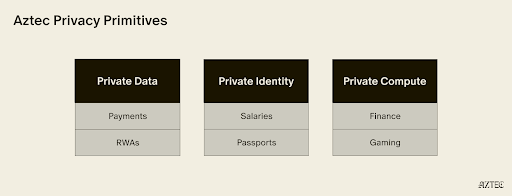
Cette évolution montre que la confidentialité devient une composante intégrée de l’architecture blockchain, et non plus une simple fonctionnalité. Les futures applications Web3 devraient ainsi intégrer nativement des capacités de confidentialité, sans dépendre d’outils externes.
Synthèse
Aztec, Zcash et Tornado Cash représentent chacun une voie distincte pour la confidentialité sur la blockchain, avec des différences en termes de mise en œuvre technique, de positionnement stratégique et de trajectoire de développement.
Zcash propose une monnaie de confidentialité, Tornado Cash fournit des outils de confidentialité, et Aztec vise à construire une plateforme de calcul confidentielle complète. À mesure que les applications se complexifient, une infrastructure de confidentialité programmable offrira un potentiel de croissance supérieur.
L’approche d’Aztec est susceptible de définir la prochaine phase de l’évolution de la confidentialité sur la blockchain.
FAQ
Quelle est la différence fondamentale entre Aztec et Zcash ?
Aztec est une solution Privacy Layer2 construite sur Ethereum, prenant en charge les Smart Contracts et le développement d’applications. Zcash est une blockchain publique indépendante axée sur les transferts anonymes. Leurs champs fonctionnels sont très différents.
Tornado Cash est-il toujours disponible ?
Tornado Cash, en tant que Smart Contract, reste on-chain, mais son utilisation est soumise à des restrictions réglementaires variables selon les juridictions. Les utilisateurs doivent évaluer les risques de manière indépendante.
Les trois solutions utilisent-elles toutes les zero-knowledge proofs ?
Oui, les trois utilisent la technologie zkSNARK, mais leurs applications diffèrent. Zcash l’utilise pour les transactions privées, Tornado Cash pour la vérification des dépôts et des retraits, et Aztec pour les preuves de calcul général.
Quelle solution de confidentialité est la mieux adaptée à la DeFi ?
Aztec est la mieux adaptée à la DeFi, car elle prend en charge les Smart Contracts de confidentialité programmables. Zcash et Tornado Cash sont limités dans ce domaine.
La confidentialité réduit-elle la transparence de la blockchain ?
Les solutions de confidentialité réduisent généralement la visibilité des données, mais les zero-knowledge proofs permettent la vérification sans exposer les données. C’est la direction centrale de la technologie de confidentialité actuelle.