Com o contínuo avanço dos modelos de IA, a demanda global por recursos de hashrate cresce de forma acelerada. Modelos de linguagem de grande porte, agentes de IA, geração de imagens e vídeos em tempo real — um número cada vez maior de aplicações consome montantes expressivos de hashrate. Embora os serviços tradicionais de nuvem ainda sejam o padrão do mercado, os altos custos de infraestrutura, a centralização de recursos e as limitações regionais de implantação estão levando o setor a buscar novos modelos de oferta. É nesse contexto que a computação de borda e a DePIN (Rede de Infraestrutura Física Descentralizada) se consolidam como áreas de destaque.
Do ponto de vista da infraestrutura digital, a Bless Network não se limita a criar um novo mercado de hashrate. Seu objetivo é estabelecer uma via técnica para conectar, transformar em ativos e tornar programáveis os recursos de hardware ocioso ao redor do mundo. Por meio de escalonamento distribuído, incentivos a nós e mecanismos de verificação confiável, a Bless capacita qualquer usuário a participar da oferta de hashrate e a construir, de forma coletiva, uma nova rede de computação aberta para a era da IA.
Análise da Arquitetura Técnica Principal da Bless Network
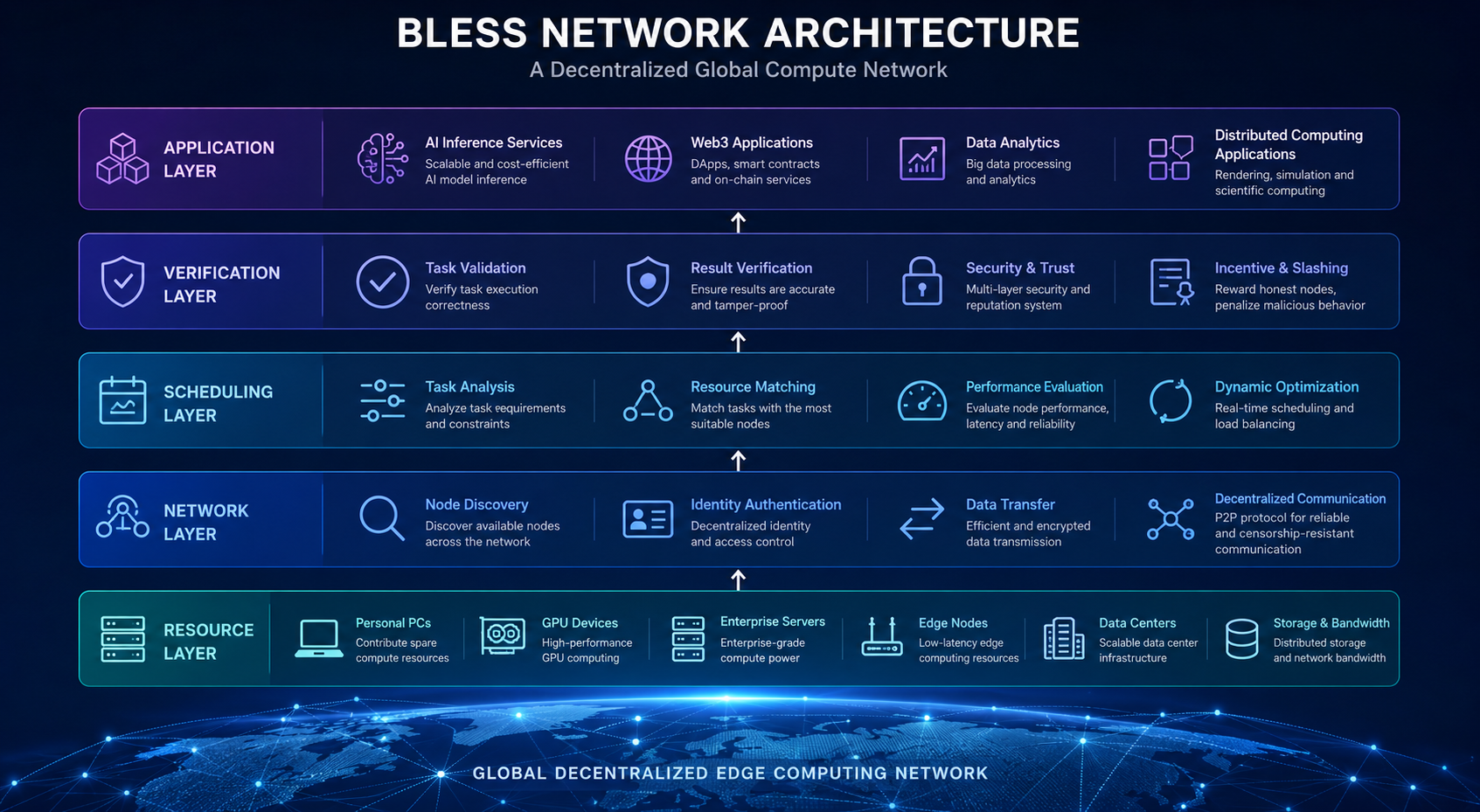
Sob a ótica arquitetural, a Bless Network é um sistema de computação em múltiplas camadas composto pelas camadas de Recursos, Rede, Escalonamento, Verificação e Aplicação. Cada camada exerce uma função específica e, em conjunto, completam o fluxo de trabalho, desde a integração dos recursos até a execução das tarefas.
A Camada de Recursos é a base, formada por computadores pessoais, dispositivos GPU, servidores empresariais, nós de borda e recursos de data centers ao redor do mundo. Esses dispositivos se conectam à rede por meio do cliente Bless, contribuindo com hashrate, armazenamento e largura de banda.
A Camada de Rede cuida da descoberta de nós, verificação de identidade e transmissão de dados. Por meio de protocolos descentralizados, os nós se conectam e se comunicam sem um gerenciamento centralizado, formando uma rede global de recursos.
A Camada de Escalonamento é o núcleo do sistema. Ela analisa os requisitos das tarefas, avalia o desempenho dos nós e faz a correspondência com os recursos ideais. Quando um usuário envia uma solicitação, o sistema atribui dinamicamente as tarefas com base no status do nó, no hashrate e no ambiente de rede, maximizando a eficiência.
A Camada de Verificação garante a computação confiável. Como as tarefas são executadas por nós diversos, o sistema precisa verificar se elas foram concluídas corretamente e se os resultados são confiáveis. Múltiplos mecanismos de verificação asseguram a segurança da rede e a integridade dos resultados.
A Camada de Aplicação fica no topo. Nela, desenvolvedores podem construir serviços de inferência de IA, aplicações Web3, plataformas de análise de dados e outros produtos que dependem de computação distribuída na Bless Network.
Computação de Borda e Redes DePIN
Para compreender a Bless Network, é preciso estar familiarizado com computação de borda e DePIN.
Computação de borda é uma arquitetura que implanta poder computacional próximo aos usuários. Diferentemente da computação em nuvem tradicional, que envia todos os dados para grandes data centers, a computação de borda processa tarefas em locais próximos, reduzindo a latência e melhorando os tempos de resposta.
Por exemplo, quando um usuário faz uma solicitação de IA, o modelo tradicional encaminha os dados para um servidor remoto. Já na computação de borda, nós próximos processam a tarefa e retornam os resultados, reduzindo significativamente o tempo de transmissão na rede.
DePIN é uma das principais tendências da Web3. Ela utiliza incentivos de blockchain para organizar recursos físicos globais em redes de infraestrutura abertas.
No modelo DePIN, os participantes contribuem com dispositivos de hardware e recebem incentivos. Nos últimos anos, surgiram projetos nas áreas de armazenamento descentralizado, comunicação sem fio e redes de GPU. A Bless Network é uma exploradora-chave no campo da computação descentralizada.
Como a Bless Agrega Recursos Globais de Hashrate Ocioso
Em todo o mundo, enormes recursos de hashrate permanecem subutilizados. Computadores domésticos, servidores empresariais e dispositivos GPU raramente operam em plena capacidade, deixando um enorme potencial ocioso.
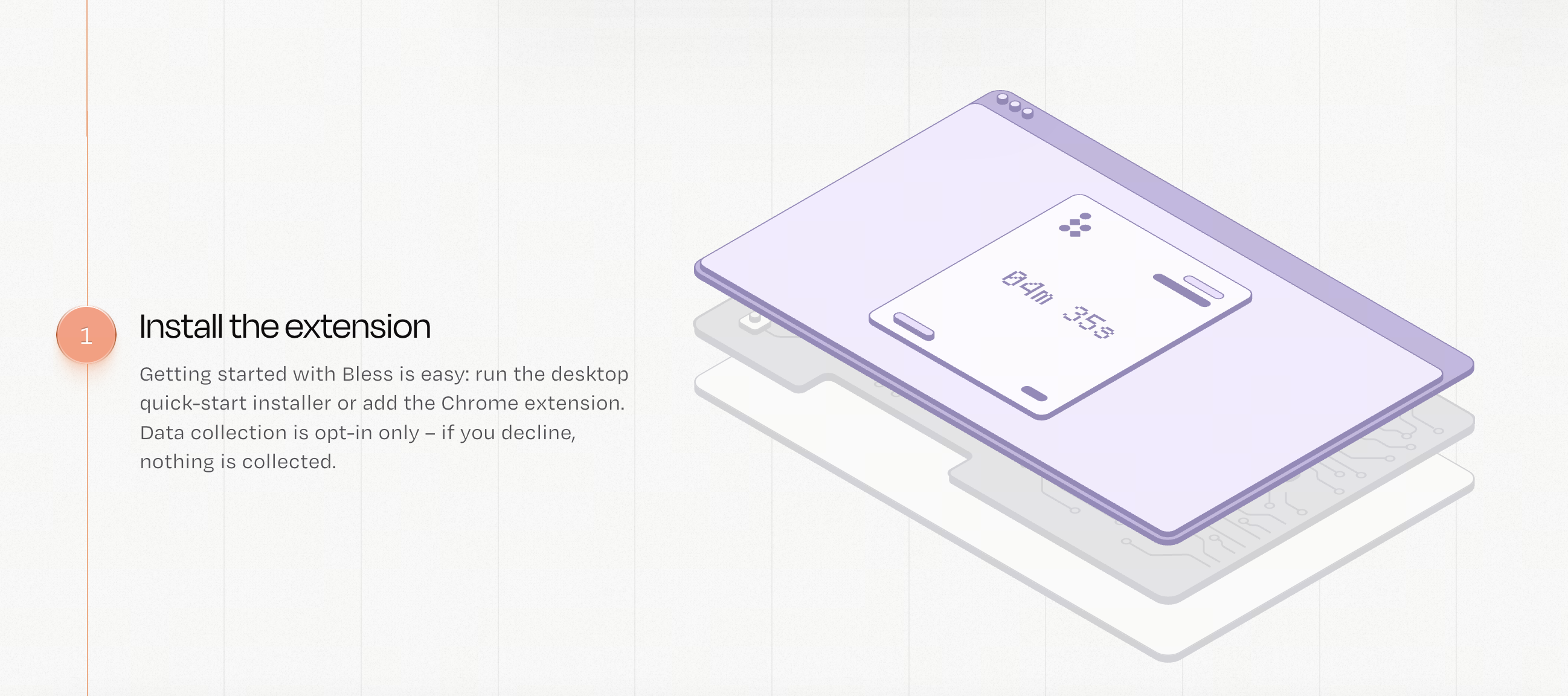
A Bless Network visa agregar esses recursos fragmentados. Quando os usuários instalam o cliente Bless e ingressam na rede, o sistema cria automaticamente perfis dos dispositivos, avaliando CPU, desempenho de GPU, memória, armazenamento e largura de banda.
Após a detecção, o sistema cria um Perfil de Recurso para cada nó e o adiciona a um pool unificado de recursos. Com base no desempenho e na adequação a diferentes tipos de tarefa, os nós são classificados como: inferência de IA, computação geral, processamento de dados ou armazenamento.
Essa classificação melhora a eficiência do escalonamento, permitindo que a rede encontre rapidamente os melhores dispositivos para cada tarefa. À medida que mais nós ingressam, o hashrate total da Bless Network cresce, gerando ganhos de escala.
Do ponto de vista de negócios, a Bless cria um mercado aberto de dois lados: de um lado, desenvolvedores e empresas que precisam de hashrate; do outro, operadores de nós que fornecem recursos ociosos, trocando valor por meio da rede.
Mecanismos de Verificação de Nós e Distribuição de Tarefas
Em qualquer rede de computação descentralizada, garantir a confiabilidade dos resultados é algo essencial. Como os executores de tarefas são nós independentes em todo o mundo, a verificação é indispensável.
Quando um usuário envia uma tarefa, o sistema de escalonamento da Bless analisa os requisitos e leva em conta o desempenho do nó, o status online, a reputação histórica, a localização geográfica e a latência da rede para selecionar o(s) nó(s) ideal(is).
Durante a execução, a verificação em múltiplas camadas assegura a confiabilidade. Entre os métodos mais comuns, destacam-se:
- Verificação redundante: a mesma tarefa é executada em vários nós; os resultados são comparados. Uma alta consistência aumenta a confiança, ao custo de recursos extras.
- Verificações aleatórias: a rede verifica algumas tarefas para detectar fraudes; resultados anômalos podem reduzir a reputação de um nó.
- Sistema de reputação: os nós acumulam pontuações de desempenho ao longo do tempo. Nós com alta reputação recebem mais tarefas e recompensas mais altas; nós com baixa reputação podem sofrer restrições.
Esses mecanismos mantêm, em conjunto, a qualidade da rede.
Como a Bless Suporta Inferência de IA
A IA é um dos principais motores da demanda computacional, e a inferência está se tornando uma das maiores áreas de consumo.
Antes, o mercado se concentrava em clusters de treinamento. Mas com o aumento dos usuários de IA, a demanda por inferência dispara. Cada chat, geração de imagem ou chamada de agente consome recursos computacionais em tempo real.
Para desenvolvedores, alugar servidores de alto desempenho a longo prazo é caro. A Bless Network oferece acesso flexível a recursos: os desenvolvedores podem utilizar recursos distribuídos sob demanda, sem a necessidade de investir pesadamente em infraestrutura.
A computação de borda também reduz a latência. Quando as solicitações são processadas por nós próximos, os tempos de resposta melhoram — algo fundamental para assistentes de IA em tempo real, atendimento ao cliente e aplicativos interativos.
Além disso, a rede global de nós da Bless permite uma implantação regional flexível. À medida que a IA se globaliza, o escalonamento de recursos entre regiões se torna uma vantagem estratégica de infraestrutura.
Bless Network vs. Serviços Tradicionais de Nuvem
Ambos fornecem hashrate, mas diferem fundamentalmente em organização e operação.
Nuvem tradicional é construída e operada por grandes fornecedores, que mantêm data centers gerenciados centralmente e oferecem serviços de aluguel com ecossistemas maduros e suporte empresarial.
Bless Network adota um modelo de oferta distribuída. Os recursos vêm de contribuidores globais, com a propriedade pulverizada entre os participantes. A coordenação e os incentivos em nível de protocolo integram esses recursos em uma rede unificada.
| Item de Comparação |
Bless Network |
Serviços Tradicionais de Nuvem |
| Fonte de Recursos |
Contribuições globais de nós |
Data centers centralizados |
| Estrutura de Propriedade |
Distribuída |
Controle centralizado |
| Arquitetura de Rede |
Descentralizada |
Centralizada |
| Método de Escala |
Entrada de novos nós na rede |
Construção de novos servidores |
| Mecanismo de Incentivo |
Incentivos via token |
Aluguel comercial |
| Tolerância a Falhas |
Colaboração entre múltiplos nós |
Redundância em data centers |
Esses modelos tendem a se complementar. A nuvem tradicional atende necessidades críticas empresariais, enquanto as redes descentralizadas abrem novas possibilidades de uso de recursos, participação aberta e colaboração global.
Desafios para Redes de Computação Descentralizadas
Apesar do enorme potencial, a adoção em larga escala enfrenta diversos desafios:
- Estabilidade dos nós: dispositivos pessoais e nós de borda frequentemente ficam offline ou apresentam oscilações, o que complica o escalonamento.
- Latência e sincronização de dados: a distribuição global dos nós adiciona sobrecarga para coordenação e sincronização de resultados, especialmente em aplicações em tempo real.
- Segurança de dados: algumas tarefas envolvem informações sensíveis. Garantir a privacidade em uma rede aberta é crucial para a adoção empresarial.
- Custos de verificação: equilibrar a sobrecarga da verificação com eficiência e confiança é um desafio central de design.
- Ecossistema de desenvolvedores: são necessárias ferramentas maduras, APIs e aplicações para atrair desenvolvedores.
Direções Futuras de Desenvolvimento da Tecnologia Bless Network
À medida que a IA e a DePIN evoluem, o roteiro da Bless Network se torna mais claro.
- Computação nativa para IA: otimizações para inferência de LLM, fluxos de trabalho de agentes de IA e escalonamento de GPU.
- Provas de conhecimento zero: a verificação ZK pode validar resultados enquanto preserva a privacidade do usuário.
- Compatibilidade cross-chain: permite escalonamento de recursos, pagamentos e incentivos em múltiplas blockchains, gerando maior sinergia de ecossistema.
- Mercados automatizados de recursos: contratos inteligentes para precificação, lances e distribuição de receita, reduzindo custos e aumentando a eficiência.
Se a escala de nós continuar crescendo e a eficiência do escalonamento melhorar, a Bless Network pode se tornar uma infraestrutura global de computação de borda, fornecendo recursos abertos para aplicações de IA e Web3.
Resumo
A Bless Network é uma rede de computação descentralizada que combina DePIN, computação de borda e escalonamento distribuído de recursos. Seu objetivo central é agregar o hashrate ocioso de todo o mundo, fornecendo infraestrutura aberta e escalável para inferência de IA, processamento de dados e aplicações Web3.
Arquiteturalmente, ela cria um ciclo completo de computação por meio das camadas de recursos, rede, escalonamento, verificação e aplicação — desde a integração dos recursos até a execução das tarefas, verificação dos resultados e distribuição das receitas. A essência é transformar hardware fragmentado em uma rede de computação coordenada, melhorando a utilização global dos recursos.
Com o crescimento da demanda por inferência de IA e o amadurecimento do ecossistema DePIN, as redes de computação descentralizadas estão se consolidando como uma tendência-chave de infraestrutura digital. Apesar dos desafios relacionados à estabilidade dos nós, segurança de dados e ecossistema de desenvolvedores, o modelo de computação aberta da Bless Network oferece um novo caminho técnico e uma direção prática para a futura colaboração computacional global.