Seiring meluasnya ekosistem DeFi menjadi lingkungan multi-chain dan multi-protokol dengan struktur imbal hasil yang rumit, kurva pembelajaran dan kesulitan eksekusi metode tradisional kian meningkat. Kemunculan Prompt-to-DeFi secara luas dipandang sebagai salah satu upaya penting dalam arah Agentic Finance.
Berbeda dengan agregator DeFi tradisional yang sekadar menyatukan titik masuk protokol, INFINIT lebih menekankan peran Agen AI dalam perancangan strategi, penalaran, dan eksekusi.
Apa Itu Prompt-to-DeFi Milik INFINIT?
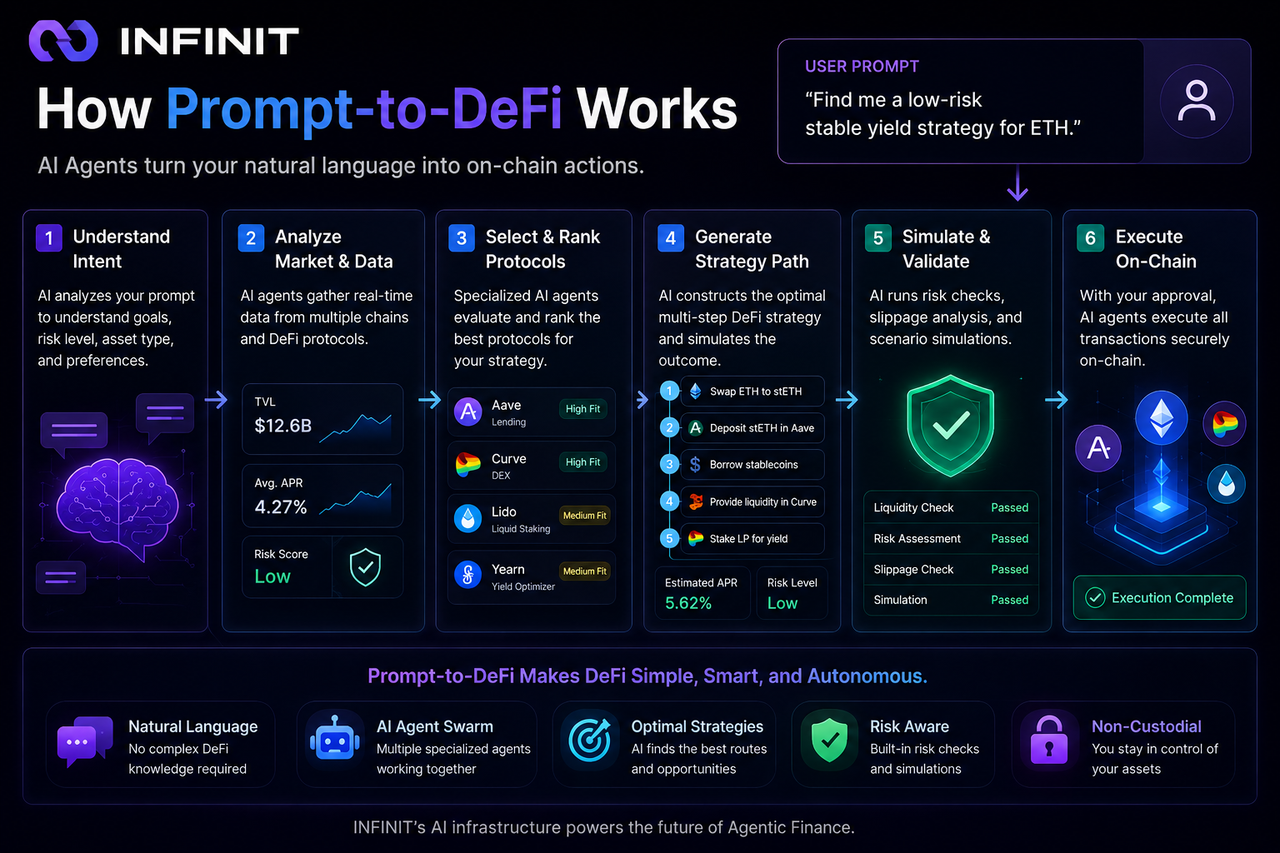
Sebagai mekanisme interaksi bertenaga AI yang menghasilkan strategi DeFi on-chain melalui bahasa alami, Prompt-to-DeFi milik INFINIT memungkinkan pengguna melewati operasi protokol manual yang rumit. Cukup masukkan tujuan atau kebutuhan, dan sistem akan secara otomatis menganalisisnya serta menghasilkan alur eksekusi on-chain yang sesuai.
Tujuan inti Prompt-to-DeFi adalah mengalihkan fokus pengguna dari langkah-langkah operasional spesifik ke pengungkapan tujuan secara langsung, sehingga Agen AI dapat menangani semua logika yang mendasarinya secara otonom.
Apa Logika Inti di Balik Prompt-to-DeFi?
Logika fundamental Prompt-to-DeFi adalah mengubah persyaratan bahasa alami menjadi tindakan on-chain yang dapat dieksekusi.
Misalnya, saat pengguna memasukkan:
"Cari strategi imbal hasil stabil dengan risiko rendah untuk ETH"
Sistem tidak sekadar mengembalikan daftar protokol. Sebaliknya, sistem melakukan analisis lebih mendalam yang mencakup:
- Toleransi risiko pengguna
- Tingkat imbal hasil on-chain saat ini
- Likuiditas yang tersedia
- Keamanan protokol
- Biaya eksekusi
- Kompatibilitas aset
Agen AI kemudian menghasilkan jalur strategi lengkap, seperti:
- Konversi ETH ke LST
- Setor ke protokol pinjaman
- Berpartisipasi dalam kumpulan imbal hasil stabil
- Optimalkan jalur imbal hasil secara otomatis
Seluruh proses ini ibarat AI "menerjemahkan" tujuan pengguna ke dalam bahasa eksekusi DeFi.
Bagaimana INFINIT Memahami Prompt Pengguna
Langkah pertama INFINIT adalah pemahaman semantik terhadap prompt pengguna. Dengan menggunakan large language model (LLM), sistem menganalisis preferensi risiko, target imbal hasil, horizon waktu, jenis aset, dan ruang lingkup operasional yang dapat diterima.
Tidak seperti pencocokan kata kunci tradisional, Agen AI memprioritaskan "pengenalan niat". Misalnya, "imbal hasil stabil" dan "imbal hasil tinggi" memicu struktur strategi yang sangat berbeda.
Sistem juga melakukan analisis kontekstual dinamis menggunakan data on-chain real-time. Saat volatilitas pasar melonjak, Agen dapat mengurangi penggunaan Leverage; jika imbal hasil suatu protokol menurun, sistem dapat secara otomatis menyesuaikan jalur strategi.
Mekanisme penalaran dinamis inilah yang benar-benar membedakan Prompt-to-DeFi dari sistem strategi berbasis template konvensional.
Bagaimana Agen AI Memilih Protokol DeFi
Setelah memahami prompt, INFINIT beralih ke fase pemilihan protokol.
Platform ini menampung beberapa Agen khusus, masing-masing bertanggung jawab atas jenis protokol berbeda — protokol pinjaman, DEX, bridge cross-chain, protokol restaking, dan agregator imbal hasil. Agen-agen ini terus memantau TVL, tingkat imbal hasil, kedalaman likuiditas, parameter risiko, status Smart Contract, dan aktivitas on-chain. Berdasarkan tujuan pengguna, sistem secara otomatis menyaring dan menggabungkan protokol yang paling sesuai.
Misalnya, saat menghasilkan strategi looping dengan Leverage, sistem tidak hanya memilih protokol pinjaman; sistem juga mengevaluasi stabilitas suku bunga, risiko likuidasi, kapasitas peminjaman, dan volatilitas aset. Dibandingkan riset manual di beberapa protokol, Agen AI dapat melakukan penyaringan dinamis dan optimalisasi jalur dengan jauh lebih efisien.
Bagaimana Prompt-to-DeFi Menghasilkan Jalur Eksekusi On-Chain
Setelah protokol dipilih, sistem mulai membangun jalur eksekusi.
Tahap ini meliputi:
- Menguraikan urutan operasi
- Memperkirakan biaya gas
- Merancang rute konversi aset
- Mengoordinasikan interaksi cross-chain
- Mengontrol Slippage
- Mensimulasikan risiko
Misalnya, strategi imbal hasil cross-chain dapat mencakup:
- Bridging dari Ethereum ke Arbitrum
- Mengonversi ETH ke Stablecoin
- Menyetor ke protokol pinjaman
- Mengonfigurasi yield farming secara otomatis
Langkah-langkah ini secara otomatis dihubungkan oleh Agen AI menjadi satu alur kerja terpadu.
Sistem juga mensimulasikan hasil perdagangan terlebih dahulu, memeriksa likuiditas yang tidak mencukupi, Slippage berlebihan, risiko likuidasi, kegagalan jalur, dan anomali protokol. Hanya setelah lolos verifikasi, strategi dilanjutkan ke eksekusi.
Bagaimana INFINIT Mengeksekusi Tindakan Multi-Langkah On-Chain
Di DeFi tradisional, pengguna harus mengklik secara manual melalui beberapa halaman protokol langkah demi langkah. Dengan Prompt-to-DeFi, Agen AI mengatur semua langkah secara otomatis.
Melalui lapisan eksekusi terpadu, sistem menangani:
- Otorisasi dompet
- Panggilan kontrak
- Swap
- Bridge
- Setor
- Peminjaman
- Konfigurasi imbal hasil
Pengguna hanya melihat layar konfirmasi akhir, sementara semua logika on-chain yang kompleks dijalankan di belakang layar oleh Agen.
INFINIT beroperasi dengan model non-custodial — platform tidak pernah memegang aset pengguna secara langsung. Kewenangan eksekusi Agen AI dibatasi secara ketat pada ruang lingkup yang diotorisasi pengguna, sehingga mengurangi risiko sentralisasi.
Model "koordinasi otomatis AI + konfirmasi akhir pengguna" ini merupakan arah desain utama dalam lanskap Agentic Finance saat ini.
Bagaimana Prompt-to-DeFi Berbeda dari Agregator DeFi Tradisional
Agregator DeFi tradisional terutama menyatukan titik masuk protokol, memudahkan pengguna mengakses berbagai platform. Namun, pengguna tetap bertanggung jawab merancang strategi sendiri.
Prompt-to-DeFi melangkah lebih jauh dengan menghadirkan Agen AI yang memungkinkan sistem untuk:
- Memahami tujuan pengguna
- Menghasilkan strategi secara otomatis
- Menyesuaikan jalur secara dinamis
- Mengoordinasikan eksekusi secara otomatis
Perbedaan fundamentalnya terletak pada keberadaan "lapisan strategi AI".
| Dimensi Perbandingan |
Prompt-to-DeFi |
Agregator DeFi Tradisional |
| Metode Input Pengguna |
Prompt bahasa alami |
Operasi manual |
| Pembuatan Strategi |
Dihasilkan otomatis oleh AI |
Dirancang sendiri oleh pengguna |
| Koordinasi Multi-Langkah |
Otomatis |
Eksekusi langkah demi langkah oleh pengguna |
| Penalaran Real-Time |
Didukung |
Terbatas |
| Analisis Risiko |
Analisis dinamis |
Biasanya minimal |
| Tingkat Otomatisasi |
Relatif Tinggi |
Sedang |
Ringkasan
Prompt-to-DeFi milik INFINIT adalah implementasi praktis signifikan dari penggabungan Agen AI dengan DeFi. Misi utamanya adalah mengurangi kompleksitas keuangan on-chain melalui interaksi bahasa alami.
Dibandingkan agregator DeFi tradisional, Prompt-to-DeFi tidak hanya menyatukan titik masuk protokol tetapi juga memanfaatkan AI untuk menangani penalaran strategi, pemilihan protokol, dan eksekusi on-chain secara otonom. Pengguna dapat menyelesaikan operasi DeFi multi-langkah yang kompleks tanpa perlu pengetahuan mendalam tentang struktur keuangan yang rumit.
FAQ
Bagaimana Prompt-to-DeFi Milik INFINIT Memahami Kebutuhan Pengguna?
Sistem menggunakan large language model untuk menganalisis preferensi risiko pengguna, target imbal hasil, jenis aset, dan persyaratan operasional, dikombinasikan dengan data on-chain real-time untuk penalaran dinamis.
Dapatkah Prompt-to-DeFi Menjalankan Strategi Kompleks Secara Otomatis?
Ya. Sistem dapat mengoordinasikan beberapa langkah secara otonom — termasuk Swap, Bridge, pinjaman, dan yield farming — serta menghasilkan jalur eksekusi terpadu.
Apa Perbedaan Antara Prompt-to-DeFi dan Agregator DeFi Tradisional?
Agregator tradisional terutama menyatukan titik masuk protokol, sedangkan Prompt-to-DeFi menekankan pembuatan dan eksekusi strategi otomatis berbasis AI.
Apakah INFINIT Mengambil Alih Kepemilikan Aset Pengguna?
Tidak. INFINIT mengikuti model non-custodial — aset pengguna selalu tetap berada di dompet mereka sendiri.