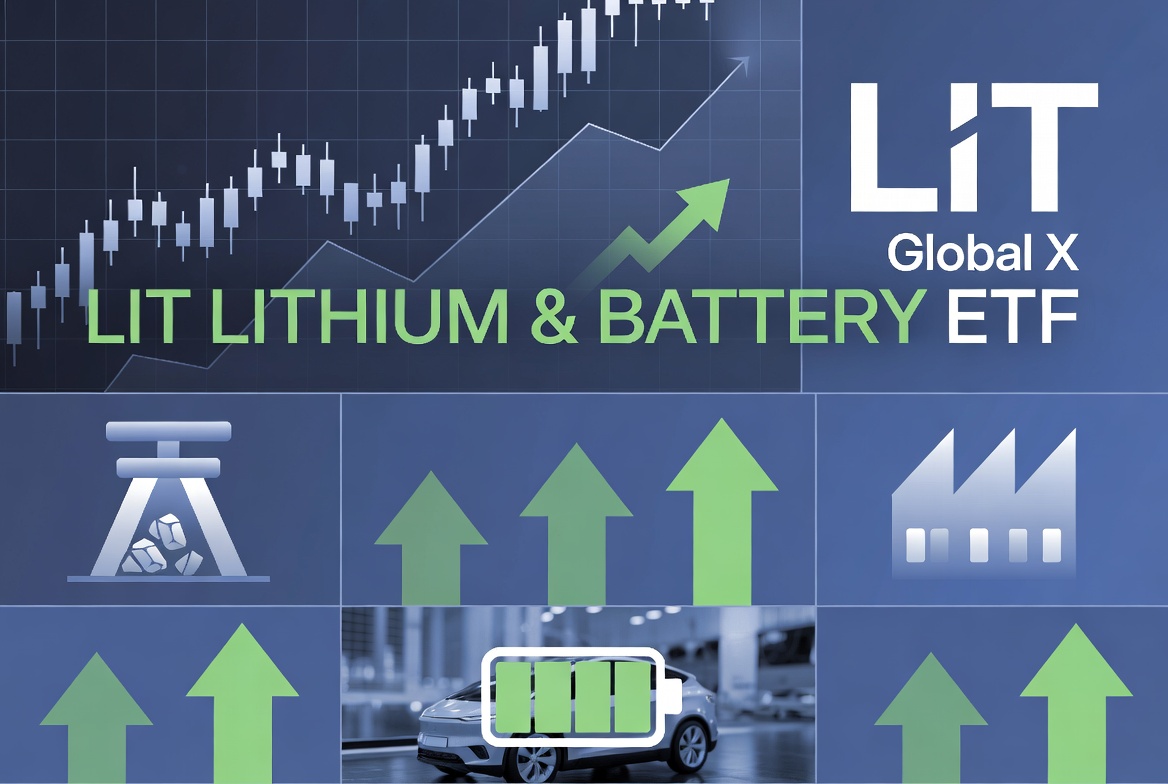
L'expansion des marchés des véhicules à énergies nouvelles, du stockage d'énergie et des énergies propres soutient régulièrement la demande de batteries au lithium. Le lithium étant une matière première stratégique pour les batteries de puissance, les sociétés minières de lithium, les fabricants de batteries et les acteurs de la chaîne d'approvisionnement des énergies nouvelles forment un écosystème de marché étroitement interconnecté.
D'un point de vue sectoriel, LIT ne se contente pas de suivre les fluctuations du cours du lithium : il reflète également la santé globale de la chaîne d'approvisionnement mondiale des énergies nouvelles. Les évolutions de l'offre et de la demande de lithium, les progrès technologiques dans les batteries et les tendances des ventes de véhicules à énergies nouvelles sont autant de facteurs déterminants pour les variations du prix du LIT.
Positionnement stratégique du LIT
L'objectif principal du LIT est de suivre la performance de marché des entreprises de la chaîne d'approvisionnement mondiale des batteries au lithium. Contrairement aux ETF généralistes, le LIT cible spécifiquement les ressources en lithium et les systèmes de batteries dans le secteur des énergies nouvelles.
Structurellement, le LIT fonctionne comme un « ETF de la chaîne d'approvisionnement des énergies nouvelles ». Son portefeuille inclut généralement non seulement des mineurs de lithium, mais aussi des producteurs de matériaux pour batteries, des fabricants et d'autres acteurs de l'écosystème des énergies nouvelles.
Cette conception permet au LIT de ne pas dépendre des performances d'une seule entreprise, mais plutôt de refléter la dynamique globale de l'ensemble de la chaîne de valeur des batteries au lithium.
La logique de marché sous-jacente au LIT repose sur la demande mondiale à long terme de systèmes de stockage d'énergie et de ressources en lithium dans l'ère des énergies nouvelles.
Pourquoi le LIT suit-il la chaîne d'approvisionnement des batteries au lithium ?
Le LIT met l'accent sur cette chaîne car les batteries au lithium sont devenues un pilier du marché des énergies nouvelles. Véhicules à énergies nouvelles, systèmes de stockage d'énergie et dispositifs électroniques portables reposent tous sur la technologie lithium-ion pour le stockage d'énergie.
Alors que les systèmes énergétiques traditionnels dépendent du pétrole et des combustibles fossiles, le secteur des énergies nouvelles privilégie le stockage électrique. Le lithium s'impose ainsi comme une matière première industrielle essentielle de l'ère moderne.
Du point de vue de la chaîne de valeur, la hausse des ventes de véhicules à énergies nouvelles stimule généralement la demande de batteries de puissance, ce qui entraîne à son tour la croissance des activités minières, du traitement des matériaux et de la fabrication.
Cette interdépendance a forgé un écosystème cohérent autour de la chaîne d'approvisionnement des batteries au lithium. Le LIT cherche à capter ces évolutions sectorielles via une structure d'ETF.
Le portefeuille du LIT s'articule autour des ressources en lithium et de la chaîne de valeur des batteries. Contrairement aux ETF indiciels traditionnels qui privilégient la pondération par capitalisation boursière, le LIT adopte une approche thématique.
Premièrement, il alloue des capitaux aux sociétés minières de lithium, en charge de l'extraction et de l'approvisionnement en matières premières. Ensuite, il intègre des entreprises de matériaux pour batteries et des fabricants de batteries de puissance. Certains acteurs de la chaîne d'approvisionnement des véhicules à énergies nouvelles peuvent également y figurer.
Le tableau ci-dessous présente la répartition type de la chaîne de valeur du LIT :
| Segment de la chaîne de valeur |
Rôle principal |
| Mineurs de lithium |
Approvisionnement en ressources en lithium |
| Sociétés de matériaux |
Transformation des matériaux pour batteries |
| Fabricants de batteries |
Production de batteries de puissance |
| Entreprises d'énergies nouvelles |
Déploiement de systèmes de batteries |
Cette structure implique que le LIT ne se limite pas à suivre le prix du lithium : il capture l'ensemble de la chaîne d'approvisionnement mondiale des batteries au lithium.
Quel est l'impact des sociétés minières de lithium sur la volatilité du LIT ?
Les mineurs de lithium sont un moteur majeur de la volatilité du LIT, en raison du rôle stratégique du lithium dans les batteries de puissance. Avec l'essor des véhicules à énergies nouvelles et du stockage d'énergie, la demande de lithium augmente généralement en parallèle.
Les mineurs génèrent leurs revenus principalement par l'extraction et la vente. Lorsque les cours du lithium grimpent, leur rentabilité s'améliore, ce qui rend leurs actions très influentes sur la performance du LIT.
Par ailleurs, la dynamique mondiale de l'offre et de la demande de lithium façonne les attentes du marché pour l'ensemble de la chaîne d'approvisionnement des énergies nouvelles. Une offre restreinte peut peser sur la structure de coûts des batteries de puissance.
Ainsi, les fluctuations du prix du lithium n'affectent pas seulement les mineurs, mais aussi l'ensemble du marché des ETF sur les batteries au lithium.
Les fabricants de batteries constituent un autre pilier du LIT. Contrairement aux mineurs, qui dépendent des prix des matières premières, ces entreprises misent sur la technologie, l'échelle de production et la demande en aval.
Avec la progression des ventes de véhicules à énergies nouvelles, les constructeurs automobiles ont besoin de volumes importants de batteries de puissance, ce qui rend les revenus des fabricants fortement corrélés aux ventes de véhicules.
Les marchés du stockage d'énergie stimulent également la demande : systèmes à grande échelle, batteries domestiques et réseaux d'énergie renouvelable reposent tous sur la technologie lithium-ion.
D'un point de vue commercial, les fabricants de batteries cherchent à acquérir un avantage concurrentiel grâce à la production de masse et à l'innovation technologique. Ces facteurs influencent à leur tour la volatilité du LIT.
Qu'est-ce qui distingue le LIT des ETF sur les énergies nouvelles ?
La différence fondamentale réside dans leur focalisation sectorielle. Les ETF classiques sur les énergies nouvelles couvrent souvent le solaire, l'éolien, les infrastructures de réseau et les équipements, tandis que le LIT se concentre exclusivement sur la chaîne d'approvisionnement des batteries au lithium.
Les ETF traditionnels sur les énergies nouvelles s'apparentent davantage à des « ETF complets de transition énergétique », alors que le LIT met l'accent sur les ressources en lithium, la fabrication de batteries et le stockage d'énergie.
Par conséquent, le LIT est généralement plus réactif aux variations du prix du lithium et aux tendances des véhicules à énergies nouvelles. Les évolutions de l'offre et de la demande de lithium ont un impact direct sur la rentabilité et les anticipations de la chaîne d'approvisionnement.
Cette approche ciblée rend la concentration sectorielle du LIT plus élevée que celle des ETF généralistes, ce qui peut se traduire par une volatilité accrue.
Principales utilisations du LIT
Le LIT sert principalement à suivre la chaîne d'approvisionnement des énergies nouvelles et les marchés des ressources en lithium. De nombreux investisseurs l'utilisent pour évaluer la performance des véhicules à énergies nouvelles et des batteries de puissance à l'échelle mondiale.
Il est également considéré comme un ETF représentatif de la chaîne d'approvisionnement des énergies nouvelles. Les prix du lithium, la demande de batteries et les tendances du stockage d'énergie influent tous sur sa performance.
D'un point de vue de marché, le LIT reflète à la fois le marché des ressources en lithium et la demande à long terme de stockage d'énergie dans le cadre de la transition énergétique mondiale.
En outre, certains investisseurs utilisent le LIT pour surveiller l'activité en amont (ressources) et en milieu de chaîne (fabrication de batteries) de la chaîne.
Synthèse
Le LIT (Global X Lithium Battery ETF) est un ETF thématique centré sur les ressources en lithium, la fabrication de batteries et la chaîne d'approvisionnement des énergies nouvelles. Sa performance de marché est influencée par les cours du lithium, les ventes de véhicules à énergies nouvelles et les tendances de la transition énergétique mondiale.
Par rapport aux ETF classiques sur les énergies nouvelles, le LIT accorde une place prépondérante à la chaîne d'approvisionnement des batteries au lithium et aux systèmes de stockage d'énergie, ce qui le rend plus sensible aux évolutions de l'offre de lithium et du marché des batteries.
Alors que le marché des énergies nouvelles poursuit sa croissance, l'importance du lithium, de la fabrication de batteries et du stockage d'énergie ne cesse de s'accroître. Le LIT constitue un outil essentiel pour les acteurs du marché souhaitant observer la chaîne d'approvisionnement des énergies nouvelles.
FAQ
Qu'est-ce que l'ETF LIT ?
LIT est un ETF thématique qui investit dans les ressources en lithium, la fabrication de batteries et les entreprises de la chaîne d'approvisionnement des énergies nouvelles. Il est conçu pour suivre l'industrie mondiale des batteries au lithium.
Pourquoi le LIT est-il sensible au prix du lithium ?
Le lithium est une matière première stratégique pour les batteries de puissance. Les variations de son prix affectent la rentabilité des mineurs et le sentiment général du marché à l'égard de la chaîne d'approvisionnement des énergies nouvelles.
Le LIT investit-il dans les sociétés minières de lithium ?
Oui, le LIT détient généralement des actions de sociétés minières de lithium, qui constituent un maillon amont clé de la chaîne de valeur des batteries au lithium.
En quoi le LIT diffère-t-il d'un ETF classique sur les énergies nouvelles ?
Le LIT est plus ciblé : il se concentre sur les ressources en lithium et les batteries de puissance, alors que les ETF classiques sur les énergies nouvelles englobent souvent des domaines plus vastes comme le solaire, l'éolien et les équipements.
Pourquoi les ventes de véhicules à énergies nouvelles influencent-elles le LIT ?
La production de véhicules à énergies nouvelles nécessite des volumes importants de batteries de puissance, elles-mêmes dépendantes du lithium. Par conséquent, toute variation des ventes de véhicules a un impact direct sur la performance du LIT.