Avec la multiplication des appareils IoT, des Agent IA et des systèmes d'automatisation, les machines du monde physique acquièrent des capacités décisionnelles autonomes toujours plus poussées. Pourtant, dans l'architecture Internet traditionnelle, la plupart des appareils restent tributaires de plateformes centralisées pour la gestion des identités, le règlement des paiements et la coordination des données. Cette dépendance entrave la formation de réseaux ouverts et collaboratifs entre machines.
L'économie des machines émerge précisément pour permettre à ces dernières de prendre part de façon autonome aux activités économiques, à l'image des internautes. En tant que blockchain Layer 1 dédiée au DePIN et à l'économie des machines, peaq entend bâtir un système de collaboration décentralisé pour les appareils réels, reposant sur des identités on-chain, des paiements automatisés et des mécanismes d'incitation.
Qu'est-ce que l'économie des machines ?
L'économie des machines désigne un modèle de réseau dans lequel les machines, les appareils et les systèmes d'IA peuvent mener de façon autonome des activités économiques. Dans ce système, les machines ne se contentent pas de collecter des données : elles possèdent également une identité on-chain, un portefeuille numérique et des capacités de paiement.
Les réseaux IoT classiques assurent généralement la connectivité et la transmission des données entre appareils, mais ils ne disposent pas de mécanismes d'échange de valeur fiables entre eux. Par exemple, une voiture intelligente ne peut pas régler automatiquement sa recharge, un capteur ne peut pas vendre ses données en temps réel de manière indépendante, et un robot ne peut pas percevoir automatiquement la récompense de ses tâches. L'économie des machines résout ces problèmes grâce à la blockchain, permettant aux machines d'interagir et d'échanger de la valeur comme le feraient des comptes on-chain.
Dans l'architecture de peaq, les machines peuvent non seulement effectuer des paiements, mais aussi participer à des transactions de données, exécuter des tâches automatiquement et recevoir des récompenses on-chain proportionnelles à leurs contributions. Ce modèle transforme les appareils, de simples terminaux matériels, en véritables acteurs économiques sur la blockchain.
Pourquoi les machines ont-elles besoin d'une identité on-chain ?
Dans l'économie des machines, l'identité de la machine constitue le socle de tout le système.
Face au nombre colossal d'appareils dans le monde réel, sans système d'identité unifié, le réseau ne peut ni vérifier l'authenticité des appareils ni déterminer la fiabilité des données. Pour y remédier, peaq propose le système peaq ID, qui génère une identité on-chain pour chaque machine.
Lorsqu'un appareil se connecte au réseau, il reçoit un identifiant on-chain unique. Il est alors reconnu par le système, peut participer aux échanges de données, appeler des Smart Contracts et percevoir des récompenses. Par exemple, un appareil de surveillance environnementale télécharge des données de qualité de l'air ; le réseau peut alors confirmer la source et distribuer des incitations en fonction de la contribution.
L'identité de la machine n'est pas qu'un simple moyen d'identification : elle détermine si un appareil peut réellement participer aux activités économiques on-chain. Sans identités fiables, l'économie des machines ne peut pas former un système de collaboration stable.
Dans l'architecture de l'économie des machines de peaq, la connexion d'un appareil au réseau suit généralement plusieurs étapes.
D'abord, l'appareil doit enregistrer son identité on-chain. Le système génère un peaq ID pour l'appareil, lie le portefeuille correspondant et les autorisations d'accès. Ensuite, l'appareil peut interagir avec la blockchain via des nœuds ou des API, puis commencer à télécharger des données ou à participer à des tâches réseau.
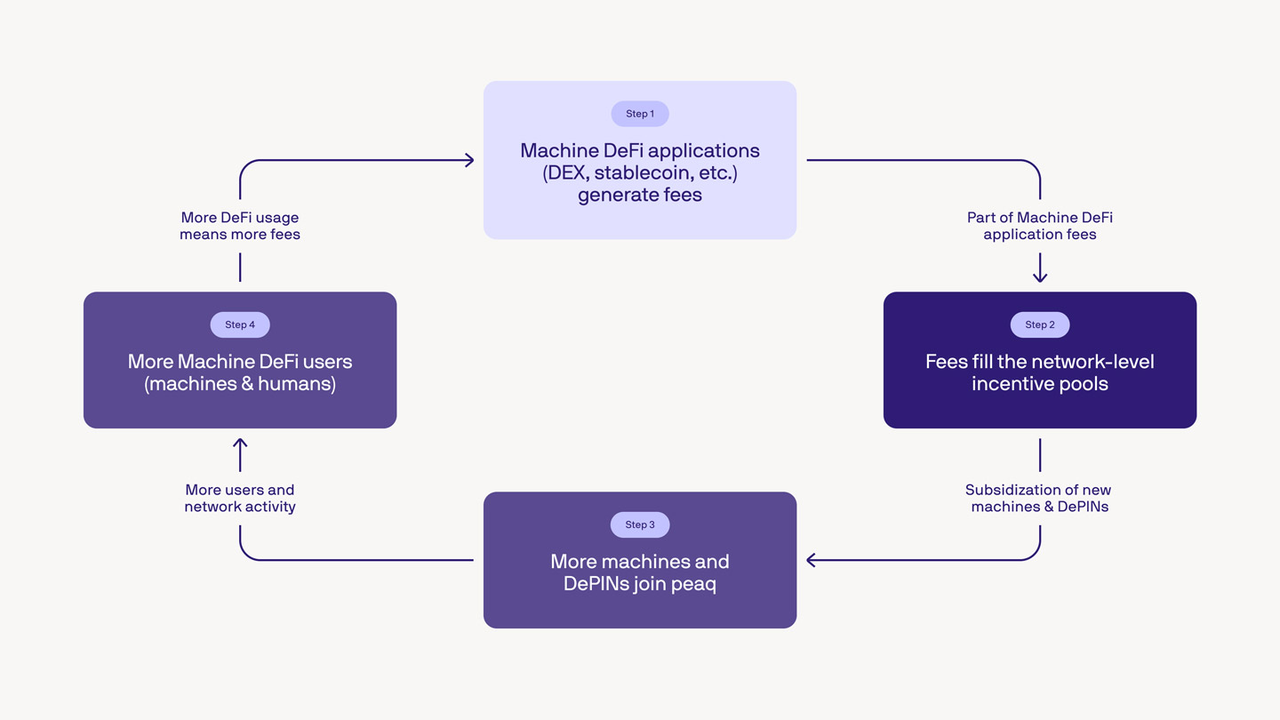
Une fois les données soumises, le Smart Contract vérifie la source et l'identité de l'appareil. Lorsque le système confirme la validité des données, il enregistre la contribution de l'appareil et distribue des récompenses en Token à ce dernier. L'appareil peut ensuite utiliser ces récompenses pour poursuivre sa participation aux activités du réseau, créant ainsi un cycle vertueux.
Comparé aux réseaux IoT traditionnels, la différence fondamentale avec peaq est que les appareils ne se contentent pas de télécharger des données : ils disposent de réelles capacités d'action on-chain et de participation économique.
Les paiements entre machines sont l'un des cas d'usage centraux de l'économie des machines.
Dans l'environnement Internet traditionnel, la plupart des paiements exigent encore une intervention manuelle. Par exemple, l'utilisateur doit payer lui-même les frais de stationnement, de recharge ou d'utilisation d'un appareil. Dans l'architecture de peaq, les machines peuvent effectuer automatiquement leurs paiements via un portefeuille on-chain.
Prenons l'exemple des véhicules autonomes : lorsqu'une voiture entre dans une borne de recharge, le système identifie automatiquement l'équipement, obtient les informations de prix et appelle le protocole de paiement on-chain pour effectuer le règlement. Après paiement, les enregistrements sont inscrits sur la blockchain, sans aucune intervention humaine.
Ce modèle signifie qu'à l'avenir, les machines non seulement échangeront des données, mais mèneront également une collaboration économique de façon indépendante. Pour la conduite autonome, les réseaux de robots et les infrastructures intelligentes, la capacité de paiement automatique est un fondement essentiel pour une collaboration entre machines à grande échelle.
Un autre enjeu clé de l'économie des machines est de garantir la fiabilité des données des appareils.
Les appareils du monde réel peuvent télécharger des données erronées, dupliquées, voire frauduleuses. Le réseau a donc besoin de mécanismes de vérification. Pour y répondre, peaq fournit des modules de vérification et de stockage des données, qui contrôlent les identités des appareils, confirment les sources de données et conservent l'historique.
Par exemple, dans un réseau de données cartographiques, plusieurs véhicules peuvent télécharger simultanément des informations routières. Le système effectue une vérification croisée entre les appareils pour déterminer quelles données sont les plus fiables, réduisant ainsi l'impact des fausses informations.
Pour les réseaux DePIN, l'authenticité des données est cruciale, car le fonctionnement des infrastructures réelles repose souvent sur d'immenses volumes de données en temps réel. Si les données ne peuvent pas être vérifiées, la crédibilité et la valeur commerciale de l'ensemble du réseau s'en trouvent compromises.
Quel est le lien entre les Agents IA et l'économie des machines ?
Avec les progrès des AI Agents, l'économie des machines s'intègre désormais profondément à l'intelligence artificielle.
Les AI Agents sont des systèmes logiciels dotés de capacités décisionnelles autonomes. L'économie des machines leur fournit des capacités d'exécution et de paiement on-chain. Par exemple, un système d'IA peut dispatcher automatiquement des robots pour effectuer des livraisons, ou sélectionner des ressources énergétiques et des sources de données en fonction des prix en temps réel.
Dans ce modèle, l'IA n'est plus un simple outil d'analyse : elle peut participer directement aux activités économiques du monde réel. À l'avenir, les AI Agents pourront gérer simultanément des véhicules, des robots et des réseaux d'appareils, en orchestrant les paiements, l'allocation des ressources et les opérations collaboratives via la blockchain.
Quels scénarios d'économie des machines existent sur peaq ?
Actuellement, l'écosystème de peaq se concentre principalement sur les infrastructures réelles et les réseaux de collaboration entre appareils.
Dans le transport, les véhicules téléchargent des données cartographiques et routières et perçoivent des récompenses en fonction de leurs contributions. Dans les réseaux de données environnementales, les capteurs collectent en temps réel des données sur l'air, le climat et le bruit, et les vendent à des acheteurs de données. Dans les réseaux de robots, les robots attribuent automatiquement les tâches et règlent les revenus via des Smart Contracts.
Par ailleurs, les réseaux énergétiques décentralisés constituent une direction majeure pour peaq. Les appareils énergétiques peuvent participer automatiquement au commerce d'énergie on-chain, tandis que les réseaux de données IA permettent aux appareils et aux AI Agents de construire ensemble des marchés de données distribués.
Quels défis l'économie des machines doit-elle relever ?
Bien que l'économie des machines présente un potentiel à long terme, l'écosystème n'en est encore qu'à ses débuts.
Premièrement, l'intégration d'appareils à grande échelle reste complexe. Les protocoles et les normes matérielles varient d'un appareil à l'autre, ce qui rend l'intégration unifiée difficile. Deuxièmement, la vérification des données du monde réel est coûteuse. La blockchain garantit l'immuabilité des données, mais ne peut intrinsèquement assurer leur authenticité.
De plus, l'économie des machines soulève des questions de protection de la vie privée, de régulation, d'évolutivité du réseau et de coûts de maintenance des appareils. Pour les projets DePIN, établir un modèle d'incitation en Token durable sur le long terme est également un défi que l'industrie doit continuer à explorer.
Ainsi, si l'économie des machines offre de larges perspectives d'application, elle a encore besoin de temps avant un déploiement à grande échelle.
Résumé
En tant qu'orientation clé promue par peaq, l'économie des machines vise à permettre aux machines, aux appareils et aux AI Agents de participer de manière autonome aux activités économiques on-chain.
Grâce aux identités machines, aux paiements on-chain et aux mécanismes de vérification des données, peaq offre des capacités de collaboration décentralisées aux infrastructures du monde réel. Ce modèle étend non seulement le champ d'application de la blockchain, mais fait également passer le Web3 de la finance numérique aux réseaux d'appareils réels.
FAQ
Pourquoi peaq met-il l'accent sur la collaboration on-chain entre machines ?
peaq entend utiliser la blockchain pour doter les appareils réels d'une identité, de capacités de paiement et de collaboration, et ainsi former un réseau ouvert d'économie des machines.
Quel est le rôle de peaq ID ?
peaq ID génère une identité on-chain pour chaque appareil, permettant aux machines de participer aux interactions on-chain, à la vérification des données et à la distribution des récompenses.
Pourquoi les machines ont-elles besoin de paiements on-chain ?
Les paiements on-chain permettent aux appareils d'effectuer automatiquement des achats de ressources, des règlements et une collaboration économique, sans intervention manuelle.
Quelle est la différence entre l'économie des machines et l'IoT ?
L'IoT résout principalement la connectivité des appareils, tandis que l'économie des machines met l'accent sur l'échange de valeur et le comportement économique autonome entre eux.
Comment les Agents IA participent-ils à l'économie des machines ?
Les AI Agents peuvent dispatcher des appareils via la blockchain, effectuer des paiements et exécuter automatiquement des tâches dans le monde réel.
Quelles sont les applications typiques sur peaq ?
Les applications actuelles incluent les réseaux de données cartographiques, les réseaux de surveillance environnementale, les réseaux de collaboration robotique et les réseaux énergétiques décentralisés.