Seiring dengan pertumbuhan pasar perdagangan global secara daring, emas CFD telah menjadi pilar dalam lanskap derivatif logam mulia. Berbeda dengan investasi emas fisik tradisional, gold CFD berfokus pada perdagangan pergerakan harga, menjadikannya alat populer untuk perdagangan jangka pendek, mengikuti tren, dan hedging risiko makro.
Emas telah lama menjadi aset safe-havan utama di pasar keuangan global. Saat inflasi naik, dolar berfluktuasi, atau ketegangan geopolitik meningkat, harga emas dengan cepat menarik perhatian pasar.
Bagaimana Cara Kerja Gold CFD?
Gold CFD beroperasi berdasarkan prinsip inti "penyelesaian selisih".
Misalnya, jika seorang trader memperkirakan harga emas internasional akan naik, mereka membuka posisi long gold CFD di harga $2.300 per ons. Saat harga mencapai $2.350, mereka menutup posisi dan mengantongi selisih $50 sebagai keuntungan.
Sepanjang proses, trader tidak pernah benar-benar memiliki emas—mereka hanya berpartisipasi dalam pergerakan harga itu sendiri.
Jika trader sebaliknya memperkirakan penurunan, mereka bisa membuka posisi short. Menutupnya setelah harga turun akan menghasilkan keuntungan dari pergerakan ke bawah.
Karena gold CFD mendukung trading di kedua arah, peluang tetap ada baik di pasar naik maupun turun.
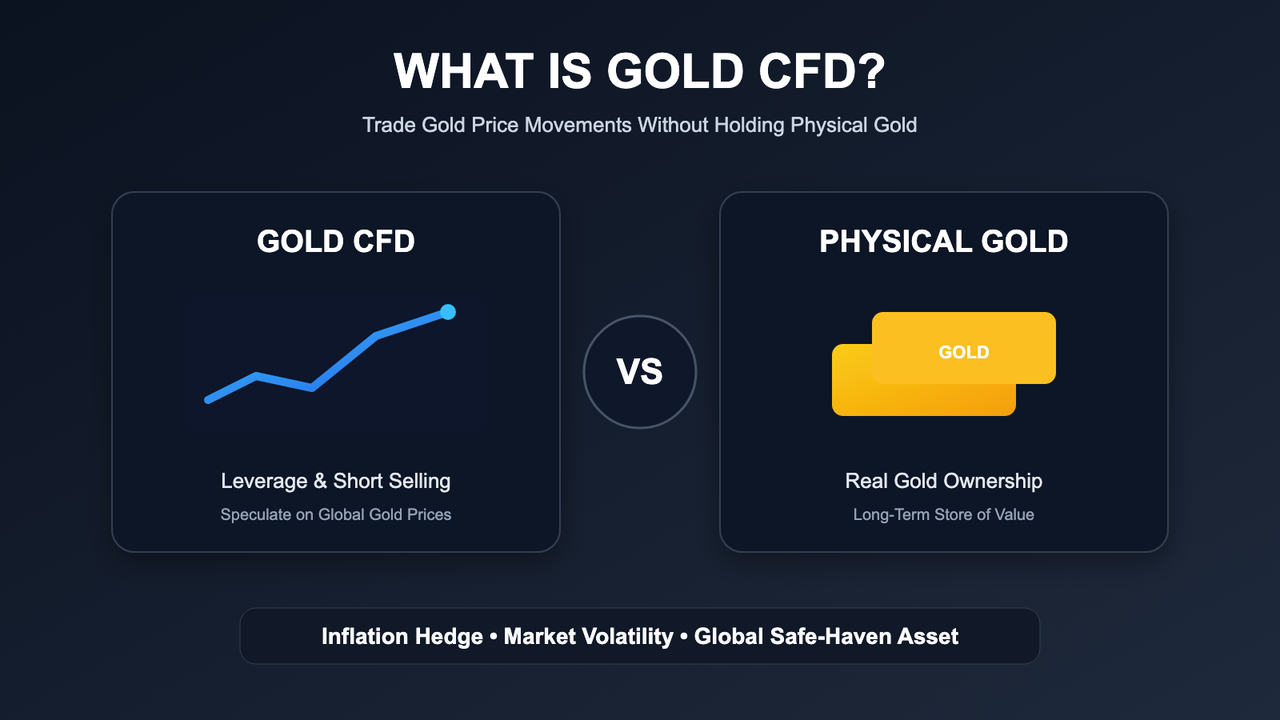
Apa Perbedaan Gold CFD dengan Investasi Emas Fisik?
Perbedaan utama antara gold CFD dan emas fisik tradisional terletak pada kepemilikan: Anda tidak pernah benar-benar memegang emas.
Emas fisik mencakup kepemilikan batangan, koin, atau perhiasan. Gold CFD, di sisi lain, adalah derivatif yang melacak perubahan harga tanpa perlu penyerahan fisik.
Perbedaan inti antara keduanya meliputi:
| Aspek |
Gold CFD |
Investasi Emas Fisik |
| Memiliki Emas Fisik |
Tidak |
Ya |
| Leverage Tersedia |
Sering |
Jarang |
| Short Selling Didukung |
Ya |
Jarang |
| Perlu Penyimpanan |
Tidak |
Ya |
| Logika Inti |
Penyelesaian Selisih Harga |
Kepemilikan Emas Fisik |
Sementara emas fisik biasanya digunakan untuk pelestarian kekayaan jangka panjang, gold CFD dirancang untuk partisipasi pasar jangka pendek.
Mengapa Anda Bisa Short Gold CFD?
Karena gold CFD pada dasarnya adalah taruhan pada arah harga, trader bisa mendapat untung baik pasar naik maupun turun.
Misalnya, jika seorang trader memperkirakan dolar yang lebih kuat akan menekan harga emas, mereka bisa membuka posisi short gold CFD. Jika harga kemudian turun, menutup posisi akan mengunci keuntungan dari penurunan tersebut.
Tidak seperti pasar emas fisik—di mana short selling jarang dimungkinkan—gold CFD menawarkan mekanisme fleksibel yang banyak digunakan dalam trading makro.
Fleksibilitas ini juga menjadikan gold CFD instrumen pilihan untuk trading ekspektasi suku bunga dan hedging terhadap aliran safe-haven.
Bagaimana Leverage Bekerja dalam Gold CFD?
Gold CFD biasanya diperdagangkan dengan margin.
Misalnya, dengan leverage 20x, seorang trader hanya perlu sebagian kecil dari nilai total posisi sebagai margin untuk mengendalikan eksposur yang jauh lebih besar pada emas.
Logika perhitungan leverage biasanya dapat dinyatakan sebagai:
Leverage meningkatkan efisiensi modal tetapi juga memperbesar potensi keuntungan dan kerugian dari pergerakan pasar.
Karena emas sensitif terhadap dolar, suku bunga, dan sentimen risiko, pergerakan harga bisa tajam dan tiba-tiba.
Biaya Apa yang Terkait dengan Gold CFD?
Biaya utamanya adalah spread dan biaya pendanaan semalam (swap).
Spread—selisih antara harga bid dan ask—adalah sumber pendapatan utama platform.
Holding posisi gold CFD dalam semalam biasanya dikenakan biaya pendanaan, karena broker secara efektif meminjamkan modal kepada Anda.
Akibatnya, gold CFD lebih cocok untuk trading jangka pendek hingga menengah daripada untuk kepemilikan jangka panjang.
Apa Risiko Utama Gold CFD?
Gold CFD adalah produk leverage berisiko tinggi. Risiko utamanya meliputi:
- Risiko Leverage
- Risiko Likuidasi
- Risiko Volatilitas Pasar
- Risiko Likuiditas
- Risiko Biaya Pendanaan
Misalnya, selama pengumuman suku bunga Federal Reserve atau rilis CPI AS, harga emas bisa bergerak tajam, memengaruhi posisi CFD yang terbuka.
Dengan leverage tinggi, bahkan pergerakan harga merugikan yang kecil pun dapat dengan cepat menggerus ekuitas akun Anda.
Gold CFD vs. Emas Berjangka: Apa Bedanya?
Baik gold CFD maupun emas berjangka memungkinkan trader berspekulasi pada pergerakan harga emas internasional, sehingga sering menjadi bahan perbandingan.
Namun struktur mendasarnya sangat berbeda.
Gold CFD biasanya ditawarkan oleh broker daring dan melayani trader ritel, sementara emas berjangka adalah kontrak standar yang diperdagangkan di bursa dengan tanggal kedaluwarsa tetap.
Selain itu:
| Aspek |
Gold CFD |
Emas Berjangka |
| Masa Habis Berlaku |
Biasanya Tidak |
Ya |
| Tempat Trading |
Broker Daring (Ritel) |
Bursa Berjangka |
| Model Leverage |
Berbasis Margin |
Persyaratan Margin Bursa |
| Format Kontrak |
Tidak Terstandarisasi |
Terstandarisasi |
| Pengguna Umum |
Terutama Ritel |
Lebih Institusional |
Gold CFD mengutamakan fleksibilitas; emas berjangka berakar pada struktur pasar komoditas profesional.
Peran Gold CFD di Pasar Global
Gold CFD menawarkan cara untuk mendapatkan eksposur terhadap harga emas internasional tanpa perlu penyerahan fisik.
Trader menggunakan gold CFD untuk spekulasi jangka pendek, trading makro, hedging inflasi, penghindaran risiko, dan memanfaatkan pergerakan dolar.
Seiring berkembangnya pasar derivatif daring, gold CFD telah menjadi andalan dalam ekosistem trading logam mulia modern.
Ringkasan
Gold CFD adalah derivatif keuangan yang diselesaikan berdasarkan selisih harga emas, memungkinkan trader untuk berpartisipasi dalam pergerakan harga emas tanpa memiliki logam fisik.
Tidak seperti investasi emas tradisional, gold CFD menekankan leverage, trading dua arah, dan partisipasi volatilitas—tetapi mengandung risiko tinggi seperti likuidasi, biaya pendanaan, dan fluktuasi pasar.
Tanya Jawab (FAQ)
Apakah Anda perlu memiliki emas fisik untuk trading gold CFD?
Tidak. Gold CFD adalah derivatif penyelesaian selisih; Anda tidak pernah memiliki emas fisik.
Mengapa Anda bisa short gold CFD?
Karena CFD berkaitan dengan arah harga, bukan kepemilikan. Anda bisa mendapat untung baik harga naik maupun turun.
Apa perbedaan gold CFD dengan emas fisik?
Emas fisik berarti memiliki logamnya; gold CFD diselesaikan secara tunai berdasarkan perubahan harga.
Mengapa gold CFD berisiko tinggi?
Gold CFD biasanya melibatkan leverage, yang memperbesar baik keuntungan maupun kerugian dari pergerakan pasar.
Apa yang memengaruhi harga gold CFD?
Dolar AS, kebijakan suku bunga, inflasi, dan sentimen risiko global adalah pendorong utama.
Bisakah gold CFD dipegang dalam jangka panjang?
Karena biaya pendanaan semalam terus terakumulasi seiring waktu, gold CFD lebih cocok untuk trading jangka pendek hingga menengah.