ما هي Space and Time؟
 (المصدر: spaceandtime)
Space and Time (وتُعرف اختصارًا بـ SXT) هي منصة بيانات لامركزية تدمج تقنية البلوكشين مع الحوسبة البياناتية. هدفها الأساسي هو تمكين تطبيقات ويب3 من الوصول إلى البيانات والتحقق منها واستخدامها بشكل آمن.
على عكس قواعد البيانات التقليدية، لا تقتصر Space and Time على تخزين المعلومات فحسب، بل تركز على:
- قابلية التحقق من البيانات
- الإدارة اللامركزية
- دمج البيانات على السلسلة وخارجها
- إمكانية الوصول من العقود الذكية
ويعني ذلك أن المطورين لم يعودوا بحاجة إلى الاعتماد الكامل على مزودي البيانات المركزية لكي تستخدم عقودهم الذكية بيانات خارجية.
لماذا يحتاج ويب3 إلى مستودع بيانات لامركزي؟
في العديد من تطبيقات التمويل اللامركزي (DeFi) أو GameFi أو التطبيقات المالية على السلسلة، غالبًا ما تكون البيانات مشتتة عبر مصادر مختلفة، مثل:
- سجلات المعاملات على البلوكشين
- بيانات البورصات المركزية
- المعلومات المالية الخارجية
- بيانات الأعمال خارج السلسلة
المشكلة أن العقود الذكية لا تستطيع قراءة هذه البيانات بأمان بمفردها.
المنهج التقليدي يعتمد على خدمات طرف ثالث لتغذية البيانات، لكن ذلك يطرح مشكلات:
- مشكلات الثقة في البيانات – إذا تم التلاعب بمصدر البيانات، فقد يتأثر البروتوكول بأكمله.
- تحديات التحقق – غالبًا لا يستطيع المستخدمون التأكد من صحة البيانات.
- خطر المركزية – إذا تعطل مزود الخدمة، فقد يتعطل النظام بأكمله.
الهدف الجوهري لـ Space and Time هو بناء طبقة بيانات قابلة للتحقق تتيح للعقود الذكية استخدام البيانات الخارجية بأمان.
كيف تعمل Space and Time؟
تبدأ Space and Time بفهرسة البيانات من بلوكشينات متعددة، مثل Ethereum وBase والشبكات الرئيسية الأخرى. ثم تقوم بتخزين تلك البيانات والتحقق منها عبر شبكة مُحقِّقين لامركزية.
يمكن للمطورين الاستعلام عن البيانات باستخدام SQL والاستفادة من التقنية الأساسية للمنصة، Proof of SQL، لإنشاء براهين المعرفة الصفرية (ZK proofs) التي تؤكد أن نتائج الاستعلام لم تُغير.
ببساطة، تقوم هذه التقنية بالاستعلام عن البيانات والتحقق منها وإرجاع النتائج بشكل آمن إلى العقود الذكية – دون الحاجة إلى الثقة بطرف وسيط.
ما هو Proof of SQL؟
Proof of SQL هي تقنية أساسية من Space and Time. وهي نظام إثبات المعرفة الصفرية مصمم خصيصًا لاستعلامات البيانات، مما يسمح للمستخدمين بإثبات أن البيانات جاءت من قاعدة البيانات الصحيحة ولم يتم تعديلها.
ميزاتها الرئيسية:
- دعم الاستعلامات السريعة – يدعي الفريق أن زمن الاستجابة أقل من الثانية.
- توليد إثبات ZK – يمكن أن تتضمن نتائج الاستعلام براهين تشفيرية.
- التوافق مع العقود الذكية – يمكن للعقود التحقق من صحة البيانات قبل تنفيذ الإجراءات.
هذا النموذج مهم بشكل خاص لـ DeFi وأسواق الائتمان على السلسلة والتمويل المؤسسي.
ما هي الخزائن الافتراضية من Space and Time؟
 (المصدر: spaceandtime)
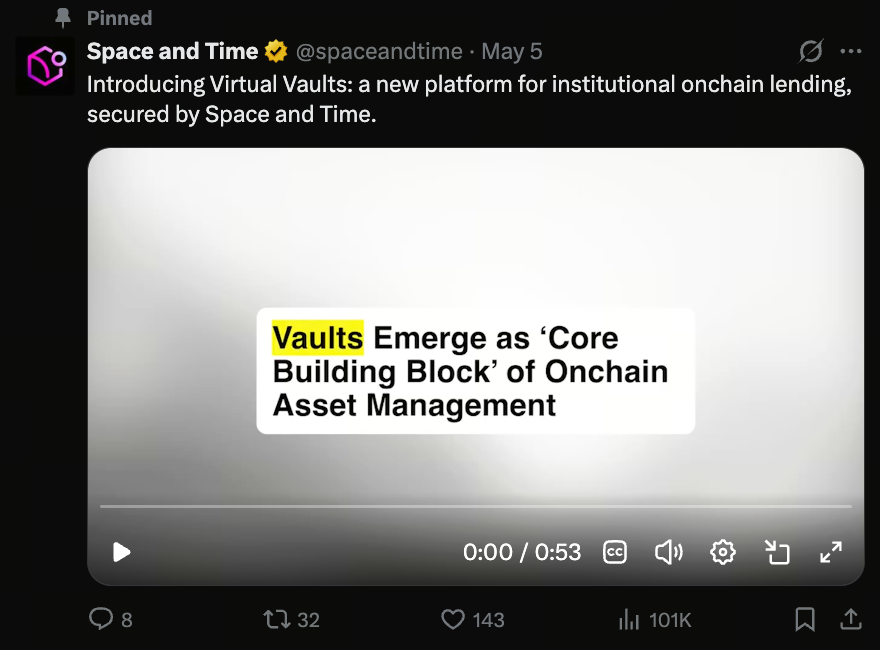
إلى جانب خدمات البيانات، أطلقت Space and Time مؤخرًا الخزائن الافتراضية، ودخلت بذلك سوق الإقراض المؤسسي على السلسلة.
هذه الميزة تعالج سؤالًا جوهريًا في الإقراض المؤسسي: كيف يمكن للمُقرضين التحقق من حالة الضمانات الخاصة بالمقترض في الوقت الفعلي؟
العديد من منصات الإقراض المؤسسي اعتمدت سابقًا على:
- التقارير الدورية
- التدقيق المركزي
- مقاييس سداد بسيطة
لكن هذه الأساليب غالبًا لا تلتقط المخاطر في الوقت الفعلي بدقة.
كيف تعمل الخزائن الافتراضية على تحسين الإقراض على السلسلة؟
تتيح الخزائن الافتراضية من Space and Time للمُقرضين وضع شروط محددة، مثل:
- الأصول المؤهلة كضمان
- منصات التداول التي يجب مراقبتها
- متى يتم تفعيل تنبيهات المخاطر
- حدود نسبة الضمان
يتتبع النظام باستمرار مراكز الأصول الخاصة بالمقترض على السلسلة وخارجها، ويوفر بيانات في الوقت الفعلي عبر التحقق التشفيري.
يعني ذلك:
- شفافية أكبر – يستطيع المُقرضون رؤية ما إذا كانت الضمانات كافية بوضوح.
- تقليل عدم تناسق المعلومات – يرى كل من المُقرضين والمقترضين نفس البيانات.
- أنسب للمؤسسات الكبيرة – يمكن تنفيذ ضوابط مخاطر أكثر تفصيلاً.
لماذا يركز السوق المؤسسي على التحقق من البيانات على السلسلة؟
مع النمو السريع للأصول الواقعية (RWA) والتمويل على السلسلة، تتطلب المؤسسات موثوقية أعلى للبيانات.
ينطبق هذا بشكل خاص على مجالات مثل:
- الإقراض على السلسلة
- تمويل العملات المستقرة
- ترميز الأصول
- DeFi المؤسسي
بدون مصادر بيانات قابلة للتحقق، يصبح بناء أسواق مالية واسعة النطاق أمرًا صعبًا.
تضع Space and Time نفسها كبنية تحتية بيانات موثوقة خلف هذه التطبيقات.
الشراكة بين Microsoft وSpace and Time
تلقت Space and Time استثمارًا من M12، ذراع رأس المال المخاطر لـ Microsoft، واندمجت مع Microsoft Fabric – منصة البيانات الذكية من Microsoft للتحليلات المؤسسية وإدارة البيانات السحابية. من خلال هذه الشراكة، تهدف Space and Time إلى مساعدة المؤسسات على دمج بيانات البلوكشين بسهولة أكبر في أنظمتها الحالية. بالإضافة إلى ذلك، تواصل SXT توسيع حالات الاستخدام التعليمية والمؤسسية، مثل العمل مع شركات في جنوب شرق آسيا لتخزين شهادات إتمام الدورات على السلسلة.
حالات استخدام رمز SXT
SXT هو الرمز الأصلي للنظام البيئي لـ Space and Time، ويتم نشره حاليًا على شبكات Ethereum وBase وشبكات بلوكشين أخرى.
حالات استخدام الرمز تشمل:
- دفع رسوم استعلام البيانات
- التحقق من الشبكة والأمان
- حوافز النظام البيئي
- التفاعل مع البروتوكول
مع تزايد الطلب على البيانات، يصبح SXT أصلًا تشغيليًا حيويًا داخل النظام البيئي.
خلاصة
التركيز الأساسي لـ Space and Time هو حل مشكلة الثقة في البيانات في عالم ويب3. إنه ليس مجرد مشروع بلوكشين – بل هو أقرب إلى:
- بنية تحتية بيانات لامركزية
- طبقة حوسبة قابلة للتحقق
- شبكة بيانات مالية على السلسلة
من خلال تقنيات مثل Proof of SQL والخزائن الافتراضية، تهدف Space and Time إلى تمكين العقود الذكية من معالجة أكثر من مجرد معاملات الرموز – بل يمكنها أيضًا استخدام البيانات الواقعية وبيانات السلسلة بشكل آمن.
مع دخول المؤسسات إلى سوق التمويل على السلسلة، قد تصبح أنظمة البيانات القابلة للتحقق مثل هذه حجر الزاوية في البنية التحتية المالية لويب3.