Contexto de Mercado e Relevância: A DeFi entrou numa era de paralelismo entre cadeias, em que redes como a Ethereum, as Layer 2, a BNB Chain, a Solana e a Sui formam bolsas de liquidez isoladas. Para executar uma única estratégia completa, os utilizadores precisam frequentemente de fazer bridging de ativos, alternar entre bolsas e gerir várias carteiras — o que aumenta custos, derrapagem e provoca atrasos na execução. O valor técnico da Yei Finance reside na tentativa de elevar a "circulação de ativos" a uma "orquestração unificada de liquidez", transformando as operações entre cadeias de um processo moroso a nível front-end numa capacidade central do sistema.
Valor Alargado na Ótica da Blockchain e dos Ativos Digitais: Visto pela lente da evolução da infraestrutura, a Yei Finance não representa apenas uma atualização de um protocolo de empréstimos — assinala um percurso para a DeFi migrar de silos de protocolo isolados para um sistema operativo entre cadeias. A sua arquitetura consolida compensação, execução, roteamento e incentivos numa única lógica de rede, e estende-se a cadeias adicionais através de uma camada de mensagens e módulos Vault, oferecendo uma nova base técnica para a eficiência de capital on-chain, a composabilidade e as finanças programáveis.
Arquitetura técnica central da Yei Finance explicada
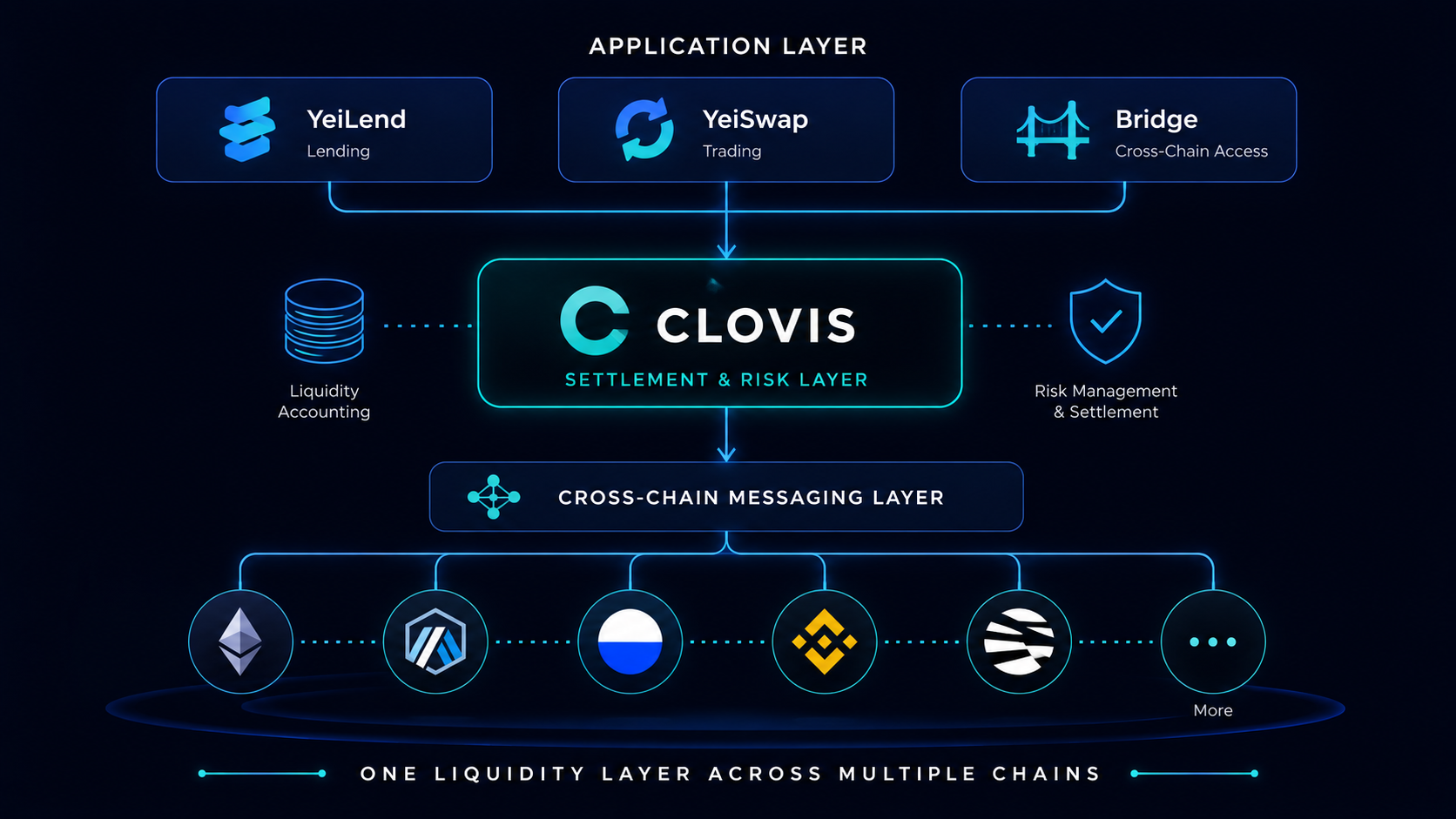
A arquitetura técnica da Yei Finance divide-se em três camadas: a Camada de Aplicação, a Camada de Compensação e a Camada de Comunicação entre Cadeias.
A Camada de Aplicação inclui o YeiLend (empréstimos), o YeiSwap (negociação) e a Bridge/Transport (gateways entre cadeias). A Camada de Compensação é gerida pelo Clovis, que trata da contabilidade global de capital, dos parâmetros de risco e da coordenação da liquidação. A Camada de Comunicação entre Cadeias sincroniza o estado e encaminha ativos através de protocolos de mensagens de terceiros.
A ideia-chave por detrás deste design em camadas é que a Yei Finance não reimplementa cada cadeia como um sistema autónomo. Em vez disso, trata cada cadeia como um nodo de execução dentro de uma rede unificada. Os ativos permanecem sob custódia e interagem localmente, enquanto a lógica de risco e liquidação é tratada a um nível superior e global.
Do ponto de vista da engenharia, este modelo oferece dois benefícios centrais: primeiro, reduz a fragmentação da liquidez entre cadeias; segundo, transforma a adição de novas cadeias num exercício de expansão modular, em vez de uma reconstrução completa do protocolo.
Com base em atualizações públicas recentes, após o CLO ter concluído o seu TGE em outubro de 2025, o Clovis entrou numa fase de expansão entre cadeias. O roadmap prioriza a ligação das principais redes EVM, permitindo empréstimos e coordenação DEX entre cadeias, e expandindo-se eventualmente para ecossistemas não EVM. Esta trajetória mostra claramente que o objetivo da arquitetura não é ser apenas mais uma ferramenta de bridging, mas servir como sistema primário de liquidez entre cadeias.
O que é a Abstração de Liquidez?
A Abstração de Liquidez separa fundamentalmente a questão de "em que cadeia está o capital" da questão de "para que estratégia é usado o capital".
No modelo tradicional, os utilizadores têm primeiro de transferir manualmente ativos para uma cadeia de destino e depois aceder a um protocolo de destino. No modelo de abstração, os utilizadores fornecem capital e o protocolo trata autonomamente do roteamento, da execução e da liquidação com base no estado global.
Pense nisto como a versão DeFi da "virtualização de recursos":
- Os utilizadores veem uma interface de capital única e unificada.
- O protocolo gere internamente os caminhos entre cadeias e as sequências de execução.
- O resultado é uma maior utilização do capital e um atrito operacional significativamente menor.
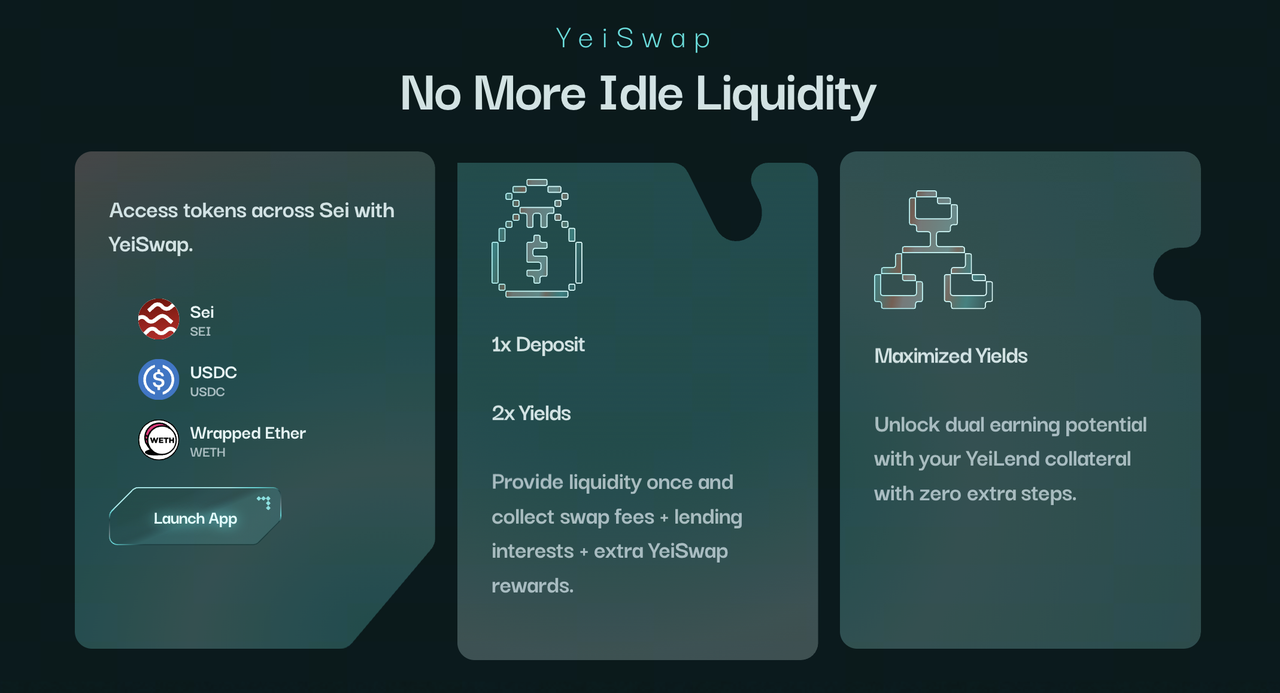
O slogan da Yei Finance, "Depositar uma vez, ganhar em todo o lado", é a materialização deste mecanismo. Um único depósito pode gerar rendimento de múltiplas fontes — juros de empréstimos, taxas de negociação e incentivos de roteamento entre cadeias acumulados.
Esta abordagem é especialmente valiosa para players institucionais e utilizadores de estratégias de alta frequência num mundo multi-cadeia. Estes priorizam a eficiência da rotação de capital e as taxas de conclusão de estratégias em detrimento da gestão manual das complexidades das transferências entre cadeias.
Como o Clovis Unifica a Liquidez Multi-Cadeia
A lógica unificadora do Clovis assenta numa Camada de Compensação Global combinada com Vaults Leves.
Os Vaults Leves são implementados em cada cadeia ligada para lidar com receções e envios locais de ativos, registo de posições e interfaces de execução. A Camada de Compensação Global gere o livro-razão global entre cadeias, a verificação de risco e a liquidação. Quando estes componentes funcionam em conjunto, o capital que antes estava disperso pelas Cadeias A, B e C pode ser tratado como uma única bolsa disponível para distribuição.
O valor técnico deste modelo reside no seu paradigma de "execução local, liquidação global":
- A execução local garante que cada cadeia mantém a liquidez nativa e a compatibilidade com o ecossistema.
- A liquidação global garante que as estratégias não são interrompidas pelas fronteiras entre cadeias.
O Clovis não consolida fisicamente a liquidez numa única cadeia. Em vez disso, unifica a liquidez num sentido económico através da sua camada de compensação.
Esta é uma distinção crucial face aos agregadores tradicionais entre cadeias, que otimizam principalmente os caminhos de execução de negociações. O Clovis, por seu lado, visa reestruturar a forma como o capital é organizado e implantado.
Como Funcionam em Conjunto os Empréstimos, a Negociação e o Bridging entre Cadeias
No ecossistema Yei Finance, os empréstimos, a negociação e o bridging não são ferramentas paralelas e separadas — formam um fluxo contínuo. Uma cadeia de coordenação típica é a seguinte:
- Um utilizador deposita ativos através de um Vault em qualquer cadeia suportada.
- A camada de compensação identifica a melhor utilização desses ativos e aloca-os a uma bolsa de empréstimos ou a uma bolsa de negociação.
- Quando é necessária uma ação entre cadeias, o sistema aciona os módulos de mensagens e roteamento para atualizar o estado.
- Os dados de rendimento e risco são enviados de volta à camada de compensação, que atualiza as posições globais.
Este modelo produz três resultados principais:
- Maior reutilização de capital: A mesma liquidez pode participar em múltiplos cenários de geração de rendimento.
- Menor interrupção de estratégia: As ações entre cadeias são incorporadas no processo, não sendo acrescentadas como passos extra.
- Limites de risco mais claros: Os parâmetros de risco são geridos centralmente, não dispersos por múltiplos protocolos.
Da perspetiva do utilizador, a complexidade é remetida para a camada do protocolo. Da perspetiva do sistema, os verdadeiros desafios estão na consistência do estado entre cadeias e nos mecanismos de recuperação de exceções — ambos determinam se o protocolo se mantém estável em condições de alta volatilidade.
O Papel da Wormhole e da LayerZero no Ecossistema
A Wormhole e a LayerZero servem essencialmente como a espinha dorsal de mensagens entre cadeias e interoperabilidade do ecossistema Yei Finance.
Não são meros canais de transferência. O seu papel mais crítico é permitir que diferentes cadeias sincronizem intenções de execução, estados de ativos e resultados de liquidação — fornecendo a infraestrutura de comunicação para a lógica de compensação global do Clovis.
Arquiteturalmente, estes protocolos são normalmente usados para:
- Desencadear ações entre cadeias e confirmar recibos de eventos.
- Transmitir o estado das contas, alterações de posição e resultados de execução de estratégias.
- Atuar como pontes de mensagens de confiança entre cadeias distintas, reduzindo o risco de fragmentação do ecossistema.
Usar múltiplas camadas de mensagens em conjunto oferece maior redundância e flexibilidade, mas também aumenta a complexidade de engenharia — abrangendo a ordenação de mensagens, tentativas de falha e o tratamento de diferenças nas garantias de confirmação on-chain.
Se a Yei Finance vier a desenvolver as suas próprias capacidades de camada de mensagens, o objetivo central não será substituir os protocolos existentes, mas melhorar o determinismo e a controlabilidade das liquidações entre cadeias.
Como a Yei Finance se Diferencia das Pontes entre Cadeias Tradicionais
A missão central de uma ponte entre cadeias tradicional é "mover ativos da Cadeia A para a Cadeia B".
O objetivo da Yei Finance é "permitir que os ativos continuem a operar eficientemente dentro de um sistema unificado após a travessia entre cadeias". A diferença nos limites de capacidade é fundamental.
Eis uma comparação em quatro dimensões:
- Função: As pontes tradicionais focam-se na transferência; a Yei Finance foca-se na compensação unificada e na distribuição de capital.
- Retenção de valor: Após uma transferência por ponte tradicional, o valor sai do sistema; a Yei Finance mantém o valor em circulação dentro do protocolo.
- Eficiência de capital: As pontes tradicionais exigem que os utilizadores reimplantem o capital uma segunda vez; a Yei Finance reduz movimentos redundantes através de uma camada de abstração.
- Forma de produto: Uma ponte tradicional é uma solução pontual; a Yei Finance funciona como um sistema operativo DeFi entre cadeias.
Assim, a Yei Finance e as pontes não são substitutas, mas ocupam camadas diferentes: as pontes resolvem "se é possível fazer a travessia de ativos", enquanto a camada de compensação resolve "como trabalhar eficientemente após a travessia".
Desafios Enfrentados pelos Protocolos de Liquidez entre Cadeias
Mesmo com uma visão arquitetural clara, os protocolos de liquidez entre cadeias têm de ultrapassar obstáculos técnicos e de mercado significativos:
- 1) Riscos de segurança entre cadeias: A combinação de contratos multi-cadeia, protocolos de mensagens e módulos de roteamento expande consideravelmente a superfície de ataque. Uma vulnerabilidade em qualquer camada pode propagar-se e afetar a liquidez global.
- 2) Problemas de consistência de estado: Diferentes cadeias têm tempos de confirmação, regras de finalidade e perfis de congestionamento distintos, o que pode causar atrasos em transações entre cadeias, cenários complexos de reversão ou inconsistências temporárias.
- 3) Equilíbrio entre profundidade de liquidez e custo: Para proporcionar experiências de baixa derrapagem, os protocolos precisam de bolsas de liquidez profundas. Mas incentivos elevados inflacionam os custos de crescimento e ameaçam a sustentabilidade a longo prazo.
- 4) Complexidade de governança e risco: Os parâmetros entre cadeias não são universais. A volatilidade dos ativos, a qualidade dos oráculos e a eficiência da liquidação variam muito entre cadeias, exigindo modelos de governança finamente calibrados.
- 5) Incerteza regulatória e de conformidade: As tendências transfronteiriças, multi-cadeia e semelhantes a derivados significam que as mudanças políticas podem impactar diretamente os canais de liquidez e a integração de utilizadores.
Estes desafios significam que a concorrência entre protocolos entre cadeias não é apenas sobre "velocidade de implementação de funcionalidades" — é um teste abrangente de capacidade de engenharia em segurança, eficiência e governança.
A Direção Futura da Tecnologia da Yei Finance
Com base nos roadmaps recentemente divulgados, a evolução técnica da Yei Finance deverá focar-se nas seguintes áreas:
Integração Aprofundada entre DEX e Empréstimos entre Cadeias
Integrar ainda mais as bolsas de negociação e de empréstimos para minimizar o capital inativo e melhorar a velocidade de transição entre posições.
Reforço das Capacidades da Camada de Mensagens
Continuando a usar a Wormhole e a LayerZero, a Yei Finance reforçará a sua própria coordenação de liquidação para melhorar a fiabilidade da confirmação entre cadeias e a recuperação de falhas.
Expansão para Ecossistemas Não EVM
A entrada em redes como a Solana e a Sui permitirá que a camada de compensação aceda a mais fontes de liquidez e fortaleça os efeitos de rede.
Automatização de Rendimento e Execução de Estratégias
Através de um motor de estratégias Vault, a plataforma permitirá uma maior configuração com um clique, tornando estratégias complexas entre cadeias acessíveis a um leque mais alargado de utilizadores.
Abertura de Interfaces para Programadores e Modularidade
Se o ecossistema SDK/API amadurecer, protocolos de terceiros poderão construir aplicações sobre o Clovis, avançando para um modelo de protocolo-como-plataforma.
Tecnicamente, o verdadeiro ponto de inflexão não será um único lançamento, mas a melhoria sustentada em métricas-chave: volume de negociação entre cadeias, utilização de empréstimos, taxas de sucesso de mensagens e eficiência de recuperação de exceções.
Conclusão
O coração da arquitetura técnica da Yei Finance é a camada de compensação Clovis, que transforma os empréstimos, a negociação e o bridging de ferramentas dispersas num sistema unificado de liquidez entre cadeias. A Abstração de Liquidez oferece aos utilizadores uma única interface de operação, enquanto o protocolo trata internamente do roteamento entre cadeias, da sincronização de estado e da liquidação de risco — impulsionando uma maior eficiência de capital e uma melhor execução de estratégias.
A Wormhole e a LayerZero fornecem a estrutura de comunicação essencial que torna possível a coordenação multi-cadeia. O fator diferenciador da Yei Finance, no entanto, é o seu foco não apenas na "transferência entre cadeias", mas na "eficiência contínua após a transferência".
À medida que a DeFi multi-cadeia entra numa fase de construção de infraestrutura, a capacidade de equilibrar segurança, finalidade de liquidação e eficiência de governança determinará se a Yei Finance pode evoluir de um projeto orientado por narrativa para uma rede de liquidez entre cadeias fiável e duradoura.