Blockchain was originally built around “complete transparency” as a core feature, enabling all transactions and data to be publicly verified and creating a trustless system. However, as DeFi, on-chain finance, and institutional involvement have expanded, the limitations of this transparency have become increasingly apparent.
In traditional financial systems, privacy protection is essential. Whether for personal assets, trading strategies, or corporate data, full public disclosure is not feasible. As blockchain takes on more complex economic activity, privacy shifts from an optional feature to a fundamental requirement. This has led to the emergence of diverse privacy solutions, each following its own technical path.
Industry Positioning and Significance of the Three Privacy Solutions: Zcash, Tornado Cash, and Aztec
Mainstream blockchain privacy solutions fall into three categories: privacy public chains like Zcash, mixing protocols like Tornado Cash, and privacy Layer2 solutions like Aztec.
Each approach aligns with a distinct stage of development and set of objectives. Privacy public chains overhaul transaction models from the base layer, mixing protocols add privacy features to existing chains, and privacy Layer2 solutions deliver privacy capabilities to the ecosystem without modifying the main chain.
This segmentation highlights not only technical differences, but also the growing demand for privacy in the industry. Privacy technology is evolving—from “anonymous transfers” to “privacy applications” and onward to “programmable privacy infrastructure”—toward a systematic and platform-level approach.
Core Differences: Comparing Zcash, Tornado Cash, and Aztec Privacy Paths
Architecturally, Zcash, Tornado Cash, and Aztec start from fundamentally different design philosophies. Zcash, as an independent public chain, is focused on building a cryptocurrency system with anonymous transactions. Tornado Cash is a tool protocol deployed on Ethereum, using pooled funds to achieve privacy. Aztec introduces zero-knowledge proofs at Layer2, extending privacy to the Smart Contract layer.
Functionally, Zcash specializes in payment privacy for untraceable transfers. Tornado Cash prioritizes “de-linking” by breaking the traceability of funds. Aztec supports not only private transfers, but also private DeFi, private identity, and complex on-chain logic.
Technically, all three leverage zero-knowledge proofs, but in distinct ways. Zcash integrates zkSNARK deeply into its protocol layer, Tornado Cash uses it for deposit and withdrawal verification, and Aztec expands it for general computational proofs, enabling programmable privacy.
Architecture and Capabilities: Zcash, Tornado Cash, and Aztec Compared
| Comparison Dimension |
Aztec |
Zcash |
Tornado Cash |
| Type |
Privacy Layer2 (zkRollup) |
Privacy Public Chain |
Mixing Protocol |
| Architecture Layer |
Ethereum Layer2 |
Independent Network |
Ethereum Application Layer |
| Privacy Implementation |
Default privacy + optional disclosure |
Optional privacy addresses |
Mixing breaks association |
| Technical Core |
zkRollup + zkSNARK |
zkSNARK |
zkSNARK + Mixer |
| Functional Scope |
Private Smart Contracts / DeFi / Identity |
Anonymous payments |
Private transfers |
| Programmability |
High |
Low |
Extremely low |
| Compliance Capability |
Strong (proof support) |
Medium |
Weak |
| Usage Complexity |
Medium |
Medium |
Low |
| Long-term Positioning |
Privacy infrastructure |
Privacy currency |
Tool protocol |
The comparison reveals Aztec’s broader capabilities—it not only hides transactions, but also empowers developers to build robust privacy applications. Zcash and Tornado Cash are more focused on single-function solutions.
Compliance and Regulatory Perspectives: Zcash, Tornado Cash, and Aztec
Privacy technology development is closely tied to regulatory challenges. Tornado Cash, due to its total anonymity and lack of controls, faces intense regulatory scrutiny. Zcash offers transparent address options but remains heavily privacy-oriented.
Aztec, by contrast, incorporates “selective disclosure,” enabling users to prove transaction or asset information as needed. This design makes it more institution-friendly and opens pathways for privacy technology in regulated financial systems.
Looking forward, privacy solutions will emphasize “verifiable privacy” rather than absolute anonymity.
Privacy Technology Evolution
Historically, these three solutions represent three stages of privacy technology. Zcash embodies early exploration of anonymous payments, Tornado Cash introduced privacy tools into public chain ecosystems, and Aztec has advanced into privacy infrastructure.
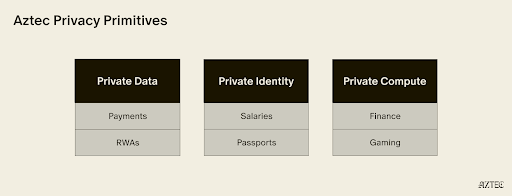
This progression shows privacy moving from a single feature to an integral part of blockchain architecture. Future Web3 applications are likely to have built-in privacy capabilities rather than relying on external tools.
Summary
Aztec, Zcash, and Tornado Cash each represent a distinct path for blockchain privacy, differing in technical implementation, strategic positioning, and development trajectory.
Zcash delivers privacy currency, Tornado Cash offers privacy tools, and Aztec seeks to build a comprehensive privacy computing platform. As applications become more complex, privacy infrastructure with programmability will offer greater growth potential.
Aztec’s approach is likely to define the next phase of blockchain privacy evolution.
FAQs
What is the core difference between Aztec and Zcash?
Aztec is a privacy Layer2 solution built on Ethereum, supporting Smart Contracts and application development. Zcash is an independent public chain focused on anonymous transfers. Their functional scopes are significantly different.
Is Tornado Cash still available?
Tornado Cash, as a Smart Contract, remains on-chain, but its use is subject to varying regulatory restrictions across jurisdictions. Users should assess risks independently.
Do all three use zero-knowledge proofs?
Yes, all three utilize zkSNARK technology, but their applications differ. Zcash uses it for private transactions, Tornado Cash for deposit and withdrawal verification, and Aztec for general computational proofs.
Which privacy solution is best for DeFi?
Aztec is best suited for DeFi, as it supports programmable privacy Smart Contracts. Zcash and Tornado Cash are limited in this area.
Does privacy reduce blockchain transparency?
Privacy solutions generally decrease data visibility, but zero-knowledge proofs enable verifiability without exposing data. This is the central direction of current privacy technology.







