Alien Worlds is a decentralized metaverse game system built on blockchain, with its core structure comprising Planet DAO, an NFT asset system, and the Trilium (TLM) tokenomics model. By converting in-game actions into on-chain verifiable economic activities, the project enables players' operations on virtual planets to directly influence resource distribution and Rendite structures, thereby creating a continuous Play-to-Earn ecosystem.
From a technological and industry evolution standpoint, the core value of Alien Worlds lies in its pioneering exploration of decentralized game governance. Unlike traditional blockchain games that rely on centralized servers to control the economy, Alien Worlds anchors its rules on-chain via DAOs and NFTs, distributing governance authority and economic rewards directly to players. This approach held substantial experimental significance during GameFi's early stages, establishing a foundational reference for later blockchain game economic models.
Within the convergence of Web3 and the Metaverse, Alien Worlds exemplifies an "on-chain economic simulator." By integrating NFT assets, DAO governance, and token incentives, it builds a user behavior-driven virtual economy. This design fundamentally redefines asset ownership in gaming while making the governance logic of virtual worlds programmable and scalable.
What Is Planet DAO
Planet DAO is the central governance unit in the Alien Worlds ecosystem. Each planet operates an independent DAO structure to oversee resource allocation, reward mechanisms, and ecological development.
In this system, planets compete for resources and influence. Players earn voting rights by engaging in a planet's governance, allowing them to shape its economic parameters. Planet DAO effectively converts "server-side rules" into on-chain governance, ensuring game rules are determined by the community rather than solely by developers.
This design positions Alien Worlds as one of the few early projects to embed DAO as a core gameplay mechanic, laying the experimental groundwork for later GameFi governance models.
How Players Mine Trilium through NFTs
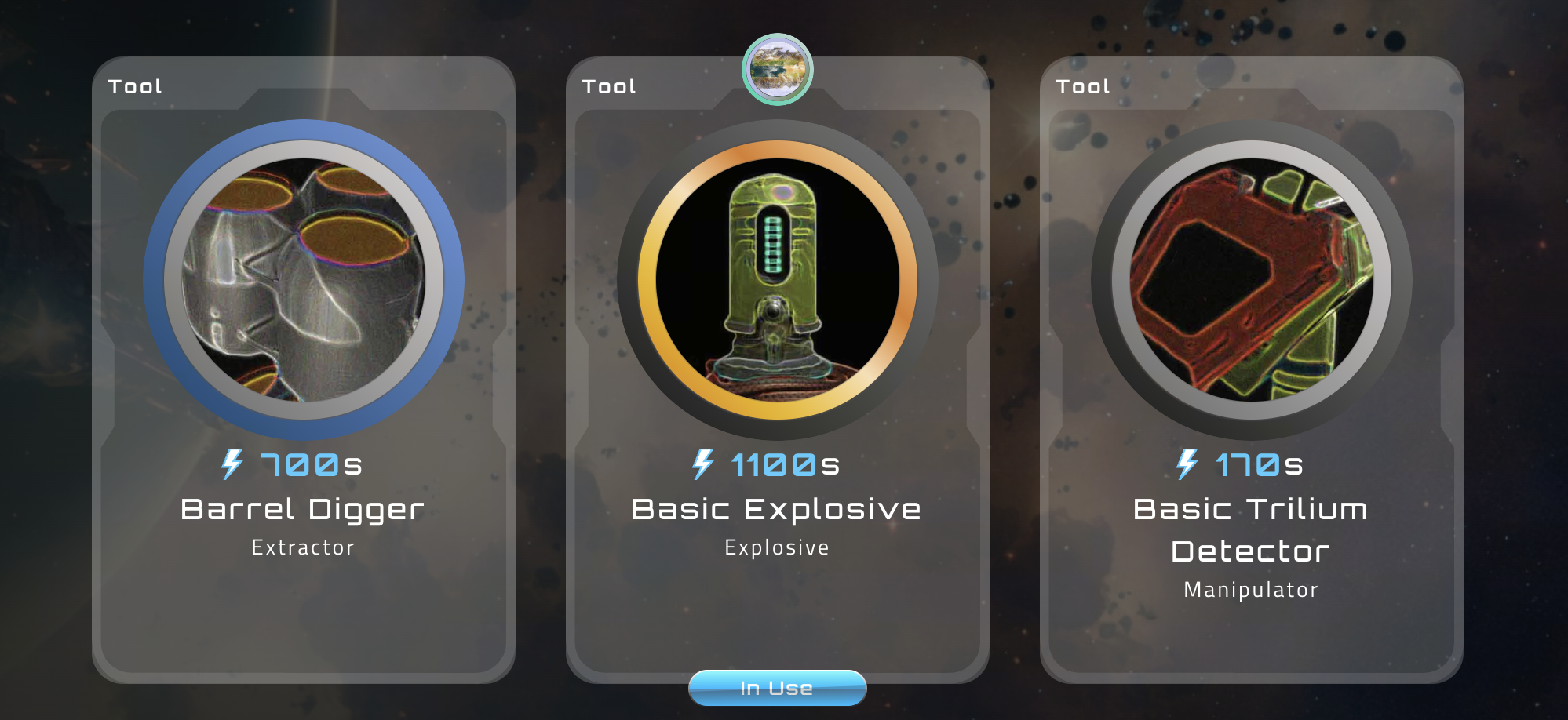
In Alien Worlds, players use NFT tools to mine and earn Trilium (TLM) rewards. Here, NFTs function as "hashrate tools," with their attributes directly influencing mining efficiency.
Each NFT comes with unique Mining Power, Cooldown time, and rarity parameters, which together determine the TLM output per unit of time.
In practice, players select a planet, then use their NFT tools to mine. The system calculates rewards based on NFT attributes and planet-specific parameters, establishing an on-chain model of "action + asset weight = yield."
How Does the Land System Work in Alien Worlds
Land serves as a critical resource unit in the Alien Worlds economy—it is both an NFT type and a direct influencer of a planet's resource production capacity.
Each Land NFT carries independent parameters—resource type, mining efficiency bonus, and reward distribution ratio—that shape the mining rewards for players in that area, creating localized economic variation.
Landowners can optimize their returns by adjusting parameters or engaging in governance, positioning land as a critical link between DAO governance and economic output.
What Types of NFTs Are There in the Game
Alien Worlds NFTs fall into three main categories: Tool NFTs, Character NFTs, and Land NFTs.
Tool NFTs facilitate mining and task completion—the foundational yield instruments. Character NFTs boost combat performance, enhancing players' PvP capabilities. Land NFTs govern resource production efficiency and rank among the ecosystem's most enduringly valuable assets.
Different NFTs can create synergy effects, enabling players to strategically optimize their overall returns through careful asset allocation.
How Does Planet DAO Achieve Community Governance
Planet DAO's governance mechanism relies on TLM staking and NFT weight calculations. By staking TLM, players earn voting rights to participate in planetary governance decisions.
Key governance decisions encompass adjusting resource allocation ratios, refining reward mechanisms, and updating ecological parameters. This imparts dynamic adaptability to the game economy, moving beyond static rule sets.
Over time, Planet DAO functions as an on-chain economic regulator, channeling community behavior to shape resource allocation and sustain ecological equilibrium.
How Is Alien Worlds Different from Traditional Blockchain Games
Unlike conventional blockchain games, Alien Worlds prioritizes an "economy-first" design logic over gameplay-driven mechanics.
While traditional blockchain games often prioritize player experience, combat systems, or social interaction, Alien Worlds resembles an "automated economic simulation system" designed primarily to test the sustainability of token incentives and NFT resource distribution.
Additionally, Alien Worlds' governance is fully DAO-based rather than server-centric, ensuring greater rule transparency and community participation.
What Challenges Do GameFi Projects Face
GameFi projects commonly confront three major challenges: weak economic model sustainability, inconsistent user retention, and token inflation.
As an early entrant, Alien Worlds shares these vulnerabilities. Its reward system depends on continuous user growth and market momentum; during downturns, token demand may wane.
Moreover, GameFi projects often struggle with a structural issue: users are driven by incentives rather than content, undermining long-term ecosystem stability.
Future Ecological Development Direction of Alien Worlds
Alien Worlds' future development may center on three fronts: first, refining DAO governance to boost efficiency and participation quality; second, expanding NFT utility to unlock greater combinability and strategic depth; third, pursuing cross-chain and multi-ecosystem interoperability to increase asset liquidity.
Looking at industry trends, as Web3 gaming infrastructure matures, Alien Worlds could transition from an early experimental blockchain game into a more sophisticated economic simulation, simultaneously improving user experience and system scalability.
Summary
Alien Worlds constructs an early decentralized GameFi economic model using Planet DAO, NFTs, and TLM mining. Its core value is converting player actions into on-chain economic activity and enabling community-driven governance and resource allocation via DAOs. While the model still has inherent limitations, its experimental significance and structural reference value remain important in GameFi history.
Author: Max
Disclaimer
* The information is not intended to be and does not constitute financial advice or any other recommendation of any sort offered or endorsed by Gate.
* This article may not be reproduced, transmitted or copied without referencing Gate. Contravention is an infringement of Copyright Act and may be subject to legal action.
What are the top NFT data platforms? This article highlights ten leading NFT data platforms, listing their key features so you can choose the right one for NFT analysis based on your needs.
Solana faces both opportunities and challenges in its development. Recently, severe network congestion has led to a high transaction failure rate and increased fees. Consequently, some have suggested using Layer 2 and appchain technologies to address this issue. This article explores the feasibility of this strategy.
Sui is a PoS L1 blockchain with a novel architecture whose object-centric model enables parallelization of transactions through verifier level scaling. In this research paper the unique features of the Sui blockchain will be introduced, the economic prospects of SUI tokens will be presented, and it will be explained how investors can learn about which dApps are driving the use of the chain through the Sui application campaign.
This article introduces the technical principles, framework, and applications of Zero-Knowledge (ZK) technology, covering aspects from privacy, identity (ID), decentralized exchanges (DEX), to oracles.