Against the backdrop of the digital transformation of global financial markets, blockchain technology is progressively changing the ways in which assets are issued, circulated, and managed. Tokenized stocks, as one of the important applications of real-world assets (RWA), are becoming a key bridge connecting traditional finance and on-chain finance. With the continued entry of institutional capital into the market, the gradual refinement of regulatory frameworks, and the rapid development of on-chain infrastructure, tokenized stocks are moving from conceptual exploration toward practical application. This course will guide participants through an in-depth understanding of the development background and operating mechanisms of tokenized stocks, as well as their potential roles and impacts in future financial markets.
As the digital asset market continues to grow, more and more crypto investors are beginning to pay attention to the stock market, particularly the U.S. stock market, which is dominated by AI, technological innovation, and global leading companies. Moving from crypto assets to stock investing is not about entering a completely unfamiliar territory, but rather an expansion of one's asset allocation perspective.
This course, viewed from the perspective of crypto investors, introduces the basic operational logic, investment methods, and risk management of the U.S. stock market. Combined with Gate Stocks trading, it helps users understand how to participate in global stock markets and gradually establish a multi-asset investment framework.
As the digital asset market continues to evolve, the boundaries between crypto assets and traditional financial markets are gradually being broken down. In the past, investors often needed to manage cryptocurrency accounts and securities accounts separately in order to participate in investment opportunities across different markets. Today, however, as trading platforms continue to expand their product capabilities, users are beginning to access global asset markets in a more integrated and efficient manner.
The launch of Gate Stocks further bridges crypto assets and the U.S. stock market, enabling users to directly trade U.S. stocks and ETFs using USDT. This course will guide learners through the product positioning of Gate Stocks, market access models, trading processes, account mechanisms, and future development directions, helping users build a comprehensive understanding of multi-asset allocation and cross-market investing.
Prediction markets express event probabilities through traded prices. Since the second half of 2025, trading volumes on platforms such as Kalshi and Polymarket have risen significantly, with sports, macroeconomics, and crypto topics becoming highly active segments. At the same time, the CFTC is advancing event contract rules, while federal-state regulatory jurisdictional disputes continue—"popular" and "credible" should not be treated as synonymous.
For crypto users, prediction markets serve both as event information dashboards and potential trading entry points. In March 2026, Gate integrated Polymarket, allowing users to participate in selected prediction markets using spot USDT. Gate for AI Agent, meanwhile, can integrate market data, news, and other capabilities into clients such as Cursor and Claude to help organize event background information. This course explains how to read probabilities, assess calibration, and judge information efficiency; Gate-related products appear only in the context of reading workflows and boundary illustrations. The entire content is for educational purposes only and does not constitute investment advice or gambling guidance.
This course starts from the development trends at the intersection of AI and finance, providing a systematic understanding of how intelligent investment systems are gradually transforming traditional asset allocation logic. As data scales expand, market structures grow more complex, and AI technology advances rapidly, financial markets are shifting from being "experience-driven" to "data- and model-driven." The course combines quantitative models, on-chain data, AI Agents, and intelligent trading ecosystems to deconstruct how AI is redefining investment research, risk management, and asset allocation processes. Through comprehensive framework learning, you will gain a deeper understanding of the future direction of financial systems and autonomous investment decision-making systems.
This course starts from the perspective of institutional capital flows, providing a systematic analysis of how traditional finance is gradually entering the crypto market and driving the evolution of the broader digital financial ecosystem. As ETFs, institutional custody, stablecoins, and on-chain financial infrastructure continue to mature, crypto assets are transitioning from the periphery of the market to becoming increasingly integrated into the global capital system. The course not only focuses on the logic behind institutional entry but also delves into multi-asset markets, on-chain liquidity, and the convergence trends with TradFi. Through comprehensive structured learning, you will gain a deeper understanding of the future direction of financial system digitization and on-chain transformation.
The U.S. stock and ETF markets are centered on fiat-denominated securities, with pricing and trade execution conducted through exchange matching during fixed trading sessions. Their regulatory frameworks, corporate actions, and disclosure logic differ significantly from the 24/7 cryptocurrency market. For users who primarily hold crypto assets over the long term, the securities market serves not only as an important reference for macro risk appetite but also as a potential extension for asset allocation. However, participating without understanding trading hours, instrument differences, and regulatory boundaries can lead to the misstep of "applying crypto trading habits to stock investing."
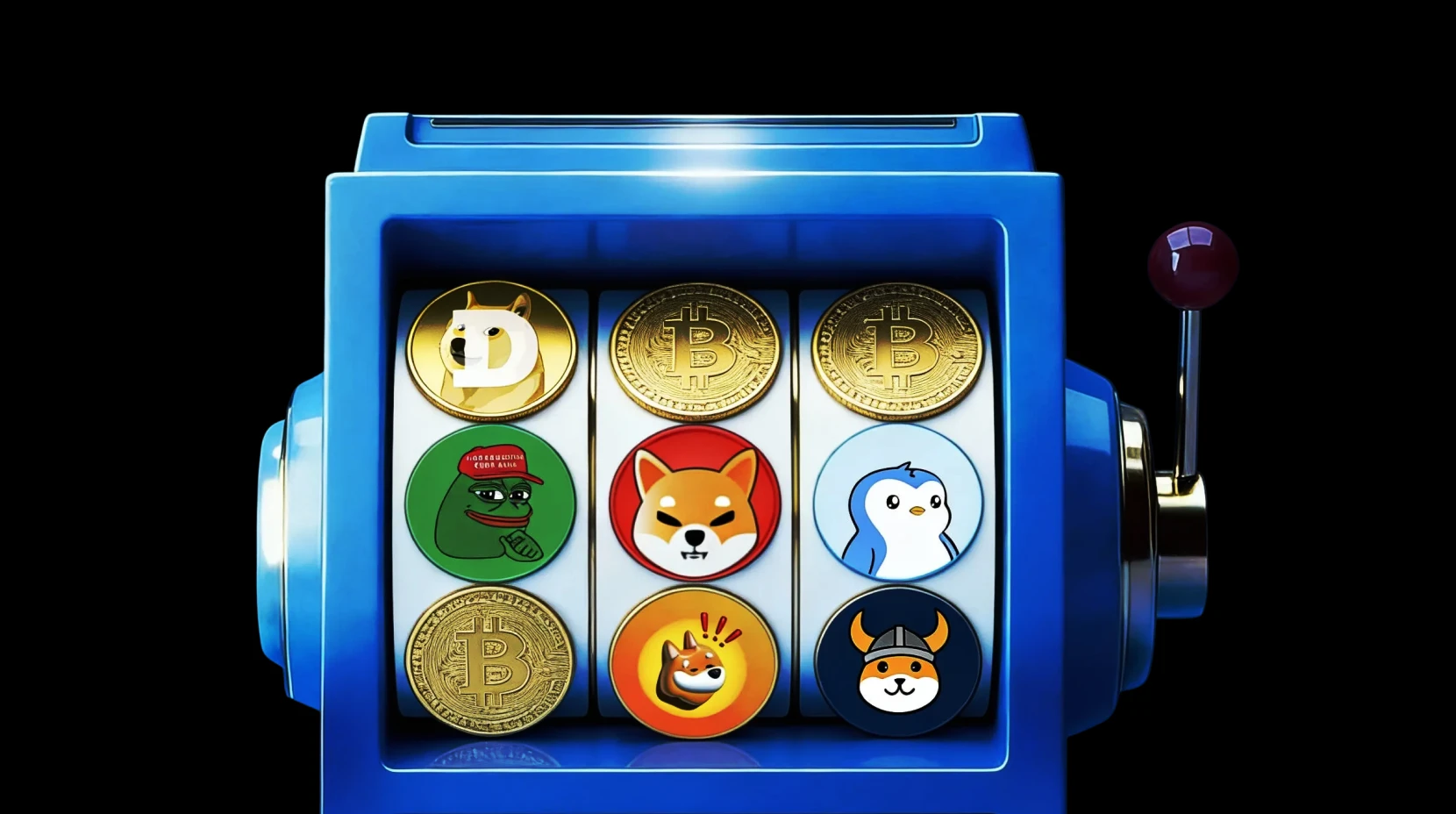
Meme coins have long been regarded as a market phenomenon characterized by high volatility and low barriers to entry. However, the dynamics behind them are not entirely random. This course systematically analyzes the operational mechanisms and risk boundaries of the meme coin market from three perspectives: emotional finance, on-chain behavior, and capital structure. The goal is to help learners develop a clearer framework for participating in the meme coin market.
As crypto and traditional finance increasingly converge, more users are turning their attention to traditional markets such as gold, forex, crude oil, and global indices. The goal of Gate TradFi is to enable users to conveniently access global multi-asset markets within a familiar crypto platform, while improving trading efficiency through a unified account and fund management system.
This course will start with the positioning of Gate TradFi, introducing its product structure, CFD mechanisms, multi-asset market logic, and real-world trading scenarios. It aims to help users build a foundational understanding of TradFi and grasp the future direction of multi-asset trading.
A Contract for Difference (CFD) enables participants to take directional exposure to currencies, precious metals, equity indices, commodities, and stocks without holding the underlying assets, with gains and losses settled in cash. Starting with "What Is a CFD?" the course clarifies how CFDs differ from spot and futures in typical retail contexts, then moves into trading mechanics and profit/loss sources, asset class coverage, margin, leverage, and forced liquidation rules, as well as fee structures such as spreads and overnight costs, along with execution factors like trading hours, liquidity, and cross-market correlations. It then zeroes in on risk management strategies and discipline before and after major events, using a case study to connect the full cycle from analysis and entry to stop-loss, exit, and post-trade review. The concluding module brings together the opportunities, costs, risks, and target audience, helping learners assess whether CFDs fit their personal objectives and constraints.
A crypto card connects digital assets in a payment account to global card clearing networks such as Visa and Mastercard, enabling cardholders to complete transactions at merchants using fiat currency as the pricing unit. Behind the scenes, the system automatically deducts assets and handles currency conversion. Compared to the “sell crypto first, then transfer funds” approach, this method reduces the steps involved in daily spending. However, it does not come without costs or volatility—spreads, FX conversion fees, cross-border charges, pending periods, settlement cycles, and the choice of which asset is debited all collectively determine the actual purchasing power.
This course will take a macro perspective to systematically explore how Real World Assets (RWA) are gradually entering the on-chain financial system and reshaping the structure and logic of the crypto market. With the development of blockchain technology, the financial system is moving from closed to open, and from single assets to multi-asset integration. The course not only focuses on technical implementation paths but also emphasizes key elements such as legal structures, liquidity, and capital allocation. Through phased analysis, you will understand how RWA serves as a critical bridge connecting traditional finance and the crypto world.
Artificial intelligence has entered areas such as information organization, strategy discussion, backtesting assistance, and automated execution within the crypto market. However, AI does not equate to a higher success rate: it may improve research efficiency, but it can also amplify hallucinations, outdated information, and operational risks. This course starts from the "trading workflow" to clarify which stages are suitable for AI, which decisions must retain human oversight, and how to establish a disciplined approach to review and audit AI usage. The course emphasizes capability boundaries and risk management, and does not provide trading signals or promises of returns.
As the crypto market gradually undergoes structural integration with the traditional financial system, "tokenized stocks" are transitioning from conceptual exploration to practical experimentation. Tokenized stocks do not merely represent a change in the form of trading U.S. stocks. They entail a systematic restructuring of asset issuance methods, trading hours, and market accessibility. They show the crypto world's genuine demand for compliant assets, and also highlight the inherent boundaries of on-chain finance in terms of law, custody, and rights mapping. Understanding tokenized stocks essentially means understanding how TradFi and Crypto compromise, reorganize, and coexist with each other.
Stablecoins are the closest thing to a "cash layer" in the crypto market: margin for trading, on-chain payments, DeFi collateral, and risk-off positioning all rely heavily on them. However, behind names like USDT, USDC, and DAI lie fundamentally different reserve structures, redemption paths, compliance boundaries, and failure modes. Treating all stablecoins as "one dollar" can lead to unexpected losses from de-pegging, freezes, cross-chain costs, or yield packaging. This course starts from a mechanistic classification, explaining how de-pegging and bank runs occur, how the true costs of holding and transferring accumulate, and how yield-bearing products stack risk beneath a stable facade—helping you establish selection criteria, diversification, and event-driven discipline, rather than simply chasing high yields.