По мере того как блокчейн-индустрия постепенно переходит от единой платежной сети к долгосрочной цифровой инфраструктуре, энергоэффективность, аппаратные барьеры и устойчивость сетей становятся ключевыми отраслевыми проблемами.
Bitcoin долгое время считался одной из самых защищенных криптовалютных сетей, однако его высокое энергопотребление и централизация ASIC вызывают активные споры. Chia, в свою очередь, пытается заменить непрерывную конкуренцию хэшрейта ресурсами хранения, сохраняя базовые принципы модели безопасности Bitcoin. Благодаря концепции «зеленого блокчейна» и низкоэнергетического механизма консенсуса эта сеть привлекла значительное внимание.
Chia и Bitcoin: краткий анализ
Chia — это блокчейн-сеть Уровня 1, созданная основателем BitTorrent Брэмом Коэном. Ее основной механизм — Proof of Space and Time (PoST). В отличие от традиционных сетей PoW, Chia не требует непрерывных вычислений на GPU или ASIC. Вместо этого пользователи предоставляют для валидации сети свободное место на жестких дисках. Необходимо заранее сгенерировать файлы Plot, а затем отправлять соответствующее доказательство, когда сеть выдает задание.
Bitcoin, запущенный Сатоши Накамото в 2009 году как децентрализованная цифровая валюта, стал первой блокчейн-системой, реализовавшей децентрализованный консенсус. Его основной механизм — Proof of Work (PoW). Майнеры конкурируют, затрачивая огромные вычислительные мощности для создания новых блоков и получения вознаграждения в BTC. Благодаря долгой и стабильной работе Bitcoin остается одной из самых защищенных сетей в блокчейн-индустрии.
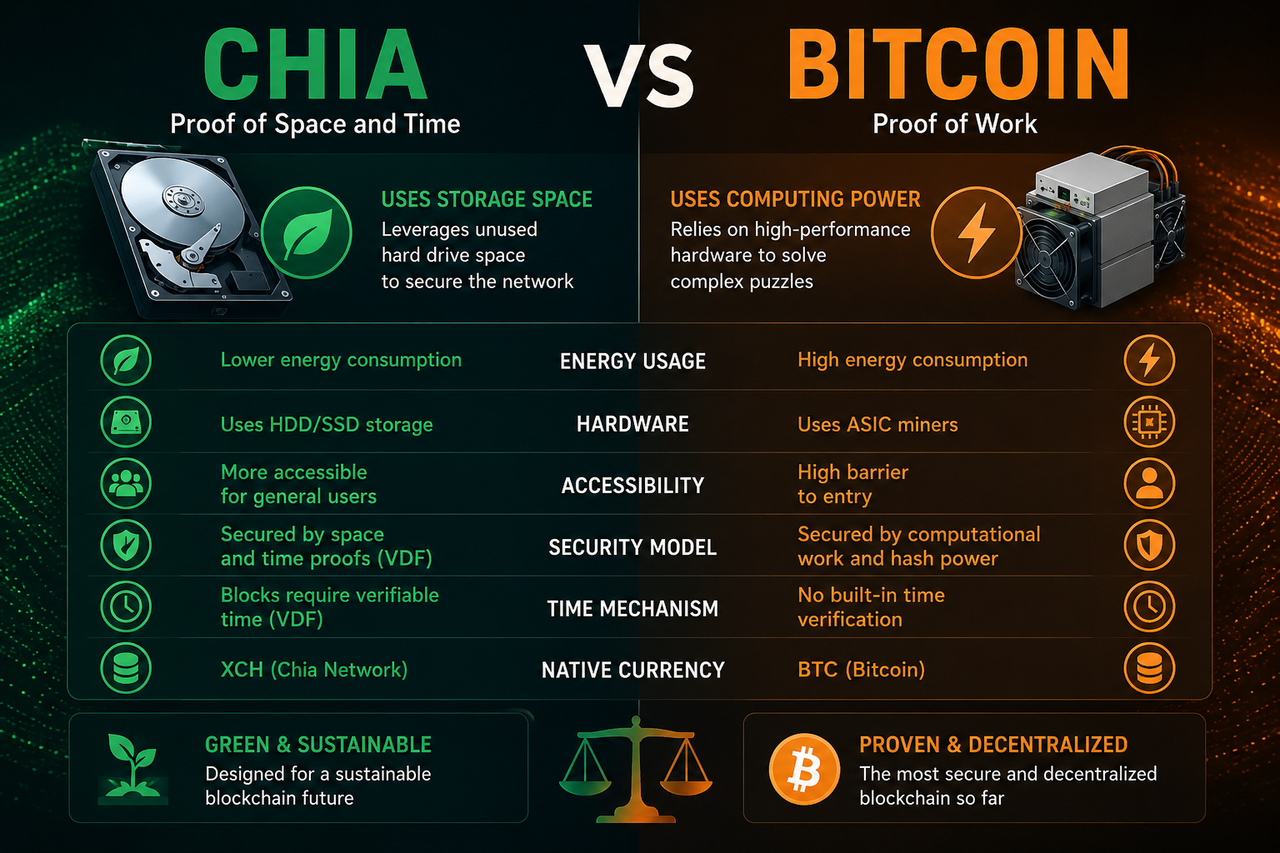
Основные различия: Proof of Space и Proof of Work
Ключевое различие между Proof of Space и Proof of Work заключается в ресурсах, обеспечивающих безопасность сети.
PoW в Bitcoin строится на непрерывной конкуренции хэшрейта. Майнеры постоянно вычисляют хэши, чтобы получить право на создание нового блока.
$SHA256(SHA256(Block\ Header)) < Target$
Proof of Space в Chia, напротив, опирается на предварительно записанные данные Plot. Узлы участвуют в решении задач с помощью дискового пространства, без постоянных высокочастотных вычислений.
$P(\text{win}) \propto \frac{\text{Farmer Space}}{\text{Total Network Space}}$
Простыми словами:
- Bitcoin потребляет «вычислительные ресурсы в реальном времени».
- Chia потребляет «долгосрочные ресурсы хранения».
Поэтому две сети существенно различаются по аппаратной архитектуре, энергетической модели и структуре затрат.
Почему разрыв в энергопотреблении между Chia и Bitcoin настолько велик
Майнинговые устройства Bitcoin должны работать с высоким энергопотреблением в течение длительного времени, из-за чего сети PoW расходуют огромные объемы электроэнергии.
ASIC-майнеры требуют не только непрерывных вычислений, но и дополнительных систем охлаждения, а также профессиональной инфраструктуры майнинговых ферм. Это главная причина, по которой энергопотребление Bitcoin часто подвергается критике.
В отличие от этого, фаза фарминга в Chia в основном связана с чтением жестких дисков, поэтому долгосрочное эксплуатационное энергопотребление здесь обычно ниже.
Однако Chia не полностью свободна от потребления ресурсов.
На этапе Plotting (создания плот-файлов) система выполняет интенсивную запись данных. В начале многие пользователи использовали высокопроизводительные SSD для генерации файлов Plot, что приводило к ускоренному износу некоторых накопителей.
Таким образом:
- Высокое потребление Bitcoin обусловлено в основном долгосрочной работой.
- Потребление ресурсов Chia в основном сосредоточено на начальном этапе Plotting.
Чем различаются модели безопасности Chia и Bitcoin?
Безопасность Bitcoin обеспечивается конкуренцией хэшрейта.
Для атаки 51% злоумышленник должен контролировать более половины мирового хэшрейта, что требует чрезвычайно высоких затрат на энергию и оборудование.
Безопасность Chia, с другой стороны, основана на пространстве хранения и доказательствах времени.
Помимо Proof of Space, Chia использует Proof of Time и функцию проверяемой задержки (Verifiable Delay Function, VDF), что гарантирует строгий хронологический порядок создания блоков.
Это означает, что даже если злоумышленник контролирует огромные ресурсы хранения, он не сможет быстро перестроить историю блоков с помощью параллельных вычислений.
Хотя модели безопасности различаются, обе сети следуют консенсусу Накамото, поддерживая согласованность через правило самой длинной цепочки.
В чем разница в токеномике между Chia и Bitcoin?
Токеномика Bitcoin относительно проста.
Общее предложение BTC фиксировано и составляет 21 млн монет, а вознаграждение за блок уменьшается вдвое через определенные промежутки времени (халвинг).
XCH в сети Chia также использует постепенно уменьшающуюся структуру вознаграждений, но одним из главных спорных моментов является Стратегический резерв.
Вскоре после запуска основной сети команда Chia предварительно сгенерировала большое количество XCH для корпоративных партнерств, развития экосистемы и долгосрочного финансирования.
Сторонники утверждают, что это помогает построить экосистему, тогда как критики считают, что это подрывает справедливость распределения токенов.
Таким образом, две сети существенно различаются с точки зрения философии «честного запуска».
Резюме
Chia и Bitcoin — это блокчейн-сети, основанные на консенсусе Накамото, но имеющие фундаментальные различия в механизмах консенсуса и структуре используемых ресурсов.
Bitcoin использует Proof of Work, поддерживая безопасность сети через непрерывную конкуренцию хэшрейта. Chia использует Proof of Space and Time, снижая энергопотребление за счет пространства хранения и временных доказательств.
PoW доказал свою безопасность в долгосрочной перспективе, но это сопряжено с высоким энергопотреблением и централизацией ASIC. PoST пытается применить низкоэнергетические ресурсы хранения для создания более устойчивой блокчейн-инфраструктуры.
Часто задаваемые вопросы
В чем самое большое различие между Chia и Bitcoin?
Bitcoin использует Proof of Work (PoW), а Chia — Proof of Space and Time (PoST).
Почему Bitcoin требуются ASIC-майнеры?
Потому что ASIC значительно эффективнее обычных GPU или CPU при вычислении хэша SHA-256.
Нужны ли Chia майнинговые устройства?
Chia не использует ASIC-майнеры; для фарминга обычно применяются HDD или SSD.
Менее ли безопасна Chia, чем Bitcoin?
Модель безопасности Bitcoin прошла более длительную проверку временем, в то время как Chia использует другую структуру proof-of-space-and-time. Прямое сравнение здесь некорректно.