The core difference between crypto as a “financial product” and as a “payment method” is regulatory purpose and legal duty structure. A payment-method frame treats digital assets as means of transfer and settlement, emphasizing AML, KYC, and payment-service registration. A financial-product frame treats them as investable assets that funds may hold, emphasizing disclosure, fair trading, insider-trading bans, and investor protection. Is crypto a financial asset? explains how those labels affect tax design, ETF access, and compliance duties.
On-chain tokens do not inherently say “payment” or “investment.” Classification is how lawmakers respond to use and risk. Bitcoin can move peer-to-peer or trade as an investment; stablecoins may involve both settlement and reserve management. Many jurisdictions therefore stop using one label for all digital assets and split rules by function, issuance, or trading context.
What Is Crypto Under a Payment-Method Frame?
In a payment-method frame, digital assets are usually defined as virtual or crypto assets usable for payment, transfer, or settlement. Goals center on payment-system stability, AML controls, and consumer protection. Japan’s Payment Services Act long placed crypto mainly here; Singapore’s MAS approach to Digital Payment Tokens follows a similar logic.
Typical duties include registration or licensing of service providers, KYC/AML, client-asset segregation, and risk disclosure. The frame does not naturally require continuous financial reporting by issuers, nor default securities-style insider-trading rules. When assets are used mainly for investment trading or fund holdings, payment law alone may under-cover investor-protection needs.
What Is Crypto Under a Financial-Product Frame?
In a financial-product frame, digital assets sit closer to stocks, bonds, and investment trusts—or at least under parts of securities / financial-instruments law. The goal expands from “payment safety” to “capital-market fairness and transparency.” Japan’s move into the Financial Instruments and Exchange Act (FIEA) is one example; the U.S. SEC often reviews token offers and trading under securities logic.
Typical duties include higher disclosure, market-abuse controls, suitability management, and a legal basis for funds/ETFs to hold digital assets. Being a financial product is not automatic identity as a “security,” but trading sits closer to capital-market rules.
Countries recognizing crypto as financial assets surveys how Japan, the EU, the United States, and other markets write digital assets into financial-product or securities systems—and how drafting techniques differ.
Core Differences at a Glance
| Dimension |
Payment-method frame |
Financial-product frame |
| Regulatory goal |
Payment safety, AML, consumer protection |
Market fairness, disclosure, investor protection |
| Typical laws |
Payment services / funds settlement acts |
Financial instruments / securities laws |
| Core duties |
Venue registration, KYC/AML, asset segregation |
Disclosure, insider-trading rules, suitability |
| Issuer disclosure |
Relatively limited; service/risk notices |
Continuous disclosure; higher material-event duties |
| Tax design |
Often ordinary/miscellaneous income |
Closer to capital gains or separate taxation |
| ETF access |
Usually not a direct fund-holding basis |
Category precondition for spot crypto ETFs |
| Typical scenes |
Transfers, settlement, payment stablecoins |
Exchange investing, fund allocation, public offers |
| Main risks |
Money laundering, custody misuse, payment outages |
Incomplete disclosure, manipulation, mis-selling |
The same token can trigger different rules by scene—daily payments vs exchange trading. Some stablecoins face dual review because they combine payment and reserve-investment features.
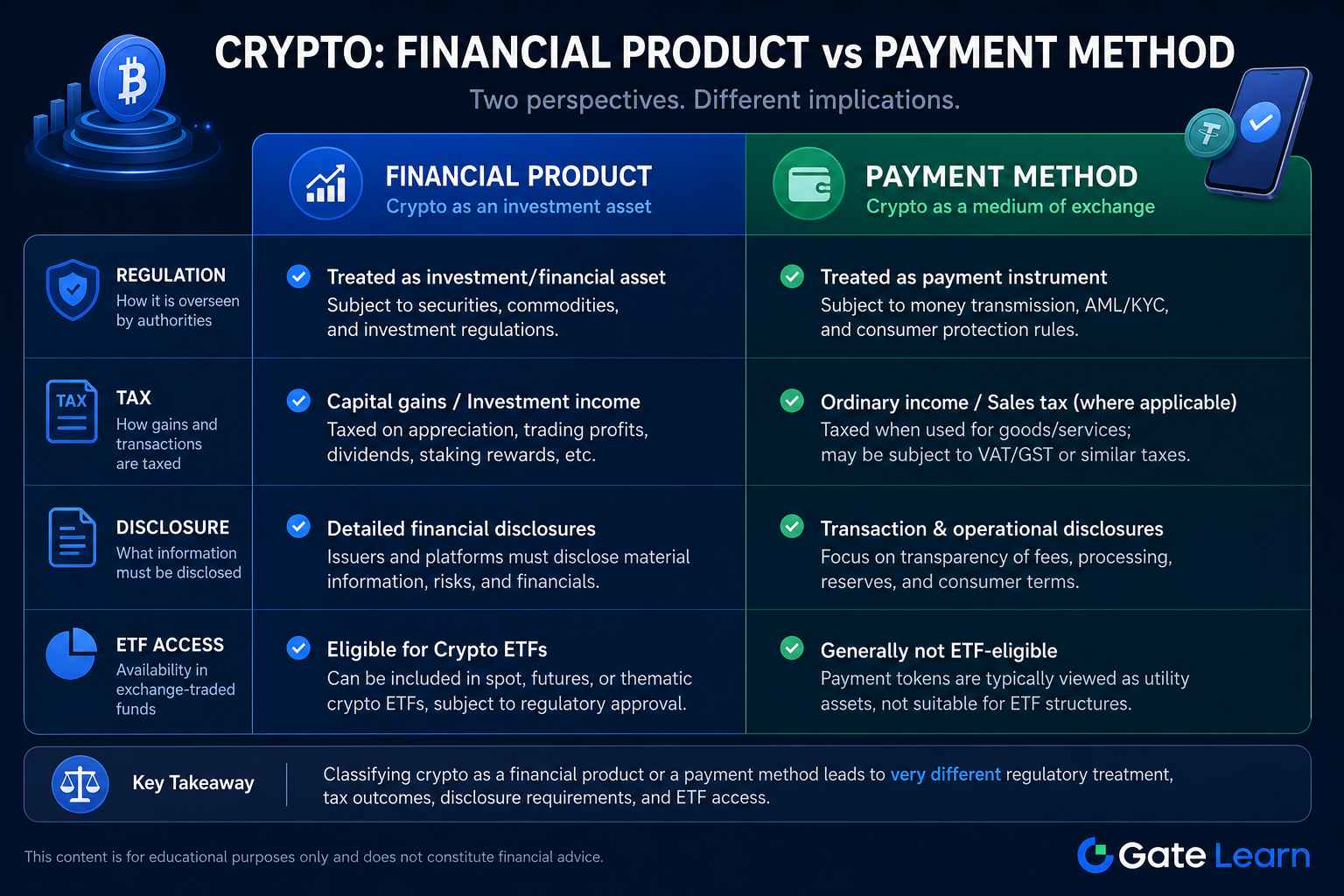 Figure 1. Duty differences when crypto is framed as a financial product vs a payment method.
How Classification Affects Tax and ETFs
Legal class and tax design are not one-to-one, but framing influences how lawmakers set rates and taxable events. Payment-method framing often parks crypto gains in ordinary or miscellaneous income. Financial-product framing more often aligns gains with equity/bond capital gains via separate or unified capital-gains rates.
ETF access links more directly to classification. Funds listing on securities markets usually need underlyings in permitted financial-instrument categories. Payment rules answer conversion/transfer service questions; they do not automatically answer whether a fund may hold spot bitcoin. Moving assets from payment law into financial-instruments law is often treated as a legal precondition for spot crypto ETFs—while the fund itself still needs separate approval. Countries with approved crypto ETFs separates product approval from legal-framework changes.
Can One Asset Fall Under Both Frames?
Yes. Practice is increasingly function-based: stablecoins may face both payment and financial-product rules; DeFi and platform tokens may differ by issuance and holder rights. MiCA separates ART, EMT, and other crypto-assets; U.S. analysis often uses Howey-style securities tests.
Limits of the Comparison
Three limits matter. Jurisdiction limit: Japan’s FIEA/PSA split does not map one-to-one onto the U.S. SEC/CFTC split, and MiCA is a third drafting technique. Asset-type limit: bitcoin, utility tokens, stablecoins, and security tokens follow different rules—one table cannot cover every token. Static-class limit: law changes the default label, but legacy products, cross-border trades, and self-custody may still face overlapping or older rules.
Clearer classification improves regulatory transparency; it does not remove price volatility, smart-contract risk, or venue counterparty risk. The comparison is a checklist tool, not a ranking of regulatory models.
Summary
Crypto may be framed as a payment method or a financial product: the former stresses payment safety and AML; the latter stresses capital-market fairness and investor protection. The frames differ systematically on law, disclosure, tax design, and ETF access. The same asset can trigger different rules by scene; stablecoins and utility tokens often face overlapping lines. Understanding classification helps separate “payable” from “investable” when checking venue licenses, disclosures, and fund underlyings.
FAQ
Is crypto a financial product or a payment method?
It depends on jurisdiction and use. Some markets emphasize payment-services duties; others place major crypto under financial-product or securities rules with disclosure and investor-protection duties. Payment and investment use of the same asset can diverge.
What does it mean if crypto becomes a financial product?
Trading, issuance, and fund holdings may face capital-market style rules—higher disclosure, insider-trading limits, suitability—and a category basis for crypto ETFs. That is not automatic “every token is a security,” but duties usually exceed a pure payment-services frame.
How does financial-product classification relate to crypto ETFs?
ETFs need underlyings funds may legally hold. Financial-product or securities frames supply that legislative basis; listing still needs fund approval, custody, and exchange rules.
Do you still pay tax under a payment-method frame?
Yes. Classification and tax sit in different systems. Payment framing does not waive tax; some jurisdictions treat gains as ordinary/miscellaneous income based on local definitions of transfers, mining, and staking.
Why did Japan move crypto from payment law toward financial-instruments law?
Lawmakers viewed real-world use as going beyond pure payment, with heavy investment trading. Under FIEA, tools sit closer to equity-style financial products—disclosure, insider-trading rules—and create legal linkage for spot crypto ETFs and separate taxation. Follow official Japanese texts for effective dates and detail.
Are stablecoins payment methods or financial products?
They can implicate both. Everyday settlement tokens often sit under payment-token rules; reserve investment, yield distribution, or public offers may also trigger securities or financial-product oversight. Check structure, issuer, and jurisdiction.