Eli Lilly (LLY) stock represents the publicly traded shares of Eli Lilly and Company, with its primary appeal centered on a research-driven, innovative pharmaceuticals business. Market enthusiasm for LLY stock is fueled mainly by anticipated growth in weight loss and diabetes medications; however, evaluating this stock requires a broader perspective than just a single product line. As a research-driven pharmaceutical company, Eli Lilly (LLY) aligns more closely with the profile of an innovative growth stock, making it best understood through four key dimensions: business fundamentals, financial reports, valuation, and risk.
What Is Eli Lilly (LLY) Stock? Why Does the Market Focus on It?
Eli Lilly is a pharmaceutical company specializing in prescription drugs, innovative therapies, and high-barrier commercialization. The value of LLY stock is not about manufacturing scale, but whether the company can consistently convert R&D outcomes into sustainable long-term revenue. As an equity, it behaves more like an innovative growth company than a traditional manufacturer.
LLY draws significant market attention largely due to strong expectations in weight loss and diabetes therapies. When a company combines high growth prospects with substantial product barriers, its valuation is often priced in advance. Ongoing discourse around LLY stock extends beyond current revenue to whether its core therapeutic areas can continue to scale and if its pipeline can deliver new growth drivers.
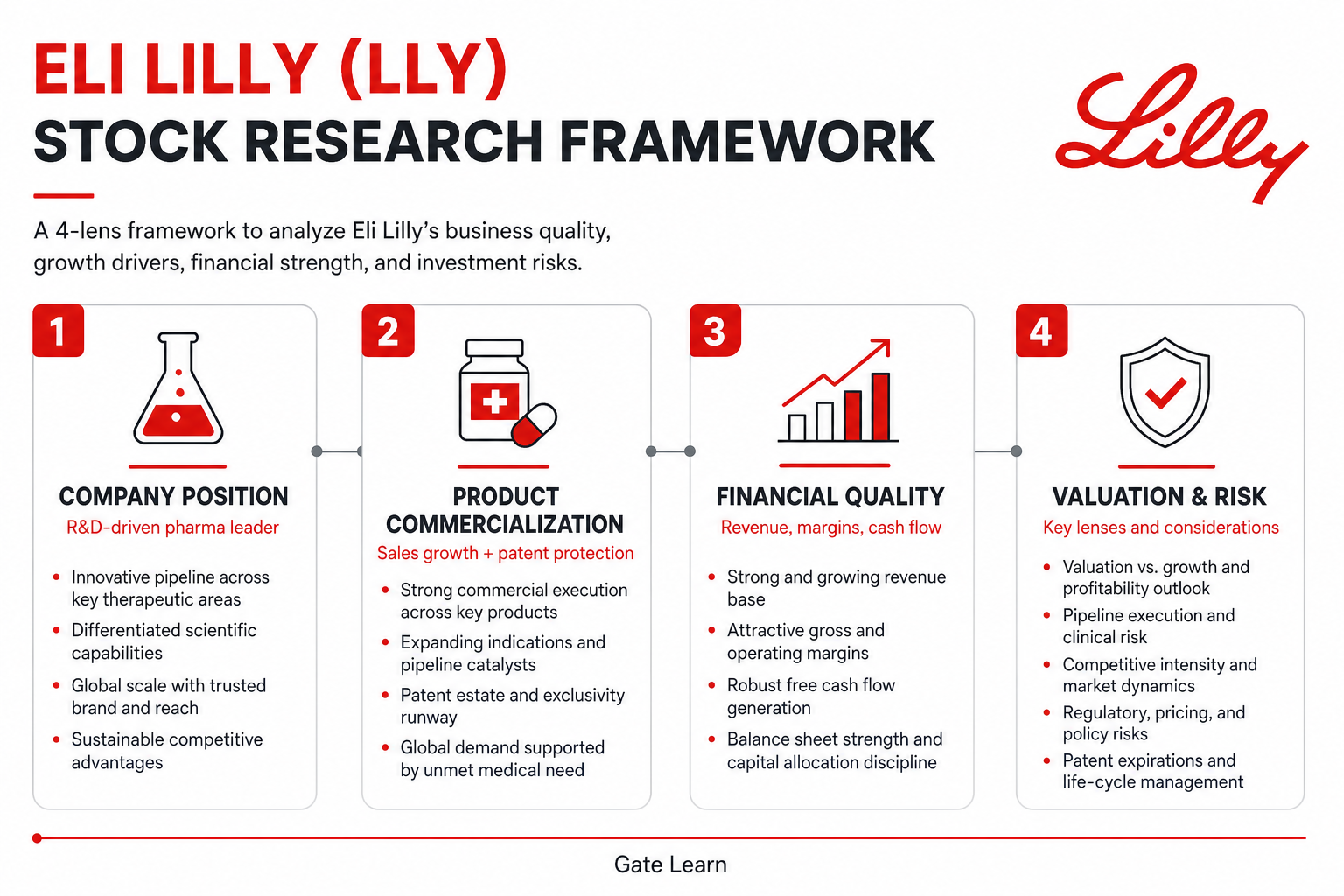 Figure 1. LLY stock research framework: from company positioning and product commercialization to financial and valuation perspectives.
What Are LLY’s Core Businesses and Revenue Streams?
LLY generates the majority of its revenue from pharmaceutical sales. For a pharmaceutical company, the key factor is not sales at a single point in time, but whether its drugs can continuously gain acceptance among physicians, patients, and payers. The interplay of research-driven development, patent protection, and scalable commercialization defines its revenue logic.
| Observation Dimension |
Key Focus |
Relevance for Stock Assessment |
| Pharmaceutical Sales |
Core product volume, pricing, penetration |
Determines stability of revenue growth |
| R&D Investment |
Clinical pipeline, trial progress, approval pace |
Determines future growth sources |
| Patent Cycle |
Length of exclusivity, generic competition |
Determines duration of profit window |
These three indicators collectively define the quality of LLY’s revenue. The complexity of pharma stocks lies in the need to simultaneously assess current income and future pipelines; a single quarterly report rarely captures the long-term picture.
What Drives Growth for LLY Stock?
LLY’s growth drivers extend beyond a single product, comprising core product lines, indication expansion, and R&D pipelines. In the short term, the market tracks current product sales and supply capacity; in the medium term, it looks at new indications and market penetration; in the long term, it evaluates whether the pipeline can deliver new growth points.
The company’s product logic functions as a continuous growth engine, not a one-off breakout. As long as demand persists in core therapeutic areas and new pipelines progress, the market is likely to maintain strong interest. Shifts in competition and supply can directly impact the growth narrative and valuation outlook.
When analyzing LLY’s financials, focus should go beyond revenue growth rates. Critical factors include what drives growth, the stability of gross margins, the reasonableness of R&D expenses, and whether operating cash flow can sustain long-term investment.
| Financial Indicator |
Description |
Typical Signals |
| Revenue |
Sales scale and growth rate |
Indicates scaling ability |
| Gross Margin |
Product mix and cost control |
Reflects pricing power and product quality |
| Operating Cash Flow |
Real cash generation |
Indicates profit quality |
| R&D Expenses |
Investment in future growth |
Reflects pipeline development strength |
Pharma companies that can grow revenue while maintaining high profit quality typically receive higher valuations. The key in financial analysis is distinguishing whether growth stems from pricing, sales volume, or product mix changes—not simply observing growth in isolation.
Why Does LLY Command a High Valuation? What Are the Risks?
LLY’s premium valuation is fundamentally the market’s way of pricing in anticipated future growth. When investors believe that a product line can continue to scale, the pipeline will deliver, and competitive advantages are durable, they are willing to pay a higher multiple. Why LLY’s Valuation Is High provides a dedicated discussion of this logic.
A high valuation is not inherently problematic; the challenge is that it demands rapid delivery on growth expectations. When growth persists, valuations hold; when growth slows, the market recalibrates its pricing.
LLY’s main risks fall into four categories: competitive risk, patent and generic risk, regulatory and clinical risk, and valuation risk. Growth pharma stocks rely more heavily on future delivery, so their risk profiles are typically broader than those of traditional defensive pharma companies.
| Risk Type |
Primary Source |
Key Focus |
| Competitive Risk |
Industry peers, alternative therapies |
Market share and product cadence |
| Patent Risk |
Patent expiration, generics |
Exclusivity and profit window |
| Regulatory Risk |
Approvals, labeling, safety |
Clinical and compliance progress |
| Valuation Risk |
Overly high expectations, growth slowdown |
Alignment of revenue and valuation |
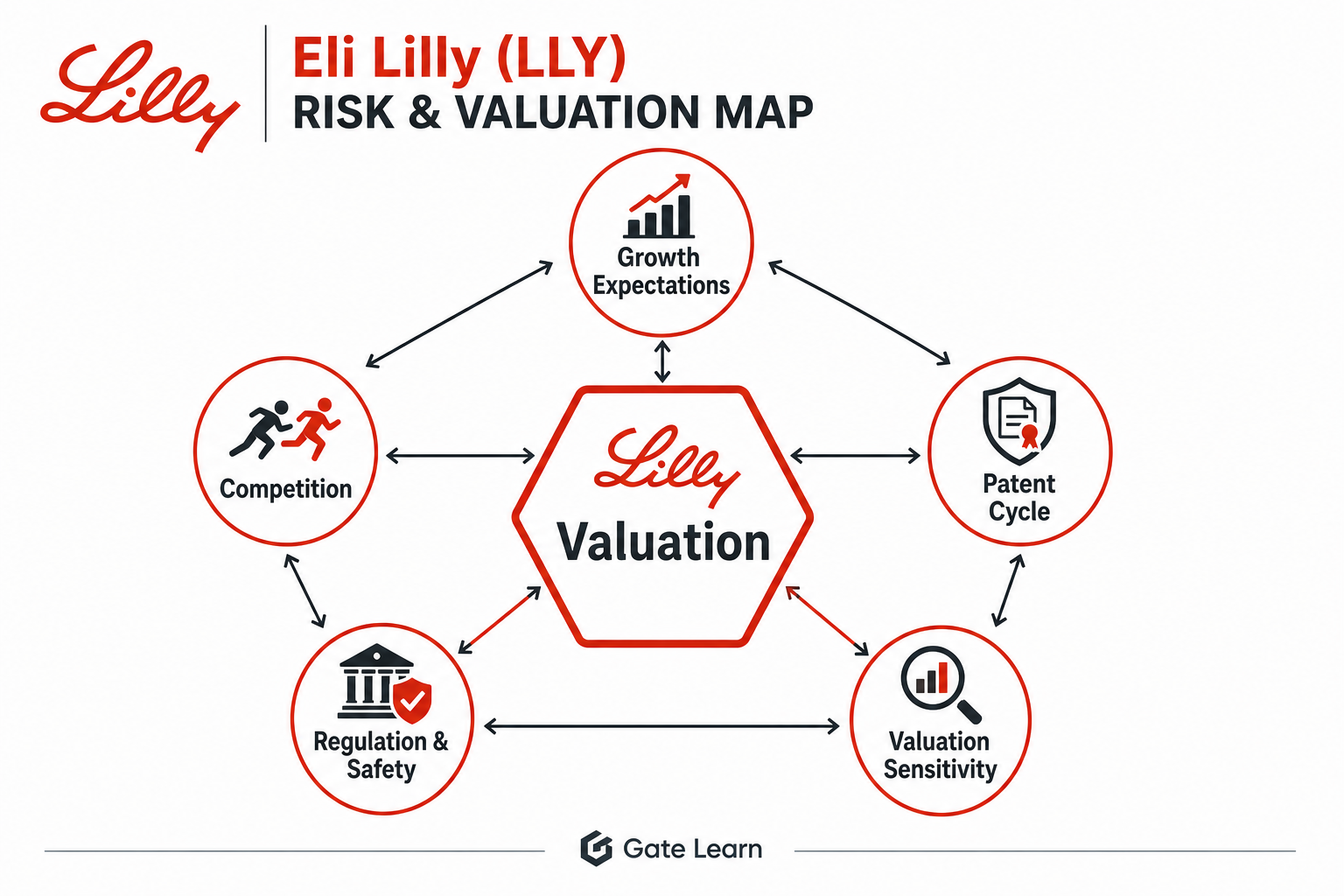 Figure 2. LLY valuation and risk map: growth expectations, competition, patents, regulation, and valuation sensitivity interact.
How to View and Trade LLY Stock on Gate
Within Gate Stocks, search for Eli Lilly using the ticker LLY. Before placing a trade, always verify the company name, market attributes, order type, and trading session. Confirm that the main page matches the stock code before proceeding. The Gate LLY stock page is the most direct way to confirm the entity and ticker; for step-by-step instructions, see Trading LLY Stock on Gate.
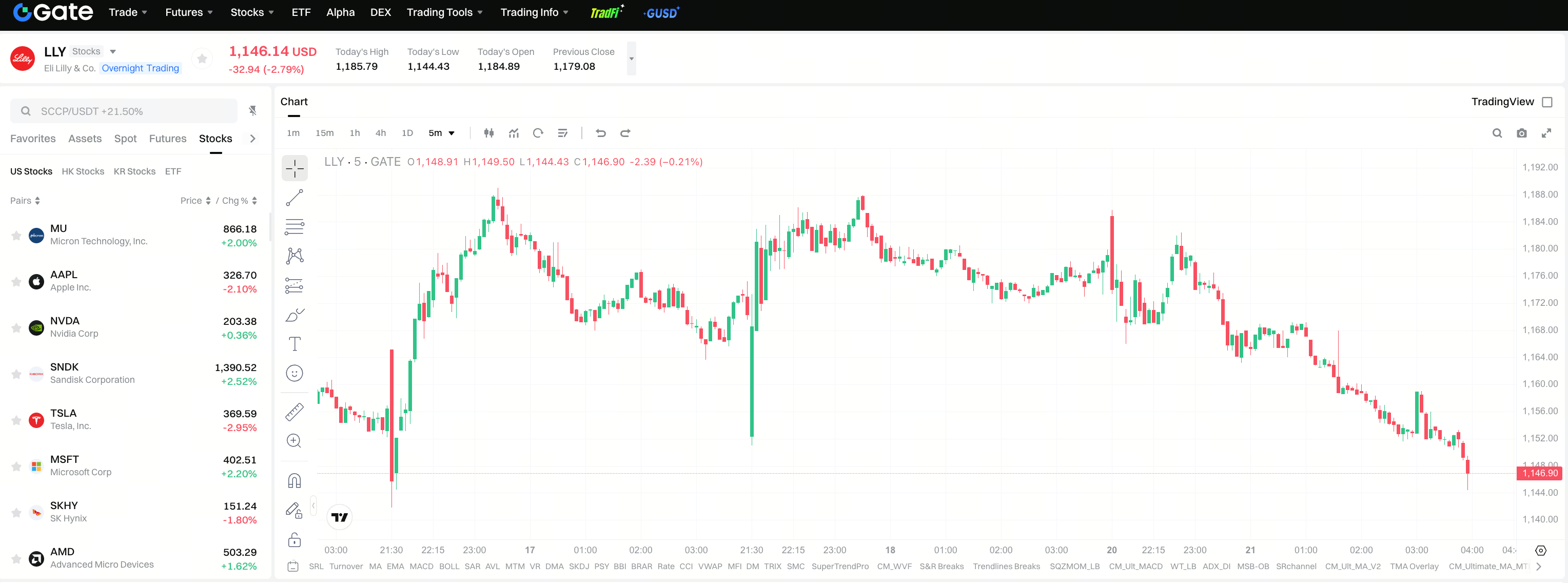
Separating company research from platform trading reduces operational errors. For individual stocks, it is generally more prudent to confirm the underlying asset before analyzing the business, rather than focusing on price first.
Summary
The core of LLY stock is not traditional manufacturing or consumer goods logic, but research-driven development, product scaling, and valuation expectations. To understand LLY, it is essential to consider its business model, growth drivers, financial performance, and risk structure, rather than relying solely on the popularity of a single product.
FAQ
What Kind of Company Is LLY Stock?
Eli Lilly is a pharmaceutical company focused on R&D and the commercialization of innovative drugs, with a primary emphasis on prescription pharmaceuticals. LLY stock is best characterized as an innovative growth pharmaceutical equity, with R&D capability and product scaling as core drivers.
What Is LLY’s Main Revenue Source?
LLY’s revenue comes primarily from pharmaceutical sales, scaling of core products, and commercialization during the patent protection period. Assessing revenue stability requires a combined view of product mix, indication expansion, and the R&D pipeline.
Why Does the Market Pay So Much Attention to LLY Stock?
Market interest in LLY is driven by strong growth expectations in weight loss and diabetes medications. The size of the addressable market and penetration rate in these areas directly influence the stock’s valuation.
How Do I View LLY Stock on Gate?
In Gate Stocks, search for ticker LLY, confirm the company name and main page, and then review trading information. Verifying the underlying entity and ticker is the most fundamental step before trading.