Na trilha de Infraestrutura de IA atual, a maioria dos sistemas ainda concentra seus esforços em inferência de modelos e poder de hash, enquanto a memória de longo prazo e a colaboração entre múltiplos agentes permanecem em estágios iniciais.
O Unibase pretende construir a base essencial para que os Agentes de IA operem de forma contínua — por meio de uma Camada de Memória descentralizada, protocolos abertos de agente e uma arquitetura de disponibilidade de dados — permitindo que a IA acumule experiência, compartilhe conhecimento e atue em redes abertas como agentes digitais de longa duração.
Qual é a arquitetura geral do Unibase?
A estrutura geral do Unibase é composta por três componentes principais: Membase, Protocolo AIP e Unibase DA.
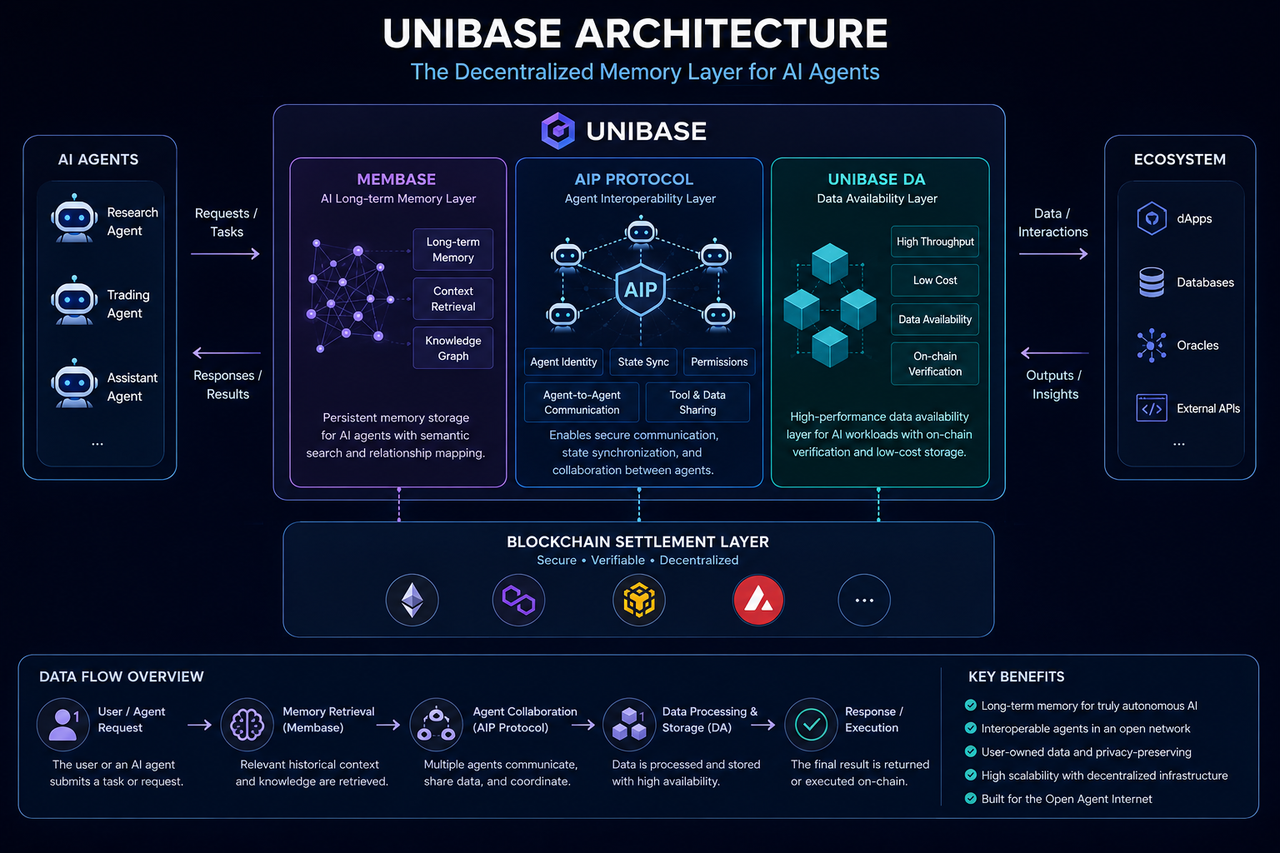
O Membase gerencia a memória de longo prazo dos Agentes de IA, armazenando contexto histórico, estados de tarefas e dados de conhecimento. O Protocolo AIP (Protocolo de Interoperabilidade de Agentes) estabelece padrões de comunicação entre os agentes, permitindo que diferentes IAs troquem estados e colaborem em tarefas. O Unibase DA (Disponibilidade de Dados) cuida do armazenamento, sincronização e acessibilidade dos dados de IA de alta frequência.
Sistemas tradicionais de IA dependem de bancos de dados centralizados e janelas de contexto de curto prazo; já o Unibase prioriza a sincronização de estados de longo prazo e redes abertas de agentes. O objetivo não é apenas aprimorar as capacidades do modelo, mas fornecer a infraestrutura para que os Agentes de IA persistam e colaborem ao longo do tempo.
| Módulo |
Função principal |
Principais recursos |
| Membase |
Camada de memória de longo prazo da IA |
Armazena contexto, estados históricos e dados de conhecimento |
| Protocolo AIP |
Protocolo de comunicação entre agentes |
Gerenciamento de identidade, sincronização de estado e colaboração entre múltiplos agentes |
| Unibase DA |
Camada de disponibilidade de dados |
Armazenamento de dados de IA, sincronização e verificação on-chain |
Como os agentes de IA geram e armazenam memórias?
Nos modelos tradicionais de linguagem de grande escala, o contexto da conversa costuma ser limitado em extensão, e a maioria dos estados não é preservada a longo prazo após o término de uma sessão. Isso significa que a IA enfrenta dificuldades para acumular experiência continuamente ou lembrar preferências do usuário e tarefas históricas ao longo do tempo.
O módulo Membase do Unibase foi projetado para resolver esse problema.
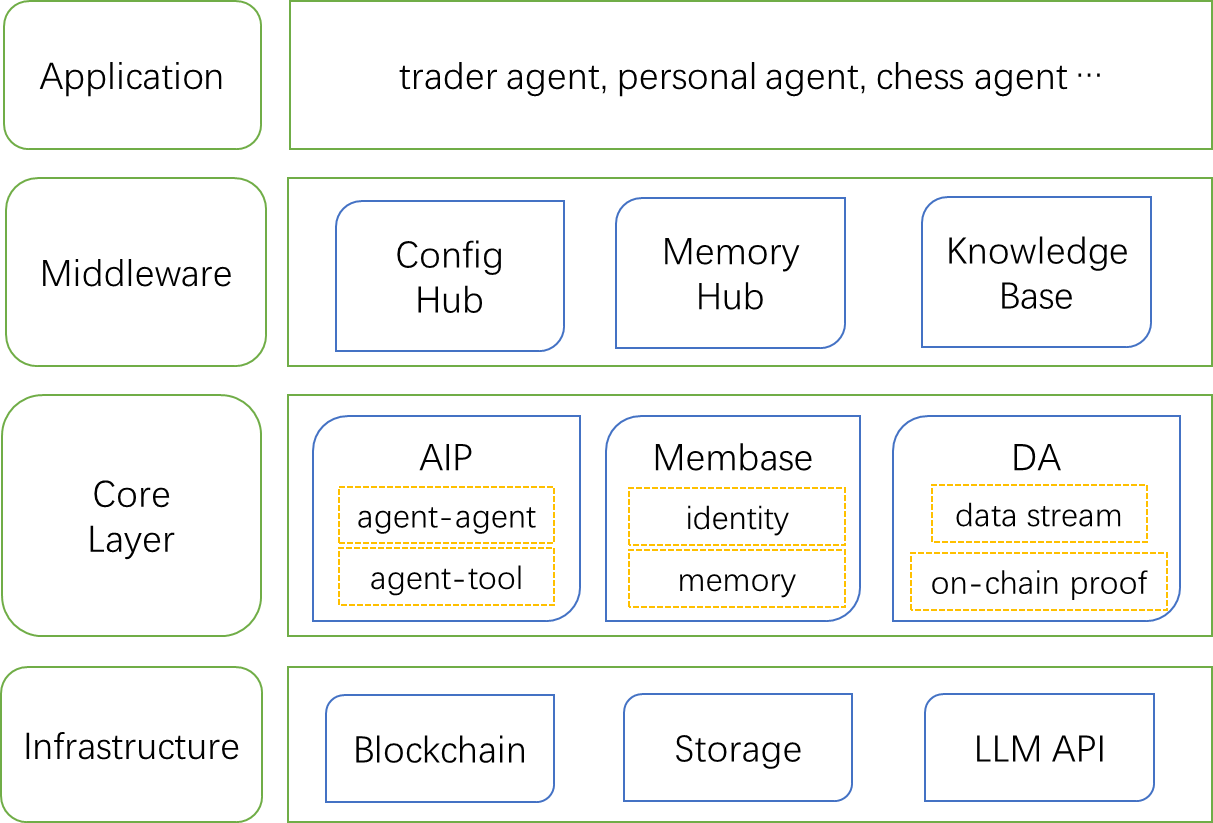
Quando um Agente de IA interage com usuários, executa tarefas ou invoca ferramentas, os estados relevantes são convertidos em dados de memória estruturados. Esses dados podem incluir conversas históricas, resultados de tarefas, informações ambientais ou fragmentos de conhecimento. Em seguida, o Membase grava esse conteúdo no sistema de memória de longo prazo e cria índices pesquisáveis.
Em tarefas posteriores, o Agente de IA pode recuperar esses estados históricos, permitindo aprendizado contínuo e persistência de contexto. Essa arquitetura torna a IA mais semelhante a uma entidade digital persistente do que a um sistema de perguntas e respostas único.
| Tipo de memória da IA |
Características |
Limitações |
| Janela de contexto de curto prazo |
Resposta rápida |
Não retém estados a longo prazo |
| Memória de banco de dados centralizado |
Armazenamento de longo prazo |
Dados sob controle da plataforma |
| Membase do Unibase |
Memória de longo prazo descentralizada |
Suporte à colaboração e ao compartilhamento de estado entre múltiplos agentes |
Como o Membase alcança o gerenciamento de contexto de longo prazo?
A lógica central do Membase vai além de apenas "armazenar dados" — ela permite que a IA acesse e gerencie estados históricos de forma contínua.
Durante a operação, os Agentes de IA filtram, atualizam e recuperam memórias de longo prazo com base nos requisitos da tarefa. Por exemplo, quando um usuário envia uma nova solicitação, o Agente pode primeiro pesquisar informações históricas relevantes e, em seguida, gerar uma resposta com base no contexto atual.
Ao contrário dos bancos de dados tradicionais, o Membase foca no gerenciamento de memória em nível semântico. Isso significa que a IA não apenas lê texto — ela entende relacionamentos do usuário, objetivos da tarefa e mudanças ambientais com base em estados históricos.
Em cenários de colaboração entre múltiplos agentes, diferentes Agentes também podem compartilhar estados parciais de memória. Por exemplo, um Agente de pesquisa pode sincronizar seus resultados com um Agente de execução, que então prossegue com as próximas etapas.
Essa estrutura transforma a memória de longo prazo de um ativo de modelo único em uma infraestrutura compartilhada dentro de uma rede aberta de Agentes.
Como o Protocolo AIP permite a comunicação entre agentes?
O Protocolo AIP é o protocolo de interoperabilidade de Agentes do Unibase, funcionando como um padrão de comunicação no ecossistema de Agentes de IA.
Em uma internet aberta de Agentes, os agentes podem vir de diferentes modelos, plataformas ou aplicações. Sem um protocolo unificado, trocar estados e colaborar se torna desafiador.
Os recursos principais do Protocolo AIP incluem gerenciamento de identidade, sincronização de estado, controle de permissão e comunicação entre agentes. Por exemplo, um Agente pode solicitar resultados de análise de dados de outro ou delegar tarefas específicas a ele.
Essa estrutura tem semelhanças com interações de contratos inteligentes no Web3. Ao fornecer um padrão unificado, diferentes Agentes de IA podem formar relações colaborativas dentro de uma rede aberta, em vez de ficarem presos a uma única plataforma.
| Função |
Função do Protocolo AIP |
| Identidade do agente |
Gerencia identidades e permissões dos agentes |
| Sincronização de estado |
Sincroniza estados dos agentes |
| Comunicação |
Estabelece comunicação entre agentes |
| Coordenação de tarefas |
Suporta tarefas colaborativas entre múltiplos agentes |
| Invocação de ferramentas |
Chamadas de ferramentas entre plataformas |
Como o Unibase DA suporta as operações de dados da IA?
Os Agentes de IA geram grandes volumes de dados de alta frequência durante a operação contínua, incluindo atualizações de memória, estados de tarefas, registros de chamadas de ferramentas e informações de colaboração.
As blockchains tradicionais têm dificuldade em lidar diretamente com esses dados de IA de alto rendimento; por isso, o Unibase introduz uma Camada de Disponibilidade de Dados dedicada.
As funções principais do Unibase DA incluem aumentar o rendimento de dados da IA, reduzir os custos de armazenamento de longo prazo, garantir a acessibilidade do estado e suportar verificação e sincronização on-chain.
Para as redes de Agentes de IA, a Camada de Disponibilidade de Dados serve como infraestrutura subjacente para a memória de longo prazo e a sincronização de estado. Sem uma disponibilidade de dados estável, os Agentes de IA teriam dificuldade para operar continuamente e compartilhar estados.
| Tipo de dado |
Função no Unibase DA |
| Estado do diálogo |
Salva o contexto atual do agente |
| Atualizações de memória |
Sincroniza atualizações de memória de longo prazo |
| Registros de ferramentas |
Armazena resultados de chamadas de ferramentas |
| Dados de colaboração entre agentes |
Registra estados de colaboração entre múltiplos agentes |
| Dados de verificação |
Suporta verificação e rastreabilidade on-chain |
Como é concluído um processo típico de colaboração entre agentes de IA?
Na arquitetura do Unibase, um processo padrão de colaboração entre múltiplos agentes envolve várias etapas.
Primeiro, um usuário emite uma solicitação de tarefa para um Agente de IA — como pesquisa de dados, análise de mercado ou execução automatizada. O Agente então chama o Membase para recuperar estados históricos de longo prazo, incluindo preferências do usuário, tarefas passadas e dados de conhecimento relevantes.
Se a tarefa envolver múltiplos Agentes, o Protocolo AIP estabelece links de comunicação entre eles. Por exemplo, um Agente de pesquisa pode coletar informações enquanto um Agente de execução lida com o processamento subsequente.
Durante a execução da tarefa, todas as mudanças de estado e atualizações de dados são sincronizadas com o Unibase DA para garantir a acessibilidade dos dados e a consistência do estado. Após a conclusão, os dados recém-gerados são gravados de volta no Membase, tornando-se contexto de longo prazo para tarefas futuras.
| Etapa |
Módulo do sistema |
Função principal |
| Solicitação do usuário |
Agente de IA |
Recebe a tarefa |
| Recuperação de memória |
Membase |
Recupera contexto histórico |
| Colaboração entre agentes |
Protocolo AIP |
Estabelece comunicação e sincronização de estado |
| Sincronização de dados |
Unibase DA |
Salva estado de execução |
| Atualização de memória |
Membase |
Grava na memória de longo prazo |
Como o Unibase difere dos sistemas tradicionais de IA?
Os sistemas tradicionais de IA normalmente usam uma arquitetura centralizada, com memória e estados armazenados nos bancos de dados da plataforma. Os usuários têm controle limitado sobre seus dados e não conseguem colaborar entre agentes de diferentes plataformas.
Em contraste, o Unibase enfatiza sistemas de memória de longo prazo, protocolos abertos de comunicação entre agentes, estruturas de dados descentralizadas e capacidades de colaboração entre múltiplos agentes.
A IA tradicional se assemelha a chamadas de modelo únicas, enquanto o Unibase foca na autonomia e persistência de longo prazo dos Agentes de IA.
| Dimensão |
Sistemas tradicionais de IA |
Unibase |
| Memória |
Contexto de curto prazo |
Sistema de memória de longo prazo |
| Estrutura de dados |
Banco de dados centralizado |
Armazenamento descentralizado |
| Colaboração entre agentes |
Limitada |
Suporta colaboração em rede aberta |
| Sincronização de estado |
Dentro da plataforma |
Sincronização entre plataformas |
| Propriedade dos dados |
Controlada pela plataforma |
Enfatiza abertura e verificabilidade |
Por que a internet aberta de agentes precisa de uma camada de memória?
O objetivo central da Internet Aberta de Agentes é permitir que os Agentes de IA existam de forma persistente, interajam continuamente e formem redes colaborativas — assim como os usuários na internet.
Se os Agentes de IA não conseguirem preservar estados de longo prazo, cada tarefa exigiria a reconstrução do contexto, limitando severamente a eficiência da colaboração. A Camada de Memória existe para dar aos Agentes de IA uma "identidade persistente" e "experiência de longo prazo".
Sob essa estrutura, a IA deixa de ser apenas um modelo que gera conteúdo temporário e passa a ser um agente digital capaz de crescimento de longo prazo.
Portanto, os sistemas de memória de longo prazo são considerados uma infraestrutura crítica para a Internet Aberta de Agentes, e o Unibase se destaca como um projeto representativo nessa direção.
Resumo
A lógica operacional central do Unibase gira em torno de memória de longo prazo, protocolos abertos e disponibilidade de dados.
Por meio do Membase, do Protocolo AIP e do Unibase DA, os Agentes de IA podem preservar contexto de longo prazo, colaborar entre plataformas e sincronizar continuamente estados dentro de uma rede aberta. Essa arquitetura transforma os Agentes de IA de ferramentas de curto prazo em entidades digitais autônomas capazes de existir e evoluir ao longo do tempo.
Perguntas Frequentes
Qual é a função do Membase?
O Membase armazena o contexto de longo prazo, as tarefas históricas e os dados de conhecimento dos Agentes de IA, permitindo que a IA aprenda continuamente e acesse informações históricas.
Como funciona o Protocolo AIP?
O Protocolo AIP é um protocolo de comunicação entre agentes que possibilita o gerenciamento de identidade, a sincronização de estado e a colaboração entre múltiplos agentes.
O que é o Unibase DA?
O Unibase DA é a camada de disponibilidade de dados que suporta o armazenamento, a sincronização e a acessibilidade de dados de alta frequência para os Agentes de IA.
Por que os Agentes de IA precisam de memória de longo prazo?
A memória de longo prazo ajuda a IA a preservar estados históricos, acumular experiência ao longo do tempo e melhorar a colaboração em tarefas complexas.
O que é a Internet Aberta de Agentes?
A Internet Aberta de Agentes é uma rede aberta onde os Agentes de IA podem se interconectar e interoperar, permitindo que vários agentes colaborem sob um protocolo unificado.