As Bitcoin Layer 2, the RGB Protocol, Lightning Network, and BTCFi concepts continue to gain momentum, the market is increasingly turning its attention to infrastructure projects within the Bitcoin ecosystem that can capture genuine network value. Unlike token models driven purely by market sentiment, more projects are now emphasizing the link between tokens and protocol revenue, network activity, and ecosystem growth. Against this backdrop, the economic model of LIGHT serves as a key lens for assessing Bitlight's long-term viability.
From the perspective of Bitcoin's financial infrastructure evolution, LIGHT represents more than just a payment token—it is the core vehicle for Bitlight’s incentive mechanisms and governance framework. As stablecoin payments, asset issuance, on-chain finance, and the developer ecosystem continue to expand, whether LIGHT can establish a healthy value capture and incentive loop will directly impact Bitlight’s competitiveness and sustainability in the Bitcoin Layer 2 space.
Core Functions and Use Cases of LIGHT
In most blockchain networks, the native token functions both as a medium of operation and an ecosystem incentive tool. For Bitlight, LIGHT follows the same design logic.
The main use cases of LIGHT include:
Paying Network Fees
Users must pay fees in LIGHT when transferring assets, executing contracts, or interacting with applications on the Bitlight network. This mechanism directly ties the token to network usage demand.
Node Staking and Network Security
Certain nodes on the Bitlight network must stake LIGHT to qualify for operation.
Staking not only strengthens network security but also reduces the likelihood of malicious activity.
Governance Participation
LIGHT holders can participate in ecosystem governance.
This includes:
- Protocol upgrades
- Parameter adjustments
- Ecosystem fund usage
- Voting on community proposals
Ecosystem Incentives
Project teams reward developers, users, and ecosystem partners with LIGHT.
This is also a key driver of ecosystem growth.
Overall, LIGHT is not merely a payment token but a foundational asset underpinning network operations, governance, and ecosystem expansion.
Token Distribution and Release Mechanism of LIGHT
The long-term stability of a token economic model largely depends on supply structure and release schedule. LIGHT has a fixed maximum total supply. Its allocation primarily covers the following areas:
Ecosystem Development Fund
Ecosystem development typically accounts for a significant portion.
This fund is mainly used for:
- Developer incentives
- Application support
- User growth
- Liquidity building
Team and Advisors
Team tokens generally have a longer lock-up period, aligning project development goals with long-term interests.
Investment Institutions
Tokens allocated to seed and strategic investors typically follow a phased unlocking mechanism. This design helps reduce short-term selling pressure.
Community and Airdrop Rewards
These rewards attract early users to participate in network building. As the ecosystem matures, these tokens are gradually released into the market.
For investors, tracking the unlock schedule over the coming years is crucial, as newly circulating supply often directly impacts market supply and demand dynamics.
Role of LIGHT in Network Governance
Governance is a vital component of any blockchain ecosystem. Bitlight aims to gradually establish a more open community governance system, with LIGHT serving as its foundation.
Governance typically covers:
Protocol Upgrade Decisions
When the network needs new features or technical adjustments, the community can express its views through governance voting.
Parameter Adjustments
For example:
- Fee ratios
- Node reward coefficients
- Scale of incentive plans
These parameters directly affect the efficiency of ecosystem operations.
Ecosystem Fund Management
Some fund pools may be managed by the community. Token holders can participate in decisions regarding project support and resource allocation. As the network matures, governance rights tend to become increasingly important—a key source of long-term value for utility tokens.
How LIGHT Incentivizes Developers and Ecosystem Participants
The growth of any Layer 2 project depends on its developer ecosystem. Bitlight uses token incentives to drive network expansion.
Developer Reward Program
Development teams that deploy applications can earn LIGHT rewards based on user count, transaction volume, and network contributions. This mechanism helps reduce early-stage development costs.
User Growth Incentives
These include:
- Testnet rewards
- Liquidity incentives
- Usage rewards
- Community activity rewards
These measures help boost user engagement.
Node Operator Rewards
Node operators earn LIGHT rewards by providing network services. This model attracts more participants to maintain network operations.
Ecosystem Partnership Incentives
Wallets, payment service providers, infrastructure providers, and other partners may also receive support from the ecosystem fund. Industry experience shows that a successful token model typically balances the interests of developers, users, and infrastructure participants.
Analysis of LIGHT and Protocol Value Capture Mechanisms
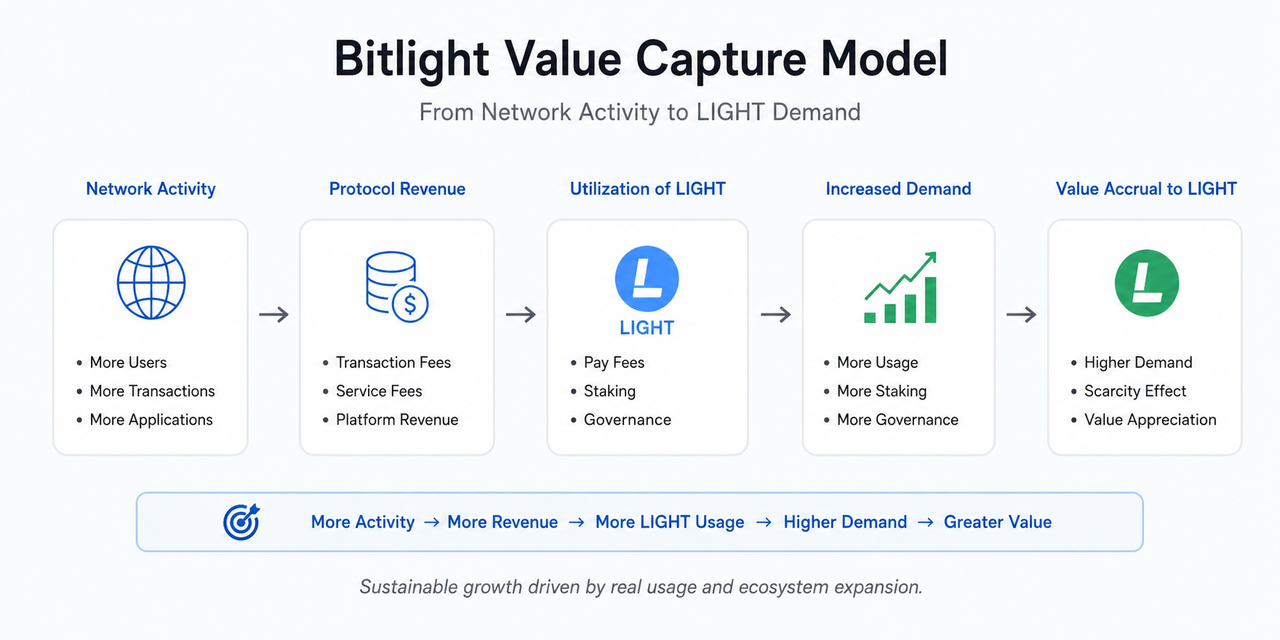
Value capture capability determines whether a token can gain long-term market traction. Value capture refers to how the value generated by the protocol flows back into the token system. For Bitlight, several potential sources exist.
Network Fees
As user numbers grow, network activity increases. More transactions mean higher fee demand.
Node Staking Demand
If the network scales and the number of nodes increases, the staking demand for LIGHT may also rise accordingly.
DeFi Application Growth
If lending protocols, DEXs, stablecoin systems, and yield products emerge in the future, related business activities could further expand LIGHT’s use cases.
Enhanced Governance Value
As the ecosystem grows, governance rights themselves may hold higher value. Such mechanisms have been validated in several mature blockchain ecosystems. However, it is important to note that value capture ultimately depends on real user growth and application adoption.
Key Factors Influencing the Value of LIGHT
The factors affecting LIGHT’s long-term performance include the following.
Development of the Bitcoin Layer 2 Industry
If BTCFi continues to grow, related infrastructure projects will benefit. Conversely, a decline in track popularity may dampen market demand.
Adoption of the RGB Protocol
Bitlight’s technical roadmap is deeply tied to RGB. Whether the RGB ecosystem gains widespread developer adoption will affect network activity.
Developer Ecosystem Scale
More applications lead to richer user activity, which generally boosts network value.
Development of the Stablecoin Payment Market
Bitlight has been focusing on the RGB Stablecoin network in recent years. If demand for stablecoin payments grows, it could unlock new value sources.
Market Liquidity
Trading depth, exchange coverage, and market participation also influence token performance.
Risks to Consider When Investing in LIGHT
Despite Bitlight’s innovation, investors should remain mindful of potential risks.
Technology Development Risk
The RGB protocol is still a relatively emerging technology. Whether it achieves large-scale adoption remains uncertain.
Ecosystem Growth Risk
The value of Layer 2 projects heavily depends on ecosystem scale. If developer and user growth falls short of expectations, network value could suffer.
Market Competition Risk
The Bitcoin Layer 2 space is highly competitive.
Projects such as:
- Stacks
- Bitlayer
- Rootstock
- Merlin Chain
are all vying for the BTCFi market.
Token Release Risk
Future unlock plans may increase market circulating supply. Rapid supply growth could exert downward price pressure.
Regulatory Risk
The regulatory landscape for stablecoins, DeFi, and digital assets continues to evolve. Policy changes may affect related business operations.
Long-Term Development Potential of the LIGHT Ecosystem
From an industry trend perspective, Bitcoin is gradually evolving from a pure store of value into a financial infrastructure. Ordinals, Runes, RGB, Lightning Network, and BTCFi are all driving this transformation. Bitlight’s strategic focus centers on three areas:
Bitcoin Native Payment Network
Enhancing payment efficiency through the combination of RGB and Lightning.
BTCFi Infrastructure
Supporting financial use cases such as lending, trading, and asset management.
Attracting more applications to deploy on the Bitlight network. If the Bitcoin ecosystem can replicate part of Ethereum DeFi’s growth trajectory, projects providing underlying infrastructure services may have opportunities for sustained growth.
However, BTCFi is still in its early stages. Industry scale, user demand, and business models remain to be further validated.
Summary
LIGHT is the core value carrier of the Bitlight ecosystem. Its design purpose goes beyond paying network fees—it also assumes governance, incentive, and ecosystem-building responsibilities. By integrating fees, staking, governance, and developer rewards into a unified system, Bitlight aims to create a self-sustaining, self-incentivizing economic cycle.
From a long-term perspective, LIGHT’s value depends not solely on market sentiment but on the actual usage of the Bitlight network, the scale of the developer ecosystem, and the growth rate of the Bitcoin Layer 2 market. As BTCFi, stablecoin payments, and RGB applications mature, LIGHT could become a key foundational asset bridging Bitcoin liquidity and on-chain financial activity. However, while focusing on growth potential, risks such as technological maturity, market competition, and regulatory changes warrant ongoing attention.