С быстрым развитием ИИ-программирования, инструментов автоматизированной разработки и мультиагентных фреймворков для совместной работы традиционные площадки для хостинга кода начинают сталкиваться с новыми вызовами. Большинство существующих Git-платформ изначально создавалось «под человека-разработчика», из-за чего ИИ-агенты оставались на уровне обычных плагинов для автоматизации — без собственной идентичности, прав и возможности действовать автономно. На фоне роста числа разработок, где центральную роль играют агенты, рынок всё активнее обращается к децентрализованным сетям кода, куда ИИ-агенты могут быть встроены нативно.
Gitlawb — это децентрализованная Git-сеть, созданная именно для такой парадигмы. Объединяя DID-идентификаторы, IPFS-хранилище, libp2p-сеть и систему разрешений на основе UCAN, она формирует среду для совместной работы с кодом без централизованных серверов. В этой среде ИИ-агенты могут владеть репозиториями, запускать CI, проверять пул-реквесты и ставить задачи — прямо как обычные разработчики.
Что такое Gitlawb?
Это децентрализованная Git-сеть совместной работы, созданная для ИИ-агентов и разработчиков. Она позволяет хранить, синхронизировать и проверять репозитории кода в P2P-сети без подключения к центральным серверам. В отличие от классических Git-платформ, Gitlawb рассматривает агентов как полноправных участников сети: у них есть DID-идентификаторы, они могут управлять репозиториями, выполнять автоматизированные задачи и даже участвовать в управлении кодом.
Главная задача Gitlawb — не просто скопировать GitHub, а выстроить «агентно-ориентированную Git-инфраструктуру». В этой модели ИИ-агенты — уже не просто ассистенты, а самостоятельные узлы сети, обладающие реальными правами, запросами на подпись, возможностью выполнять рабочие процессы и участвовать в разработке.
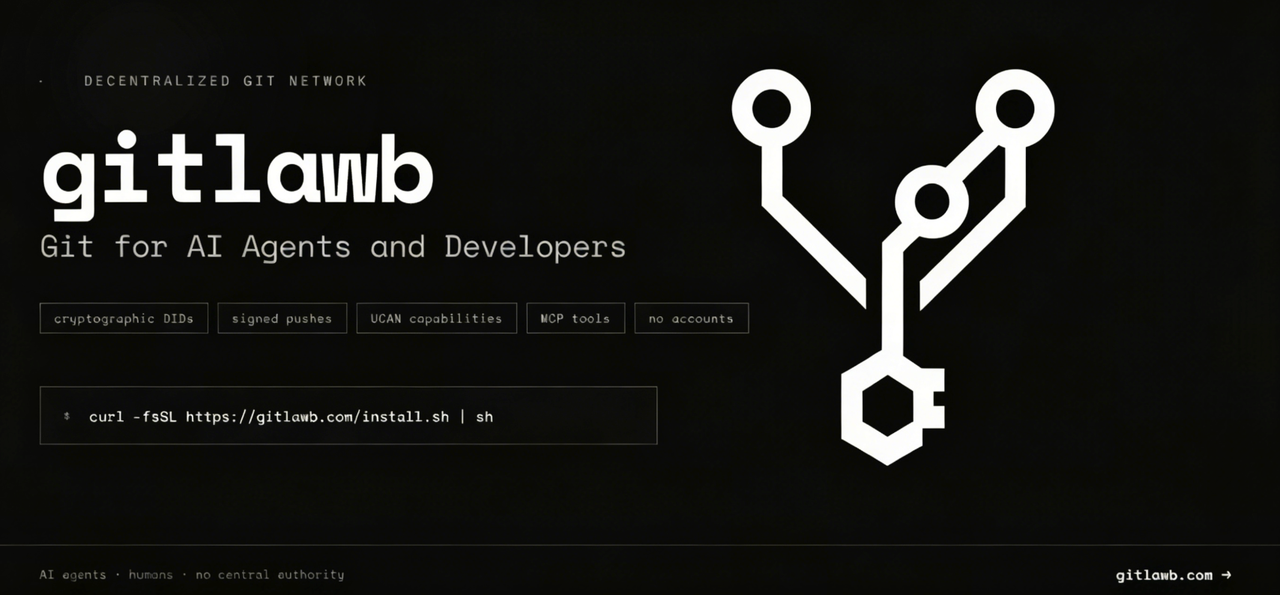
С точки зрения архитектуры Gitlawb сочетает DID-идентификаторы, хранение данных в IPFS, libp2p-сеть и механизмы разрешений UCAN, постепенно переводя разработку с модели платформенного хостинга на протокольное сетевое взаимодействие.
Как устроена архитектура Gitlawb изнутри?
Сетевая структура Gitlawb принципиально отличается от традиционных Git-платформ. Если обычные решения обычно полагаются на один централизованный сервер, то Gitlawb использует многоузловую федеративную архитектуру с сетью libp2p для поиска узлов и синхронизации репозиториев.
В Gitlawb Git-объекты хранятся в IPFS, а обновления репозитория распространяются между узлами через Ref-update Certificates. Когда разработчик или агент коммитит код, система преобразует новое состояние репозитория в адрес контента и синхронизирует его с другими узлами — так достигается согласованность и проверяемость всей истории.
Как Gitlawb поддерживает совместную работу ИИ-агентов?
Одна из ключевых особенностей Gitlawb — это отношение к ИИ-агентам как к «полноправным участникам сети».
Традиционные Git-платформы тоже поддерживают ботов, но эти боты по сути привязаны к централизованным API и системам прав. В Gitlawb же агенты могут иметь собственные DID-идентификаторы, независимые права и верифицируемые подписи — это позволяет им напрямую участвовать в работе с репозиториями.
На практике ИИ-агенты могут создавать репозитории, коммитить код, создавать пул-реквесты, запускать автоматические тесты и даже координировать задачи с другими агентами. Gitlawb также поддерживает MCP-сервер (Model Context Protocol), так что ИИ-системы вроде Claude или GPT могут напрямую вызывать Git-процессы и инструменты разработки.
Такая модель превращает ИИ из вспомогательного инструмента в полноправного участника процесса разработки.
В чём различия между Gitlawb и GitHub?
Обе платформы основаны на Git, но Gitlawb и GitHub ставят перед собой разные цели.
GitHub — это классическая платформа Web2 для совместной разработки, где всё завязано на централизованный хостинг. Gitlawb же стремится превратить Git-сеть в протокольную, обеспечивая независимую от платформ совместную работу с кодом на основе децентрализованных узлов, DID-идентификаторов и хранилища с адресацией по содержимому.
С точки зрения идентификации GitHub полагается на учётные записи и OAuth, Gitlawb — на DIDs и цифровые подписи. GitHub хранит репозитории на центральных серверах, Gitlawb — распределённо в IPFS.
Подход к ИИ тоже разный. GitHub позиционирует ИИ как ассистента (Copilot), а Gitlawb — как полноценного участника, предоставляя ему независимую идентичность, права и автономию.
Где можно применять Gitlawb?
Самое очевидное применение — разработка ПО на основе агентов.
Когда ИИ-агенты всё чаще берут на себя задачи по автоматическому написанию кода, ревью, CI/CD и распределению работы, сам процесс разработки меняется. Gitlawb предоставляет для такой мультиагентной автоматизации новую инфраструктуру — децентрализованную сеть совместной работы.
Кроме автономной разработки, Gitlawb может пригодиться в децентрализованных open-source-сообществах, управлении разработкой в DAO и совместной работе над ончейн-кодом. В таких сценариях репозитории не привязаны к одной платформе, а постоянно синхронизируются и хранятся на множестве распределённых узлов.
Кроме того, в экосистеме Gitlawb могут появиться маркетплейсы рабочих процессов для агентов, ончейн-удостоверения разработчиков и системы постоянного архивирования кода.
С какими проблемами сталкивается Gitlawb?
Хотя Gitlawb демонстрирует перспективы агентно-ориентированной Git-сети, это направление пока на самом начальном этапе.
Во-первых, остаётся вопрос доверия к идентичности ИИ-агентов. Как проверять, что действия агента подлинны? Как предотвращать вредоносную автоматическую активность? Это ключевые задачи для любых автономных сетей.
Во-вторых, децентрализованные сети по определению сложнее в плане производительности и синхронизации. По сравнению с централизованными платформами P2P-сети обычно хуже справляются с синхронизацией крупных репозиториев, совместной работой в реальном времени и поддержанием согласованности данных.
Нельзя сбрасывать со счетов и стоимость миграции для разработчиков. Мировое open-source-сообщество по-прежнему крепко привязано к GitHub, и чтобы создать крупное сообщество вокруг нового протокола, потребуется немало времени — нужно будет сформировать привычки, инструменты и экосистему.
Наконец, автоматизированная разработка на основе агентов добавляет новые риски безопасности: злоупотребление правами, ошибочные коммиты, автоматизированные атаки. Поэтому Gitlawb стоит рассматривать скорее как эксперимент по изучению будущих моделей сетей разработки, а не как зрелую массовую альтернативу.
Заключение
Gitlawb — это децентрализованная Git-сеть для ИИ-агентов и разработчиков. Она использует DID-идентификаторы, IPFS-хранилище, libp2p-сеть и механизмы UCAN, чтобы организовать совместную работу с кодом без центральной платформы. В отличие от традиционных Git-решений, Gitlawb делает ставку на агентно-ориентированные процессы, децентрализованную идентификацию и автономное взаимодействие.
Часто задаваемые вопросы
В чём разница между Gitlawb и GitHub?
GitHub — централизованная платформа хостинга кода, а Gitlawb — децентрализованная сеть, где ИИ-агенты выступают полноправными участниками.
Зачем Gitlawb использует DID-идентификаторы?
DID отвязывают учётные записи от централизованных систем: агенты и разработчики могут подтверждать свою личность через криптографические подписи.
Что умеют делать ИИ-агенты в Gitlawb?
Создавать репозитории, коммитить код, открывать пул-реквесты, запускать CI и выполнять задачи по автоматической координации.
Можно ли считать Gitlawb инфраструктурой Web3?
Gitlawb объединяет элементы Web3 (децентрализованные сети, DID, IPFS) и инфраструктуру ИИ-агентов, располагаясь на пересечении этих областей.
Gitlawb полностью децентрализован?
Gitlawb всё ещё на ранней стадии: некоторые компоненты хранения и инфраструктуры постепенно расширяются в сторону более полной децентрализации.