Lam Research (LRCX) is a U.S. stock listed on Nasdaq, representing shares of Lam Research Corporation. It belongs to the semiconductor wafer fabrication equipment sector—not a crypto token and not an index ETF share.
LRCX is often used to track chipmaker spending on etch, deposition, and clean tools for advanced nodes, memory, and packaging. Gate Stocks · LRCX confirms legal name, ticker, and on-page fields so company research stays separate from order execution.
What Is Lam Research (LRCX)? What Does the Ticker Represent?
Lam Research Corporation is a semiconductor equipment company headquartered in Fremont, California, founded in 1980. It supplies wafer front-end process tools and related services to chipmakers worldwide. LRCX is its Nasdaq ticker; on Gate Stocks the display name is typically Lam Research Corp and the trading code is LRCX.
Holding LRCX means a proportional economic claim on Lam Research Corporation—not ownership of a single tool or fab line. A practical path is company–industry–ticker: issuer Lam Research Corporation; industry semiconductor equipment and services; public markets and Gate Stocks both identify the stock as LRCX.
Separate company facts from trading-page fields. Investor-relations pages describe products and disclosures; the trading page shows ticker, order types, and available funding. The two layers complement each other and do not replace each other.
How Does Lam Research Make Money? Etch, Deposition, and Clean
Lam Research earns mainly by selling and servicing wafer fab equipment across etch, deposition, and clean. Etch removes material and transfers patterns; deposition adds films and material layers; clean removes residues and prepares surfaces.
Educational product maps often cite etch platforms such as Kiyo and Flex; deposition examples such as VECTOR, Striker, SABRE, and ALTUS; and clean examples such as Coronus. Platform names map process roles to tool families—not revenue-share claims.
| Process pillar |
Core role |
Educational platform examples |
| Etch |
Remove material; transfer patterns |
Kiyo, Flex |
| Deposition |
Add films and material layers |
VECTOR, Striker, SABRE, ALTUS |
| Clean |
Remove residues; prepare surfaces |
Coronus |
The table builds a process–tool framework: identify the wafer action first, then map it to equipment class. Install, spare parts, and process services also shape customer relationships; segment reporting should follow investor-relations disclosures.
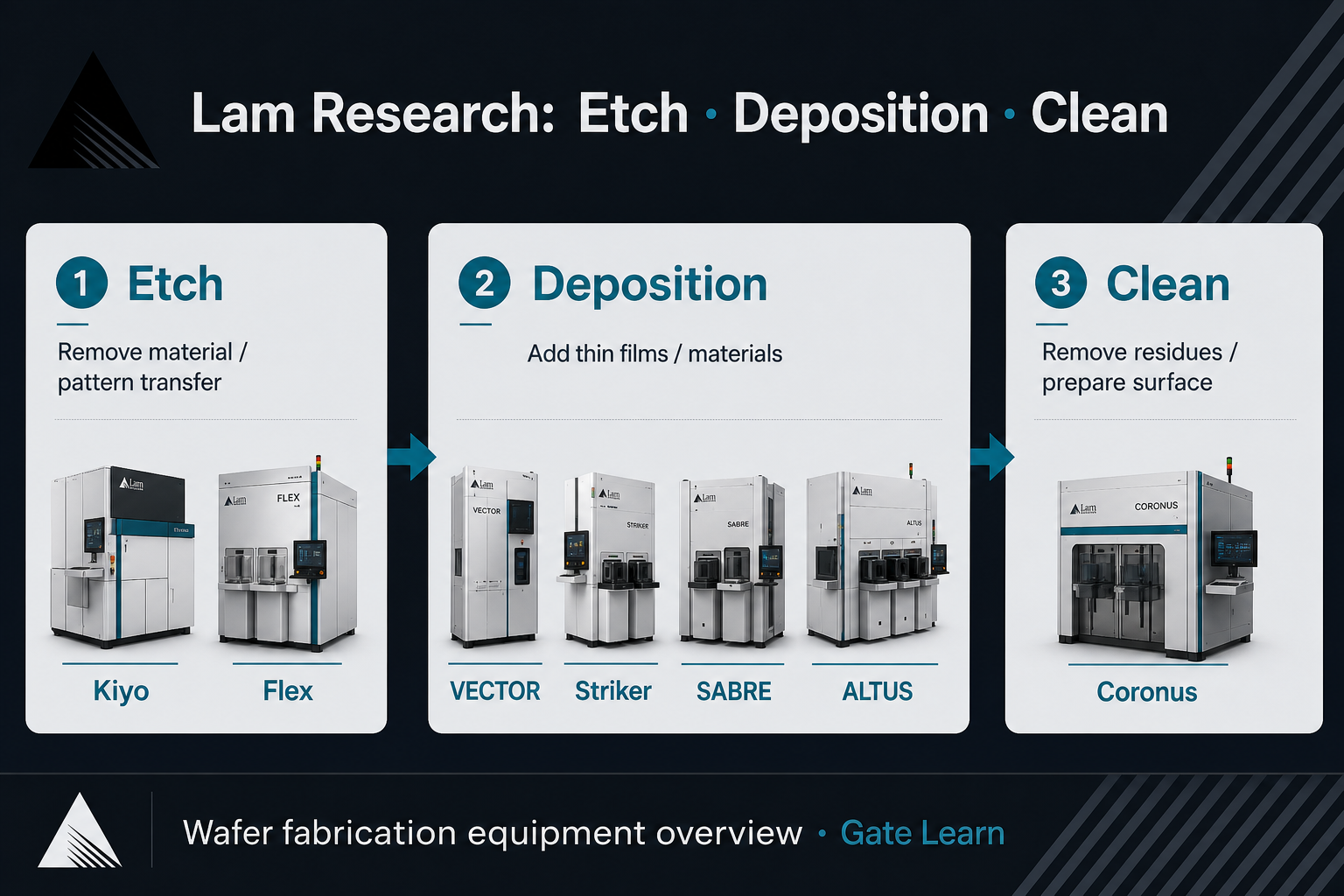
Figure 1. Lam Research etch, deposition, and clean process roles with educational equipment examples (Etch / Deposition / Clean).
Which Customers Does Lam Research Serve? Memory, Foundry, IDM, and Packaging
Lam Research’s customers mainly fall into three groups: Memory manufacturers, Foundry operators, and integrated device manufacturers (IDMs). Memory covers DRAM and NAND CapEx; Foundries fabricate logic for fabless designers; IDMs design and manufacture in-house and may buy tools across both lines.
Advanced nodes, 3D structures such as 3D NAND stacks, and advanced packaging / wafer-level packaging (WLP) raise demand for precise etch, deposition, and clean. Demand moves with roadmaps and capacity plans—cycle variables, not forecasts of any single order.
| Customer type |
Typical role |
Common scenario keywords |
| Memory |
DRAM / NAND manufacturers |
High-aspect-ratio structures; multi-layer stacks |
| Foundry |
Logic foundries |
Advanced nodes; logic process modules |
| IDM |
Design-and-manufacture firms |
Captive fab expansion and process upgrades |
The table stresses who buys the tools. One equipment maker can serve both memory and logic customers; packaging and WLP extend demand into interconnect steps. Customer concentration should follow periodic company reports.
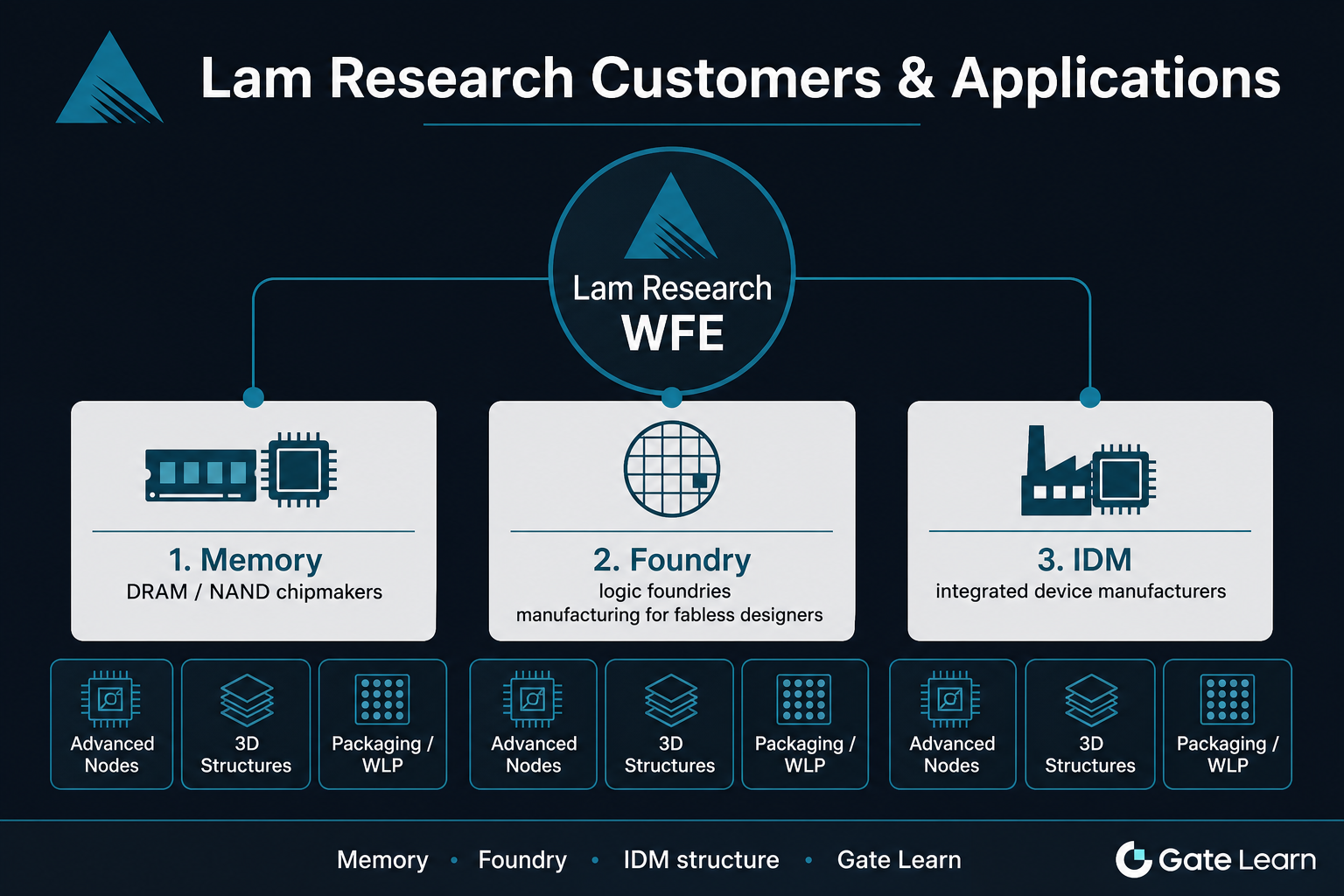
Figure 2. Lam Research customer and application map: Memory, Foundry, IDM, plus advanced nodes, 3D structures, and packaging / WLP.
How Does LRCX Differ From Applied Materials and Peer Equipment Stocks?
LRCX and Applied Materials (AMAT) both sit in semiconductor equipment, but product focus and process coverage do not fully overlap. Lam Research emphasizes etch, deposition, and clean; Applied Materials typically spans a broader materials-engineering and multi-process module set. Same industry is not same product mix.
LRCX vs AMAT compares the two stocks across process focus, customer overlap, and service-cycle dimensions. Peers also include lithography, metrology, and specialty-tool vendors—one equipment-stock label should not replace product-level comparison.
What Are the Advantages, Risks, and Limits of Understanding or Trading LRCX Stock?
Advantages of studying LRCX include converting the abstract semiconductor-equipment theme into a checkable issuer, process platforms, and customer types. Etch, deposition, and clean offer a clear educational split; Nasdaq LRCX is searchable on public markets and Gate Stocks; comparing with AMAT helps avoid treating all equipment names as one risk profile.
Risks are equally concrete. Equipment demand tracks chipmaker CapEx cycles; memory and logic upturns can diverge. Customer concentration, regional capacity shifts, export controls, and technology transitions affect deliverable scope and competition. Equity prices reflect views of cycles and technology paths—not a linear map of process capability.
Gate Stocks may differ from a traditional brokerage in account structure, funding currency, settlement display, and session rules. Company research does not replace interface-level checks; fees, order types, and available balances must follow the trading interface. These notes identify risk sources; they are not buy, hold, or sell advice.
How Do You View and Trade LRCX Stock on Gate Stocks?
On Gate Stocks, search ticker LRCX. Gate Stocks · LRCX verifies the full name Lam Research Corp, trading code, and on-page fields. For stablecoin buy and sell flows, buy LRCX with USDT covers funding preparation, symbol search, order fields, and fee checks.
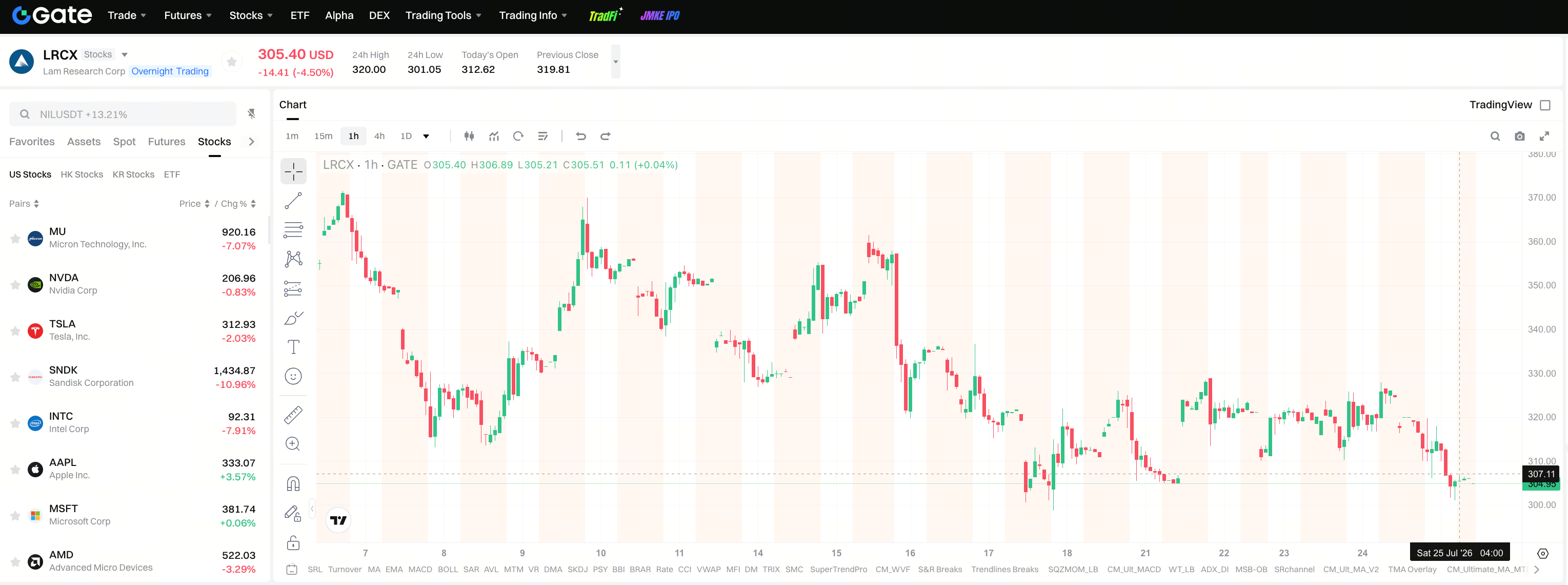
Before any order, confirm the page ticker is LRCX, the issuer maps to Lam Research Corporation, and order type plus available funding match the intended arrangement. Path descriptions outline a repeatable framework only—not buy or sell guidance.
| Check item |
Focus |
Notes |
| Ticker and issuer |
LRCX / Lam Research Corp |
Avoid mix-ups with nearby equipment tickers |
| Funding basis |
Available USDT or other supported balances |
Separate account cash from order-available buying power |
| Order rules |
Type, validity, fees |
Reconfirm against fields shown on the page |
The table layers understanding wafer fab equipment above trade execution. Industry research answers what the company does; page checks answer whether an order can be placed under platform rules.
Summary
Lam Research (LRCX) is a Nasdaq-listed wafer fab equipment stock from Lam Research Corporation, focused educationally on etch, deposition, and clean. Customers span Memory, Foundry, and IDM, with applications in advanced nodes, 3D structures, and packaging. Versus Applied Materials and peers, compare process focus—not industry labels alone. On Gate Stocks, verify ticker, issuer, and order fields, and treat CapEx cycles and execution rules as separate risk layers.
FAQ
What does Lam Research do?
Lam Research Corporation supplies wafer fabrication equipment and related services to chipmakers worldwide, with an educational core in etch, deposition, and clean. Headquartered in Fremont, California, it trades on Nasdaq under ticker LRCX.
What is the LRCX stock ticker?
LRCX is the Nasdaq ticker for Lam Research Corporation and the trading code used on Gate Stocks. The display name is typically Lam Research Corp; confirm issuer name and ticker together to avoid mixing LRCX with other equipment stocks.
How does Lam Research make money?
Lam Research mainly earns by selling and servicing wafer fab equipment across etch, deposition, and clean. Chipmaker expansions and process upgrades create tool and service demand; segment mix should follow periodic disclosures, not inferences from a single tool name.
What is the difference between LRCX and AMAT?
LRCX (Lam Research) and AMAT (Applied Materials) both belong to semiconductor equipment, but process mixes differ: Lam Research emphasizes etch, deposition, and clean; Applied Materials typically covers a broader materials-engineering and multi-process module set. Compare product focus and reported segments, not a single equipment-stock label.
How do you buy LRCX stock on Gate?
On Gate Stocks, search ticker LRCX, confirm issuer name, available funding, and order fields, then submit under page rules. With USDT or other stablecoins, confirm funding definitions first. Path descriptions are not investment advice.
What are the main risks of semiconductor equipment stocks?
Main risks include CapEx cycle swings, memory versus logic divergence, customer concentration, regional capacity shifts, export controls, and technology transitions. Platforms also differ on funding currency, fees, and session rules. Risk notes identify variables; they are not trading advice.