مع توسع قطاع البلوكشين من التحويلات البسيطة إلى تطبيقات معقدة مثل التمويل اللامركزي (DeFi)، وألعاب البلوكشين، وSocialFi، والتداول على السلسلة، أصبحت كفاءة سلاسل البلوكشين العامة تحت المجهر أكثر من أي وقت مضى. فالتطبيقات الحديثة تتطلب سرعات تأكيد أعلى، وإنتاجية أكبر، وتجربة مستخدم أكثر استقرارًا، غير أن البلوكشين التقليدي يواجه غالبًا ازدحام الشبكة وتأخير المعاملات في حالات التزامن العالي.
تواجه بيئة EVM، التي تُعد من أكثر بيئات العقود الذكية استخدامًا، تحديات مماثلة. فاعتماد EVMs التقليدية على التنفيذ التسلسلي يجعلها عنق زجاجة مع ارتفاع حجم المعاملات. ونتيجة لذلك، ظهرت EVM المتوازية كابتكار جوهري لسلاسل البلوكشين العامة عالية الأداء، وتبرز Sei كمشروع رائد في هذا المجال.
ما هي EVM المتوازية
EVM المتوازية هي بنية تتيح تنفيذ عدة معاملات في الوقت نفسه. بخلاف EVMs التقليدية التي تعالج المعاملات تباعًا، يحدد التنفيذ المتوازي المعاملات غير المتعارضة في الحالة ويشغلها بشكل متزامن.
الهدف الأساسي هو رفع إنتاجية البلوكشين في ظروف التزامن العالي. فعندما تؤثر معاملتان على حسابات أو عقود ذكية أو بيانات حالة منفصلة، يمكن تنفيذهما في آن واحد دون انتظار إحداهما للأخرى. تستفيد EVM المتوازية من هذا المبدأ لتشغيل عدة مهام في وقت واحد.
مع ذلك، لا يلغي التوازي الحاجة للمنطق التسلسلي بالكامل. إذا حاولت عدة معاملات تعديل نفس بيانات الحالة، يجب على النظام اكتشاف التعارضات وجدولة التنفيذ مجددًا لتفادي عدم الاتساق. أي أن التنفيذ المتوازي يعتمد آلية جدولة أكثر تطورًا.
لماذا تواجه EVMs التقليدية عنق زجاجة في الأداء
تعالج EVMs التقليدية المعاملات بشكل تسلسلي حسب ترتيب دخولها إلى الكتلة، مع تحديث الحالة على السلسلة بعد كل معاملة.
ورغم أن هذا الأسلوب يضمن اتساق الشبكة، إلا أنه يمنع معالجة المعاملات المستقلة في الوقت نفسه. ومع تزايد حجم المعاملات، تتكدس الشبكة بطوابير متزايدة، مما يؤدي إلى الازدحام وارتفاع رسوم Gas.
وتتجلى هذه المشكلة بشكل خاص في التمويل اللامركزي (DeFi) والتداول عالي التردد على السلسلة. فعندما يقوم العديد من المستخدمين بالمبادلة أو التداول أو سك NFTs في وقت واحد، يصعب على النموذج التسلسلي تقديم تجربة مستقرة.
كيف تتيح EVM المتوازية التنفيذ المتوازي
الركيزة الأساسية لـ EVM المتوازية هي اكتشاف تعارضات الحالة.
يقوم النظام بتحليل بيانات الحالة التي قد تصل إليها كل معاملة، ويحدد المعاملات غير المتداخلة. المعاملات التي لا تتعامل مع نفس الحالة توزع على سلاسل تنفيذ منفصلة وتُعالج بشكل متزامن.
تعتمد بعض EVMs المتوازية نموذج التنفيذ المتفائل (Optimistic Execution)، حيث يُفترض عدم وجود تعارضات وتُراجع حالة الاتساق بعد التنفيذ. إذا ظهرت تعارضات، يُعاد ترتيب أو تنفيذ المعاملات المتأثرة.
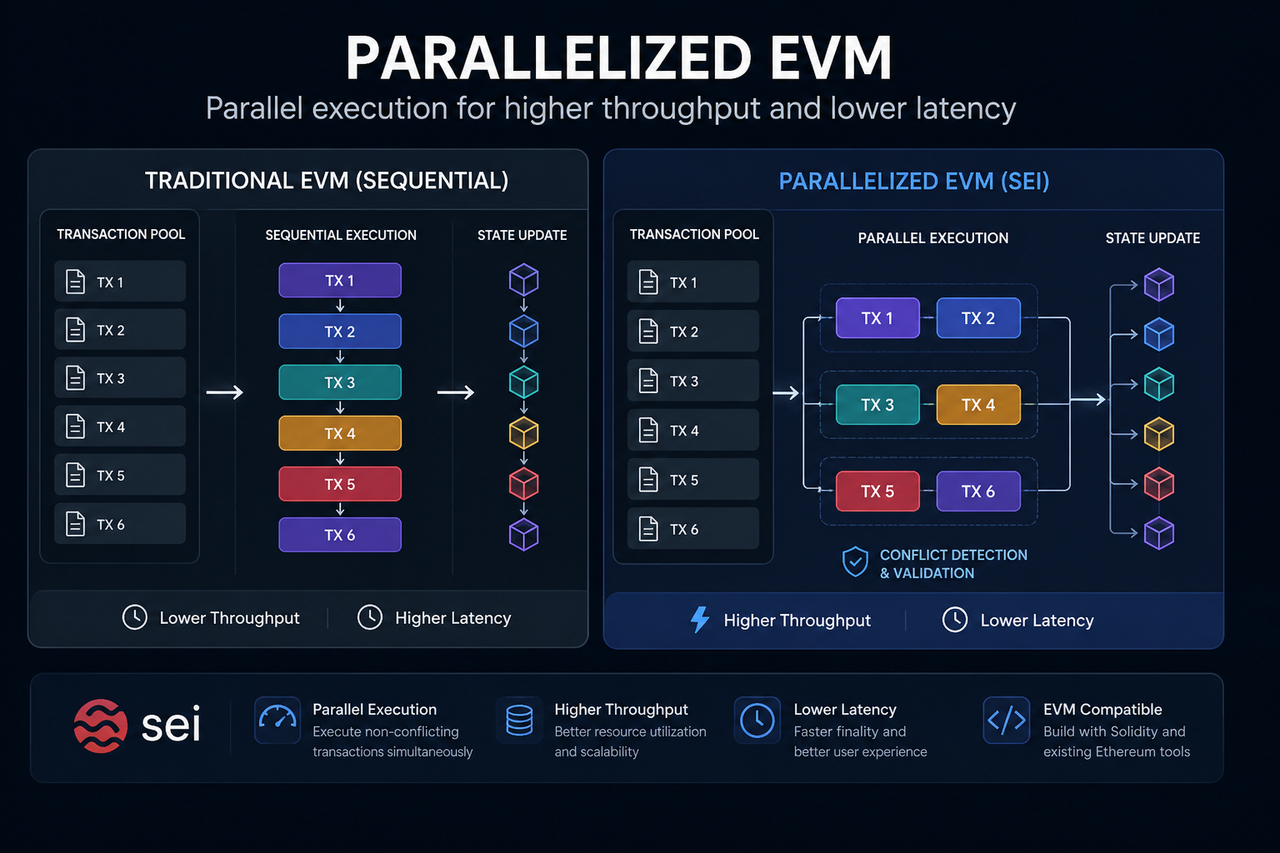
تستفيد هذه البنية من قدرات المعالجات الحديثة متعددة الأنوية، ما يرفع كفاءة معالجة المعاملات بشكل كبير.
لكن التوازي يزيد من تعقيد النظام؛ إذ يجب على العقد إدارة مزامنة الحالة، والتراجع عن التعارضات، والجدولة المتقدمة، ما يتطلب بنية تحتية أكثر تطورًا.
لماذا تركز Sei على EVM المتوازية
Sei هي سلسلة بلوكشين عامة عالية الأداء تدعم EVM.
مقارنةً بشبكات EVM التقليدية، تركز Sei على التفاعلات في الوقت الفعلي على السلسلة، مثل التداول عالي التردد، ودفاتر الطلبات، والعقود الدائمة، وألعاب البلوكشين اللحظية. وتحتاج هذه التطبيقات إلى إنتاجية أعلى وزمن استجابة أقل، ما يجعل التنفيذ التسلسلي عائقًا.
EVM المتوازية في Sei تتيح تشغيل المعاملات المستقلة بشكل متزامن، ما يرفع كفاءة التنفيذ الإجمالية. كما تعزز ميزات مثل Twin-Turbo Consensus وSeiDB ونهائية التنفيذ منخفضة الكمون من استجابة الشبكة.
وبالنسبة للمطورين، يُعد توافق Sei مع أدوات Ethereum ميزة مهمة؛ إذ يمكنهم الاستمرار في استخدام Solidity وMetaMask وبنية EVM الحالية دون الحاجة لتعلم بيئة جديدة كليًا.
ما هي مزايا EVM المتوازية
الميزة الرئيسية لـ EVM المتوازية هي تحسين كفاءة معالجة المعاملات في بيئات التزامن المرتفع.
عبر تنفيذ العديد من المعاملات في الوقت نفسه، تزداد إنتاجية الشبكة وتنخفض أوقات انتظار المعاملات—وهو أمر حاسم للتداول على السلسلة، والتمويل اللحظي، والتطبيقات التفاعلية المعقدة.
كما يعظم التنفيذ المتوازي الاستفادة من عتاد الخوادم الحديثة. ففي حين أن النماذج التسلسلية لا تستخدم إمكانات المعالجات متعددة الأنوية بالكامل، تتماشى EVM المتوازية مع تقنيات الحوسبة الحديثة.
ومن منظور المستخدم، يساعد التنفيذ المتوازي في تقليل ازدحام الشبكة وتقلب رسوم Gas، مما يجعل تجربة الاستخدام أكثر استقرارًا.
ما هي التحديات التي تواجهها EVM المتوازية
رغم مكاسب الأداء الواضحة، يضيف التنفيذ المتوازي تعقيدًا تقنيًا كبيرًا.
يؤدي اكتشاف تعارضات الحالة إلى زيادة الأعباء على النظام، حيث يتعين على العقد تقييم تعارضات المعاملات في الوقت الفعلي وإدارة الجدولة ومزامنة الحالة.
كما يزيد التنفيذ المتوازي من صعوبة التطوير؛ إذ يجب تصميم بعض التطبيقات للتعامل مع الوصول المتزامن للحالة، وإلا قد تنتج عنها نتائج غير متسقة أو نزاعات على الموارد.
يتطلب تحقيق تنفيذ متوازي مستقر مع الحفاظ على التوافق مع EVM تحسينات معمارية شاملة. ولا يزال تحقيق التوازن بين الأداء والتوافق واللامركزية تحديًا مستمرًا أمام EVM المتوازية.
كيف ستعيد EVM المتوازية تشكيل مستقبل سلاسل البلوكشين العامة
مع تطور تطبيقات البلوكشين، أصبحت الكفاءة عاملًا فاصلًا في التنافسية.
تطبيقات السلسلة المستقبلية ستتجاوز تحويل الأصول لتشمل الألعاب اللحظية، ووكلاء AI، والتواصل الاجتماعي على السلسلة، والأنظمة المالية المتقدمة. وتتطلب هذه السيناريوهات إنتاجية أعلى وزمن استجابة أقل، وهو ما قد لا توفره النماذج التسلسلية التقليدية.
EVM المتوازية تمثل تحولًا في منظومة EVM—من التركيز على "التوافق أولًا" إلى الجمع بين الأداء وقابلية التوسع.
الملخص
EVM المتوازية هي بنية تتيح تنفيذ المعاملات بشكل متزامن، متغلبة بذلك على حدود الأداء للنماذج التسلسلية التقليدية.
مع تزايد الطلب على التمويل اللامركزي (DeFi)، وألعاب البلوكشين، والتفاعلات عالية التردد على السلسلة، أصبح التنفيذ المتوازي ضرورة لسلاسل البلوكشين العامة عالية الأداء. تستفيد EVM المتوازية من قدرات الأجهزة الحديثة وتعزز إنتاجية الشبكة وفعاليتها اللحظية مقارنةً بـ EVMs التقليدية.
وتبرز Sei كمشروع ريادي في مجال EVM المتوازية، حيث تركز على تحسين الأداء عبر التنفيذ المتوازي وبنية منخفضة الكمون، مع الحفاظ على التوافق مع أدوات تطوير Ethereum.
الأسئلة الشائعة
ما الذي يميز EVM المتوازية عن EVM التقليدية؟
تنفذ EVMs التقليدية المعاملات بشكل تسلسلي، بينما تتيح EVMs المتوازية تنفيذ المعاملات المستقلة بشكل متزامن.
لماذا تعتبر EVM المتوازية مثالية للتطبيقات عالية التردد؟
التداول عالي التردد والتفاعلات اللحظية تحتاج إلى إنتاجية أكبر وزمن استجابة أقل. التنفيذ المتوازي يقلل من أوقات الانتظار.
لماذا تركز Sei على EVM المتوازية؟
Sei تستهدف التفاعلات عالية الأداء على السلسلة، وتعمل على رفع كفاءة التنفيذ مع الحفاظ على التوافق مع أدوات Ethereum.
هل تلغي EVM المتوازية التنفيذ التسلسلي بالكامل؟
لا. عندما تتعارض المعاملات في الحالة، يعالجها النظام بشكل تسلسلي أو يعيد تنفيذها حسب الحاجة.
ما هي التحديات الرئيسية أمام EVM المتوازية؟
تشمل التحديات الرئيسية اكتشاف تعارضات الحالة، وجدولة التنفيذ المعقدة، وتحقيق التوازن بين التوافق والثبات.