The storage industry has historically followed two main technological routes: HDD and Flash. Western Digital once managed both hard drive and flash operations simultaneously, making it difficult for investors to distinguish between the two cycles using a single ticker. After the spin-off, WDC focuses on mechanical hard drives, while SNDK specializes in NAND Flash and SSD, clarifying the boundaries and financial reporting for US storage companies.
From the perspective of digital asset users, SNDK is a US stock available for trading on platforms such as Gate Stocks using USDT and other funds. Understanding SNDK’s business scope, industry position, and cyclical factors is essential for differentiating SNDK from WDC, Micron, and other storage-related US equities.
What is SanDisk (SNDK)? Which listed company does it represent?
SanDisk Corporation became an independent, publicly traded company in 2025 following its spin-off from Western Digital. Listed on Nasdaq under the ticker SNDK, SanDisk covers NAND Flash manufacturing, SSDs, and storage solutions for enterprise, cloud, client, and automotive applications.
SNDK and Western Digital (WDC) are now separate entities: WDC retains the HDD business, while SNDK inherits the NAND Flash and SSD operations. SanDisk Spin-off and WDC / SNDK Relationship details the spin-off timeline, shareholder allocation, and business boundaries. Financial reports and industry research should use SNDK as the entry point and review WDC’s HDD metrics separately.
What business did SNDK inherit after SanDisk’s spin-off from Western Digital?
Western Digital completed its Flash business spin-off in 2025, granting shareholders SNDK stock proportional to their holdings. Post-spin-off, WDC and SNDK are separately quoted on Nasdaq and independently disclose financial data. SNDK inherits NAND wafer and chip production, enterprise and client SSDs, embedded flash, and automotive flash solutions; WDC’s revenue is primarily driven by HDD.
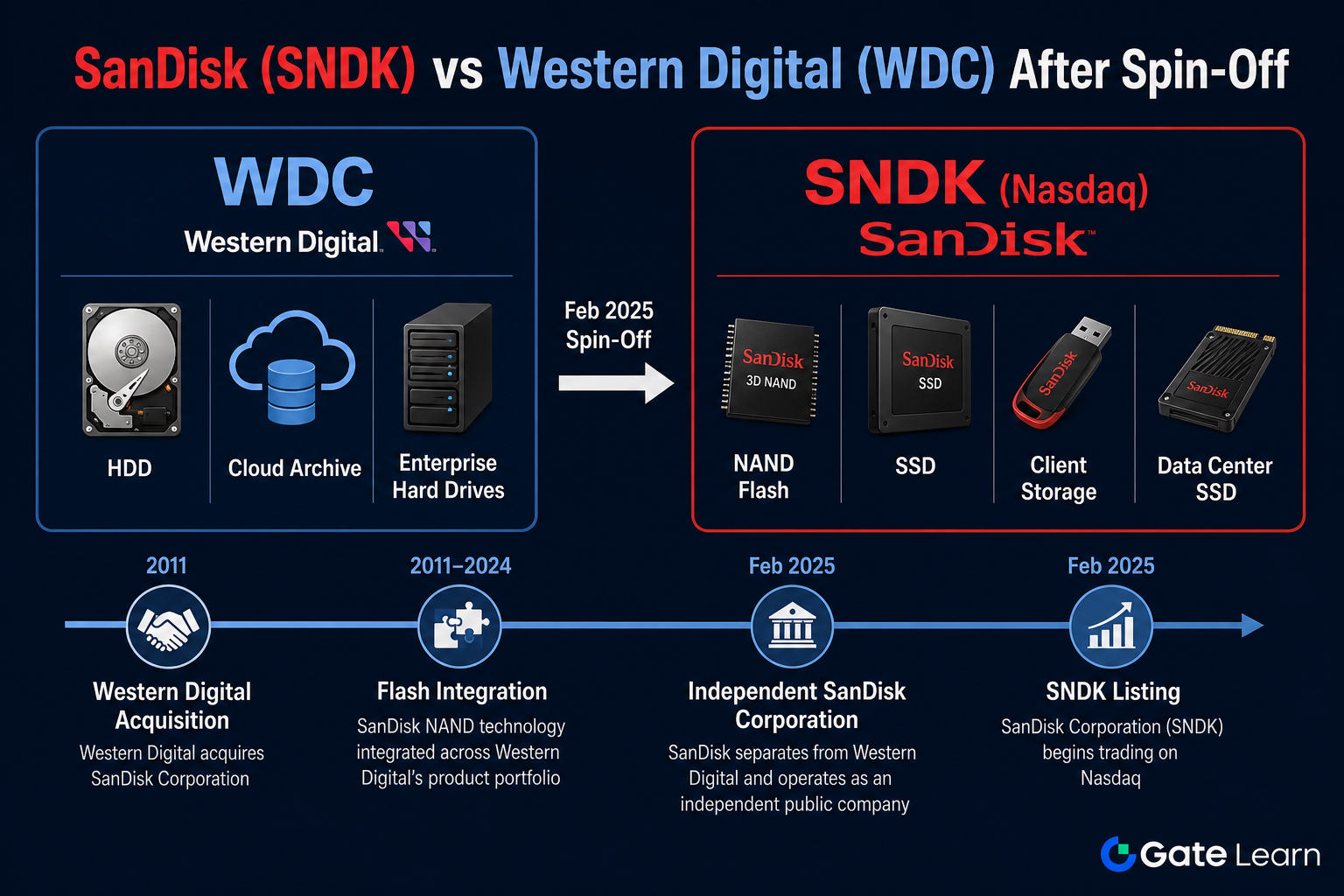 Figure 1. Business division after SanDisk spin-off: WDC retains HDD storage, SNDK independently inherits NAND Flash and SSD operations.
SNDK’s financial performance directly reflects NAND pricing and SSD shipments, while WDC is more aligned with HDD shipments and cloud archiving demand. The two business models have structurally different capital expenditures and gross margin fluctuations.
What is SNDK’s core business? How are NAND Flash and SSD differentiated?
SNDK’s business is built on NAND Flash technology, with SSDs and embedded flash as primary product forms. SNDK Business Structure and Product Matrix outlines the product lines across enterprise, client, mobile, and automotive sectors.
NAND Flash enables data read/write at the chip level; SSDs integrate NAND, controllers, and firmware into solid-state drives for data centers, PCs, and industrial endpoints. SNDK controls NAND capacity upstream, optimizes controllers and firmware midstream, and delivers SSDs or embedded solutions downstream to OEMs and distributors.
| Level |
Technology/Product |
Function |
Typical Downstream |
| Upstream |
NAND Flash wafer |
Storage unit manufacturing, process iteration |
Internal SSD production lines, embedded customers |
| Midstream |
Controllers & firmware |
Read/write management, error correction, performance optimization |
Enterprise and client SSDs |
| Downstream |
SSD / Embedded Flash |
Standardized storage products for end-users |
Cloud vendors, PC brands, automotive electronics |
NAND determines cost and supply flexibility, while SSDs drive revenue mix and customer retention. Analyzing SNDK stock requires tracking both average NAND selling prices and SSD shipment structure.
How does SanDisk operate across the storage industry chain? From wafer to end product
SanDisk spans manufacturing, integration, and delivery: wafer fabs produce NAND, controllers and firmware integrate chips into storage units, and finished products—SSDs, embedded flash, or retail storage cards—enter the supply chains of data centers, cloud infrastructure, and consumer devices.
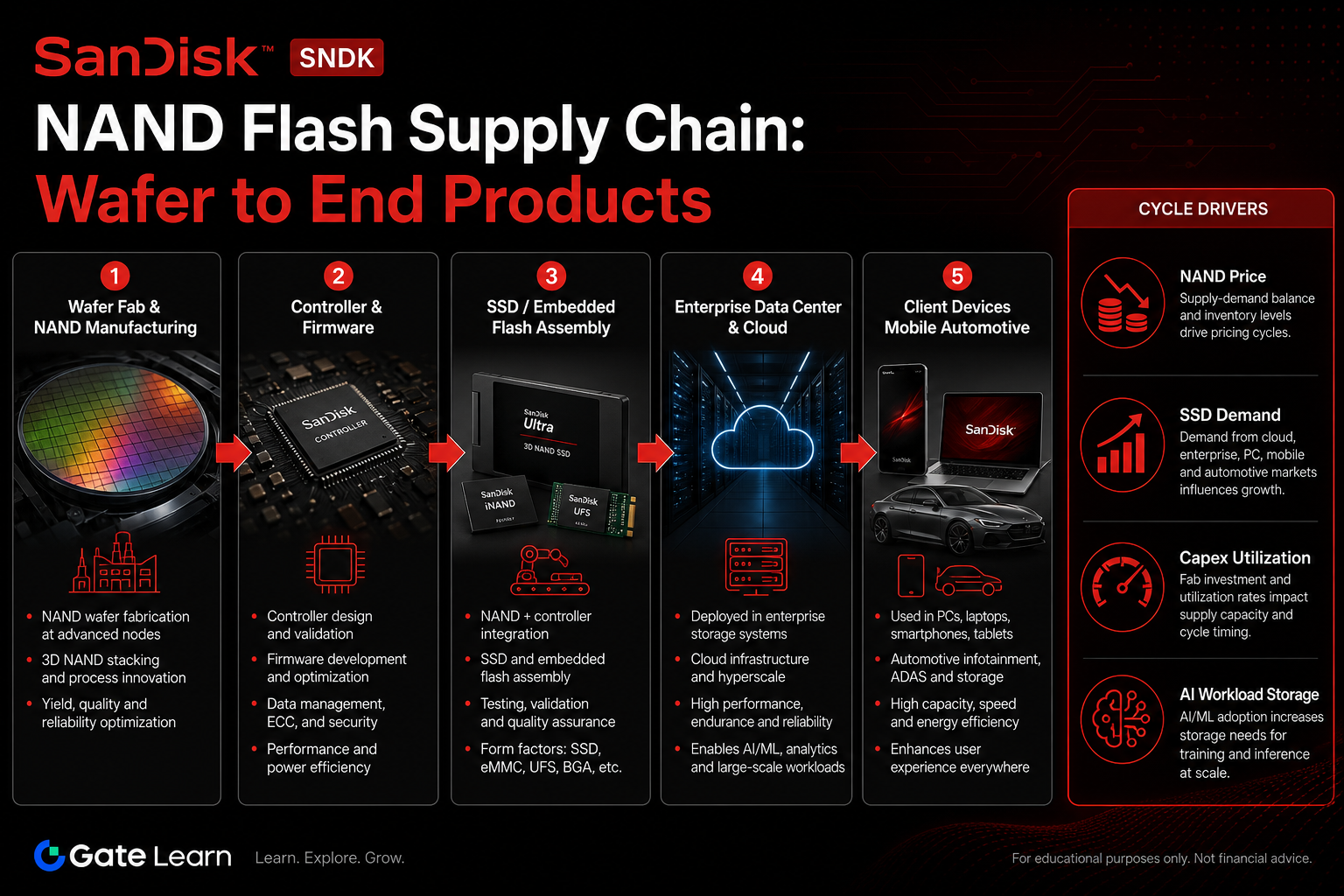 Figure 2. NAND Flash industry chain process: from wafer manufacturing and controller integration to enterprise and client SSD delivery.
Upstream capital expenditure determines NAND supply, while downstream cloud investments and PC upgrades drive SSD demand. SNDK’s gross margin is influenced by both wafer costs and end-user demand.
What industry cycles impact SNDK stock? How do NAND prices and SSD demand transmit?
SNDK stock is highly sensitive to the NAND Flash industry cycle: when expansion leads to oversupply, average NAND prices fall and gross margins are pressured; when cloud providers and AI infrastructure drive SSD procurement, increased shipments can partially offset price declines. The transmission path is wafer capital expenditure → capacity release → NAND price fluctuation → SSD price adjustment → SNDK revenue and profit margin changes.
| Cycle Variable |
Supply Side Signal |
Demand Side Signal |
Impact on SNDK |
| NAND Price |
New capacity, utilization rate |
Inventory clearance speed |
Direct impact on chip gross margin |
| Enterprise SSD Demand |
Product certification cycle |
Cloud capex, AI cluster expansion |
Influences high-margin revenue share |
| Client SSD Demand |
Channel inventory |
PC, game console upgrades |
Affects consumer shipments and ASP |
| Capital Expenditure |
Process migration, fab investment |
— |
Shapes long-term cost curve and cash flow |
SNDK Core Metrics and Risk Checklist provides a framework for monitoring gross margin, inventory turnover, capital expenditure, and capacity utilization. Cycle analysis must consider both supply and demand signals; a single NAND price point is insufficient to capture SSD structural changes.
What role does SNDK play in AI and data center storage demand?
AI training and inference require higher throughput and lower latency in storage. NAND Flash and SSDs serve as high-speed cache, data staging, and persistent storage in AI data centers. SNDK enterprise SSDs target cloud providers and AI infrastructure operators, commonly used for hot and warm data storage layers. SNDK and AI Storage Demand explains storage tiering for training, inference, and edge scenarios. AI demand is not a one-way boon; procurement cycles and competitor capacity still affect shipment performance.
What are the advantages and risks of holding or trading SNDK stock?
Advantages: SNDK has clearly defined business boundaries and independent financial reporting post-spin-off, facilitating comparison with WDC and Micron. The SanDisk brand is well-recognized in consumer flash, and enterprise SSDs address cloud and AI infrastructure needs. Gate Stocks allows SNDK trading using USDT; Gate Buy SNDK details account setup, ticker search, and order verification.
Risks and limitations: NAND price volatility affects gross margins; profitability is pressured during overcapacity phases; process competition and customer concentration drive performance fluctuations; SNDK must compete with Samsung, SK Hynix, and Micron post-spin-off; US stock trading involves exchange rate and settlement rules. Each advantage, risk, and limitation should be assessed separately and does not constitute investment advice.
Post-spin-off, SNDK and WDC follow distinct technological paths: WDC focuses on HDD with relatively stable margins; SNDK centers on NAND and SSD, offering higher growth potential but greater price cycle volatility. Micron (MU) covers both DRAM and NAND, while SNDK is more purely exposed to the NAND cycle. Seagate (STX) and WDC are both HDD-focused, while SNDK operates in the flash segment.
| Asset |
Ticker |
Core Technology |
Main Cycle Variables |
| SanDisk |
SNDK |
NAND Flash, SSD |
NAND price, SSD demand, flash capex |
| Western Digital |
WDC |
HDD |
Cloud archiving demand, HDD shipments, unit capacity cost |
| Micron |
MU |
DRAM, NAND |
Memory and flash cycles, HBM demand |
| Seagate |
STX |
HDD |
HDD market supply/demand, large drive pricing |
SNDK vs WDC vs Micron compares business purity, cycle exposure, and financial reporting. Confirm that SNDK’s ticker corresponds to SanDisk Corporation—not Western Digital or other storage vendors—before trading or research.
Summary
SanDisk Corporation was independently listed on Nasdaq as SNDK in February 2025, inheriting NAND Flash and SSD operations; WDC retains HDD. SNDK’s industry chain spans wafers, controller integration, and end-user shipments, with cycles driven by NAND pricing, SSD demand, and capital expenditure. AI and data centers create new use cases for enterprise SSDs. SNDK, WDC, Micron, and Seagate differ fundamentally in technology and cycle exposure and should be analyzed separately by ticker.
FAQ
Which stock is SNDK? What is its relationship to the SanDisk brand?
SNDK is the Nasdaq ticker for SanDisk Corporation, the independent flash and SSD company spun off from Western Digital in 2025. SanDisk is both the consumer storage brand and the name of the listed entity post-spin-off.
Can SNDK and WDC still be considered the same company?
No. After the spin-off, WDC and SNDK are two independent, publicly traded companies with separate trading and financial disclosures. WDC operates the HDD business; SNDK operates the NAND Flash and SSD business. Shareholders receive SNDK shares according to spin-off rules.
What industry factors mainly drive SNDK stock?
SNDK stock is primarily influenced by NAND Flash pricing, wafer capacity utilization, enterprise and client SSD shipments, and the pace of capital expenditure in storage. Unlike WDC’s HDD cycle drivers, SNDK’s profitability is closely tied to NAND market dynamics.
What products does SNDK provide for AI data centers?
SNDK delivers enterprise SSDs and related flash solutions for AI training and inference infrastructure, providing high-speed, high-capacity solid-state storage layers. These are used for hot data caching, model weight loading, and intermediate result staging, with deployment varying by customer architecture.
How can you find SNDK stock on Gate?
Search for the ticker SNDK or the name SanDisk on Gate Stocks to view market and trading details. When using USDT as funding, complete account setup and verify the ticker corresponds to SanDisk Corporation.
What risks should you check before researching SNDK stock?
Monitor NAND price volatility, capital expenditure and overcapacity, process competition, customer concentration, post-spin-off operational scale, and risks related to exchange rates and platform rules for US stock trading. Use SNDK’s independent financial disclosures for analysis and avoid confusion with WDC’s historical consolidated reports.