Unlike traditional online games that rely on centralized servers to determine outcomes, TOYLAND integrates smart contracts and Chainlink VRF to make critical game processes verifiable on-chain. The ecosystem also introduces a dual-token structure consisting of TOYL and USDTOY to separate value accrual from payment and settlement functions.
By combining arcade gameplay, blockchain transparency, and Web3 incentives, TOYLAND aims to create a sustainable entertainment ecosystem where users can participate, earn rewards, and verify key game outcomes.
What Is TOYLAND?
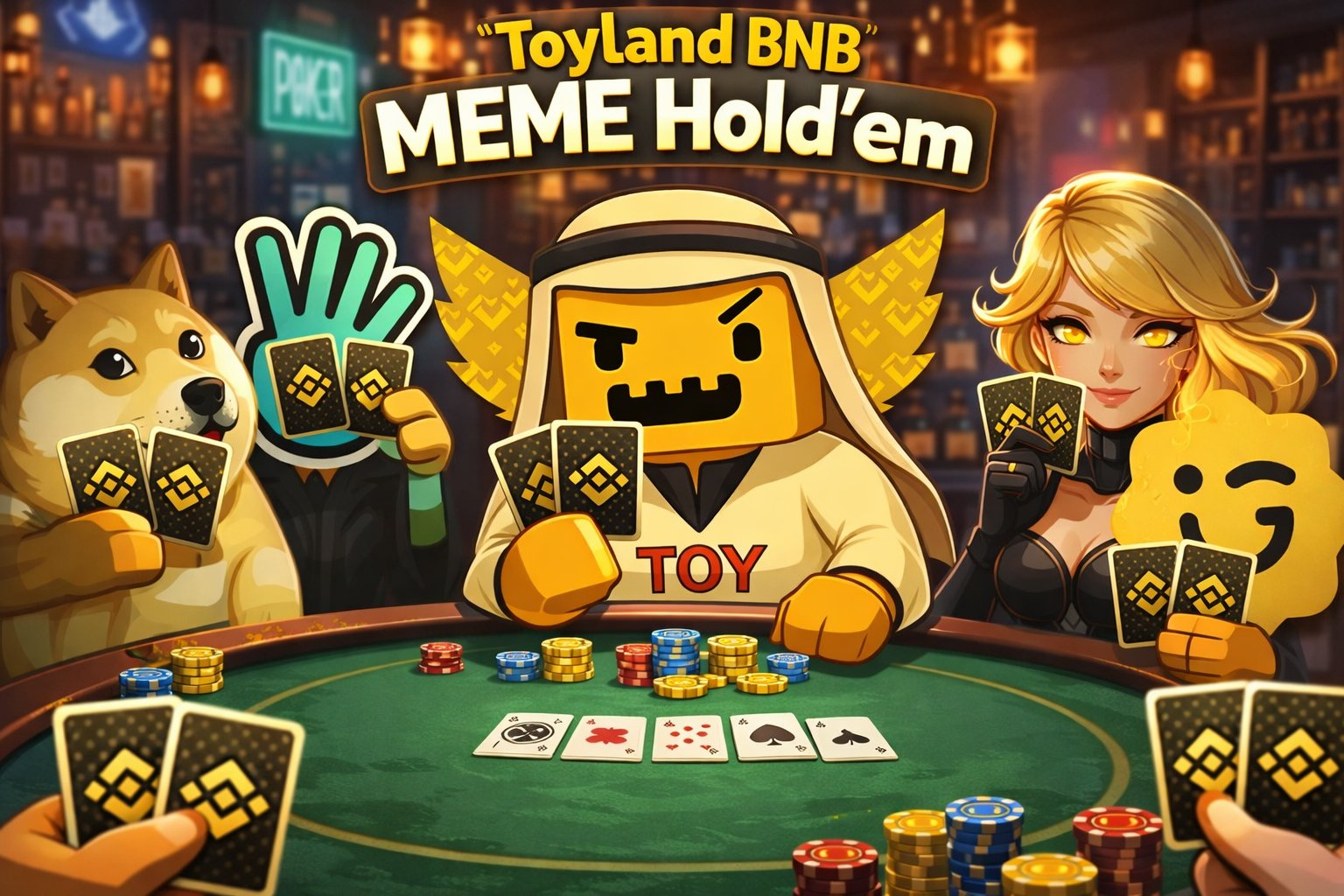
TOYLAND is an on-chain arcade gaming ecosystem designed to bring fast-paced Web3 entertainment to BNB Chain. Rather than focusing on NFT-based role-playing games or long-term character progression, TOYLAND emphasizes quick gameplay, transparent outcomes, and player rewards.
The platform integrates smart contracts and verifiable randomness to ensure that game results are generated fairly. Players interact directly with blockchain infrastructure through their wallets, while key game data and reward distribution mechanisms are recorded transparently.
TOYLAND's ecosystem revolves around several core components:
- On-chain arcade games
- Chainlink VRF
- TOYL token
- USDTOY settlement asset
- Smart contracts
- Community incentive mechanisms
These components work together to provide a transparent and reward-driven gaming experience.
How Does TOYLAND's On-Chain Arcade System Work?
TOYLAND's gaming infrastructure relies on smart contracts and blockchain execution. Players connect their wallets, select a game, and interact with the platform through on-chain transactions.
After a player enters a game, Chainlink VRF generates a verifiable random number. Smart contracts then calculate the result and distribute rewards according to predefined rules.
The overall process can be summarized as follows:
| Stage |
Description |
| Player Participation |
Connect wallet and join a game |
| Randomness Generation |
Chainlink VRF produces random values |
| Smart Contract Execution |
Game rules are applied |
| Reward Distribution |
Assets are sent to players |
| On-Chain Records |
Key information is recorded |
This structure allows TOYLAND to deliver a gaming experience that is more transparent than traditional server-based systems.
What Roles Do TOYL and USDTOY Play?
TOYLAND uses a dual-token model consisting of TOYL and USDTOY.
TOYL serves as the core utility token of the ecosystem. It supports rewards, ecosystem incentives, and access to certain features and activities.
USDTOY, on the other hand, is designed primarily for payment and settlement purposes. Separating ecosystem value from transactional functions helps reduce the impact of token price volatility on gameplay.
The relationship among the main components of the ecosystem is shown below:
| Asset |
Primary Role |
Main Function |
| TOYL |
Utility token |
Rewards and ecosystem incentives |
| USDTOY |
Settlement asset |
Payment and in-game transactions |
| BNB |
Network asset |
Gas fees |
| Chainlink VRF |
Infrastructure |
Verifiable randomness |
This dual-token structure allows different functions to operate independently, contributing to the long-term stability of the ecosystem.
How Does Chainlink VRF Ensure Fair Game Outcomes?
Chainlink VRF is one of the most important technologies behind TOYLAND's fairness mechanism.
Traditional online games usually rely on centralized servers to generate random results. Players often have no way to independently verify whether outcomes have been manipulated.
TOYLAND addresses this issue through Chainlink VRF. The system generates random numbers together with cryptographic proofs that can be verified on-chain.
The process generally includes:
- A game requests randomness.
- Chainlink VRF generates a random number and proof.
- Smart contracts verify the proof.
- The game result is calculated.
- Rewards are distributed accordingly.
Because randomness generation can be independently verified, no single party can arbitrarily alter game outcomes.
How Do Rewards and Revenue Mechanisms Work?
TOYLAND combines gameplay with incentive mechanisms through its play-to-earn model.
Players receive rewards based on game outcomes and participation. In addition to performance-based incentives, ecosystem activities and community engagement may also contribute to reward distribution.
TOYL plays a central role in the reward system. As players earn TOYL, they can continue participating in games, access additional features, or engage with the broader ecosystem.
The value cycle can be simplified as:
Player participation → Rewards → Token usage → Ecosystem activity → Increased participation
This cycle is designed to support user retention and ecosystem growth.
Like many blockchain gaming projects, the sustainability of the reward model ultimately depends on player activity and ecosystem development.
What Are TOYLAND's Core Games and Ecosystem Features?
TOYLAND focuses on on-chain arcade experiences rather than traditional role-playing games or large-scale virtual worlds.
The ecosystem combines several key features:
- Fast-paced gameplay
- Play-to-earn incentives
- Wallet-based participation
- Verifiable randomness
- Transparent reward distribution
- Community-driven activities
Compared with conventional GameFi projects, TOYLAND places greater emphasis on entertainment and accessibility.
Because transactions occur on BNB Chain, users benefit from relatively low costs and efficient interactions, making frequent gameplay more practical.
What Are the Advantages and Potential Risks of TOYLAND?
One of TOYLAND's main advantages is transparency. Chainlink VRF and smart contracts help ensure that key processes remain verifiable.
Another strength lies in its focused positioning. By concentrating on on-chain arcade experiences, TOYLAND differentiates itself from NFT-heavy GameFi ecosystems.
The project also benefits from BNB Chain's infrastructure, which supports lower transaction costs and faster interactions.
However, several risks should also be considered.
The long-term sustainability of the ecosystem depends on maintaining active users and balancing rewards with platform growth. In addition, regulatory considerations surrounding blockchain gaming and reward-based systems may vary across jurisdictions.
As with many Web3 projects, token economics and user engagement will play an important role in determining the ecosystem's long-term viability.
Conclusion
TOYLAND (TOYL) is a BNB Chain-based on-chain arcade ecosystem that combines smart contracts, Chainlink VRF, and a dual-token structure to deliver transparent and reward-driven gaming experiences.
TOYL and USDTOY serve different functions within the ecosystem, while Chainlink VRF provides verifiable randomness to improve fairness. Together, these components create a blockchain-powered entertainment platform focused on accessibility and transparency.
Rather than competing with traditional AAA games, TOYLAND positions itself as a Web3 arcade ecosystem where users can participate, verify outcomes, and earn rewards through on-chain interactions.
FAQ
What is TOYLAND (TOYL)?
TOYLAND is an on-chain arcade gaming ecosystem built on BNB Chain. It combines smart contracts, Chainlink VRF, and play-to-earn incentives to provide transparent gaming experiences.
What is the total supply of TOYL?
According to the project's tokenomics, TOYL has a total supply of 100 million tokens.
What is the difference between TOYL and USDTOY?
TOYL functions as the ecosystem's utility token and incentive asset, while USDTOY is primarily used for payment and settlement within the platform.
Why does TOYLAND use Chainlink VRF?
TOYLAND uses Chainlink VRF to generate verifiable random numbers, reducing the possibility of manipulated game outcomes and improving transparency.
Is TOYLAND a traditional GameFi project?
TOYLAND differs from many NFT-based GameFi projects by focusing on fast-paced arcade experiences, transparent gameplay, and blockchain-based reward mechanisms.
What are the main risks associated with TOYLAND?
The sustainability of the reward model, user retention, and regulatory developments are among the key factors that could influence the long-term growth of the ecosystem.