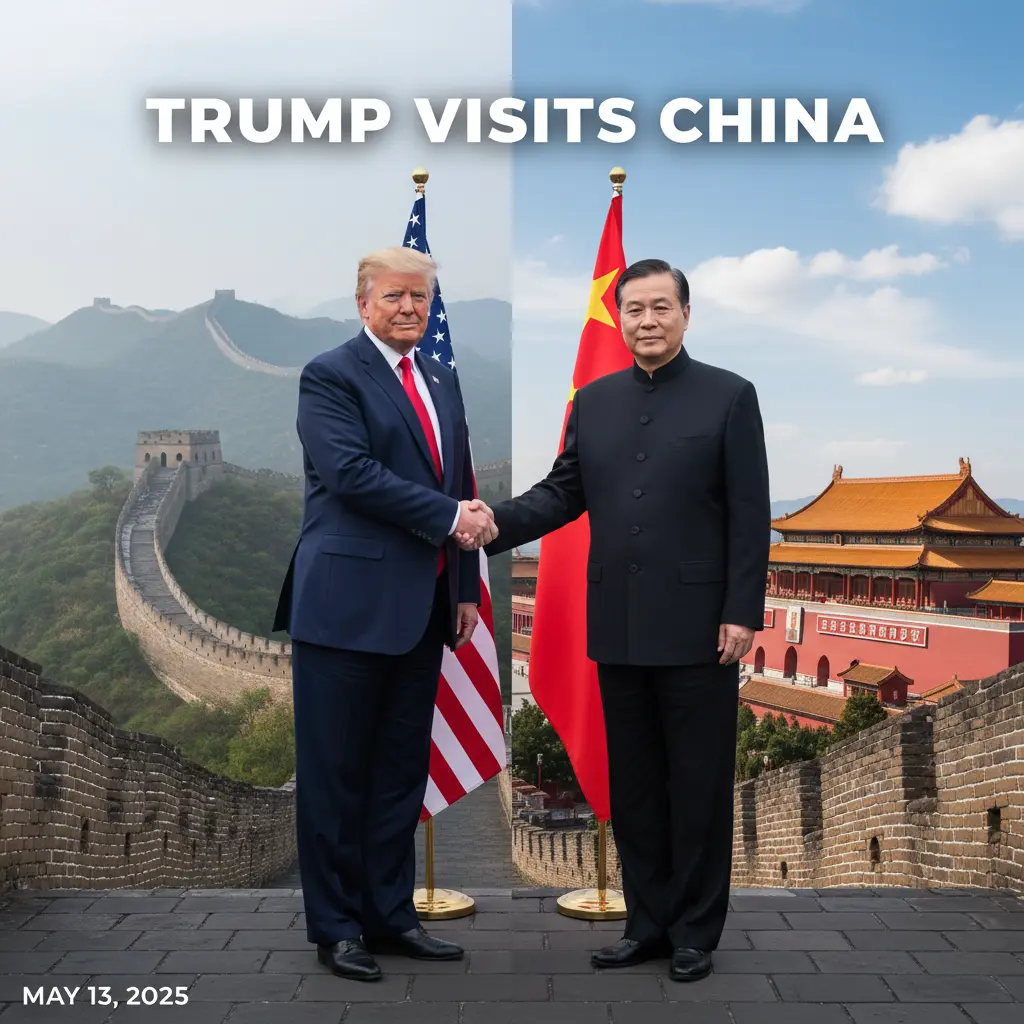
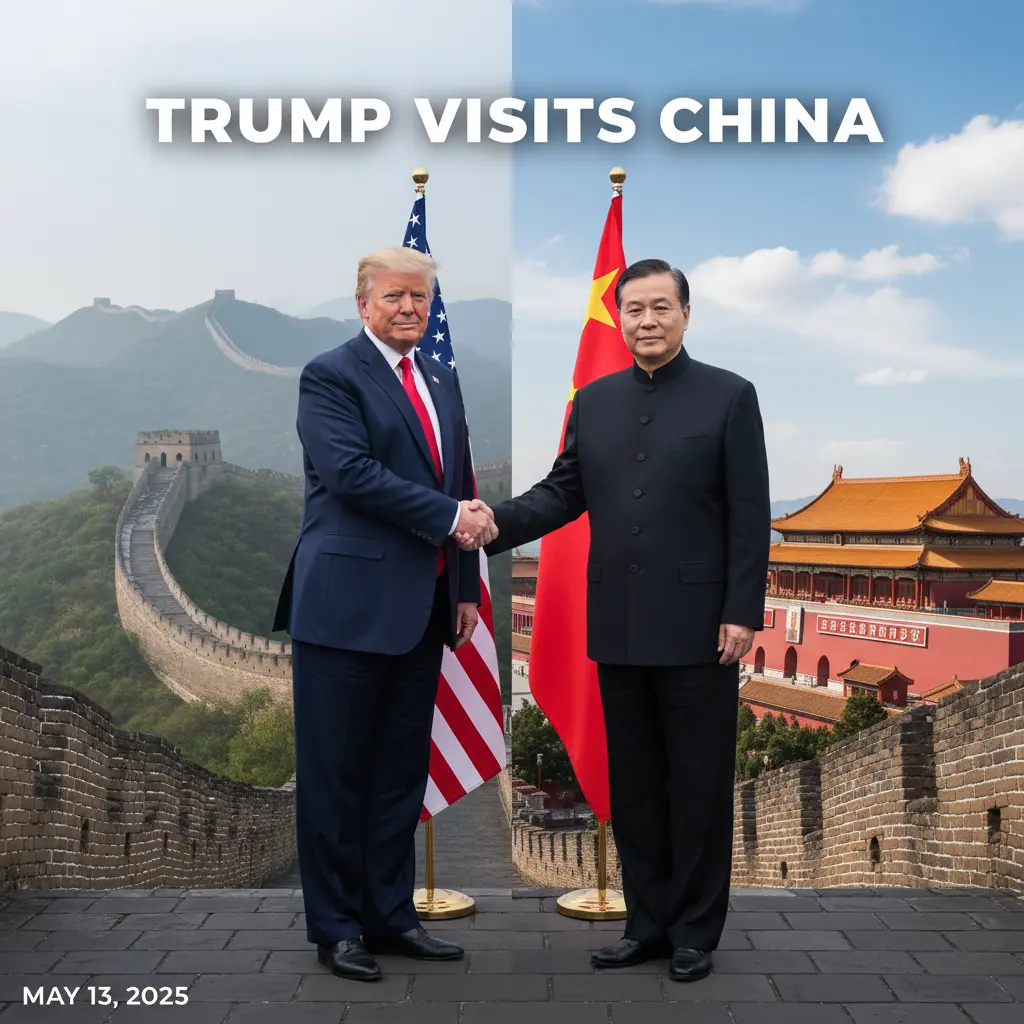
#TrumpVisitsChina
Introduction: A Global Macro Shock Converging Politics, Liquidity & Power Cycles
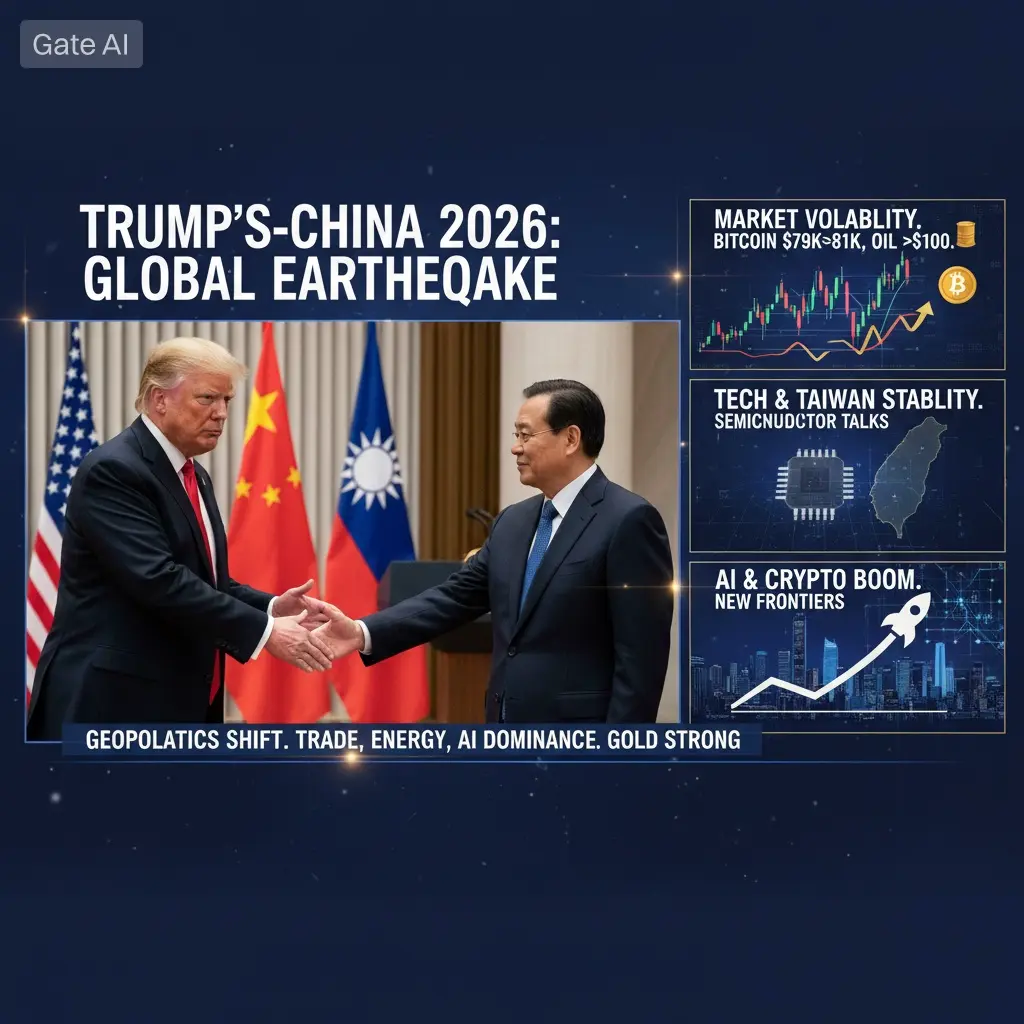
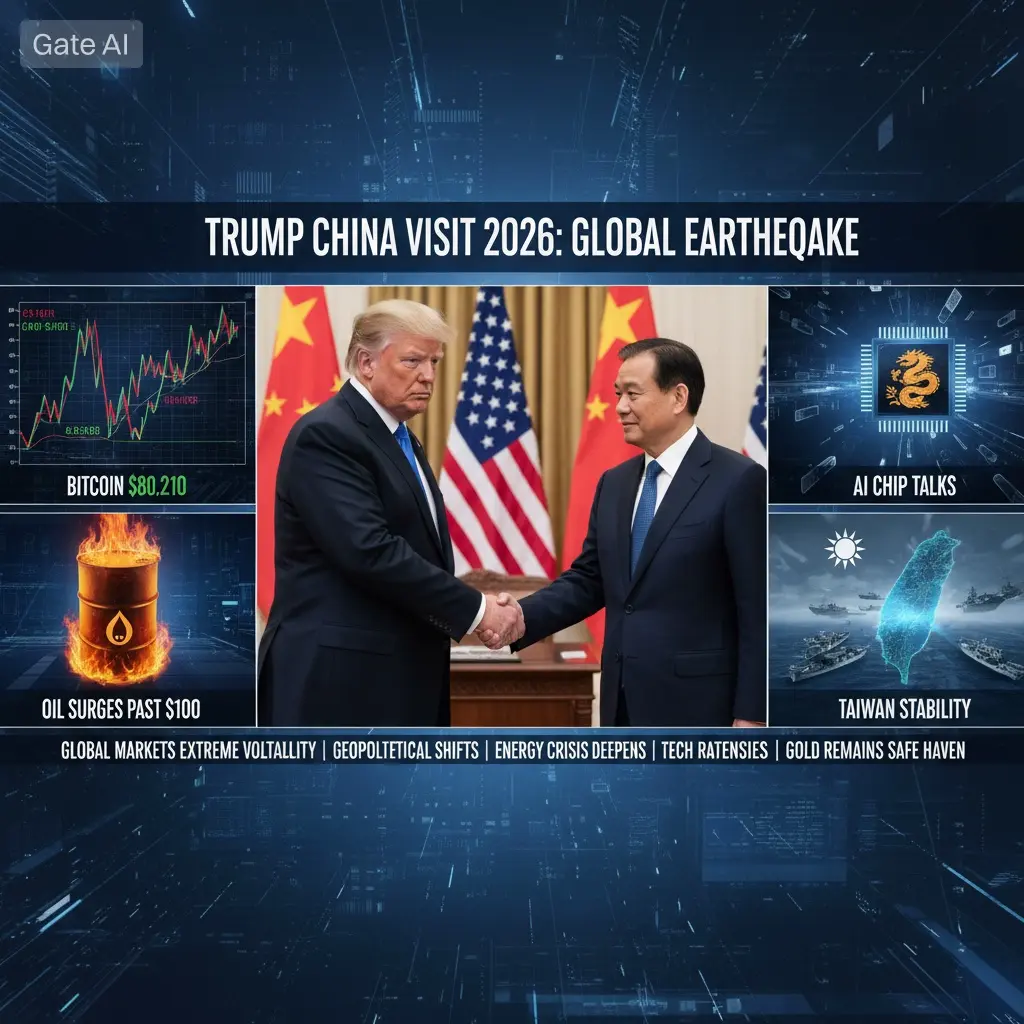
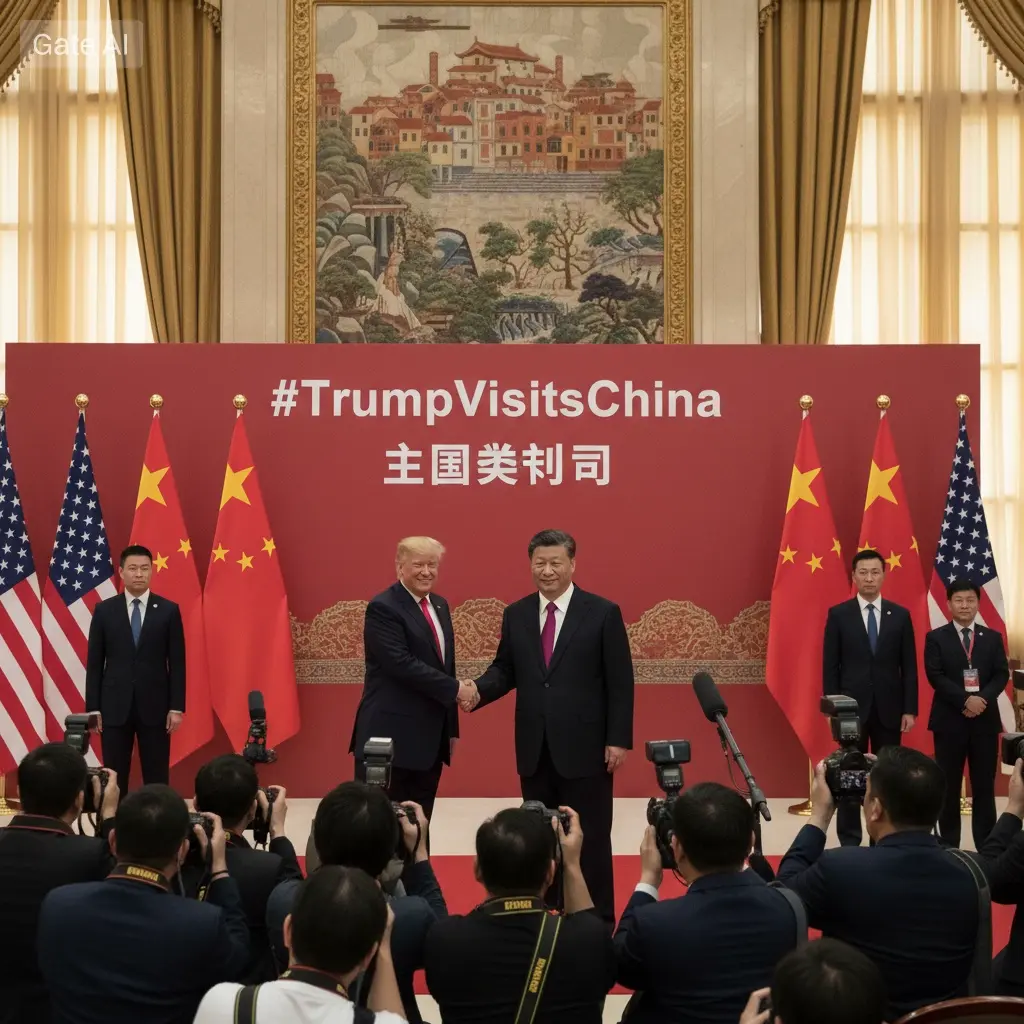
President Donald Trump’s May 13–15, 2026 visit to Beijing stands as one of the most structurally important geopolitical events of the decade because it directly connects global diplomacy with real financial market pricing mechanisms across energy, technology, inflation expectations, and digital asset liquidity cycles.
Unlike traditional diplomatic summits, this visit did not operate in isolation from markets. Instead, it acted as a direct macro transmission event, where every statement, rumor, and trade signal immediately reflected across Bitcoin, equities, oil, gold, bonds, and foreign exchange markets within seconds.
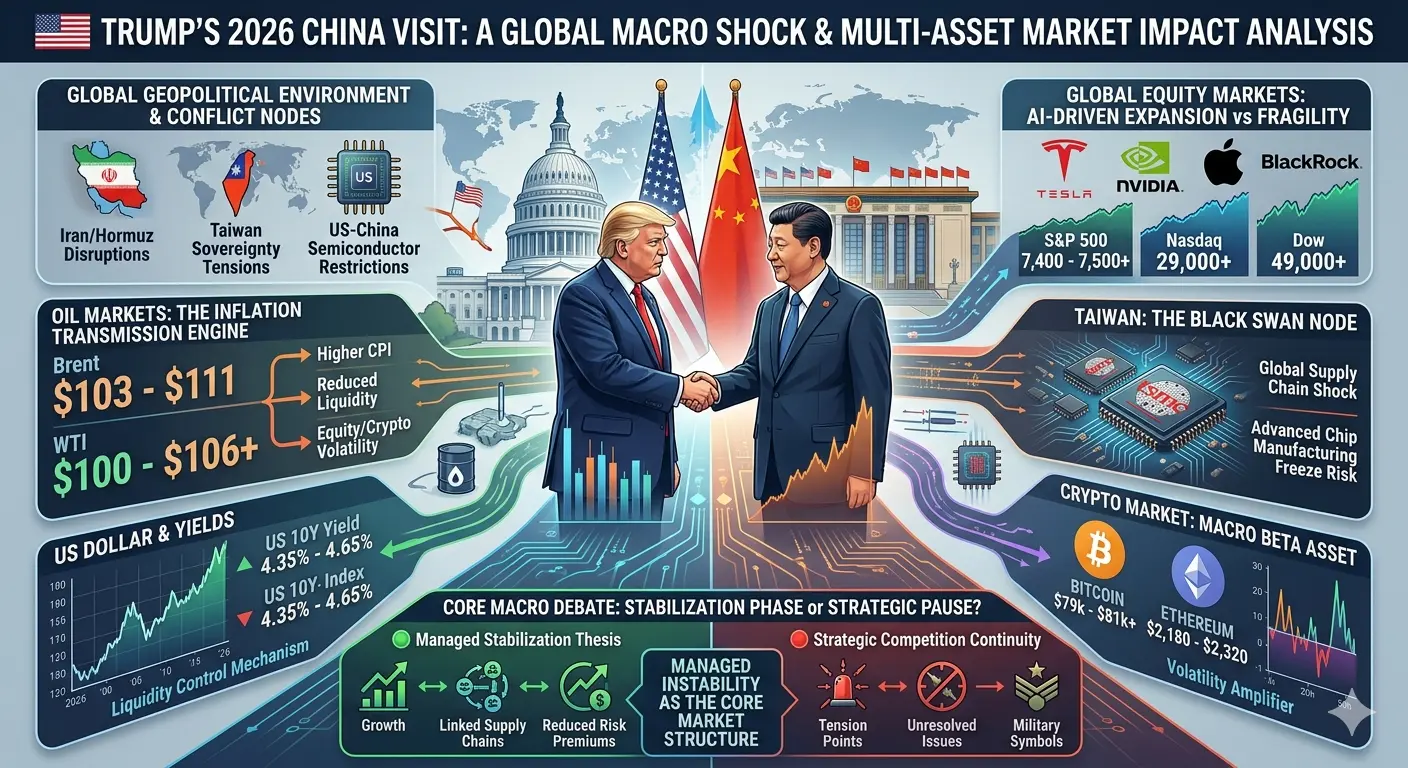
The global environment surrounding this summit was already fragile and highly sensitive due to multiple overlapping pressure points including Iran-related disruptions in the Strait of Hormuz, persistent US-China semiconductor restrictions, unresolved Taiwan sovereignty tensions, and structurally elevated inflation expectations across developed economies.
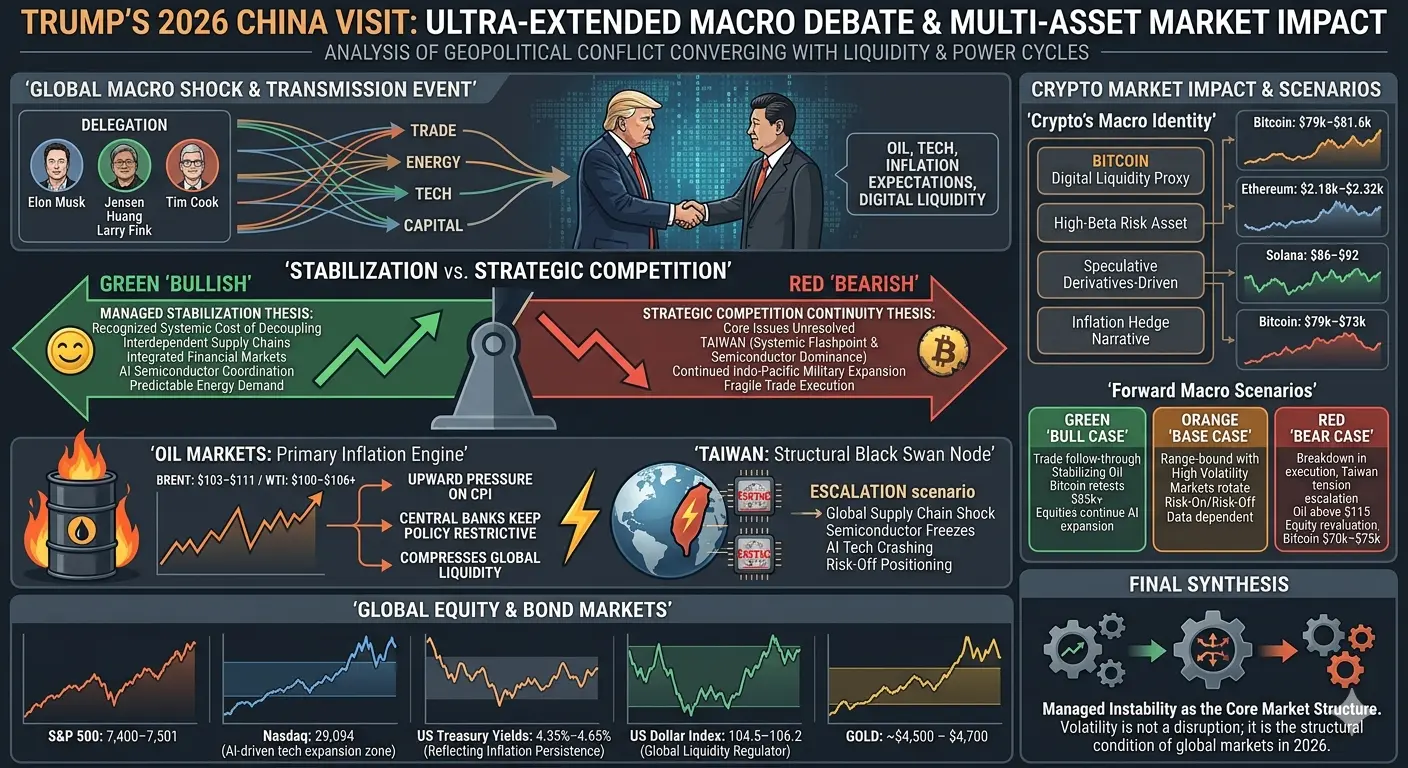
In this environment, Trump’s delegation—accompanied by major corporate figures such as Elon Musk, Jensen Huang, Tim Cook, and Larry Fink—was not symbolic but strategic, representing a convergence of political authority and global capital infrastructure negotiating simultaneously on trade flows, energy procurement, artificial intelligence development, and semiconductor supply chain stability.
Markets interpreted this summit not as a diplomatic endpoint but as a temporary stabilization phase inside a longer structural rivalry cycle between two global superpowers.
Core Macro Debate: Stabilization Phase or Strategic Pause Before Escalation?
Bullish Interpretation: Managed Stabilization Thesis
From a bullish macro perspective, this summit signals that both Washington and Beijing recognize the systemic cost of uncontrolled decoupling. Global supply chains are too interdependent, financial markets too integrated, and technological ecosystems too entangled to allow full separation without triggering structural economic damage.
Proponents of this view argue that:
US-China cooperation—even if limited—is sufficient to stabilize global inflation expectations, reduce tail-risk premiums, and support risk asset valuations across equities and cryptocurrencies.
They highlight that:
AI infrastructure requires cross-border semiconductor coordination
Energy markets depend on predictable demand flows from China
Global manufacturing still relies heavily on Chinese production capacity
Capital markets remain interconnected through dollar liquidity systems
This interpretation supports a risk-on environment where Bitcoin, equities, and industrial commodities benefit from reduced geopolitical stress premiums.
Bearish Interpretation: Strategic Competition Continuity Thesis
The opposing view argues that the summit represents not resolution but strategic cooling inside an ongoing rivalry structure.
According to this perspective, the core issues remain completely unresolved:
Taiwan remains a systemic geopolitical flashpoint tied directly to semiconductor dominance. AI chip restrictions continue as long-term policy instruments. Military positioning in the Indo-Pacific region continues to expand. Trade agreements remain politically announced but structurally fragile in execution.
From this standpoint, the summit is viewed as a temporary narrative stabilization phase before renewed volatility cycles re-emerge.
Institutional analysts increasingly agree on a hybrid model: neither full cooperation nor escalation, but managed competition with cyclical volatility shocks.
Oil Markets: The Primary Inflation Transmission Engine
Energy markets acted as the most immediate and aggressive macro response channel following the summit.
Brent crude surged into the $103 – $111 per barrel range, while WTI moved within $100 – $106+ range, reflecting both geopolitical risk premiums and demand expectations from China.
This oil movement is not just a commodity shift—it is a global inflation transmission mechanism.
Higher energy prices directly increase transportation costs, manufacturing input costs, logistics expenses, and ultimately consumer inflation levels. This creates upward pressure on CPI readings globally, forcing central banks to maintain restrictive monetary policy conditions for longer durations.
The macro implication is clear: higher oil prices compress global liquidity conditions, which historically leads to increased volatility across equities and crypto markets.
Taiwan: The Structural Black Swan Node of Global Markets
Taiwan remains the single most sensitive geopolitical variable in the entire global financial system due to its central role in semiconductor production, particularly advanced chip manufacturing controlled by TSMC.
Any escalation scenario involving Taiwan would not be a regional conflict alone—it would represent a global supply chain shock event, freezing semiconductor flows, disrupting AI development, crashing technology equities, and triggering extreme risk-off positioning across all asset classes including cryptocurrencies.
During the summit, both sides maintained carefully calibrated language emphasizing “strategic stability” and “controlled competition,” which markets interpreted as a temporary de-escalation signal rather than a resolution.
Global Equity Markets: AI Expansion vs Macro Fragility
Global equity indices reached elevated structural levels:
S&P 500: 7,400 – 7,501
Nasdaq: 29,094 (AI-driven tech expansion zone)
Dow Jones: 49,414 – 49,600 range
These levels reflect a dual-market structure:
On one side, AI-driven productivity expansion and corporate earnings strength continue to support long-term bullish equity momentum. On the other side, stretched valuations combined with inflation sensitivity and geopolitical uncertainty introduce persistent fragility into the system.
Markets are therefore not in a pure bull or bear regime—they are in a high-altitude volatility expansion phase where both upside and downside shocks are amplified simultaneously.
Bond Markets & Dollar Liquidity Control Mechanism
US Treasury yields remained elevated in the 4.35% – 4.65% range, reflecting inflation persistence and reduced expectations of aggressive monetary easing.
The US Dollar Index strengthened within the 104.5 – 106.2 range, acting as a global liquidity regulator.
A stronger dollar environment historically leads to:
Tightened global financial conditions
Reduced emerging market liquidity
Lower crypto inflows
Pressure on commodity cycles
This creates a structural macro headwind for risk assets even during geopolitical stabilization phases.
₿ Crypto Market: Macro Beta Asset in a High-Volatility Liquidity Regime
Bitcoin traded within the $79,000 – $81,600 range, showing extreme sensitivity to macro headlines rather than blockchain-native developments.
Ethereum moved between $2,180 – $2,320, while Solana fluctuated $86 – $92, Cardano remained near $0.24 – $0.27, and XRP traded $1.38 – $1.48.
Crypto markets are now operating under a clearly defined macro identity:
It is simultaneously:
A digital liquidity proxy
A high-beta risk asset
A speculative derivatives-driven instrument
And a long-term inflation hedge narrative asset
This dual identity explains why crypto experiences sharp upside rallies and equally aggressive liquidation-driven corrections within short timeframes.
Key volatility drivers included:
Oil-driven inflation expectations
Dollar strength liquidity compression
AI narrative speculation spillover
Geopolitical uncertainty tied to Taiwan
Large-scale derivatives liquidation cascades
Forward Macro Scenarios
Bull Case:
Successful follow-through on trade agreements leads to stabilizing oil prices in the $100 – $110 range, Bitcoin potentially retesting $85,000+, and equities continuing AI-driven expansion trends.
Base Case:
Markets remain range-bound with high volatility as inflation data, Fed policy signals, and geopolitical headlines continuously rotate sentiment between risk-on and risk-off phases.
Bear Case:
Breakdown in implementation or escalation in Taiwan-related tensions pushes oil above $115, triggers equity revaluation, drives Bitcoin toward $70,000–$75,000 liquidity zones, and strengthens gold as a defensive asset above $4,900+.
Final Synthesis: Managed Instability as the Core Market Structure
Trump’s 2026 China visit did not resolve global structural tensions—it redefined how those tensions are managed within financial markets.
The modern macro environment is no longer binary. It is a layered system where cooperation and competition coexist simultaneously, producing continuous volatility rather than directional certainty.
Oil acts as the inflation engine, AI acts as the growth engine, Taiwan acts as the systemic risk node, and crypto acts as the volatility amplifier of global liquidity cycles.
Prices reflect this complexity:
Oil: $100 – $111
Bitcoin: ~$80,000 range
Gold: ~$4,500 – $4,700
Equities: All-time elevated AI-driven regime
The defining truth of this era is that volatility is not a disruption—it is the structural condition of global markets in 2026.
Introduction: A Global Macro Shock Converging Politics, Liquidity & Power Cycles
President Donald Trump’s May 13–15, 2026 visit to Beijing stands as one of the most structurally important geopolitical events of the decade because it directly connects global diplomacy with real financial market pricing mechanisms across energy, technology, inflation expectations, and digital asset liquidity cycles.
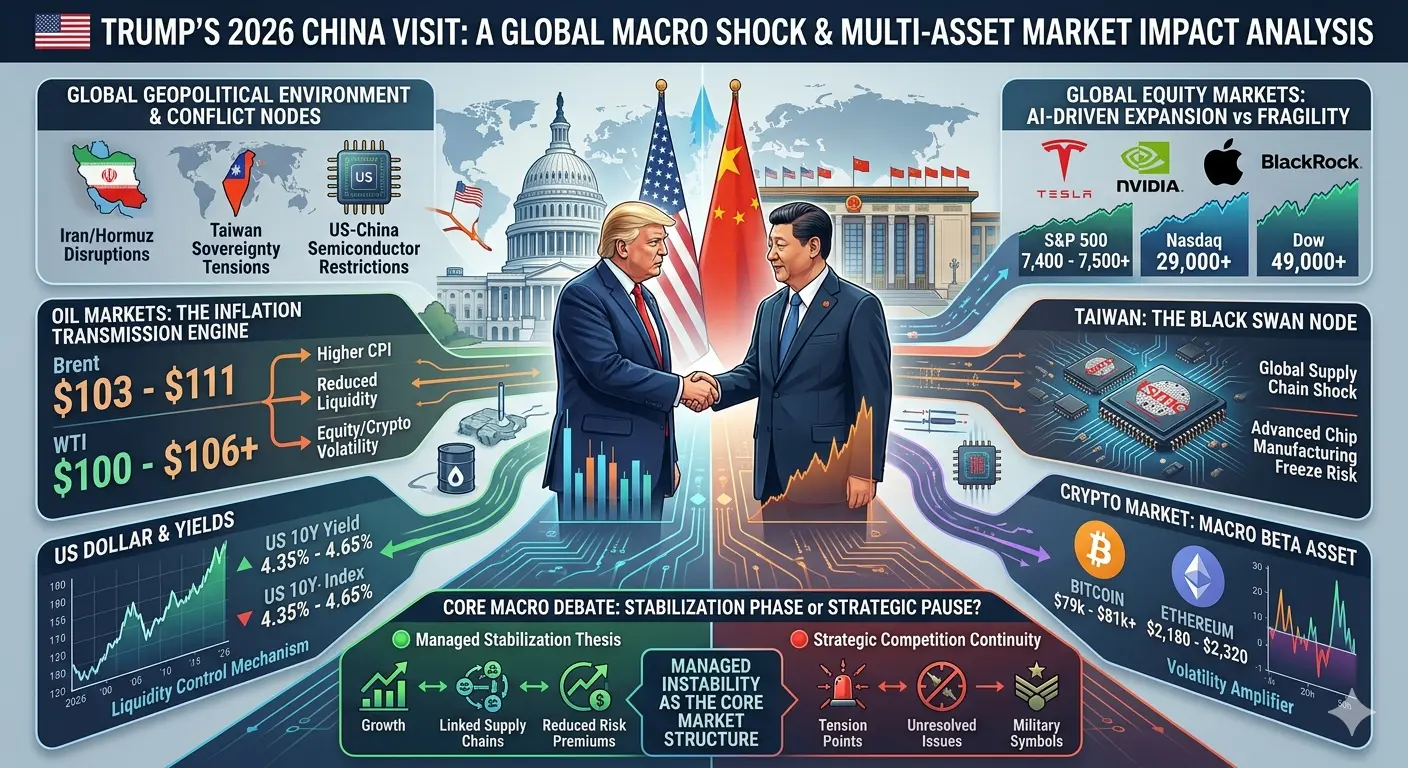
Unlike traditional diplomatic summits, this visit did not operate in isolation from markets. Instead, it acted as a direct macro transmission event, where every statement, rumor, and trade signal immediately reflected across Bitcoin, equities, oil, gold, bonds, and foreign exchange markets within seconds.
The global environment surrounding this summit was already fragile and highly sensitive due to multiple overlapping pressure points including Iran-related disruptions in the Strait of Hormuz, persistent US-China semiconductor restrictions, unresolved Taiwan sovereignty tensions, and structurally elevated inflation expectations across developed economies.
In this environment, Trump’s delegation—accompanied by major corporate figures such as Elon Musk, Jensen Huang, Tim Cook, and Larry Fink—was not symbolic but strategic, representing a convergence of political authority and global capital infrastructure negotiating simultaneously on trade flows, energy procurement, artificial intelligence development, and semiconductor supply chain stability.
Markets interpreted this summit not as a diplomatic endpoint but as a temporary stabilization phase inside a longer structural rivalry cycle between two global superpowers.
Core Macro Debate: Stabilization Phase or Strategic Pause Before Escalation?
Bullish Interpretation: Managed Stabilization Thesis
From a bullish macro perspective, this summit signals that both Washington and Beijing recognize the systemic cost of uncontrolled decoupling. Global supply chains are too interdependent, financial markets too integrated, and technological ecosystems too entangled to allow full separation without triggering structural economic damage.
Proponents of this view argue that:
US-China cooperation—even if limited—is sufficient to stabilize global inflation expectations, reduce tail-risk premiums, and support risk asset valuations across equities and cryptocurrencies.
They highlight that:
AI infrastructure requires cross-border semiconductor coordination
Energy markets depend on predictable demand flows from China
Global manufacturing still relies heavily on Chinese production capacity
Capital markets remain interconnected through dollar liquidity systems
This interpretation supports a risk-on environment where Bitcoin, equities, and industrial commodities benefit from reduced geopolitical stress premiums.
Bearish Interpretation: Strategic Competition Continuity Thesis
The opposing view argues that the summit represents not resolution but strategic cooling inside an ongoing rivalry structure.
According to this perspective, the core issues remain completely unresolved:
Taiwan remains a systemic geopolitical flashpoint tied directly to semiconductor dominance. AI chip restrictions continue as long-term policy instruments. Military positioning in the Indo-Pacific region continues to expand. Trade agreements remain politically announced but structurally fragile in execution.
From this standpoint, the summit is viewed as a temporary narrative stabilization phase before renewed volatility cycles re-emerge.
Institutional analysts increasingly agree on a hybrid model: neither full cooperation nor escalation, but managed competition with cyclical volatility shocks.
Oil Markets: The Primary Inflation Transmission Engine
Energy markets acted as the most immediate and aggressive macro response channel following the summit.
Brent crude surged into the $103 – $111 per barrel range, while WTI moved within $100 – $106+ range, reflecting both geopolitical risk premiums and demand expectations from China.
This oil movement is not just a commodity shift—it is a global inflation transmission mechanism.
Higher energy prices directly increase transportation costs, manufacturing input costs, logistics expenses, and ultimately consumer inflation levels. This creates upward pressure on CPI readings globally, forcing central banks to maintain restrictive monetary policy conditions for longer durations.
The macro implication is clear: higher oil prices compress global liquidity conditions, which historically leads to increased volatility across equities and crypto markets.
Taiwan: The Structural Black Swan Node of Global Markets
Taiwan remains the single most sensitive geopolitical variable in the entire global financial system due to its central role in semiconductor production, particularly advanced chip manufacturing controlled by TSMC.
Any escalation scenario involving Taiwan would not be a regional conflict alone—it would represent a global supply chain shock event, freezing semiconductor flows, disrupting AI development, crashing technology equities, and triggering extreme risk-off positioning across all asset classes including cryptocurrencies.
During the summit, both sides maintained carefully calibrated language emphasizing “strategic stability” and “controlled competition,” which markets interpreted as a temporary de-escalation signal rather than a resolution.
Global Equity Markets: AI Expansion vs Macro Fragility
Global equity indices reached elevated structural levels:
S&P 500: 7,400 – 7,501
Nasdaq: 29,094 (AI-driven tech expansion zone)
Dow Jones: 49,414 – 49,600 range
These levels reflect a dual-market structure:
On one side, AI-driven productivity expansion and corporate earnings strength continue to support long-term bullish equity momentum. On the other side, stretched valuations combined with inflation sensitivity and geopolitical uncertainty introduce persistent fragility into the system.
Markets are therefore not in a pure bull or bear regime—they are in a high-altitude volatility expansion phase where both upside and downside shocks are amplified simultaneously.
Bond Markets & Dollar Liquidity Control Mechanism
US Treasury yields remained elevated in the 4.35% – 4.65% range, reflecting inflation persistence and reduced expectations of aggressive monetary easing.
The US Dollar Index strengthened within the 104.5 – 106.2 range, acting as a global liquidity regulator.
A stronger dollar environment historically leads to:
Tightened global financial conditions
Reduced emerging market liquidity
Lower crypto inflows
Pressure on commodity cycles
This creates a structural macro headwind for risk assets even during geopolitical stabilization phases.
₿ Crypto Market: Macro Beta Asset in a High-Volatility Liquidity Regime
Bitcoin traded within the $79,000 – $81,600 range, showing extreme sensitivity to macro headlines rather than blockchain-native developments.
Ethereum moved between $2,180 – $2,320, while Solana fluctuated $86 – $92, Cardano remained near $0.24 – $0.27, and XRP traded $1.38 – $1.48.
Crypto markets are now operating under a clearly defined macro identity:
It is simultaneously:
A digital liquidity proxy
A high-beta risk asset
A speculative derivatives-driven instrument
And a long-term inflation hedge narrative asset
This dual identity explains why crypto experiences sharp upside rallies and equally aggressive liquidation-driven corrections within short timeframes.
Key volatility drivers included:
Oil-driven inflation expectations
Dollar strength liquidity compression
AI narrative speculation spillover
Geopolitical uncertainty tied to Taiwan
Large-scale derivatives liquidation cascades
Forward Macro Scenarios
Bull Case:
Successful follow-through on trade agreements leads to stabilizing oil prices in the $100 – $110 range, Bitcoin potentially retesting $85,000+, and equities continuing AI-driven expansion trends.
Base Case:
Markets remain range-bound with high volatility as inflation data, Fed policy signals, and geopolitical headlines continuously rotate sentiment between risk-on and risk-off phases.
Bear Case:
Breakdown in implementation or escalation in Taiwan-related tensions pushes oil above $115, triggers equity revaluation, drives Bitcoin toward $70,000–$75,000 liquidity zones, and strengthens gold as a defensive asset above $4,900+.
Final Synthesis: Managed Instability as the Core Market Structure
Trump’s 2026 China visit did not resolve global structural tensions—it redefined how those tensions are managed within financial markets.
The modern macro environment is no longer binary. It is a layered system where cooperation and competition coexist simultaneously, producing continuous volatility rather than directional certainty.
Oil acts as the inflation engine, AI acts as the growth engine, Taiwan acts as the systemic risk node, and crypto acts as the volatility amplifier of global liquidity cycles.
Prices reflect this complexity:
Oil: $100 – $111
Bitcoin: ~$80,000 range
Gold: ~$4,500 – $4,700
Equities: All-time elevated AI-driven regime
The defining truth of this era is that volatility is not a disruption—it is the structural condition of global markets in 2026.