PrinceMagsi786

vip
Active for: 0.2y
Peak Tier 0
No content yet
#BrentReturnsTo100
#BrentReturnsTo100 is one of the most significant developments in the global financial landscape, reminding everyone how closely energy markets are connected to the broader economy. Brent crude crossing the $100 level is not simply a price milestone it reflects the combined influence of global demand, production decisions, geopolitical uncertainty, supply chain dynamics, and investor sentiment. Whenever oil reaches such an important psychological level, its effects are felt far beyond the energy sector, influencing inflation, transportation, manufacturing, agriculture, cons
post-image
post-image
  • Reward
  • Comment
  • Repost
  • Share
#BrentReturnsTo100
Oil Above $100, Treasury Yields Surge: Is the Global Economy Entering a New Phase?
Financial markets often look complicated, but there are moments when a few indicators tell a much larger story.
This week may be one of those moments.
Brent crude has climbed back above $100 per barrel, while the U.S. 10-year Treasury yield has reached its highest level in more than a year. At the same time, long-term government bond yields continue moving higher, reflecting a market that is becoming increasingly cautious about inflation, economic stability, and future monetary policy.
Indivi
BTC-1.11%
MrFlower_XingChen
#BrentReturnsTo100
Oil Above $100, Treasury Yields Surge: Is the Global Economy Entering a New Phase?
Financial markets often look complicated, but there are moments when a few indicators tell a much larger story.
This week may be one of those moments.
Brent crude has climbed back above $100 per barrel, while the U.S. 10-year Treasury yield has reached its highest level in more than a year. At the same time, long-term government bond yields continue moving higher, reflecting a market that is becoming increasingly cautious about inflation, economic stability, and future monetary policy.
Individually, each of these developments is important.
Together, they send a much stronger message.
The sharp rise in oil prices is closely linked to growing geopolitical tensions in the Middle East. Energy markets are reacting not only to current supply but also to the possibility of future disruptions. When uncertainty surrounds key shipping routes or major oil-producing regions, traders quickly add a geopolitical risk premium to crude prices.
Higher oil prices rarely remain confined to the energy sector.
Fuel becomes more expensive.
Transportation costs increase.
Manufacturing expenses rise.
Businesses face higher operating costs.
Consumers ultimately feel the impact through higher prices across a wide range of goods and services.
This is one reason central banks monitor energy markets so closely. Oil often becomes an important driver of inflation expectations.
At the same time, Treasury yields are sending another powerful signal.
Government bonds are often viewed as one of the safest investments in the world. When yields rise sharply, it reflects changing expectations about inflation, economic growth, and future interest-rate policy. Higher yields also increase borrowing costs across the economy, affecting mortgages, business investment, consumer credit, and corporate financing.
For equity markets, this creates additional pressure.
Companies that rely on future growth become more difficult to value when borrowing costs increase. Investors naturally become more selective, shifting capital toward businesses with stronger cash flow, healthier balance sheets, and greater resilience during uncertain economic conditions.
The impact does not stop with traditional finance.
The cryptocurrency market has become increasingly connected to macroeconomic trends over the past few years. Bitcoin and other digital assets now react not only to blockchain developments but also to interest-rate expectations, liquidity conditions, inflation data, and investor sentiment.
This creates an interesting balance.
Higher interest rates generally reduce the flow of speculative capital into risk assets. However, persistent inflation can also strengthen the long-term investment case for scarce assets such as Bitcoin. These opposing forces explain why crypto markets often experience heightened volatility during periods of macroeconomic uncertainty.
Another important consequence involves capital allocation.
When government bonds offer increasingly attractive returns, investors naturally compare those yields with opportunities across stablecoins, staking, decentralized finance, and other digital income products. Blockchain-based financial services are no longer competing only with each other—they are increasingly competing with traditional fixed-income markets.
This encourages the crypto industry to focus more on efficiency, transparency, and sustainable returns rather than relying solely on exceptionally high headline yields.
Looking ahead, several factors will likely determine market direction.
Central bank communication, inflation reports, geopolitical developments, and energy prices will all play an important role in shaping investor expectations during the coming months. Markets are entering a period where macroeconomic events may have an even greater influence than individual company earnings.
Perhaps the most important lesson is that financial markets are becoming more interconnected than ever before.
A disruption in energy markets can influence inflation.
Inflation influences bond yields.
Bond yields influence interest-rate expectations.
Interest rates influence stocks.
Stocks influence investor confidence.
And investor confidence eventually reaches cryptocurrencies, commodities, and global capital flows.
No market operates in complete isolation anymore.
The current environment reminds us that successful investing is no longer just about identifying the strongest company or the fastest-growing sector. It is about understanding how global events connect and how one development can ripple across every major financial market.
The headlines may focus on oil or Treasury yields today, but the bigger story is the changing macroeconomic landscape. Investors who recognize these shifts early are often better prepared for the opportunities and challenges that follow.
#SummerCreationCamp
@Gate_Square
repost-content-media
  • Reward
  • Comment
  • Repost
  • Share
$BTC as house collateral just moved from rumor to real policy, and it could reshape how much $BTC stays locked.
On June 25, FHFA head Bill Pulte told Fannie Mae and Freddie Mac to draft rules that let $BTC, $ETH and other top crypto count as asset for home loan risk check. Until now you had to sell $BTC to USD, move cash to bank, season it for 60 to 90 days, then show it. New draft lets you show $BTC in custody without sale. Early outline says 50% haircut, so $100k in $BTC counts as $50k for reserve and wealth test, not for down pay yet. Some drafts say 100% of $BTC held over one year with pro
BTC-1.11%
ETH-1.42%
SOL-2.75%
XRP-1.87%
USDC0.03%
Venüs_
$BTC as house collateral just moved from rumor to real policy, and it could reshape how much $BTC stays locked.
On June 25, FHFA head Bill Pulte told Fannie Mae and Freddie Mac to draft rules that let $BTC, $ETH and other top crypto count as asset for home loan risk check. Until now you had to sell $BTC to USD, move cash to bank, season it for 60 to 90 days, then show it. New draft lets you show $BTC in custody without sale. Early outline says 50% haircut, so $100k in $BTC counts as $50k for reserve and wealth test, not for down pay yet. Some drafts say 100% of $BTC held over one year with proof of custody can count, with 50% haircut for short hold. $ETH same. $SOL and $XRP may be in tier two with 70% haircut due to higher vol.
Why this matters for supply. US home buyers hold about $1.2T in crypto per 2025 Fed poll, but most never counted. If $BTC counts, holders will not sell to buy home, they will pledge proof. That locks float. On-chain data July 20 to 23 shows long-term holder wallets added for two months straight while $BTC held $65k to $66.1k box after 13% climb from $57,750 low July 1. Less sell flow into housing bids means higher floor.
Custody is key. Draft says coins must sit in US-qualified custody, with proof of keys, no loan against, no double pledge, with 12-month history. Self-custody may need extra attestation. Lenders will pull price via two or three oracle feeds at time of lock, then apply haircut. If $BTC falls more than 30% after lock, lender can call for more asset. This is like margin call for house. Risk teams fear $BTC vol of 60% yearly could trigger calls in bear year. So haircut may rise if vol rises.
Policy path: FHFA wants proposal by late July, pilot in Q4 2026 with select lenders, full roll early 2027. Fannie and Freddie back about 70% of US home loans, so change would hit most US buyers. FHFA also said token cash like $USDC could count as cash equivalent with 0% haircut if held in bank trust, which lifts $USDC use for closing costs.
Market read: near term, $BTC $64.15k support holds as housing news adds bid under spot. $68k roof still cap until Fed July 28 to 29. $ETH benefits more since many hold $ETH as savings, $ETH at $1,922 could see lift if counted. $MKR, $ONDO, $LINK could gain as token home equity tools grow, since token funds and token cash now top goal for 84% of finance firms per July 18 poll.
Trade and plan for holder: if you plan to buy home in next year, do not sell $BTC now. Move $BTC to qualified custody, keep 12-month record, keep LTV low so 50% haircut still leaves room. Keep extra $USDC for down pay. For trader, long $BTC core above $64k with $68k take, hold $72k calls for July 30 Fed as cheap upside, as housing lock plus $1B ETF inflow seven days to July 23 shows real buy under thin summer volume of $2.3B per day.
#BitcoinMortgage #HousingCrypto #BTCasCollateral #FHFAUpdate
repost-content-media
  • Reward
  • 13
  • Repost
  • Share
ShainingMoon:
To The Moon 🌕
View More
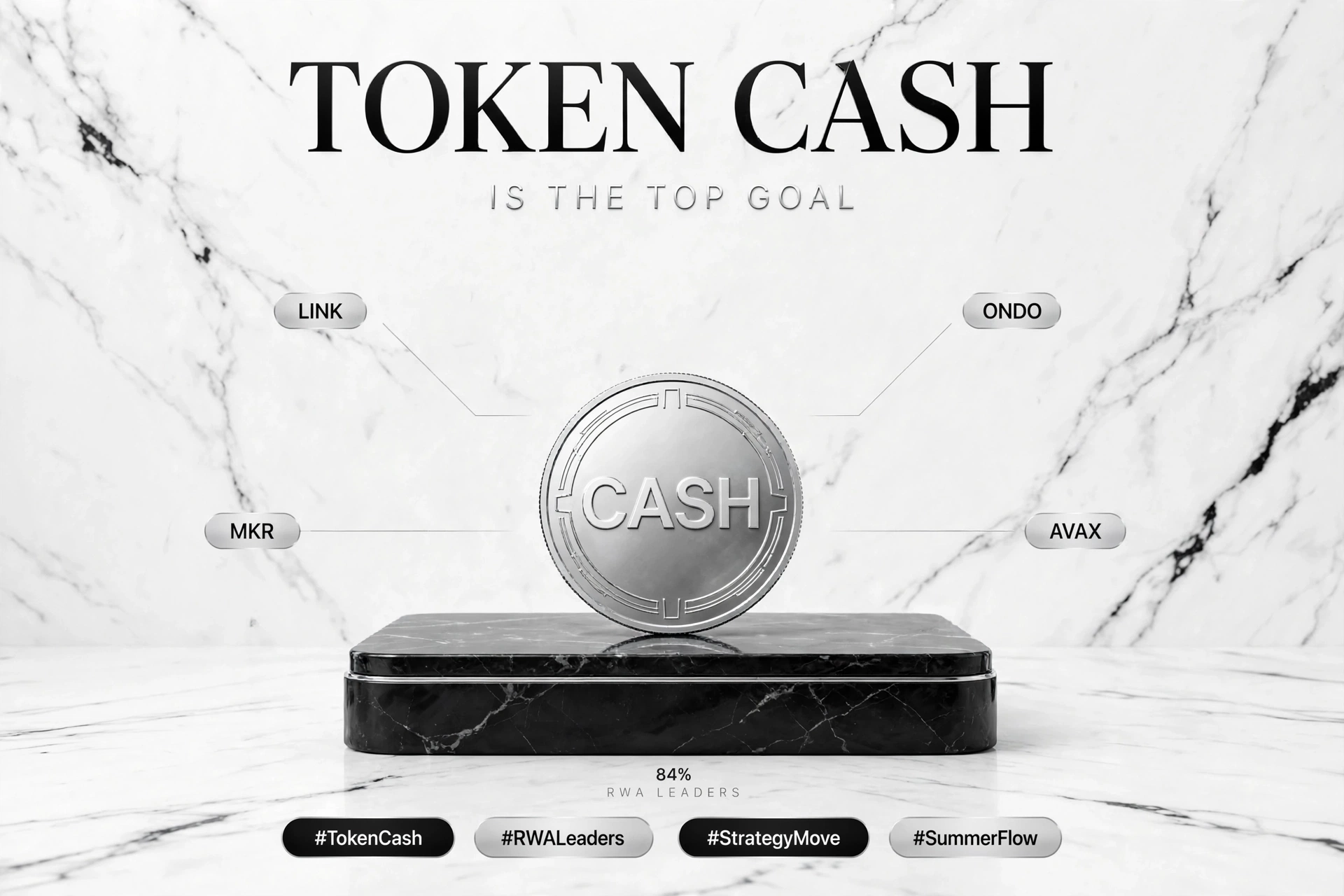
Cash, not coins, was top talk for finance firms and that twist now fuels $BTC bid in quiet summer.
July 18 poll said 84% of finance firms rank token cash and token funds as top goal for 2026. That is not a side theme now, it is main plan. $ONDO TVL hit new high July 21 to 23, $LINK held $13.5 even when $BTC stalled in $64k to $66.8k box for three days after 13% run from $57,750 low July 1, $MKR and $AVAX saw fresh inflows. Reason is simple: banks want cash that moves 24/7 with clear audit. Token $USDC and token T-bills can move in seconds, old wire takes hours. If cash moves on-chain, $BTC and
BTC-1.11%
ONDO-1.57%
AVAX-3.48%
USDC0.03%
Venüs_
Cash, not coins, was top talk for finance firms and that twist now fuels $BTC bid in quiet summer.
July 18 poll said 84% of finance firms rank token cash and token funds as top goal for 2026. That is not a side theme now, it is main plan. $ONDO TVL hit new high July 21 to 23, $LINK held $13.5 even when $BTC stalled in $64k to $66.8k box for three days after 13% run from $57,750 low July 1, $MKR and $AVAX saw fresh inflows. Reason is simple: banks want cash that moves 24/7 with clear audit. Token $USDC and token T-bills can move in seconds, old wire takes hours. If cash moves on-chain, $BTC and $ETH stay as reserve, not as spend.
$STRATEGY gave a live case of how firms now fund $BTC without sale. Firm sold 2,732,318 shares for $263.5M July 13 to 19, lifting cash to $3.225B, without touching $BTC stack. It even added 520 $BTC at $67,068 via $335.5M stock sale. Earlier in July it sold $216M of $BTC, largest sale ever, then flipped to equity route. Cash raise was second week in a row, total near $675M across two weeks via at-the-market plan. Stock trades low $80s versus high when $BTC near $128k, mNAV premium fell below 1.0 to 0.96x, so market values stack below $BTC price. Critics say firm shields pref holders at cost of common, bulls say it avoids $BTC dump that could crater price.
Macro still rules. 30-year TIPS near 3% above inflation, top in 17 years, so safe yield now fights zero yield. $BTC held $65,032 to $65,674 July 23 despite that, since US spot $BTC ETFs drew near $1B over seven days to July 23, $727M over five days to July 20, $226.92M on July 20 alone, $IBIT at $37.67 leading $116.48M and holding $47.5B, 61% share of $79B complex, 1.2M $BTC or 5.77% of supply locked. Flow now drives 45% of weekly moves per desks.
Other movers last 72 hours: $WLFI up 12.18% July 23 to lead watchlist, $MORPHO up 4%, Lighter down three days after 200% run May to early July, oil near $88.58 to $91.42 after Iran halt talk, Fed meets July 28 to 29 with hike odds near 40%.
Trade view: in low volume summer where spot volume only $2.3B per day and futures open interest lowest since 2023, RWA leaders hold up best. Long $ONDO on dips with $BTC $64.15k support as guide, $LINK $13 to $14 box as proxy for token rails, $BTC $68k roof as first take, $72k calls for July 30 Fed as cheap upside if token cash news holds.
#TokenCash #RWALeaders #StrategyMove #SummerFlow
repost-content-media
  • Reward
  • 10
  • Repost
  • Share
ShainingMoon:
To The Moon 🌕
View More
Oil up, bonds paying real 3%, and Fed back on stage next week, so crypto trades macro, not memes.
Brent and WTI ran $88.58 to $91.42 in last 72 hours after Iran halt talk hit wires July 23. When oil jumps 3%, CPI fear lifts. That pushed 30-year TIPS to near 3% above inflation, top in 17 years per Treasury data July 23. For saver, 3% real for 30 years via US gov is rare. For $BTC and gold, which pay zero yield, hold cost jumps. CoinDesk note July 23 said bulls face a test unlike prior cycles, since safe yield now beats zero yield. $BTC held $65,032 to $65,674 for three days after 13% run from $
Venüs_
Oil up, bonds paying real 3%, and Fed back on stage next week, so crypto trades macro, not memes.
Brent and WTI ran $88.58 to $91.42 in last 72 hours after Iran halt talk hit wires July 23. When oil jumps 3%, CPI fear lifts. That pushed 30-year TIPS to near 3% above inflation, top in 17 years per Treasury data July 23. For saver, 3% real for 30 years via US gov is rare. For $BTC and gold, which pay zero yield, hold cost jumps. CoinDesk note July 23 said bulls face a test unlike prior cycles, since safe yield now beats zero yield. $BTC held $65,032 to $65,674 for three days after 13% run from $57,750 low July 1, $ETH $1,860 to $1,922, $XRP $1.09 to $1.13, $SOL $76 to $78. Gold also held, so for now ETF bid offsets bond drag.
ETF bid is key. US spot $BTC ETFs drew $727M over five days to July 20, $226.92M on July 20 alone, $IBIT at $37.67 leading $116.48M and holding $47.5B, 61% share of $79B complex, 1.2M $BTC or 5.77% of supply locked. Seven-day inflow near $1B to July 23 broke eight-week bleed that saw $2.43B out in May and $4.51B out in June. Flow now drives 45% of weekly $BTC moves per desks. K33 calls this summer slumber: spot volume $2.3B per day, 62% of yearly mean, futures open interest lowest since 2023, offshore perp OI flat even as price rose. When OI flat and price up, move is spot-led and ETF-led, not leverage-led.
Fed meets July 28 to 29. Hike odds near 40% per pricing July 23. If hold and dovish tone, $BTC $68k roof breaks and $72k calls for July 30 pay. If hawkish hint due to oil, $62.5k support test comes fast. $WLD cut adds twist. $WLD will cut daily flow 43% July 24 to 25, from 5.1M to 2.9M, community locked 3.2M to 1.6M, team and backer 1.9M to 1.3M, unlock July 24 1.5% $57.7M. $WLD derivs volume up 40% to $396.25M, funding +0.0077% long.
$STRATEGY path shows how firms fund $BTC now. Firm sold 2,732,318 shares for $263.5M July 13 to 19, lifting cash to $3.225B, without touching $BTC, and added 520 $BTC at $67,068 via $335.5M stock sale.
Trade view: until Fed, range. Buy $64.15k support, sell $66.5k to $68k roof, stop $500 beyond. For oil hedge, hold small $BTC long with $USDC buffer, as oil spike can drag risk for 24h then fade. Keep size small, as thin book can snap.
#OilFed #TIPS3pct #EtfBid #MacroCrypto
repost-content-media
  • Reward
  • 10
  • Repost
  • Share
ShainingMoon:
To The Moon 🌕
View More
#EsportsTradingSeason
𝗘𝗙 𝗩𝗦 𝗧𝗛𝟭
𝗠𝘆 𝗣𝗿𝗲𝗱𝗶𝗰𝘁𝗶𝗼𝗻: 𝗧𝗛𝟭 𝗧𝗼 𝗪𝗶𝗻
My prediction for this 𝗩𝗮𝗹𝗼𝗿𝗮𝗻𝘁 match is 𝗧𝗛𝟭 𝘁𝗼 𝘄𝗶𝗻. At the moment shown in the screenshot, the match is live at 𝟮/𝟯, with 𝗧𝗛𝟭 leading 𝟭–𝟬. The current market is also heavily favoring TH1, with the displayed odds around 𝟭.𝟬𝟭𝘅 compared with 𝟴𝟯.𝟯𝘅 for EF.
The biggest reason behind my prediction is the current match situation. 𝗧𝗛𝟭 already has the advantage on the scoreboard, while 𝗘𝗙 is under significant pressure to turn the match around. When a team is already ahead in a li
EagleEye
#EsportsTradingSeason
𝗘𝗙 𝗩𝗦 𝗧𝗛𝟭
𝗠𝘆 𝗣𝗿𝗲𝗱𝗶𝗰𝘁𝗶𝗼𝗻: 𝗧𝗛𝟭 𝗧𝗼 𝗪𝗶𝗻
My prediction for this 𝗩𝗮𝗹𝗼𝗿𝗮𝗻𝘁 match is 𝗧𝗛𝟭 𝘁𝗼 𝘄𝗶𝗻. At the moment shown in the screenshot, the match is live at 𝟮/𝟯, with 𝗧𝗛𝟭 leading 𝟭–𝟬. The current market is also heavily favoring TH1, with the displayed odds around 𝟭.𝟬𝟭𝘅 compared with 𝟴𝟯.𝟯𝘅 for EF.
The biggest reason behind my prediction is the current match situation. 𝗧𝗛𝟭 already has the advantage on the scoreboard, while 𝗘𝗙 is under significant pressure to turn the match around. When a team is already ahead in a live best-of-three series, it generally has a much clearer path toward closing the match compared with a team that needs to fight back.
The market pricing shown in the screenshot is also a strong signal. The difference between 𝗘𝗙 𝟴𝟯.𝟯𝘅 and 𝗧𝗛𝟭 𝟭.𝟬𝟭𝘅 indicates that the market considers TH1 overwhelmingly more likely to win from the current position. While market odds are never a guarantee, they reflect the collective expectations of participants based on the live state of the match.
My prediction is therefore 𝗧𝗛𝟭 𝘁𝗼 𝗪𝗶𝗻, but I would still keep in mind that esports can change very quickly. A single round, momentum shift, or strong individual performance can completely change the direction of a game.
𝗙𝗶𝗻𝗮𝗹 𝗣𝗿𝗲𝗱𝗶𝗰𝘁𝗶𝗼𝗻: 𝗧𝗛𝟭 𝗪𝗶𝗻 🏆
This is my personal prediction based only on the live information visible in the screenshot, not a guaranteed result.
repost-content-media
  • Reward
  • 7
  • Repost
  • Share
ShainingMoon:
To The Moon 🌕
View More
#EsportsTradingSeason
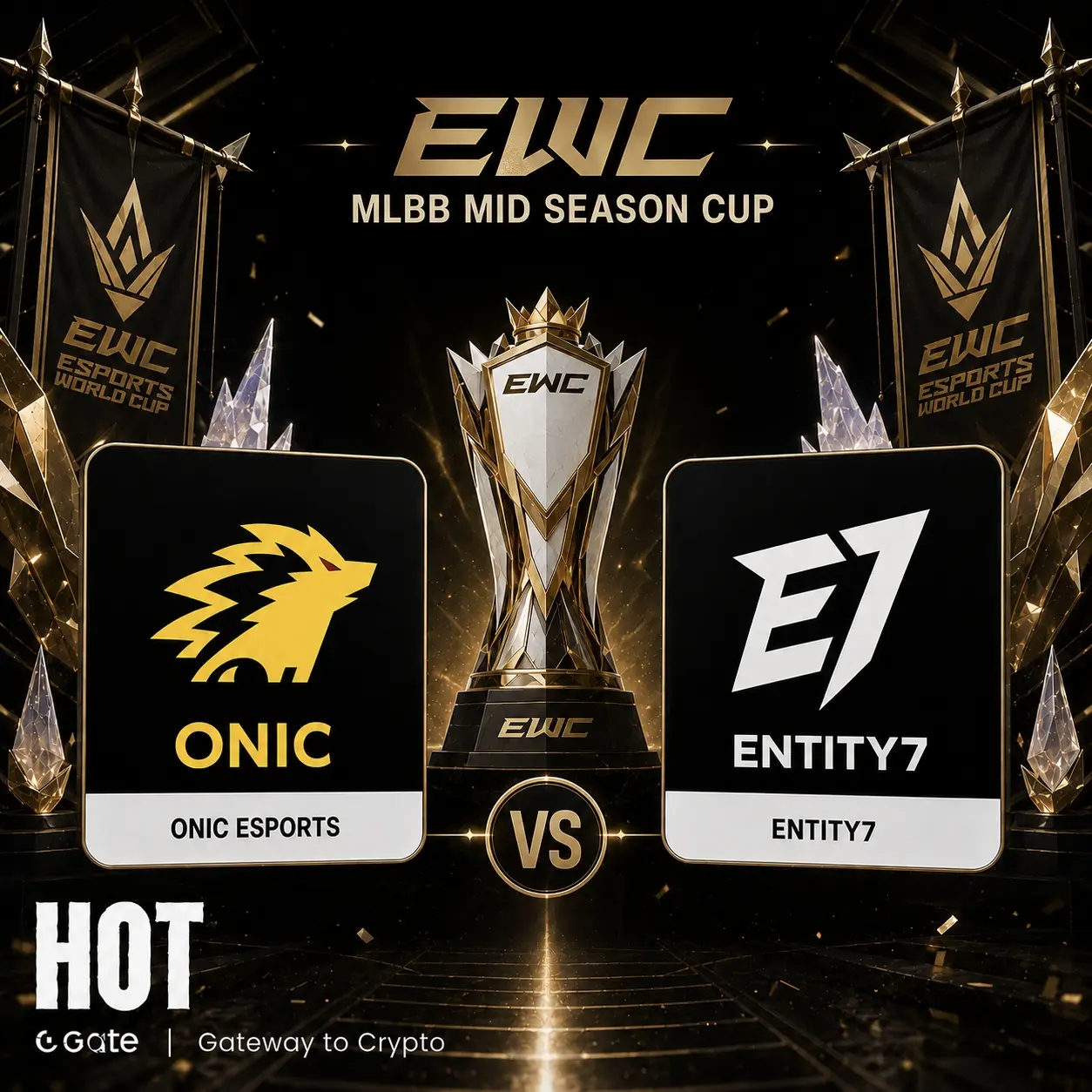
𝗘𝗪𝗖 𝗠𝗟𝗕𝗕 𝗠𝗶𝗱-𝗦𝗲𝗮𝘀𝗼𝗻 𝗖𝘂𝗽 — 𝗢𝗡𝗜𝗖 𝗩𝗦 𝗘𝗻𝘁𝗶𝘁𝘆𝟳
𝗠𝘆 𝗣𝗿𝗲𝗱𝗶𝗰𝘁𝗶𝗼𝗻: 𝗢𝗡𝗜𝗖 𝗧𝗼 𝗪𝗶𝗻 🏆
My prediction for this 𝗠𝗟𝗕𝗕 matchup is 𝗢𝗡𝗜𝗖 𝘁𝗼 𝘄𝗶𝗻. The prediction-market sentiment strongly favors ONIC, with the market information you provided showing around 𝟵𝟯% of the funds backing ONIC, while 𝗘𝗻𝘁𝗶𝘁𝘆𝟳 is being treated as the significant underdog.
The available pre-match analysis also had ONIC as the clear favorite, while the actual match listing confirms this was a Best-of-3 series between ONIC and Entity7.
The biggest
EagleEye
#EsportsTradingSeason
𝗘𝗪𝗖 𝗠𝗟𝗕𝗕 𝗠𝗶𝗱-𝗦𝗲𝗮𝘀𝗼𝗻 𝗖𝘂𝗽 — 𝗢𝗡𝗜𝗖 𝗩𝗦 𝗘𝗻𝘁𝗶𝘁𝘆𝟳
𝗠𝘆 𝗣𝗿𝗲𝗱𝗶𝗰𝘁𝗶𝗼𝗻: 𝗢𝗡𝗜𝗖 𝗧𝗼 𝗪𝗶𝗻 🏆
My prediction for this 𝗠𝗟𝗕𝗕 matchup is 𝗢𝗡𝗜𝗖 𝘁𝗼 𝘄𝗶𝗻. The prediction-market sentiment strongly favors ONIC, with the market information you provided showing around 𝟵𝟯% of the funds backing ONIC, while 𝗘𝗻𝘁𝗶𝘁𝘆𝟳 is being treated as the significant underdog.
The available pre-match analysis also had ONIC as the clear favorite, while the actual match listing confirms this was a Best-of-3 series between ONIC and Entity7.
The biggest challenge for Entity7 is the gap in market confidence. A team receiving only around 𝟭𝟬% implied support needs to outperform expectations and create an early momentum shift. In a best-of-three series, that can happen, but the underdog generally needs to execute extremely well and capitalize on every mistake from the favorite.
My prediction is therefore 𝗢𝗡𝗜𝗖 𝘁𝗼 𝘄𝗶𝗻, with the most likely scenario being an ONIC victory in 𝟮–𝟬. That said, I would not completely dismiss Entity7 because esports can produce unexpected results, and a strong opening game can change the entire momentum of a series.
𝗙𝗶𝗻𝗮𝗹 𝗣𝗿𝗲𝗱𝗶𝗰𝘁𝗶𝗼𝗻: 𝗢𝗡𝗜𝗖 𝗪𝗶𝗻 — 𝗣𝗼𝘀𝘀𝗶𝗯𝗹𝗲 𝟮–𝟬 🏆
This is my prediction based on the market sentiment and available pre-match information, not a guaranteed result.
repost-content-media
  • Reward
  • 8
  • Repost
  • Share
ShainingMoon:
To The Moon 🌕
View More
Gate Plaza's Summer Creative Camp presents an interesting opportunity for crypto creators who want to turn original ideas, market knowledge, and creative storytelling into content that can attract attention within the digital-asset community.
The campaign focuses on original content creation, giving participants a chance to share their own perspectives rather than simply reposting existing information. In a market that moves quickly and produces an enormous amount of daily content, original thinking can be one of the most valuable ways for creators to stand out.
For crypto creators, this type
EagleEye
Gate Plaza's Summer Creative Camp presents an interesting opportunity for crypto creators who want to turn original ideas, market knowledge, and creative storytelling into content that can attract attention within the digital-asset community.
The campaign focuses on original content creation, giving participants a chance to share their own perspectives rather than simply reposting existing information. In a market that moves quickly and produces an enormous amount of daily content, original thinking can be one of the most valuable ways for creators to stand out.
For crypto creators, this type of campaign can be more than just a competition. It can also be an opportunity to experiment with different content formats, explore new topics, and develop a stronger connection with an audience that is interested in blockchain, cryptocurrency, trading, and Web3.
The most important element is originality.
A strong post does not always need to be complicated. Sometimes, the most effective content comes from taking a current market topic and explaining it from a fresh perspective. A creator might analyze a Bitcoin move, explain a new blockchain development, discuss a major industry trend, or share an educational perspective that helps readers understand a complicated topic more easily.
The goal is to create something that provides genuine value.
In the crypto industry, readers are constantly looking for useful information. They want to understand why the market is moving, what new developments could mean, and how emerging technologies may affect the future of digital assets. Creators who can explain these topics clearly and responsibly have an opportunity to build trust and attract a loyal audience.
This is where a campaign like the Gate Plaza Summer Creative Camp becomes particularly interesting.
It encourages creators to think beyond simple promotional posts and focus on content that can actually engage readers. A well-researched article, a thoughtful market analysis, an educational explanation, or a detailed discussion about a new crypto trend can all provide meaningful value when presented in an original way.
The campaign also creates an environment where new creators can participate alongside people who already have experience producing crypto content.
For someone who is just starting, the opportunity to publish original work can be a useful way to gain confidence and understand what type of content resonates with the community. Experienced creators, meanwhile, can use the campaign as an opportunity to experiment with new ideas and improve their content strategy.
One of the biggest advantages of participating in a creative campaign is the potential for visibility.
A creator may have excellent ideas, but if those ideas are never seen by an audience, it can be difficult to build momentum. Campaigns that highlight high-quality content can help creators gain additional exposure and potentially reach readers who may not have discovered their work otherwise.
The campaign's reward structure also adds another layer of motivation.
According to the campaign information, eligible creators can participate in a broader reward pool, while qualifying new authors can receive promotional benefits and additional opportunities as they publish more content. High-quality content may also receive additional recognition and visibility within the platform.
These incentives can be useful, but the strongest reason to participate should still be the opportunity to create something valuable.
A creator who focuses only on rewards may produce content that feels repetitive or rushed. A creator who focuses on quality, originality, and useful information has a better chance of building something that continues to have value beyond the campaign itself.
This is especially important in the cryptocurrency industry, where audiences can quickly identify content that feels generic.
People want authentic perspectives.
They want clear explanations.
They want useful analysis.
And they want content that helps them understand an industry that is constantly changing.
The best creators are often those who can take complex information and make it easier to understand without losing the important details.
For example, instead of simply discussing that Bitcoin has moved higher, a creator could explain the possible reasons behind the move, discuss market sentiment, examine relevant macroeconomic factors, and present different scenarios that could develop next.
Similarly, instead of simply mentioning a new blockchain project, a creator could explore its technology, use cases, potential advantages, possible risks, and position within the broader market.
This type of content can create much stronger engagement because it gives readers a reason to stay until the end.
The Summer Creative Camp can therefore be viewed as an opportunity to develop a long-term content mindset.
The campaign may have a defined timeframe, but the skills creators develop while participating can continue to be useful afterward. Learning how to research a topic, structure a long-form post, communicate clearly, and build an engaging narrative are valuable skills for anyone creating content in the Web3 space.
Another important factor is consistency.
One strong post can attract attention, but consistent quality is what can help a creator build a recognizable identity. Publishing regularly allows creators to experiment, learn from audience reactions, and gradually understand which topics and formats work best for them.
The campaign's structure may encourage creators to publish multiple pieces of content, creating an opportunity to develop that consistency.
However, quantity should not come at the expense of quality.
A large number of low-value posts may not create the same impact as a smaller number of thoughtful and well-developed pieces. The most effective strategy is likely to focus on producing content that is genuinely useful while maintaining a consistent publishing schedule.
For creators interested in cryptocurrency, there are countless topics to explore.
Bitcoin and Ethereum remain major areas of interest, but the industry extends far beyond the largest assets. Stablecoins, decentralized finance, artificial intelligence, prediction markets, blockchain infrastructure, tokenization, gaming, and Web3 applications are all areas where creators can find unique stories and perspectives.
This variety gives creators significant freedom.
Someone who enjoys market analysis can focus on price movements and macro trends.
Someone with a technical background can explain blockchain infrastructure.
Someone interested in finance can explore tokenization and digital payments.
Someone who enjoys storytelling can focus on the people and ideas shaping the industry.
The key is to find a topic that matches the creator's own strengths and interests.
In my view, this is what makes a creative campaign valuable.
It does not require every creator to produce the same type of content. Instead, it creates an environment where different perspectives can exist together and where originality becomes part of the overall experience.
The crypto industry benefits from this diversity of viewpoints.
There is no single way to understand blockchain technology or digital assets. Different creators can look at the same development and reach different conclusions based on their research and experience.
That is why original content matters.
A strong creator does not simply repeat what everyone else is saying. They add context, ask questions, explain the details, and encourage readers to think more deeply about the subject.
The Gate Plaza Summer Creative Camp can therefore be seen as more than a reward campaign.
It is an opportunity for creators to test their ideas, improve their communication skills, gain exposure, and potentially build a stronger presence within the crypto community.
For new authors, it can be a starting point.
For experienced creators, it can be a new challenge.
And for readers, it can provide an opportunity to discover fresh perspectives on an industry that continues to evolve at an incredible pace.
My view is that the most successful participants will be those who focus on authenticity and value rather than simply trying to produce content as quickly as possible.
Research the topic.
Understand the facts.
Develop an original angle.
Write clearly.
And give readers a reason to remember the post.
That approach can be valuable regardless of whether the content receives a reward.
The broader lesson is that the future of Web3 content will increasingly depend on creators who can combine knowledge with creativity. As the industry grows, audiences will have more choices than ever before, making it increasingly important for creators to develop their own voice.
The Gate Plaza Summer Creative Camp provides a timely environment for that process.
It gives creators a reason to start writing, experimenting, and sharing ideas while creating opportunities for recognition and rewards.
My Final View: The real opportunity behind the Gate Plaza Summer Creative Camp is not simply the reward pool. It is the chance for creators to turn their knowledge and creativity into original content that can reach a wider audience. Rewards can provide motivation, but the long-term value comes from developing a unique voice, creating useful information, and building trust with readers.
For anyone interested in crypto content creation, this can be a good opportunity to step forward, share a fresh perspective, and see how far an original idea can go.
In a fast-moving industry where everyone is competing for attention, originality is one of the strongest advantages a creator can have.
#SummerCreationCamp
repost-content-media
  • Reward
  • 10
  • Repost
  • Share
ShainingMoon:
To The Moon 🌕
View More
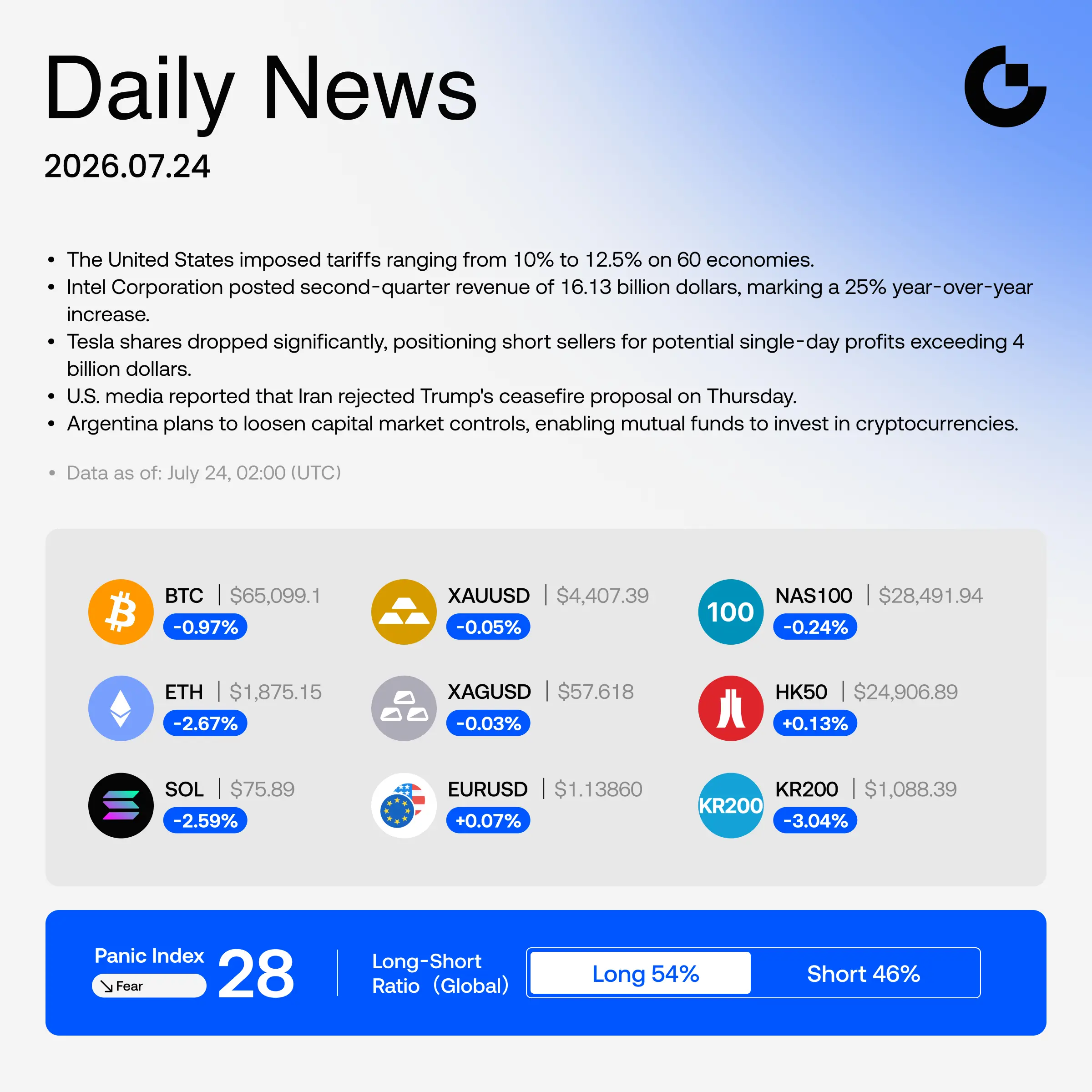
Gate Square Daily | July 24
Spend 3 minutes each day
to catch up on the latest market highlights.
💬 Got an opinion?
Share your market insights on Gate Square and let more people discover your content. 👇
HighAmbition
Gate Square Daily | July 24
Spend 3 minutes each day
to catch up on the latest market highlights.
💬 Got an opinion?
Share your market insights on Gate Square and let more people discover your content. 👇
repost-content-media
  • Reward
  • 9
  • Repost
  • Share
ShainingMoon:
To The Moon 🌕
View More
#GUSDYieldRisesto3.8%
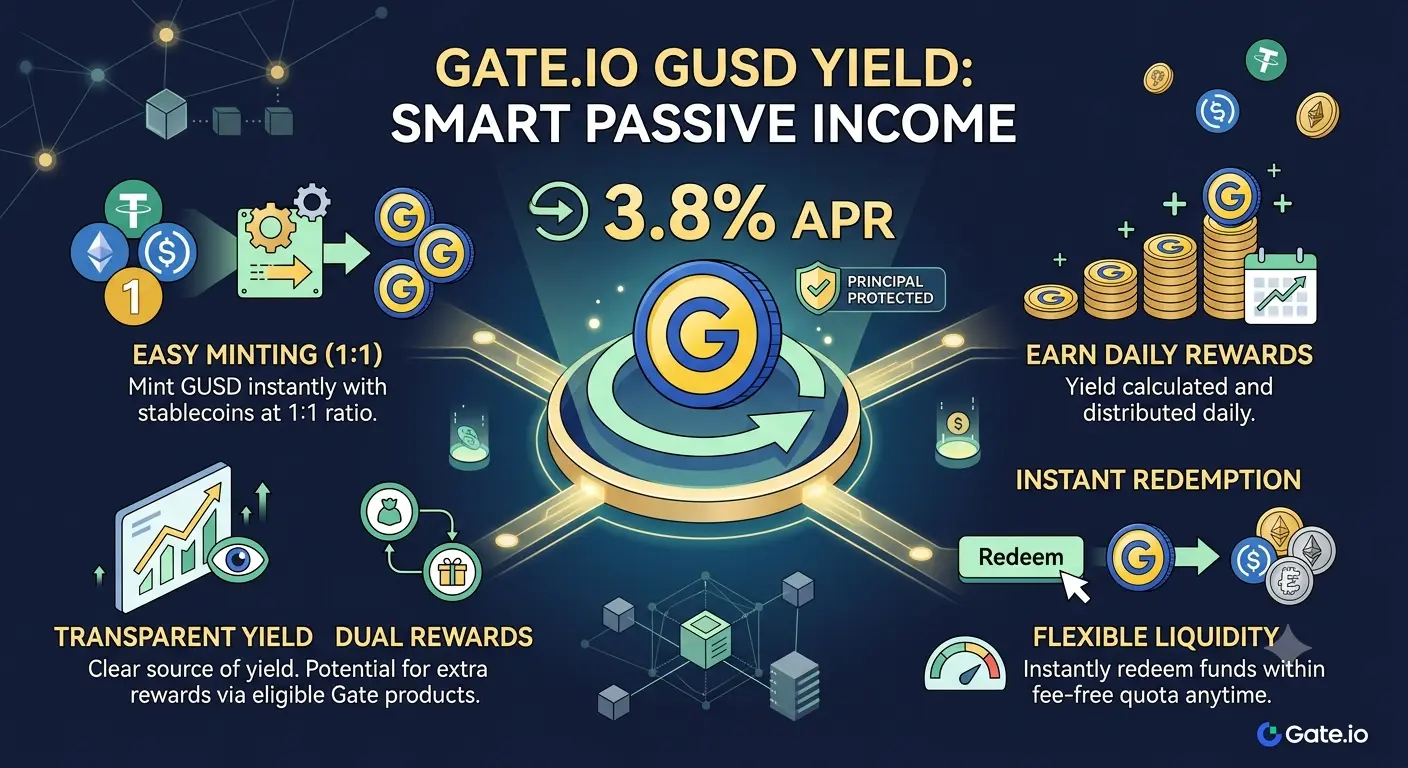
Gate GUSD Yield Climbs to 3.8% APR — Turn Idle Stablecoins Into Passive Income While Keeping Full Flexibility
Gate has introduced one of the most attractive stablecoin earning opportunities currently available. GUSD Yield has increased to 3.8% APR, offering users, investors, and traders a principal-protected solution that allows idle stablecoins to generate passive income without sacrificing liquidity. Instead of leaving USDT, USDC, or USD1 sitting idle in your account, GUSD transforms them into productive assets that begin earning rewards almost immediately.
The biggest
GUSD0.02%
USDC0.03%
USD10.00%
GT-0.45%
HighAmbition
#GUSDYieldRisesto3.8%
Gate GUSD Yield Climbs to 3.8% APR — Turn Idle Stablecoins Into Passive Income While Keeping Full Flexibility
Gate has introduced one of the most attractive stablecoin earning opportunities currently available. GUSD Yield has increased to 3.8% APR, offering users, investors, and traders a principal-protected solution that allows idle stablecoins to generate passive income without sacrificing liquidity. Instead of leaving USDT, USDC, or USD1 sitting idle in your account, GUSD transforms them into productive assets that begin earning rewards almost immediately.
The biggest advantage of GUSD is its principal-protected structure. Your original capital remains intact while your holdings generate yield over time. Unlike many DeFi protocols that expose users to smart contract vulnerabilities or highly volatile assets, GUSD is designed with capital preservation as its first priority. This creates a balance between security, flexibility, and consistent earnings, making it suitable for both conservative investors and active traders.
The current 3.8% Annual Percentage Rate (APR) provides an efficient way to earn passive income. For example, minting 1,000 USDT into GUSD can generate approximately 38 GUSD annually, excluding any additional bonus rewards. There is no need for active trading, leverage, or constant market monitoring. Your stablecoins continue working for you around the clock, creating a steady stream of returns while remaining available whenever you need them.
Getting started is remarkably simple. Users can mint GUSD at a 1:1 ratio using USDT, USDC, or USD1. One USDT becomes one GUSD, one USDC becomes one GUSD, and one USD1 becomes one GUSD. There are no complicated conversion procedures, no slippage, and no hidden exchange losses. Once the minting process is complete, your eligible balance automatically begins participating in the yield program from the following day.
The reward mechanism is equally transparent. Yield calculation starts the day after subscription, while rewards are distributed daily before 12:00 UTC. This means users receive continuous daily earnings instead of waiting weeks or months for payouts. Every reward distribution demonstrates the steady growth of your holdings and provides full visibility into your passive income.
Eligible GUSD balances held across Spot, Unified, and Funding accounts all contribute toward reward calculations. Whether your funds are allocated across different account types or maintained in a single wallet, eligible balances continue generating yield without interruption.
One of GUSD's strongest features is its instant flexible redemption. Unlike traditional staking or locked savings products, there is no lock-up period, no minimum holding duration, and no early redemption penalty. Funds remain accessible 24 hours a day, seven days a week, allowing users to respond instantly to market opportunities while still earning passive income.
Even better, GUSD minted from USDT, USDC, or USD1 can be redeemed without fees within the platform's dynamic fee-free quota. This creates a highly efficient cycle where users can mint, earn, and redeem without unnecessary costs, significantly improving the overall investment experience.
Transparency is another important strength. GUSD rewards are supported by multiple diversified sources rather than relying on a single revenue stream. These include Gate ecosystem revenues, Treasury Real World Assets (RWA), and high-quality stablecoin-backed yield-generating assets. Diversifying the underlying sources helps improve stability and sustainability while reducing dependence on any individual strategy.
Perhaps the most attractive feature is the dual-yield opportunity. GUSD is more than a passive savings product—it also functions as a productive asset throughout the Gate ecosystem. When used in eligible Launchpool and Pre-IPO events, users continue receiving their regular GUSD minting yield while simultaneously earning rewards from those investment opportunities. This allows a single pool of capital to generate multiple income streams at the same time, maximizing capital efficiency. (This dual-yield feature currently applies to Launchpool and Pre-IPO products and does not extend to Lend & Earn or Dual Investment.)
In addition to the base yield, users may also qualify for Bonus APR. The total return equals Estimated APR plus Bonus APR, with bonus rewards distributed daily in GT tokens, Gate's native ecosystem asset. Depending on subscription size and promotional allocations, total returns may exceed the standard 3.8% APR, providing an additional incentive for long-term participants.
From a broader investment perspective, GUSD addresses several limitations commonly found in both traditional finance and crypto. Conventional savings accounts often struggle to outperform inflation, while many crypto yield products require lengthy lock-up periods or involve elevated smart contract risks. GUSD combines principal protection, competitive returns, daily reward distribution, flexible liquidity, instant redemption, fee-free withdrawals within quota, and additional earning opportunities into a single product, making it one of the more comprehensive stablecoin solutions currently available.
For Gate users, investors, and traders, GUSD represents more than a simple savings product—it is an efficient treasury management tool that allows stablecoins to remain productive without limiting flexibility. Rather than choosing between safety, liquidity, or passive income, GUSD delivers all three within a single ecosystem.
As always, the displayed APR may fluctuate daily according to market conditions, and the rate shown on the subscription page at the time of participation is the applicable yield. Staying informed and making strategic use of idle stablecoins can significantly improve long-term portfolio efficiency while maintaining capital flexibility.@Gate_Square #SummerCreationCamp
repost-content-media
  • Reward
  • 8
  • Repost
  • Share
ShainingMoon:
To The Moon 🌕
View More
#UStoImpose10To12.5PercentTariffsOn60Economies
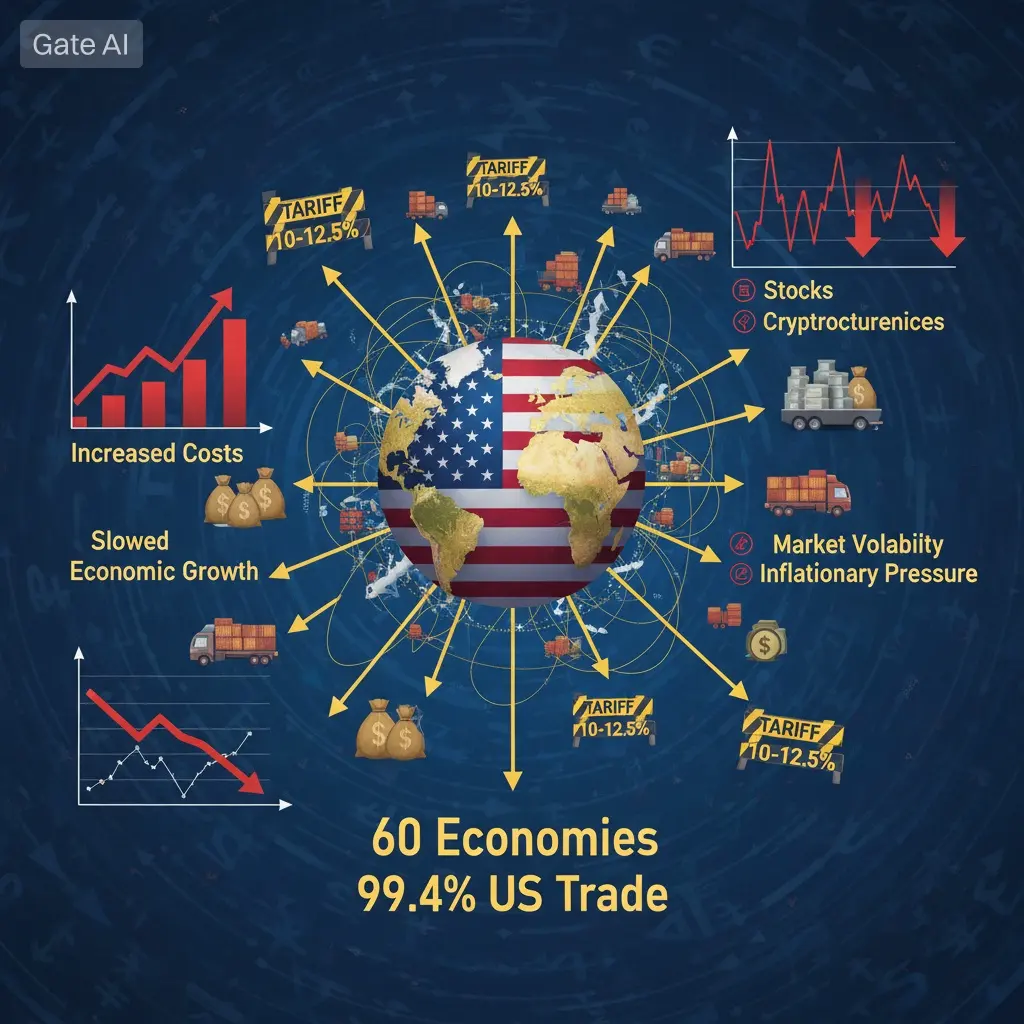
The United States has officially launched one of the most significant trade policy shifts in decades by imposing new tariffs ranging from 10% to 12.5% on imports from 60 economies, covering approximately 99.4% of total U.S. imports worth nearly $3.8 trillion annually. Effective from 12:01 a.m. ET on July 24, 2026, these measures represent far more than a routine tariff adjustment—they mark a structural transformation in global trade policy that could influence supply chains, corporate profitability, inflation, financial markets, and consumer spen
HighAmbition
#UStoImpose10To12.5PercentTariffsOn60Economies
The United States has officially launched one of the most significant trade policy shifts in decades by imposing new tariffs ranging from 10% to 12.5% on imports from 60 economies, covering approximately 99.4% of total U.S. imports worth nearly $3.8 trillion annually. Effective from 12:01 a.m. ET on July 24, 2026, these measures represent far more than a routine tariff adjustment—they mark a structural transformation in global trade policy that could influence supply chains, corporate profitability, inflation, financial markets, and consumer spending for years. The average effective U.S. tariff rate has already climbed from 2.4% in 2024 to 7.7% in 2025, representing a 220.8% increase and the highest level since 1947. According to the Yale Budget Lab, previous tariff actions had already pushed the effective tariff rate to 17.3%, the highest since 1935, while consumers effectively faced 18.2%, the highest burden since 1934. With the additional 10% to 12.5% forced-labor tariffs now in place, businesses importing manufactured goods, industrial equipment, electronics, textiles, machinery, and consumer products face another major increase in costs that will eventually ripple across global markets.
The new framework operates under a two-tier system in which countries with recognized forced-labor prohibitions are subject to a 10% tariff, while economies without comparable standards face 12.5%. At the same time, the Office of the U.S. Trade Representative has launched an overproduction investigation covering 16 countries responsible for nearly 70% of U.S. imports, representing approximately $2.66 trillion in annual trade. This creates the possibility of additional Section 301 measures beyond the current tariff package. Earlier this month, the United States also imposed 50% tariffs on selected Canadian imports, affecting portions of nearly $382 billion in bilateral trade, while separate measures targeted approximately $20 billion in Canadian products.
Existing Section 232 duties remain unchanged, including 50% tariffs on steel, 50% on aluminum, 25% on imported automobiles, together with sector-specific measures affecting semiconductors, pharmaceuticals, copper, timber, and heavy industrial equipment.
Meanwhile, proposed tariffs on generic pharmaceutical imports are scheduled to increase to 100% beginning in August 2028, with a potential rise to 200% afterward, illustrating that trade restrictions may continue expanding well beyond the current package.
Financial markets reacted immediately as investors reassessed global growth expectations. The S&P 500 declined to approximately 7,433, losing 0.88%, while Nasdaq Composite dropped around 1.6% and Dow Jones Industrial Average lost between 363 and 550 points during the trading session. S&P 500 futures slipped another 0.5%, Nasdaq-100 futures declined more than 1%, and Dow futures fell around 204 points before the opening bell. The current weakness follows several months of elevated volatility despite strong corporate earnings, with first-quarter S&P 500 revenues increasing 12% and earnings growing nearly 28%, substantially exceeding earlier analyst expectations. Nevertheless, investors now fear that higher import costs, weaker consumer demand, slower capital expenditure, and compressed corporate margins could offset those earnings gains during the second half of the year.
Technology stocks experienced particularly sharp movements because they remain heavily exposed to international supply chains. Alphabet fell approximately 4.5% to around $342.04, reducing its market value despite maintaining a capitalization above $4 trillion.
Tesla declined roughly 1.29% to $374.04, Amazon slipped approximately 1.09% to $244.84, while Nvidia outperformed most mega-cap technology companies by gaining approximately 2.39% to $212.25, extending its annual appreciation to more than 24%.
Semiconductor manufacturers also experienced broad selling pressure as Micron Technology declined nearly 8%, Intel dropped more than 4%, AMD lost around 3%, Lam Research fell roughly 3%, and the VanEck Semiconductor ETF (SMH) retreated more than 1%. Investors increasingly worry that additional tariffs could raise manufacturing costs throughout the semiconductor supply chain while simultaneously weakening demand from international customers.
Cryptocurrency markets also remain vulnerable because macroeconomic uncertainty typically reduces investor appetite for higher-risk assets.
Bitcoin continues trading between approximately $64,000 and $66,500, after successfully closing above the important $66,445 technical resistance before failing to establish momentum above $68,000. Since reaching an all-time high above $125,000 during late 2025, Bitcoin has corrected by nearly 50%, representing a decline of almost $60,000.
Year-over-year, Bitcoin remains approximately 43.67% below its July 2025 level near $111,259. Technical analysts continue monitoring the crucial $60,000 support zone because a decisive breakdown could expose the market to another 6%–10% decline toward approximately $54,000–56,000, while a successful recovery above $68,000 could reopen the path toward $70,000–72,000. Bitcoin dominance remains relatively strong, suggesting institutional capital continues favoring large-cap digital assets over speculative altcoins.
Ethereum continues trading near $1,850–1,950, considerably below optimistic long-term valuation models projecting potential prices around $8,500. Current prices therefore remain nearly 78% below those longer-term projections. Solana fluctuates between approximately $75 and $82, representing a correction exceeding 60% from previous highs above $200, while XRP remains near $1.09 and Tether continues holding close to $0.99–1.00.
Historically, altcoins often amplify Bitcoin's movements by approximately 1.5x to 2x, meaning a 10% Bitcoin decline frequently translates into 15%–20% losses across smaller cryptocurrencies, increasing overall market volatility whenever macroeconomic uncertainty intensifies.
Consumers are expected to experience higher prices across numerous product categories. Federal Reserve research indicates previous tariff rounds increased core goods PCE inflation by approximately 3.1%, contributing around 0.8 percentage points to overall core inflation.
Overall U.S. CPI remains approximately 4.2% year-over-year, while gasoline prices have increased roughly 41% compared with last year.
Yale Budget Lab estimates previous tariff measures increased household costs by approximately $2,400 annually, while substitution effects still leave an estimated burden near $2,000 per household. Additional tariffs are expected to place further upward pressure on consumer electronics, automobiles, appliances, clothing, footwear, machinery, and industrial equipment, especially products heavily dependent upon imported components.
The automobile industry illustrates how layered tariffs dramatically increase costs. A $30,000 imported vehicle facing a 10%–12.5% forced-labor tariff immediately incurs approximately $3,000–3,750 in additional duties. Combined with existing 25% automobile tariffs, total import duties may reach approximately 35%–37.5%, increasing tariff costs to roughly $10,500–11,250 before dealer margins, transportation expenses, financing costs, or state taxes are considered. Similarly, a $40,000 imported SUV could face cumulative tariff expenses approaching $14,000–15,000. Electronics also remain highly exposed because China continues supplying approximately 39% of U.S. consumer electronics and nearly 24% of major household appliances. Products such as smartphones, laptops, televisions, refrigerators, washing machines, and microwave ovens could therefore experience additional retail price increases ranging from 2% to 10%, depending on manufacturer pricing strategies and supply-chain adjustments.
Commodity markets have reflected growing geopolitical and economic uncertainty. Gold continues trading above $4,000 per ounce, with analysts discussing possible advances toward $4,200–4,400 if trade tensions continue escalating. Brent crude oil has returned near $100 per barrel, representing a remarkable recovery of nearly 38.9% from levels below $72 only weeks earlier. Additional disruptions to global trade or energy logistics could easily generate another 5%–10% movement in oil prices. Meanwhile, the U.S. Dollar Index (DXY) trades around 101, while several trade-sensitive currencies, including the Australian dollar and South Korean won, remain under pressure as investors evaluate the potential impact of slower international commerce.
From a macroeconomic perspective, economists continue projecting U.S. GDP growth near 2.1% during 2026, although several institutions believe cumulative tariff effects could reduce growth by 0.8–1.3 percentage points over time. The unemployment rate currently remains close to 4.3%, but slower investment, weaker exports, reduced manufacturing activity, and declining corporate confidence could eventually push unemployment toward approximately 4.5–4.8% if trade tensions continue expanding. European retaliation, estimated at as much as $108 billion in targeted goods, together with possible countermeasures from other trading partners, could further reduce global trade volumes while increasing uncertainty for multinational corporations.
Taken together, these figures demonstrate that the latest tariff package is not simply another short-term policy announcement but a fundamental shift in international commerce. Tariffs of 10%–12.5% covering 99.4% of $3.8 trillion in imports, combined with existing 25%–50% sector-specific duties, higher inflation, elevated commodity prices, increased market volatility, and slowing economic growth, create one of the most challenging macroeconomic environments since the post-pandemic recovery. Investors will now closely monitor inflation data, Federal Reserve policy, corporate earnings, consumer spending, global retaliation, and supply-chain adjustments to determine whether these measures remain a temporary shock or become the beginning of a much broader restructuring of the global economy.@Gate_Square #SummerCreationCamp
repost-content-media
  • Reward
  • 7
  • Repost
  • Share
ShainingMoon:
To The Moon 🌕
View More
#EsportsTradingSeason
The biggest esports summer of 2026 is here, and Gate has launched a massive event that lets you turn your esports knowledge into real rewards. Whether you follow LoL, Dota 2, Counter-Strike, Valorant, or any other top esports title, this is your chance to predict match outcomes and earn while doing it. Let me walk you through every single detail so you can jump in and start earning from day one.
The event is called the Esports Peak Trading Season, and it runs from July 20, 2026 at 16:00 to August 10, 2026 at 16:00, all times in UTC+8. That gives you roughly three full we
HighAmbition
#EsportsTradingSeason
The biggest esports summer of 2026 is here, and Gate has launched a massive event that lets you turn your esports knowledge into real rewards. Whether you follow LoL, Dota 2, Counter-Strike, Valorant, or any other top esports title, this is your chance to predict match outcomes and earn while doing it. Let me walk you through every single detail so you can jump in and start earning from day one.
The event is called the Esports Peak Trading Season, and it runs from July 20, 2026 at 16:00 to August 10, 2026 at 16:00, all times in UTC+8. That gives you roughly three full weeks to participate, complete weekly tasks, climb the leaderboard, and claim your share of the prize pool. The entire event revolves around the Gate Polymarket esports prediction section, where you can place predictions on individual match results, tournament outcomes, and even final champions across multiple esports competitions running this summer including EWC, LPL, LCK and more.
Before anything else, you must register on the event page. Head to the campaign page on Gate, click the registration button, and make sure your identity verification is complete. Only after successful registration will your prediction trades count toward tasks and the leaderboard. Any trades made before registration will not be included, so register first and then start trading. This is a critical step that many people overlook, so do it right away before placing any predictions.
Once registered, go to the Gate Polymarket esports section and pick any esports event or champion prediction market that interests you. You can predict which team wins a specific match, who takes the tournament title, or any other outcome available in the esports category. Every prediction you make counts toward your weekly task volume and your total leaderboard volume, so the more you predict, the more rewards you unlock.
The first major activity is the Esports Prediction Newcomer Bonus. If you are new to the Polymarket esports section and complete your first prediction trade of at least 100 USDT during the event period, you receive a 5 USDT prediction market voucher. This is limited to the first 500 users only, so act quickly if you want to grab this bonus. The voucher can only be used on Gate Polymarket esports markets and cannot be withdrawn, transferred, or converted to cash. But it effectively gives you five dollars of free trading credit to continue making predictions, which is a nice head start for anyone trying the platform for the first time.
The second major activity is the Weekly Prediction Trading Tasks, and this is where the recurring rewards come in. Every week during the event, you have a set of volume targets to hit. Each target unlocks a specific voucher amount. The targets reset every seven days from your registration time, so you can hit them again and again across multiple weeks. Here are the targets and their corresponding rewards. If your weekly cumulative prediction volume reaches 5,000 USDT, you earn a 5 USDT voucher. At 20,000 USDT, you earn a 10 USDT voucher. At 50,000 USDT, you earn a 20 USDT voucher. At 200,000 USDT, you earn a 100 USDT voucher. And at 500,000 USDT, you earn a 200 USDT voucher. These weekly tasks are tracked independently each cycle, so if you hit 50,000 USDT in week one, you get 20 USDT. If you hit 50,000 USDT again in week two, you get another 20 USDT. The vouchers stack with leaderboard and champion prediction rewards, meaning you are not choosing between them. You can collect all of them simultaneously.
The third and most competitive activity is the Esports Prediction Trading Leaderboard. This is the big one. Throughout the entire event, every valid prediction trade you make on designated esports markets contributes to your total cumulative volume. At the end of the event, the top 100 users by total volume who also meet minimum volume thresholds will share a massive 50,000 USDT prize pool. The breakdown is as follows. The first place winner receives 10,000 USDT but must have at least 10,000,000 USDT in cumulative volume. Second place receives 6,000 USDT with a minimum of 6,000,000 USDT. Third place receives 4,000 USDT with a minimum of 4,000,000 USDT. Places four through ten share 10,000 USDT equally among themselves, each needing at least 1,000,000 USDT. Places eleven through thirty also share 10,000 USDT equally, with each requiring at least 100,000 USDT. Places thirty-one through one hundred share 10,000 USDT proportional to each person's trading volume relative to the group, with a minimum threshold of 10,000 USDT per person. If you land in a rank bracket but fall short of the minimum volume for that bracket, you will not receive that bracket's reward. If fewer users qualify in a bracket than expected, the unclaimed portion does not roll down or redistribute. For the thirty-one to one hundred bracket, your share is calculated based on your individual volume as a proportion of all qualifying users' volume in that bracket, and anyone below 10,000 USDT gets nothing from that portion. Ranking priority goes to higher cumulative volume first, and if two users have identical volume, the one who reached that volume earlier gets the higher rank.
There are some important rules and restrictions to keep in mind. You must register on the event page and complete identity verification before your trades count. Only trades made after successful registration are included. Weekly task rewards are automatically distributed after each weekly cycle ends and data verification is completed. Leaderboard rewards are distributed within fourteen working days after the event ends, all markets settle, and audits pass. If any related market gets cancelled, delayed, closed early, settles abnormally, or cannot settle properly, Gate may adjust or cancel the corresponding tasks, points, and rewards. Mass registration, volume manipulation, self-trading, mutual wash trading, abnormal arbitrage, fake trades, market manipulation, or exploiting system vulnerabilities are strictly prohibited and will result in disqualification. Multiple accounts under the same verified identity are treated as one participant. Sub-accounts cannot participate. API users, market makers, enterprise accounts, institution accounts, and restricted accounts are excluded from this event. This event is independently organized by Gate and is not sponsored, endorsed, or authorized by any tournament organizer, game publisher, participating team, or player. The Polymarket prediction market service may be subject to legal restrictions in your jurisdiction, and you should confirm your eligibility before participating. Using fake identities, VPNs, or other methods to bypass regional restrictions and platform risk controls is prohibited. This event does not constitute investment advice, gambling advice, match prediction advice, or a guarantee of returns. Prediction market trading carries risks including price volatility, liquidity issues, market closure, settlement complications, and compliance risks. Users in the UK and other restricted regions may not be able to access all or part of the services, and you should refer to the Gate User Agreement for details. Gate reserves the right to adjust event rules, prize pools, and timing based on tournament arrangements, market conditions, system anomalies, compliance requirements, or force majeure. Gate holds final interpretation authority for this event.
To summarize how to get started, here is your step by step path. First, log into your Gate account or create one if you are new. Second, go to the event campaign page and click the registration button. Third, complete identity verification if you have not already done so. Fourth, navigate to the Gate Polymarket esports section. Fifth, choose any esports match or champion prediction market that catches your attention. Sixth, place your prediction trades and watch your weekly volume grow toward task rewards. Seventh, keep trading across all three weeks to accumulate as much total volume as possible for the leaderboard. Eighth, claim your vouchers after each weekly cycle and wait for the final leaderboard distribution after the event concludes. The key strategy is consistency. Since weekly tasks reset every seven days, you should aim to hit at least the 5,000 USDT threshold each week to collect the base voucher, and ideally push higher to unlock larger ones. Meanwhile, every dollar of volume also feeds your leaderboard total, so there is no wasted effort. Even if you are not aiming for the top ten, reaching the 10,000 USDT minimum for the thirty-one to one hundred bracket gives you a proportional share of 10,000 USDT, which could be a meaningful reward for consistent participation over three weeks.
This event is a rare opportunity to combine your passion for esports with actual financial rewards. You already watch the matches, you already have opinions on who wins, and now you can put those opinions on the Polymarket and earn vouchers and prize pool shares for doing it. Whether you are a casual viewer who just wants the newcomer bonus or a dedicated trader aiming for the leaderboard top spots, there is something here for everyone. Register now, start predicting, and make this esports summer pay off.@Gate_Square #SummerCreationCamp
repost-content-media
  • Reward
  • 10
  • Repost
  • Share
ShainingMoon:
To The Moon 🌕
View More
#UStoImpose10To12.5PercentTariffsOn60Economies to Impose 10% to 12.5% Tariffs on 60 Economies: What It Means for Global Markets
Global trade is once again entering a period of uncertainty as reports indicate that the United States is preparing to impose tariffs ranging from 10% to 12.5% on imports from around 60 economies. If implemented, this policy could reshape international supply chains, increase production costs for businesses, and create new challenges for exporters across multiple regions. Investors are watching closely because trade policy has historically influenced inflation, corpor
XAU0.52%
BTC-1.11%
ShainingMoon
#UStoImpose10To12.5PercentTariffsOn60Economies to Impose 10% to 12.5% Tariffs on 60 Economies: What It Means for Global Markets
Global trade is once again entering a period of uncertainty as reports indicate that the United States is preparing to impose tariffs ranging from 10% to 12.5% on imports from around 60 economies. If implemented, this policy could reshape international supply chains, increase production costs for businesses, and create new challenges for exporters across multiple regions. Investors are watching closely because trade policy has historically influenced inflation, corporate earnings, currency markets, and overall economic growth.
Tariffs are taxes placed on imported goods. When tariffs rise, foreign products become more expensive in the domestic market. Companies importing these goods often pass the additional costs to consumers, resulting in higher prices. This can contribute to inflation, reduce consumer purchasing power, and affect demand across multiple industries. Businesses that rely on international supply chains may also experience declining profit margins if they cannot fully pass these costs to customers.
Financial markets usually react quickly to major trade announcements. Equity markets often experience increased volatility because investors reassess corporate earnings expectations. Manufacturing, automotive, electronics, retail, and industrial companies with global supply chains may face the greatest pressure. At the same time, domestic producers competing against imported products could benefit if foreign goods become less competitive due to higher tariffs.
Currency markets may also experience significant movement. Countries heavily dependent on exports to the United States could see pressure on their currencies if trade volumes decline. Safe-haven assets such as the US dollar, gold, and certain government bonds may attract additional investor interest during periods of heightened trade uncertainty. Commodity prices may also fluctuate depending on expectations for global economic growth and industrial demand.
For the cryptocurrency market, the impact is less direct but still meaningful. Increased economic uncertainty often encourages investors to diversify their portfolios. Some market participants view Bitcoin as a hedge against macroeconomic instability, while others reduce exposure to risk assets during uncertain periods. As a result, digital asset markets could experience higher volatility if global trade tensions escalate.
Businesses may respond by relocating manufacturing facilities, diversifying suppliers, or renegotiating long-term contracts to reduce tariff exposure. Although these adjustments can strengthen supply chain resilience over time, they often require significant investment and may temporarily reduce operational efficiency. Companies with flexible global operations are generally better positioned to adapt than those relying heavily on a single manufacturing region.
Governments affected by the proposed tariffs may respond through negotiations, policy adjustments, or retaliatory trade measures. The outcome of these discussions will play an important role in determining whether the global economy experiences only temporary disruption or a broader slowdown in international commerce.
Investors should monitor official policy announcements rather than relying solely on speculation. Key indicators to watch include inflation data, manufacturing activity, corporate earnings, shipping volumes, and central bank guidance. These factors will provide valuable insight into how the proposed tariffs influence economic conditions over the coming months.
The proposed tariff policy highlights how interconnected the global economy has become. A single trade decision by a major economy can affect businesses, consumers, investors, and financial markets around the world. While challenges may arise in the short term, markets have historically adapted to changing trade environments through innovation, diversification, and strategic planning. Remaining informed, managing risk carefully, and maintaining a long-term investment perspective will be essential as this developing situation unfolds.
#UStoImpose10To12.5PercentTariffsOn60Economies
@Gate_Square
repost-content-media
  • Reward
  • 7
  • Repost
  • Share
ShainingMoon:
To The Moon 🌕
View More
#EventContractsLaunch Event Contracts Launch: A New Era of Smarter Trading
The cryptocurrency market continues to evolve, and Event Contracts represent one of the most exciting innovations for traders looking to capitalize on real-world events. Unlike traditional trading, where participants focus only on price movements, Event Contracts allow traders to predict the outcome of significant events across finance, politics, economics, sports, technology, and many other sectors. This creates a completely different trading experience where knowledge, research, and timing become valuable assets.
Even
BTC-1.11%
ShainingMoon
#EventContractsLaunch Event Contracts Launch: A New Era of Smarter Trading
The cryptocurrency market continues to evolve, and Event Contracts represent one of the most exciting innovations for traders looking to capitalize on real-world events. Unlike traditional trading, where participants focus only on price movements, Event Contracts allow traders to predict the outcome of significant events across finance, politics, economics, sports, technology, and many other sectors. This creates a completely different trading experience where knowledge, research, and timing become valuable assets.
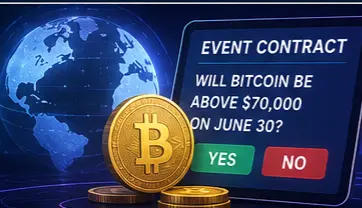
Event Contracts are designed with simplicity in mind. Instead of analyzing long-term price trends, traders answer straightforward questions based on whether an event will happen or not. For example, markets may ask whether Bitcoin will close above a certain price before a specific date, whether a central bank will change interest rates, or whether an important economic report will exceed expectations. Traders buy contracts based on their expectations and earn rewards if their predictions prove correct.
One of the biggest advantages of Event Contracts is accessibility. New traders often find futures and options difficult to understand because they involve leverage, margin requirements, and complex risk management. Event Contracts simplify participation by focusing on clear outcomes. This allows beginners to learn market behavior while experienced traders can apply their macroeconomic knowledge to generate opportunities.
Global events influence financial markets every day. Inflation reports, employment data, interest rate decisions, corporate earnings, geopolitical developments, technological breakthroughs, and regulatory announcements all have the power to move markets. Event Contracts transform these moments into trading opportunities, allowing participants to express their views directly instead of relying solely on traditional investments.
Risk management remains essential. Even when a trader has strong confidence in an outcome, unexpected developments can quickly change market expectations. Successful traders avoid placing all their capital on a single prediction. Diversifying across multiple events and maintaining disciplined position sizing helps reduce overall risk while improving long-term consistency.
Research plays a major role in Event Contract trading. Following reliable news sources, monitoring economic calendars, studying historical data, and understanding market sentiment can provide valuable insights before making predictions. Traders who consistently prepare before entering positions often gain an advantage over those relying purely on speculation.
Market psychology is another important factor. Prices often reflect expectations long before an event occurs. Sometimes the final outcome matters less than whether it exceeds or disappoints market expectations. Understanding how participants react to news can improve decision-making and increase the probability of successful trades.
Liquidity and transparency also contribute to the appeal of Event Contracts. Active markets allow participants to enter and exit positions efficiently while transparent pricing helps traders understand the probability currently assigned to each outcome. As participation increases, price discovery becomes more efficient and market confidence grows.
Technology continues to reshape financial markets, and Event Contracts demonstrate how blockchain and digital trading platforms can expand beyond traditional investing. By combining prediction markets with cryptocurrency infrastructure, these products create new opportunities for both retail and professional traders. Faster settlement, global accessibility, and continuous market availability make them attractive in an increasingly digital financial ecosystem.
The future of Event Contracts looks promising as more traders seek diversified ways to participate in global events. Whether focusing on cryptocurrency developments, macroeconomic announcements, elections, or technological milestones, these markets provide a flexible way to engage with information and convert knowledge into potential trading opportunities.
Success with Event Contracts requires patience, discipline, and continuous learning. Traders who combine research, sound risk management, and emotional control are more likely to achieve consistent results over time. Every event offers a chance to improve analytical skills, understand market behavior, and make better-informed decisions.
As financial markets continue to innovate, Event Contracts are becoming an important addition to the modern trader's toolkit. They bridge the gap between real-world events and digital trading, making markets more interactive, educational, and accessible. For traders willing to stay informed and think strategically, Event Contracts offer an exciting path toward participating in the next generation of financial markets.
#EventContractsLaunch
@Gate_Square
repost-content-media
  • Reward
  • 8
  • Repost
  • Share
ShainingMoon:
To The Moon 🌕
View More
#IntelQ2RevenueSurges25% Intel's second-quarter revenue surged by 25%, marking one of the company's strongest quarterly performances in recent years and signaling renewed confidence in its long-term strategy. The impressive growth reflects increasing demand across key business segments, particularly in artificial intelligence infrastructure, advanced data centers, and next-generation semiconductor technologies. As the global race for AI leadership intensifies, Intel appears to be regaining momentum by expanding its product portfolio, improving manufacturing capabilities, and strengthening part
INTC-4.05%
ShainingMoon
#IntelQ2RevenueSurges25% Intel's second-quarter revenue surged by 25%, marking one of the company's strongest quarterly performances in recent years and signaling renewed confidence in its long-term strategy. The impressive growth reflects increasing demand across key business segments, particularly in artificial intelligence infrastructure, advanced data centers, and next-generation semiconductor technologies. As the global race for AI leadership intensifies, Intel appears to be regaining momentum by expanding its product portfolio, improving manufacturing capabilities, and strengthening partnerships with enterprise customers.
The rapid expansion of artificial intelligence has created an unprecedented need for high-performance processors and advanced computing solutions. Businesses around the world are investing heavily in AI-powered applications, cloud infrastructure, automation, and machine learning. This trend has significantly increased demand for powerful chips capable of handling complex workloads. Intel has responded by accelerating innovation, introducing new processors, and investing billions of dollars into research, development, and fabrication facilities. These strategic investments are beginning to translate into stronger financial results.
A major contributor to Intel's revenue growth is its data center business. Cloud providers, financial institutions, healthcare organizations, and government agencies continue upgrading their infrastructure to support AI-driven operations. These customers require reliable, scalable, and energy-efficient processors, creating opportunities for Intel to expand its market share. Strong enterprise demand demonstrates that businesses remain committed to digital transformation despite ongoing economic uncertainty.
The company's manufacturing strategy is also playing an important role. Intel has invested heavily in expanding semiconductor production capacity, reducing dependence on external manufacturers, and improving supply chain resilience. These investments position the company to meet growing global demand while supporting governments seeking greater domestic chip production. As geopolitical tensions continue influencing technology supply chains, manufacturing independence has become an increasingly valuable competitive advantage.
Investors have welcomed the revenue growth because it suggests Intel's turnaround efforts are gaining traction. Financial markets often reward companies that demonstrate consistent execution, improving profitability, and clear strategic direction. Although competition remains intense, strong quarterly performance provides evidence that Intel can compete effectively in the rapidly evolving semiconductor industry.
The AI revolution remains one of the most significant drivers of technology investment worldwide. Every advancement in generative AI, robotics, autonomous systems, cybersecurity, and cloud computing increases demand for faster and more efficient processors. Intel's expanding presence in these markets could provide additional revenue opportunities in future quarters if customer demand continues to grow.
However, challenges still exist. The semiconductor industry remains highly competitive, with rivals continuously introducing innovative products. Intel must continue improving product performance, manufacturing efficiency, and cost management while maintaining significant investment in research and development. Success will depend not only on strong quarterly earnings but also on the company's ability to deliver consistent innovation over many years.
Macroeconomic conditions also remain an important factor. Interest rates, business investment, consumer demand, and international trade policies all influence technology spending. If global economic conditions remain supportive, enterprise customers may continue expanding AI infrastructure, creating sustained demand for advanced semiconductor solutions. On the other hand, slower economic growth could delay corporate technology investments.
For long-term investors, Intel's 25% revenue increase represents more than a single successful quarter. It reflects broader industry trends driven by artificial intelligence, digital transformation, cloud computing, and advanced manufacturing. These structural changes are expected to influence global technology markets for years to come.
Looking ahead, investors will closely monitor future earnings, profit margins, AI product launches, manufacturing progress, and customer adoption rates. If Intel continues executing its strategy while maintaining strong financial discipline, the company could strengthen its competitive position and deliver sustained growth. The latest quarterly results demonstrate that Intel is actively participating in the next generation of computing innovation, making it one of the technology companies to watch as the AI era continues to reshape the global economy.
#IntelQ2RevenueSurges25%
@Gate_Square
repost-content-media
  • Reward
  • 3
  • Repost
  • Share
Venüs_:
LFG 🔥
View More
#Bitcoin #DOGEcoin #BrentOil
Markets Tell Three Different Stories: BTC Pauses, DOGE Runs, Oil Burns
April 30, 2026. Three asset classes, three moods on the same day. Bitcoin pulls back 0.6% and trades at $75,785. Dogecoin jumps 5.7% and moves against the trend. Brent crude pushes to $116.85 per barrel and tests a four-year high. All three live in the same global economy, but each writes a different story.
1. Bitcoin: $75,785 and an Institutional Breathing Space
Bitcoin slipped 1.1% in the last 24 hours, easing from $76,324 to the $75,785 range. The intraday low was $74,937 and the high was $7
BTC-1.11%
DOGE-0.63%
BZ-3.47%
GS-0.35%
GAS-2.50%
Venüs_
#Bitcoin #DOGEcoin #BrentOil
Markets Tell Three Different Stories: BTC Pauses, DOGE Runs, Oil Burns
April 30, 2026. Three asset classes, three moods on the same day. Bitcoin pulls back 0.6% and trades at $75,785. Dogecoin jumps 5.7% and moves against the trend. Brent crude pushes to $116.85 per barrel and tests a four-year high. All three live in the same global economy, but each writes a different story.
1. Bitcoin: $75,785 and an Institutional Breathing Space
Bitcoin slipped 1.1% in the last 24 hours, easing from $76,324 to the $75,785 range. The intraday low was $74,937 and the high was $77,240. This is a modest 0.6% correction.
Why the dip? Because it rallied. BTC climbed from $63,000 earlier in 2026 to $76,500. That recovery was supported by five straight sessions of net inflows into spot Bitcoin ETFs totaling $1.1 billion. Now the market is digesting Strategy’s weekly 3,273 BTC buys and its 818,334 BTC reserve.
The company’s average cost is $75,537. Price sits just above that line. Technically, $75,000 is psychological support. Institutions are defending that level. The 0.6% drop is not “selling.” It is “waiting.” You cannot run a marathon without catching your breath.
2. Dogecoin: A 5.7% Meme Rally and the $0.10 Door
While BTC pulled back, DOGE gained 5.7%. It is up 5.30% in the last week and more than 11% in the last month. Price broke above $0.0970 and is testing $0.0995 resistance.
Why? Technicals. Dogecoin cleared resistance at $0.0980 and $0.0985. It holds above the 50% Fibonacci level at $0.0970. It is also above the 100-hour moving average. On the hourly chart, an ascending trend line supports price at $0.0978.
The key level is $0.0995. That is the 61.8% Fibonacci retracement of the last drop. A strong break opens the door to the psychological $0.10 mark. On-chain data is interesting too: MVRV is 0.686. Market value is 31% below realized value. NUPL sits at -0.459, in the “capitulation” zone. Historically, these levels mark points where buyers return after heavy losses.
Bottom line: As BTC rests, risk appetite shifts to memecoins. DOGE is diverging short term on technicals and community momentum.
3. Brent Oil: $116.85 and the Shadow of the Strait of Hormuz
The real fire is in energy. Brent crude is $116.85. It touched $126 intraday. That is the highest since March 2022. Compared with $70 levels at the start of 2026, it is up 70%.
One reason: U.S.-Iran tensions. The Strait of Hormuz is closed. One-fifth of the world’s oil moves through it. The U.S. maintains a naval blockade of Iranian ports. The Trump administration will not lift the blockade until Tehran returns to a nuclear deal. The message “a blockade is more effective than bombing. They are choking” has rattled markets.
Result: Eight straight sessions of gains. Brent settled up $6.77 at $118.03 per barrel. U.S. crude jumped 7% to $106.88. Inventories are also falling. U.S. crude stocks dropped 6 million barrels last week. The forecast was 200,000. Gasoline and diesel draws were larger than expected. Supply is tightening as the summer driving season begins.
Analysts are raising targets. Goldman Sachs lifted its year-end Brent forecast from $80 to $90. The physical market is in backwardation: June is $113.14, July is $105. Near-term barrels carry a premium. That means stocks are being drawn down. Spot oil is scarce.
4. The One Thing Connecting All Three: A Risk Premium
Why did BTC dip? Because it rallied and traders took profit. Institutions are protecting the $75,537 cost basis.
Why did DOGE pop? Because BTC paused and speculative money chased a short-term story. Technicals plus community equals rally.
Why did oil surge? Because geopolitical risk is real. Hormuz is closed, inventories are down, summer is coming.
All three are pricing the same thing: uncertainty. Bitcoin looks for safe-haven demand as “digital gold” but gets sold short term. Dogecoin is the barometer of “risk-on.” Oil is a direct war premium.
Final Word: The April 30 picture is clear. Money is braking and accelerating at the same time. Brakes on BTC, gas on DOGE, fire in oil. Next week, a headline from Hormuz, a signal from the Fed, a flow from ETFs… any of it can redraw these three charts.
For now the rule is simple: As long as BTC holds above $75,000, bulls stay in control. If DOGE breaks $0.10, momentum takes over. While Brent stays above $110, inflation stays hot. Stay alert.
#GateSquare #CreatorCarnival
repost-content-media
  • Reward
  • 9
  • 2
  • Share
Venüs_:
LFG 🔥
View More
Brent crude oil returning to the $100 level would be a major development for global financial markets, because oil prices influence inflation, transportation costs, corporate expenses, consumer spending, and central-bank policy.
A move back toward $100 per barrel would immediately raise questions about what is driving the rally. Is it a temporary supply disruption, geopolitical tension, stronger global demand, or a combination of several factors?
The answer matters because not every oil rally has the same economic impact.
If prices rise because of a sudden supply shock, markets may become conc
BTC-1.11%
GAS-2.10%
FUEL-13.54%
EagleEye
Brent crude oil returning to the $100 level would be a major development for global financial markets, because oil prices influence inflation, transportation costs, corporate expenses, consumer spending, and central-bank policy.
A move back toward $100 per barrel would immediately raise questions about what is driving the rally. Is it a temporary supply disruption, geopolitical tension, stronger global demand, or a combination of several factors?
The answer matters because not every oil rally has the same economic impact.
If prices rise because of a sudden supply shock, markets may become concerned about energy shortages and higher inflation. If the move is driven by stronger global demand, it could instead signal that economic activity remains resilient.
For investors, the $100 level is also psychologically important.
Oil is one of the most closely watched commodities in the world, and a sustained move above this threshold could influence expectations across multiple asset classes. Energy companies could benefit from higher crude prices, while industries that depend heavily on fuel and transportation could face increased costs.
The impact could extend far beyond the energy sector.
Airlines, shipping companies, logistics businesses, manufacturers, and consumer-focused companies could all feel pressure if higher energy costs begin to affect operating margins.
Consumers could also experience the effects through higher gasoline and transportation costs.
This creates a potential inflationary challenge for economies that are already trying to manage price stability. If energy prices remain elevated for an extended period, inflation expectations could become more difficult to control.
That is why central banks closely monitor energy markets.
Higher oil prices can create a difficult situation for monetary policymakers. On one hand, persistent inflation may encourage tighter policy. On the other hand, higher borrowing costs can slow economic growth.
This combination can create uncertainty for equity and bond markets.
The relationship between oil and the US dollar is also important.
Crude oil is primarily priced in dollars, meaning changes in currency values can influence the purchasing power of international buyers. A stronger dollar can create additional pressure on oil-importing economies, while a weaker dollar may provide some support for commodity prices.
The geopolitical environment is another major factor to watch.
Oil production and transportation routes are concentrated in strategically important regions. Any disruption involving major producers, shipping routes, or critical infrastructure can quickly change market expectations.
However, markets often react not only to actual disruptions but also to the possibility of future disruptions.
That means headlines can cause significant volatility even before physical supply is affected.
For traders, the $100 level could therefore become an important psychological and technical reference point.
A sustained move above $100 may encourage momentum traders to remain bullish, while a failure to hold the level could trigger profit-taking or a reversal.
But price alone does not tell the entire story.
Traders should also monitor inventories, production levels, global demand forecasts, refinery activity, shipping conditions, and geopolitical developments.
The broader economic environment matters as well.
If the global economy is expanding strongly, demand for oil may remain robust.
If growth begins to slow significantly, high oil prices could eventually become a burden on consumers and businesses, potentially weakening demand and creating pressure on crude prices.
This creates an interesting feedback loop.
Higher oil prices can initially reflect strong demand, but if prices remain too high for too long, they can contribute to slower economic activity.
That is one reason why the $100 level is more than just a round number.
It represents a point where markets may begin to reassess the balance between supply, demand, inflation, and economic growth.
The potential impact on cryptocurrency markets is also worth watching.
Bitcoin and other digital assets are increasingly influenced by macroeconomic conditions, liquidity, inflation expectations, and investor risk appetite.
A sharp rise in oil prices could contribute to inflation concerns and potentially affect expectations for interest rates.
If investors begin expecting tighter monetary policy, risk assets could face additional volatility.
On the other hand, some investors view Bitcoin as a potential long-term hedge against currency debasement and inflation.
This creates a complicated relationship.
A rise in oil prices may strengthen inflation concerns, but the resulting monetary-policy response could create pressure on speculative assets.
Therefore, the impact on $BTC would depend heavily on how markets interpret the underlying cause of the oil rally.
If Brent reaches $100 because of a severe geopolitical supply shock, risk sentiment could deteriorate quickly.
If the move is driven by strong global growth, the market reaction could be very different.
This distinction is critical.
For investors, the key question is not simply whether Brent reaches $100.
The bigger question is whether it can remain there.
A short-lived spike may have a limited economic impact.
A sustained period of elevated oil prices could have much broader consequences for inflation, interest rates, corporate earnings, and consumer spending.
Energy producers could benefit from higher prices, potentially increasing cash flows and investment.
However, higher production costs and increased capital spending could also become important considerations.
Meanwhile, oil-importing economies may face a more difficult environment as energy costs rise.
This could create differences between regions, with energy exporters potentially benefiting while import-dependent economies face greater pressure.
My view is that Brent returning to $100 would be an important macroeconomic signal, but the market should focus on the reason behind the move rather than the number itself.
The direction of oil prices will likely depend on the balance between geopolitical risk, global demand, production discipline, inventories, and the broader economic cycle.
For traders, volatility could increase as the market attempts to determine whether $100 represents a temporary peak or the beginning of a new higher-price environment.
My Final View: A return of Brent crude to $100 would put energy prices back at the center of the global macro conversation. The biggest consequences could come through inflation expectations, interest-rate policy, corporate costs, and consumer spending.
If the rally is temporary, markets may eventually absorb the shock.
If Brent remains above $100 for an extended period, the implications could be much larger.
The key question is no longer simply whether Brent can return to $100—it is whether the global economy can comfortably operate with oil at that level for an extended period.
#BrentReturnsTo100
repost-content-media
  • Reward
  • 5
  • Repost
  • Share
ShainingMoon:
To The Moon 🌕
View More
#BrentReturnsTo100
#BrentReturnsTo100 is one of those milestones that immediately captures the attention of the global financial community. Brent crude oil is more than just a commodity it is one of the world's most closely watched economic indicators. When prices move toward or above the $100 level, the effects are often felt far beyond the energy sector, influencing inflation expectations, transportation costs, manufacturing expenses, consumer prices, corporate profitability, and even the policy decisions of central banks across the globe.
The return of Brent to this psychological level rem
post-image
post-image
  • Reward
  • 7
  • Repost
  • Share
Venüs_:
LFG 🔥
View More
#EventContractsLaunch
#EventContractsLaunch is redefining the way we interact with financial markets by transforming major global events into opportunities for analysis, learning, and participation. Every day, the world is shaped by breaking news, economic reports, technological innovation, policy decisions, and market-moving announcements. These events influence the direction of cryptocurrencies, global stocks, commodities, and digital assets. Instead of simply reading headlines and watching prices fluctuate, market participants now have a more engaging way to apply their knowledge, evaluate
post-image
post-image
  • Reward
  • 8
  • Repost
  • Share
Venüs_:
Ape In 🚀
View More
#EsportsTradingSeason
The competitive spirit of esports and the dynamic world of financial trading share more similarities than many people realize. Both demand preparation, quick decision-making, emotional discipline, and the ability to adapt when conditions change in an instant. Whether you're competing in a high-stakes tournament or navigating the fast-moving crypto and stock markets, success is rarely the result of luck—it comes from knowledge, strategy, patience, and continuous learning.
#EsportsTradingSeason is a celebration of this unique connection between gaming
post-image
post-image
  • Reward
  • 14
  • Repost
  • Share
My_Power:
LFG 🔥
View More
  • Pinned