juttmunda

vip
Age 0.7 Year
Peak Tier 0
No content yet
#CLARITYActPassesSenateCommittee
Bitcoin Market Analysis and CLARITY Act Senate Committee Passage
Introduction: Regulatory Breakthrough Meets Market Consolidation
Bitcoin and the broader digital asset market are currently navigating a critical intersection of macroeconomic pressure, technical consolidation, and major regulatory development. The most significant recent catalyst is the advancement of the CLARITY Act (Digital Asset Market Clarity Act) through the U.S. Senate Banking Committee, where it passed with a bipartisan 15–9 vote on May 14, 2026.
At the same time, Bitcoin is trading in a
HighAmbition
#CLARITYActPassesSenateCommittee
Bitcoin Market Analysis and CLARITY Act Senate Committee Passage
Introduction: Regulatory Breakthrough Meets Market Consolidation
Bitcoin and the broader digital asset market are currently navigating a critical intersection of macroeconomic pressure, technical consolidation, and major regulatory development. The most significant recent catalyst is the advancement of the CLARITY Act (Digital Asset Market Clarity Act) through the U.S. Senate Banking Committee, where it passed with a bipartisan 15–9 vote on May 14, 2026.
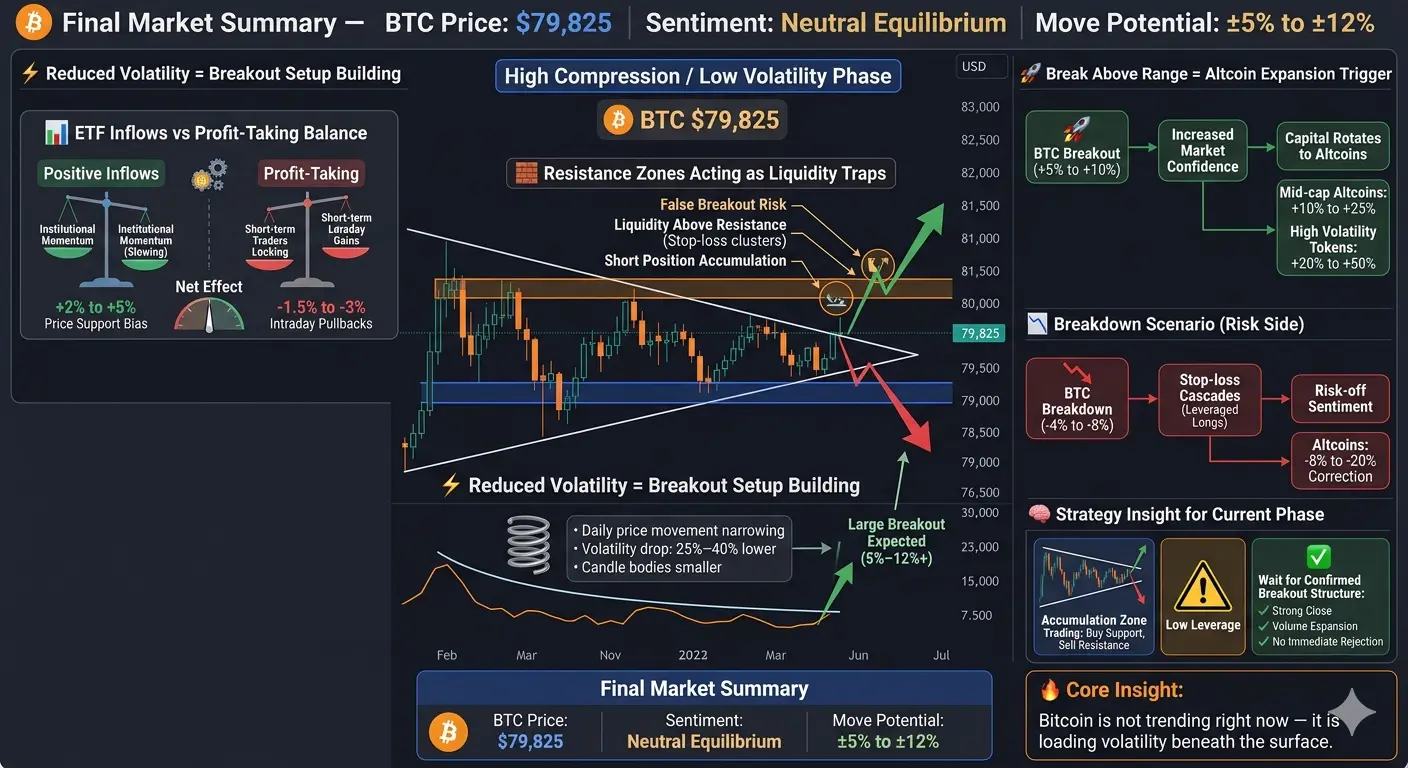
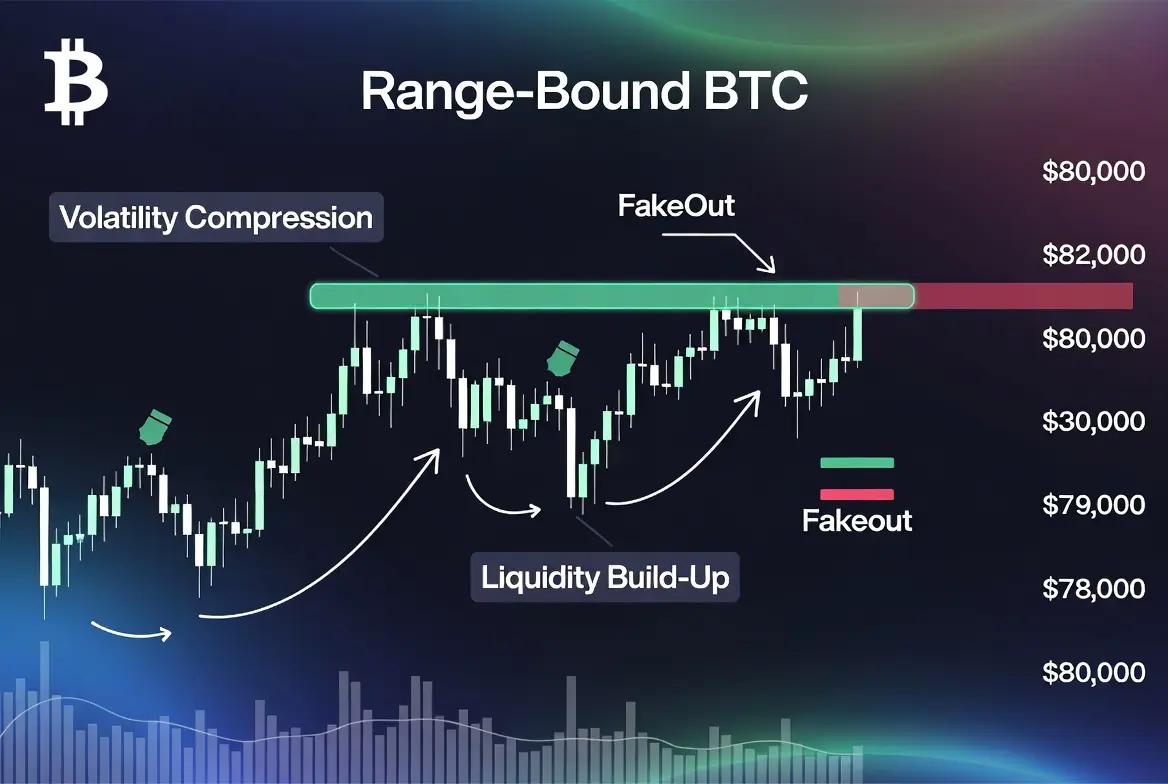
At the same time, Bitcoin is trading in a tight consolidation range between approximately $79,000 and $81,000, after multiple attempts to break above resistance near $82,000 and repeated defenses of support around $78,000. This combination of regulatory progress and price compression has created a decisive environment for the next major move in the market cycle.
CLARITY Act: What the Senate Committee Passage Means
The CLARITY Act represents one of the most important legislative efforts in U.S. crypto history. Its core objective is to eliminate long-standing regulatory uncertainty by clearly defining how digital assets are classified and supervised.
The Senate Banking Committee’s approval does not make it law yet, but it is a major procedural milestone that signals strong bipartisan willingness to structure the crypto market rather than restrict it outright.
The bill now moves toward full Senate debate, potential amendments, and eventual reconciliation with the House version before reaching the President’s desk.
Core Purpose: Establishing Regulatory Clarity
The primary goal of the CLARITY Act is to resolve the long-standing jurisdictional conflict between two major regulators:
The Securities and Exchange Commission (SEC)
The Commodity Futures Trading Commission (CFTC)
For years, crypto projects have operated under uncertainty regarding whether tokens should be treated as securities or commodities. The CLARITY Act introduces clearer definitions:
Digital commodities (like Bitcoin and sufficiently decentralized assets) fall under CFTC oversight
Investment-contract tokens remain under SEC regulation
This distinction is critical because it removes overlapping enforcement pressure that has historically created legal risk for exchanges, developers, and institutional participants.
Structural Framework of the Bill
The legislation introduces a full market structure for digital assets, covering exchanges, brokers, and token issuers.
Key components include:
Mandatory registration standards for crypto trading platforms
Anti-money laundering (AML) compliance and reporting obligations
Consumer protection rules for retail participants
Defined pathways for token decentralization classification changes
Safe harbor protections for decentralized finance (DeFi) developers who do not control user funds
Stablecoin regulation with restrictions on yield-like rewards tied to passive holding
The stablecoin framework is particularly important because it attempts to balance innovation with financial stability concerns raised by traditional banking institutions.
Market Reaction: Immediate but Controlled Volatility
The immediate market response to the committee vote was cautiously positive but not euphoric. This reflects a key theme: markets are treating this as a long-term structural development rather than an immediate price catalyst.
Following the announcement:
Bitcoin briefly moved toward $82,000
Later retraced back into the $79,000–$81,000 range
Short liquidations exceeding $250 million were reported in leveraged positions
Despite this, Bitcoin did not enter a sustained breakout phase. Instead, price behavior suggests a “buy-the-rumor, moderate-the-news” structure combined with macroeconomic hesitation.
Bitcoin Price Structure: Key Levels and Behavior
Bitcoin remains locked in a defined technical corridor:
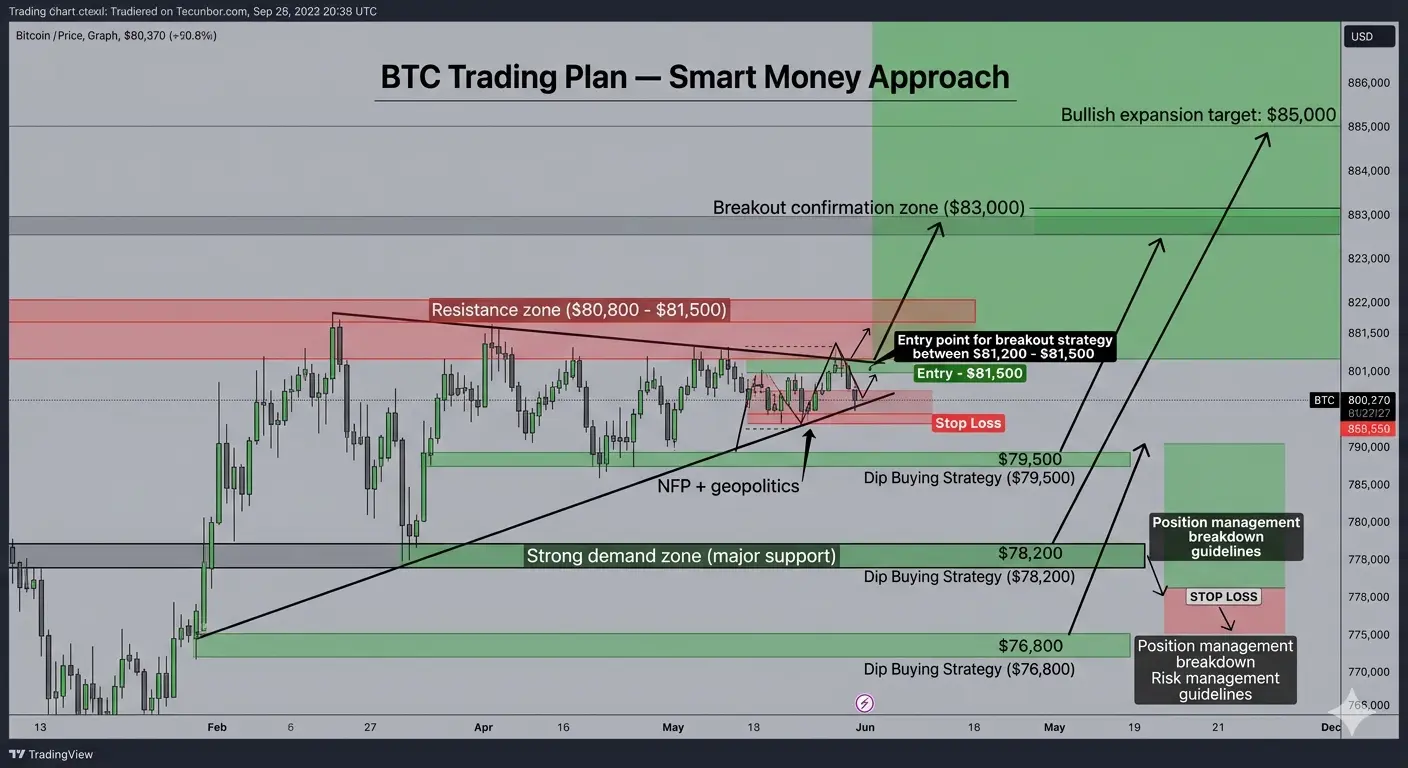
Support Zone: $78,000
Resistance Zone: $82,000
Current Trading Range: $79,000–$81,000
Repeated rejection at the upper boundary suggests sellers are active near resistance, while consistent defense of the lower boundary indicates ongoing accumulation interest.
This compression phase is often associated with volatility expansion events, where price eventually breaks sharply in one direction after liquidity builds on both sides.
Broader Market Drivers Beyond Regulation
While the CLARITY Act is a major narrative, Bitcoin’s price action is also shaped by multiple external factors:
ETF inflows and outflows affecting spot demand
Whale accumulation and distribution patterns
Futures market leverage and liquidation cascades
U.S. Federal Reserve interest rate expectations
Inflation data and macroeconomic sentiment
Equity market correlation and risk appetite cycles
These combined forces mean that regulatory optimism alone is not sufficient to trigger a breakout without supportive liquidity conditions
Institutional Impact: Why the Bill Matters Long-Term
One of the most important implications of the CLARITY Act is institutional participation.
If passed into law, it could significantly reduce legal uncertainty for:
Banks
Hedge funds
Pension funds
Asset managers
This would potentially unlock large-scale capital inflows into Bitcoin and other compliant digital assets.
Institutions generally require clear regulatory frameworks before deploying significant capital. The removal of ambiguity around SEC vs CFTC jurisdiction is therefore a major structural shift.
Market Sentiment: Cautious Optimism
Sentiment across the crypto market remains balanced between optimism and caution.
Bullish expectations are driven by:
Regulatory clarity improving legitimacy
Continued ETF demand
Strong on-chain accumulation signals
Long-term supply constraints of Bitcoin
However, caution remains due to:
Macro uncertainty
High leverage in derivatives markets
Possibility of delayed legislative progress
Resistance rejection near $82,000
Market participants are increasingly focused on confirmation rather than speculation.
Bullish Scenario: Potential Expansion Phase
If the CLARITY Act continues advancing through the full Senate with strong bipartisan support, the market could enter a new expansion phase.
In a bullish scenario:
Breakout above $82,000 could trigger momentum continuation
Bitcoin may target $85,000 initially
Extended upside could reach $88,000–$90,000
In strong macro conditions, longer-term projections extend beyond $100,000
This scenario depends heavily on sustained ETF inflows and supportive global liquidity conditions.
Bearish Scenario: Structural Risks Remain
Despite positive legislative progress, downside risks still exist independently of the bill:
Failure to pass full Senate vote due to amendments or political resistance
Macro tightening or delayed interest rate cuts
Equity market corrections triggering risk-off behavior
ETF outflows reducing spot demand
Breakdown of key support near $78,000
In a deeper correction scenario, Bitcoin could revisit:
$75,000 support
Psychological zone near $70,000 in extreme cases
However, many analysts view such pullbacks as cyclical rather than structural breakdowns.
Trading Environment: Strategy Considerations
Current market conditions favor range-based strategies until a confirmed breakout occurs.
Key strategic approaches include:
Accumulation near support zones during dips
Profit-taking near resistance levels
Strict risk management due to leveraged volatility
Avoiding overexposure during consolidation phases
Waiting for volume-confirmed breakout above $82,000
A decisive move outside the current range is likely to define the next major trend phase.
Long-Term Outlook: Structural Market Evolution
The CLARITY Act’s advancement signals a broader transformation of the crypto industry from an uncertain frontier market into a regulated financial asset class.
Over time, this may lead to:
Reduced volatility due to institutional participation
Higher liquidity across exchanges
Stronger integration with traditional financial systems
Increased legitimacy of Bitcoin as a macro asset
This transition mirrors earlier phases in commodities and equity markets where regulatory clarity preceded large-scale adoption.
Conclusion: A Critical Inflection Point
The combination of Bitcoin’s consolidation near $80,000 and the CLARITY Act’s advancement through the Senate Banking Committee represents a significant inflection point for the digital asset market.
In the short term, price action remains range-bound and sensitive to macroeconomic and liquidity conditions. In the long term, regulatory clarity has the potential to reshape the structure of the entire crypto ecosystem by enabling institutional participation at a much larger scale.
The market is now positioned in a compression phase where both regulatory progress and technical structure are building toward a potential expansion. The next decisive move—above resistance or below support—will likely define the next major trend cycle for Bitcoin.

repost-content-media
  • Reward
  • 1
  • Repost
  • Share
MasterChuTheOldDemonMasterChu:
Steadfast HODL💎
#GateSquareMayTradingShare
HYPE Trading Plan
Current Price: $43.84
HYPE coin is currently trading in a strong but volatile mid-range consolidation structure after experiencing multiple sharp expansion and retracement phases. The price is stabilizing around the $42–$45 zone, where market participants are actively rebalancing positions after recent volatility spikes. This phase typically indicates that the asset is transitioning between impulsive moves and a controlled consolidation range before the next directional expansion.
Market Structure
HYPE is currently in a high-volatility consolidati
HYPE-8.45%
BTC-1.42%
  • Reward
  • 2
  • Repost
  • Share
MasterChuTheOldDemonMasterChu:
Steadfast HODL💎
View More
#GateSquareMayTradingShare
XAUT (Tether Gold) is currently trading around $4,709.2, holding a stable intraday structure after recovering from recent macro-driven volatility. The token posted a modest +0.19% daily gain, while the broader weekly performance remains stronger at approximately +4.23%. Despite the short-term rebound, the larger trend still reflects some correction pressure with roughly -0.31% over the last 30 days and nearly -6.1% across the past 90 days. This tells traders that XAUT is currently transitioning from a correction phase back toward accumulation territory rather than e
HighAmbition
#GateSquareMayTradingShare
XAUT (Tether Gold) is currently trading around $4,709.2, holding a stable intraday structure after recovering from recent macro-driven volatility. The token posted a modest +0.19% daily gain, while the broader weekly performance remains stronger at approximately +4.23%. Despite the short-term rebound, the larger trend still reflects some correction pressure with roughly -0.31% over the last 30 days and nearly -6.1% across the past 90 days. This tells traders that XAUT is currently transitioning from a correction phase back toward accumulation territory rather than entering a full bullish expansion cycle immediately.
The current 24-hour trading range remains extremely tight between $4,697.8 and $4,710.7 — a spread of only around 0.27%. Such low volatility is typical for physically-backed gold assets and makes XAUT fundamentally different from highly volatile cryptocurrencies. Instead of rapid speculative swings, XAUT primarily reacts to macroeconomic shifts including inflation expectations, central bank reserve diversification, geopolitical instability, bond market pressure, real interest rates, and currency devaluation concerns.
XAUT’s market capitalization currently fluctuates around $2.79B–$3.3B depending on circulating supply adjustments and gold valuation changes. Daily spot volume remains relatively thin near $1.07M, which is significantly smaller compared to major crypto assets. Thin liquidity means large market orders may experience noticeable slippage during volatile sessions. Traders should therefore focus on limit execution strategies rather than aggressive market entries, especially during macro headline events.
One of the most important structural developments is Tether’s massive gold reserve expansion. Tether now reportedly controls approximately 154 tons of gold combined: • Around 132 tons backing USDT reserve structures • Approximately 22 tons directly backing XAUT circulation
This places Tether among the world’s top sovereign-level gold holders, ranking near national reserve holders like Brazil. XAUT reserves alone reportedly expanded toward 707,747 ounces during Q1 2026, reflecting nearly +36% reserve growth year-over-year.
However, the pace of accumulation has slowed: • Q4 2025 additions: ~27 tons • Q1 2026 additions: ~6 tons
This slowdown is important. It does not necessarily indicate weakness, but it suggests reserve growth is entering a more controlled institutional phase rather than aggressive accumulation. Traders should monitor whether future reserve expansion reaccelerates because that could strongly influence long-term market confidence.
From a macro perspective, global central banks continue accumulating physical gold aggressively. Roughly 863 tonnes of gold were reportedly purchased globally during 2025, making it one of the strongest annual accumulation years on record. This broader gold demand creates a structural tailwind for assets like XAUT because digital gold products benefit from rising investor preference toward hard assets during uncertain economic conditions.
Gold itself remains in a long-term bullish macro cycle despite recent corrections. After reaching all-time highs earlier in 2026, spot gold corrected roughly 16%, which directly affected XAUT pricing. However, the recent +4% weekly recovery suggests buyers are gradually returning near major support zones. If macro uncertainty increases again, XAUT could revisit higher resistance regions around: • $4,750 • $4,820 • $4,900 • Psychological $5,000 area
On the downside, key support zones traders are monitoring include: • $4,650 • $4,580 • $4,500 • Major structural support near $4,320
A breakdown below $4,500 would increase medium-term bearish pressure, while stabilization above $4,700 keeps the short-term recovery structure intact.
One of XAUT’s strongest differentiators versus traditional gold exposure is its growing role inside decentralized finance ecosystems. Unlike physical bullion stored passively, tokenized gold can generate additional yield opportunities. Recent market data showed XAUT perpetual futures funding rates reaching approximately +12.4% annualized. This is significantly higher than competing gold-backed assets and even exceeds funding levels sometimes seen in BTC or ETH during quiet market phases.
This elevated funding creates opportunities for: • Cash-and-carry arbitrage • Delta-neutral hedging • Yield-enhanced gold exposure • Stable collateral strategies
For advanced traders, this transforms XAUT from merely a “safe-haven asset” into a capital efficiency instrument capable of generating layered returns.
Additionally, DeFi integrations are increasing: • Gold-backed vault systems • Lending collateral frameworks • Yield distribution mechanisms • Liquidity farming incentives • Tokenized commodity collateralization
Some XAUT vaults are reportedly distributing approximately 33.5K incentive tokens weekly, creating an additional passive reward layer beyond gold appreciation itself. This hybrid structure — combining gold stability with blockchain-native yield mechanics — is becoming one of XAUT’s strongest institutional narratives.
Social sentiment currently remains moderately bullish: • Bullish sentiment: ~67% • Bearish sentiment: nearly 0% • Discussion activity: declining nearly -60% over recent days
Lower social activity is not necessarily bearish for XAUT. Unlike meme coins or speculative altcoins, XAUT is largely driven by institutional flows, macro positioning, and defensive portfolio allocation rather than retail hype cycles. Fear & Greed metrics around 38 still reflect cautious market psychology, which historically benefits gold-related assets as investors rotate toward defensive exposure.
For traders, XAUT behaves differently from standard crypto pairs: • Lower volatility • Smaller percentage swings • Stronger macro correlation • Reduced emotional retail activity • Greater reaction to economic headlines
This means technical analysis should focus more on: • Macro support/resistance • Gold futures correlation • Dollar index movement • Treasury yields • Inflation data • Central bank activity
Momentum indicators currently suggest stabilization rather than explosive upside acceleration. RSI structures across higher timeframes remain relatively neutral after cooling from earlier overbought conditions. Volume recovery remains limited, meaning confirmation of a larger bullish continuation would require sustained inflows and broader commodity strength.
There are also important risks traders must monitor carefully.
Reserve Transparency Risk Quarterly attestations exist, but reserve transparency still trails some competitors in terms of real-time auditing depth and insurance disclosure clarity.
Liquidity Risk Daily turnover remains relatively low. During sudden volatility spikes, spreads may widen sharply.
Macro Reversal Risk If inflation cools faster than expected or central banks shift toward aggressive monetary easing, gold demand could weaken temporarily.
Yield Compression Risk The current 12.4% funding environment may normalize quickly if arbitrage participation increases.
Correlation Risk XAUT is not immune to broader crypto liquidity contractions even though it tracks gold.
Institutionally, tokenized gold is becoming an increasingly important sector. The combination of: • Physical reserve backing • Blockchain settlement • Cross-border transferability • Yield integration • Inflation hedging • Digital custody flexibility
creates a unique market category positioned between traditional commodities and decentralized finance.
For short-term traders: • Watch $4,700 closely • Momentum improves above $4,750 • Stronger bullish continuation above $4,820 • Weakness increases below $4,650
For swing traders: • $4,500–$4,580 remains a key accumulation region • $5,000 remains the major psychological upside target • Macro volatility will likely remain the primary driver
For long-term investors: XAUT continues evolving into a strategic digital gold reserve instrument rather than a speculative crypto asset. As institutional diversification into commodities expands, tokenized gold exposure may continue gaining adoption globally.
Overall, XAUT currently represents a low-volatility, macro-sensitive, institutionally-backed digital commodity asset with growing DeFi utility, expanding reserve infrastructure, improving adoption metrics, and increasing relevance during uncertain global financial conditions.
repost-content-media
  • Reward
  • 2
  • Repost
  • Share
MasterChuTheOldDemonMasterChu:
Buy the dip 😎
View More
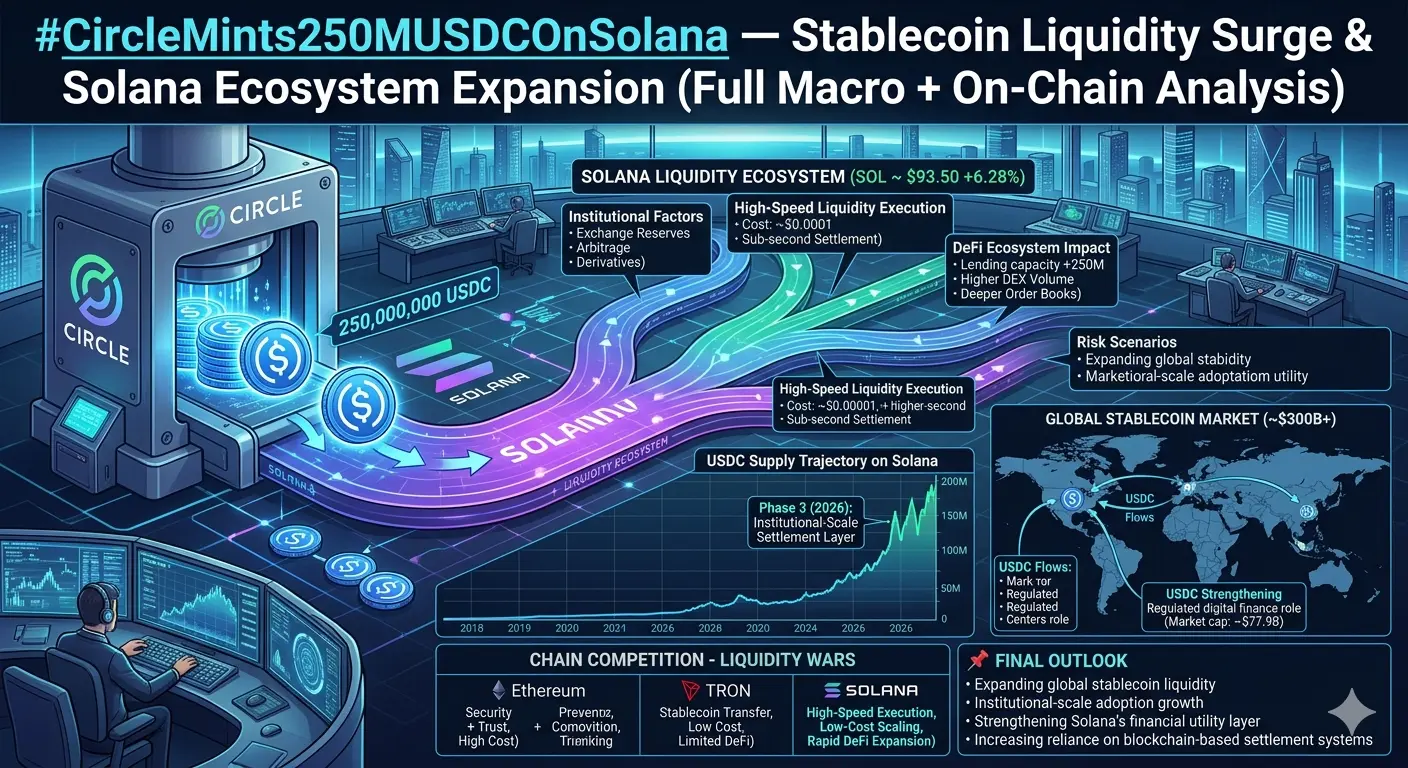
#CircleMints250MUSDCOnSolana
The latest mint of 250 million USDC on Solana by Circle is not just a liquidity event — it represents a structural shift in global digital dollar flow architecture.
With Solana trading around $93.50 (+6.28% daily, +11.65% weekly), the ecosystem is entering a phase where liquidity expansion, institutional participation, and trading activity are converging simultaneously.
This development is now directly influencing market structure, DeFi activity, and trader positioning strategies.
What Happened — Core Event
Circle, issuer of USDC (second-largest stablecoin globall
SOL-3.2%
HighAmbition
#CircleMints250MUSDCOnSolana
The latest mint of 250 million USDC on Solana by Circle is not just a liquidity event — it represents a structural shift in global digital dollar flow architecture.
With Solana trading around $93.50 (+6.28% daily, +11.65% weekly), the ecosystem is entering a phase where liquidity expansion, institutional participation, and trading activity are converging simultaneously.
This development is now directly influencing market structure, DeFi activity, and trader positioning strategies.
What Happened — Core Event
Circle, issuer of USDC (second-largest stablecoin globally), has minted:
👉 250,000,000 USDC on Solana
Key context:
Part of ongoing liquidity expansion trend
Over $17.5B USDC minted on Solana in 2025 alone
Confirmed via on-chain treasury-controlled issuance
Typically deployed into exchanges, DeFi protocols, and market-making systems
👉 This is not random supply — it is demand-driven liquidity deployment
Why This Matters — Liquidity Impact
This mint directly increases on-chain dollar liquidity, which is the core fuel of all market activity.
Key effects:
+$250M fresh trading capital injected
Higher DEX and CEX liquidity depth
Stronger derivatives and leverage capacity
Improved arbitrage efficiency across markets
Increased institutional settlement flow
👉 Simply: More USDC = more trading power + higher market activity on Solana
Solana Structural Advantage
Solana continues to dominate in high-speed liquidity execution:
Fees: near $0.0001 per transaction
Finality: sub-second
High throughput: thousands of TPS
Low latency execution
Result:
Preferred for high-frequency trading
Strong institutional settlement layer
Efficient DeFi capital movement
👉 Solana is evolving into a global liquidity execution network
USDC Expansion Trend
2023–2024: Early adoption
2025: Explosive liquidity growth
2026: Institutional integration phase
👉 Transition phase: From experimental blockchain usage → financial infrastructure layer
Institutional Liquidity Behavior
This mint reflects large-scale capital positioning, not retail activity.
Likely drivers:
Exchange reserve expansion
Market-making liquidity preparation
Derivatives margin requirements
Cross-chain arbitrage positioning
Institutional settlement demand
👉 Signal: higher trading activity expected ahead
Macro Liquidity Context
Stablecoins now act as a real-time proxy of global liquidity conditions.
They enable:
Instant global settlement
Dollar-denominated digital liquidity
Tokenized capital mobility
Efficient risk allocation
👉 USDC expansion = rising digital liquidity cycle intensity
Solana Price Context
At $93.50, Solana reflects strong momentum:
+6.28% daily
+11.65% weekly
Key drivers:
Liquidity inflows from USDC minting
Increasing DeFi activity
Rising trading volumes
Institutional integration
Chain Competition Dynamics
Ethereum:
High trust, high cost
Institutional dominance
TRON:
High stablecoin transfer volume
Low-cost settlement
Solana:
High speed + low cost + growing DeFi
Rapid institutional adoption
👉 Solana is becoming a high-performance liquidity hub
DeFi Impact
This liquidity expansion directly affects:
Lending protocols → higher liquidity pools
DEXs → deeper order books
Yield strategies → better capital efficiency
Derivatives markets → stronger margin capacity
👉 Overall: stronger financial ecosystem efficiency
Key Debate
Bullish view:
Real demand-driven minting
Fully backed USD reserves
Ecosystem expansion confirmation
Skeptical view:
Liquidity may lead demand
Flow timing distortion possible
👉 Reality: both supply and demand interact dynamically
Trading Strategy Outlook — Solana Market Positioning
Trader community is now actively focusing on Solana due to liquidity expansion signals.
Market Structure Strategy:
1. Trend Bias:
Medium-term bias: bullish continuation
Liquidity inflows support upward structure
2. Key Levels:
Support zone: $85 – $88
Resistance zone: $100 – $110
3. Breakout Strategy:
Above $100 → momentum continuation expected
Above $110 → strong expansion phase possible
4. Dip Accumulation Strategy:
Accumulation interest near support zones
Focus on liquidity-driven entries
5. Volatility Strategy:
Expect higher intraday volatility
Use liquidity spikes for short-term trades
Avoid overleveraging in breakout phases
6. Derivatives Positioning:
Increasing open interest expected
Funding rate sensitivity likely to rise
Momentum traders dominating short-term flows
👉 Overall sentiment: Trader attention is shifting toward Solana as a high-liquidity opportunity zone
What to Watch Next
USDC supply continuation on Solana
DeFi TVL expansion
SOL breakout above $100 level
Institutional flow confirmation
Exchange reserve growth patterns
Final Outlook
The $250M USDC mint on Solana represents more than liquidity expansion — it signals a structural transformation in how global digital dollars move through blockchain infrastructure.
Key outcomes:
Expanding stablecoin liquidity
Rising institutional adoption
Strengthening DeFi ecosystem
Increasing trader participation
Growing Solana network utility
At $93.50, Solana is in a critical expansion phase, where liquidity inflows are directly shaping both price structure and trading behavior.
👉 The market is no longer just reacting to Solana — it is actively building on it.
repost-content-media
  • Reward
  • 2
  • Repost
  • Share
MasterChuTheOldDemonMasterChu:
Steadfast HODL💎
View More
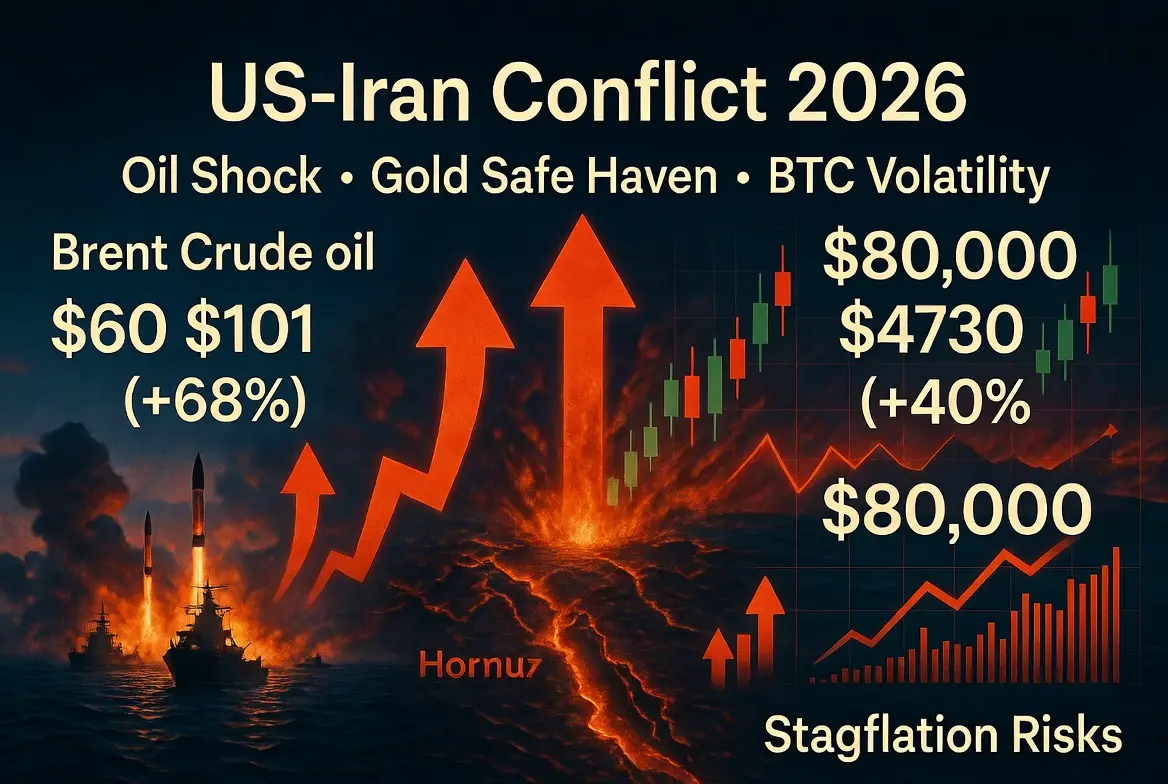
#IranUSConflictEscalates
US–Iran Conflict 2026:
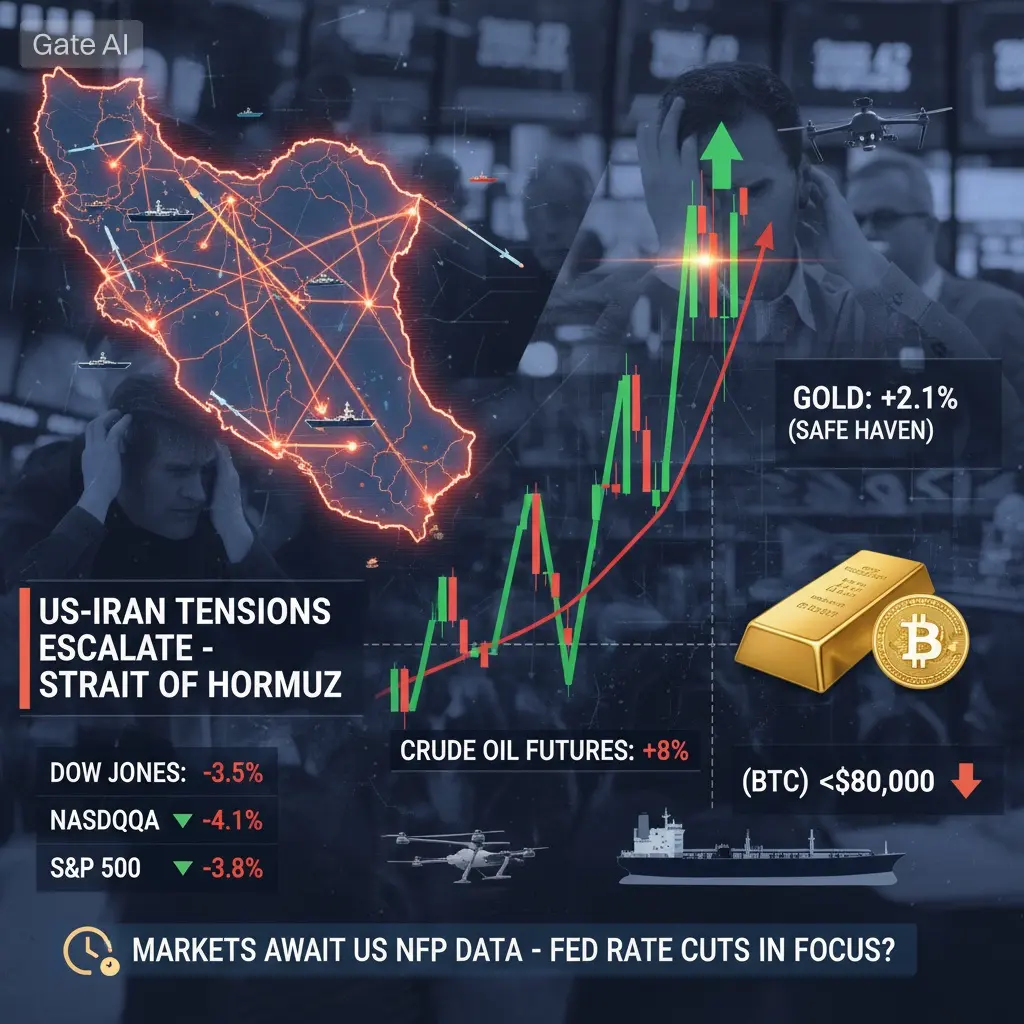
The US–Iran conflict has evolved into one of the most important macroeconomic and geopolitical events of 2026. What began as diplomatic pressure, sanctions disputes, and failed nuclear negotiations has transformed into a large-scale confrontation involving military strikes, naval operations, cyber incidents, energy disruptions, and severe financial market volatility.
This is no longer just a Middle East political issue. It is now directly influencing oil prices, inflation expectations, central-bank decisions, global trade, gold demand, cryptocu
HighAmbition
#IranUSConflictEscalates
US–Iran Conflict 2026:
The US–Iran conflict has evolved into one of the most important macroeconomic and geopolitical events of 2026. What began as diplomatic pressure, sanctions disputes, and failed nuclear negotiations has transformed into a large-scale confrontation involving military strikes, naval operations, cyber incidents, energy disruptions, and severe financial market volatility.
This is no longer just a Middle East political issue. It is now directly influencing oil prices, inflation expectations, central-bank decisions, global trade, gold demand, cryptocurrency markets, equity performance, supply chains, and currency stability.
Every new headline now moves global markets within minutes. Traders, hedge funds, institutions, and central banks are all reacting to developments across the Gulf region because the conflict sits at the center of the global energy system.
THE ROOTS OF THE ESCALATION
Tensions intensified after renewed nuclear negotiations collapsed. The US demanded stricter controls, tighter verification systems, and broader regional security commitments, while Iran rejected several core conditions. Sanctions pressure increased throughout 2025, especially on banking channels, oil exports, and strategic infrastructure.
During mid-2025, Iranian-linked regional activity increased, shipping incidents rose across Gulf waters, oil-market fears began returning, and tanker insurance premiums jumped sharply.
By late-2025 and early-2026, the situation escalated dramatically. Military facilities and strategic infrastructure were targeted, missile and drone operations intensified, naval deployments increased, cyber warfare expanded, and maritime security deteriorated.
The conflict eventually shifted from indirect confrontation toward direct regional military escalation.
OVERNIGHT DEVELOPMENTS — WHY MARKETS REMAIN NERVOUS
Fresh overnight fighting again shocked financial markets. Explosions and air-defense activity were reported near strategic Gulf areas, naval tensions near the Strait of Hormuz intensified, tanker movement disruptions increased, missile interception systems were activated, and military responses from both sides raised fears of broader escalation.
Even temporary clashes now trigger immediate reactions across oil, gold, Bitcoin, equities, bond markets, and forex markets.
This is because investors understand that any disruption near Hormuz can rapidly impact global energy flows.
THE STRAIT OF HORMUZ — THE WORLD’S MOST IMPORTANT ENERGY CHOKEPOINT
The Strait of Hormuz remains the central risk point in the entire conflict.
Approximately 20-21 million barrels of oil move through Hormuz daily, around 20% of global oil trade depends on this route, and nearly one-third of seaborne crude exports pass through the area.
Even partial disruption creates massive global consequences.
Current impacts include tanker insurance spikes of 150-220%, shipping delays of 10-16 days, freight-cost increases of 25-45%, and increased fuel and operational costs globally.
Some shipping operators have already rerouted vessels entirely, increasing delivery times, supply-chain instability, and transportation inflation.
Worst-case market scenarios estimate Brent crude above $130-150, severe inflation acceleration, global recession fears, and major equity corrections.
OIL MARKET — THE CORE OF THE GLOBAL MACRO SHOCK
Oil remains the biggest macro driver of 2026.
Current prices: WTI/XTI around $94 Brent crude around $100-102
Compared to pre-conflict averages, oil remains roughly 50-70% higher.
At peak escalation, Brent surged above $115 while WTI futures briefly approached $150-160 during panic pricing.
Oil volatility has become extreme. Daily moves of 5-10% are common as traders react instantly to military headlines and supply fears dominate sentiment.
Higher oil prices increase transportation costs, airline expenses, manufacturing costs, food distribution expenses, and global inflation pressure.
This creates a chain reaction across the world economy.
GLOBAL INFLATION PRESSURE
The oil surge is spreading inflation globally.
Energy-linked increases include: Jet fuel up 45-65% Diesel up 35-55% Marine shipping fuel up 40-70% Fertilizer costs up 30-50% Petrochemical feedstocks up 25-45%
Supply-chain consequences include rising shipping costs, rapidly increasing logistics expenses, more expensive food transportation, and shrinking manufacturing margins.
Consumer-level impact includes rising airline ticket prices, accelerating grocery inflation, and increasing industrial costs globally.
Economists increasingly warn about stagflation risks involving slower economic growth, persistent inflation, and tight financial conditions.
Global growth forecasts for 2026 have already been revised lower in several regions.
CENTRAL BANKS FACE A MAJOR PROBLEM
The conflict created a difficult environment for central banks.
If rates stay high, economic slowdown risks increase, credit conditions tighten, and liquidity weakens.
If rates are cut too early, inflation may surge further, oil-driven price pressure intensifies, and currency stability weakens.
Markets now face higher-for-longer uncertainty.
This explains why gold remains extremely strong, Bitcoin volatility remains elevated, and equity markets struggle after rallies.
GOLD — THE BIGGEST SAFE-HAVEN WINNER
Gold has become one of the strongest-performing macro assets of 2026.
Current Gold Price: Around $4,714
Earlier in 2026, gold traded near $3,300-3,400.
This means gold rallied roughly 35-40% during the conflict phase.
Drivers behind gold strength include geopolitical fear, inflation hedging, central-bank accumulation, safe-haven demand, and long-term currency concerns.
Institutional demand for gold increased sharply as ETF inflows accelerated, physical bullion demand surged, and sovereign accumulation expanded.
If tensions worsen, $5,000 gold scenarios become increasingly realistic.
If diplomacy improves, gold may cool temporarily toward lower consolidation zones.
BITCOIN — RESILIENT BUT EXTREMELY VOLATILE
Current BTC Price: $80,170
Bitcoin has experienced major volatility during the conflict including sharp selloffs during military escalation, rapid recoveries during ceasefire optimism, and high liquidation activity.
At one stage BTC dropped toward the low $70K range before recovering back toward $80K+.
This shows Bitcoin is behaving as part macro risk asset and part geopolitical hedge.
Bullish arguments include hedging against fiat uncertainty, alternative settlement networks, active institutional adoption, and continued ETF inflows.
Bearish arguments include heavy dependence on liquidity conditions, strong correlation with equities during panic, and sensitivity to macro tightening.
BTC key levels: Support around $79,200-80,000 Resistance around $81,300-82,000
If BTC breaks higher, $85K, $90K, and $95K become possible.
If support fails, $77K-76K becomes possible quickly.
Current trader behavior includes lower leverage, faster scalping, larger stablecoin allocations, and tighter stop-loss usage.
ALTCOINS CONTINUE UNDER PRESSURE
While Bitcoin remains relatively stable, ETH continues underperforming BTC, meme coins remain highly volatile, AI-themed tokens suffered sharp corrections, and small-cap liquidity weakened significantly.
Many altcoins remain 30-60% below local highs and highly sensitive to risk-off sentiment.
Capital rotation currently favors Bitcoin, gold, energy assets, and defensive positioning.
CRYPTO IN THE SANCTIONS AND GEOPOLITICAL ENVIRONMENT
Crypto increasingly became part of the geopolitical landscape itself.
Observed developments include growth in peer-to-peer settlement activity, increased cross-border transfers, and rising interest in decentralized payment channels.
At the same time, regulatory pressure increased, wallet monitoring intensified, and blockchain surveillance expanded.
This conflict accelerated debates around financial sovereignty, stablecoin regulation, CBDCs, and alternative settlement systems.
STABLECOINS — STABLE BUT TESTED
Major stablecoins largely maintained their pegs despite volatility.
However, inflation reduced real purchasing power while traders increasingly discussed commodity-backed alternatives and gold-linked digital assets.
Stablecoins still remain central to crypto liquidity, rapid portfolio rotation, and risk management strategies.
EQUITY MARKETS AND GLOBAL SENTIMENT
Global equity markets reacted negatively during major escalation phases.
Strong sectors included energy companies, defense industries, commodity producers, and gold miners.
Weak sectors included airlines, consumer discretionary, logistics firms, and manufacturing industries.
Investors increasingly shifted toward defensive assets, lower-risk positioning, and cash preservation.
MARKET PSYCHOLOGY — HEADLINE-DRIVEN VOLATILITY
Markets are currently moving based on missile headlines, naval incidents, diplomatic leaks, ceasefire rumors, and military deployments.
Algorithms and institutional trading systems react within seconds.
This creates sudden liquidations, violent intraday swings, and fast reversals.
For traders, emotional reactions have become extremely dangerous.
TRADING STRATEGIES IN THIS ENVIRONMENT
Professional traders are focusing on capital protection, reduced leverage, news monitoring, position scaling, and liquidity management.
Many portfolios now hold 30-50% stablecoins or cash alongside smaller trade sizes, faster trade execution, and defensive allocation strategies.
Current market rewards discipline, patience, flexibility, and risk management.
FINAL CONCLUSION
The US–Iran conflict has become one of the defining macroeconomic events of 2026.
It now directly impacts oil markets, inflation, gold, Bitcoin, global growth, interest-rate expectations, supply chains, and worldwide risk sentiment.
Oil at $94 confirms markets still fear prolonged instability.
Gold at $4,714 shows safe-haven demand remains extremely strong.
Bitcoin at $80,170 demonstrates resilience, but volatility remains elevated.
A diplomatic breakthrough could trigger relief rallies in crypto, lower oil prices, reduced inflation fears, and stronger risk appetite globally.
But further escalation risks higher inflation, slower growth, recession fears, and extreme market volatility.
For traders and investors, this is now a macro-driven, headline-sensitive environment where survival depends on discipline, adaptability, and strong risk management.
repost-content-media
  • Reward
  • Comment
  • Repost
  • Share
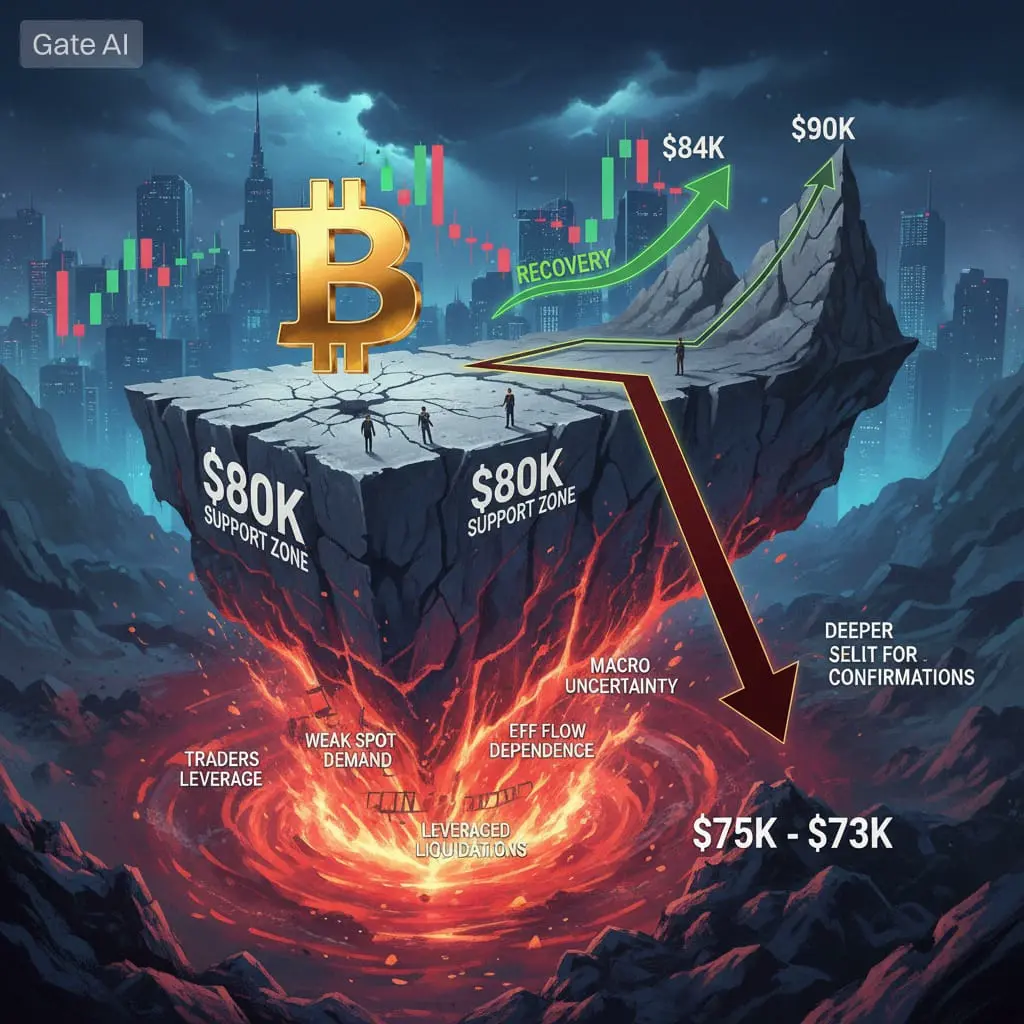
#BitcoinFallsBelow80K
Bitcoin $80K Breakdown
Bitcoin is currently trading around $80,240 with intraday movement already showing weakness after touching lows near $79,200 The market is sitting on a critical psychological and technical threshold where $80,000 is not just a price level but a structural battlefield between bullish continuation and deeper correction risk Despite a broader 7 day gain of around 2% and a 30 day gain near 10% the short term structure has become extremely fragile due to liquidity shifts leverage positioning macro uncertainty and ETF driven flow imbalance
This report c
BTC-1.42%
HighAmbition
#BitcoinFallsBelow80K
Bitcoin $80K Breakdown
Bitcoin is currently trading around $80,240 with intraday movement already showing weakness after touching lows near $79,200 The market is sitting on a critical psychological and technical threshold where $80,000 is not just a price level but a structural battlefield between bullish continuation and deeper correction risk Despite a broader 7 day gain of around 2% and a 30 day gain near 10% the short term structure has become extremely fragile due to liquidity shifts leverage positioning macro uncertainty and ETF driven flow imbalance
This report combines both macro drivers and technical breakdown to explain why Bitcoin dropped below $80K what traders are currently thinking and what the next major move could be in 2026
CURRENT MARKET STRUCTURE
Bitcoin price $80,240
24h low $79,200
24h change +0.42%
7 day trend +2.1%
30 day trend +10%
On surface the trend still looks bullish but underneath market structure is weakening due to dependency on leveraged futures positioning and inconsistent spot demand
WHY BITCOIN FELL BELOW $80K CORE REASONS
1 PROFIT TAKING AFTER MAJOR RALLY
Bitcoin previously reached an all time high near $126,000 From that level BTC corrected approximately 30 to 35 percent This type of retracement is normal after parabolic expansion Early buyers secured profits while late entrants near the top started exiting positions creating downward pressure
2 WEAK SPOT DEMAND STRUCTURE
Recent price recovery toward $80K was not fully organic Market data shows that much of the upward movement was driven by perpetual futures leverage institutional ETF inflows and short term momentum trading However real spot demand from long term buyers remained relatively weak This creates a fragile structure where price rises on leverage but struggles to sustain without consistent buying pressure
3 MACRO RISK SENTIMENT PRESSURE
Global uncertainty has increased due to inflation concerns interest rate uncertainty geopolitical tensions including US Iran conflict escalation and risk off rotation across markets When macro uncertainty rises Bitcoin behaves more like a risk asset than a safe haven leading to capital rotation out of speculative assets
4 LIQUIDATION CASCADES
One of the strongest downward forces came from leveraged liquidations When BTC broke below $80K initially over 300 million dollars in long positions were liquidated Forced selling accelerated downward momentum Stop loss clusters triggered cascading sell pressure creating a self reinforcing drop
5 ETF FLOW DEPENDENCY RISK
While ETF inflows have been strong hundreds of millions per day at peak they are concentrated during specific trading windows This creates a situation where price rises during inflow bursts and weakens when inflows slow CoinDesk analysis highlights that much of this demand comes from participants with limited conviction making flows reversible under stress conditions
TECHNICAL ANALYSIS KEY STRUCTURE
Bitcoin is currently sitting in a critical technical zone
BULLISH STRUCTURE STILL INTACT
MA7 around 80172
MA30 around 76935
MA120 around 74982
This alignment still confirms a broader uptrend As long as price stays above MA30 the macro structure remains technically bullish
SHORT TERM WEAKNESS
Price dipped below short term moving averages MACD divergence shows weakening momentum Price is losing upward acceleration Short term volatility increasing
VOLUME SIGNALS
Expanding volume with upward price is positive but if volume increases on downside it becomes a warning signal
CURRENT KEY LEVEL $80K
$80K is extremely important due to psychological significance historical support zones moving average convergence and liquidation clustering A sustained break below $80K shifts sentiment from bullish pullback to structural correction risk
LIQUIDATION STRUCTURE REAL MARKET ENGINE
Below current levels 6.8B plus leveraged positions within 5K downside range
1.7B liquidation cluster near 73K
17B potential exposure near 67K CME gap
Even small downward moves can trigger cascading liquidations accelerating volatility
CME GAP STRUCTURE
Upper gap 84100
Lower gap 67100
Upper gap fill is bullish continuation but lower gap fill is extreme bearish cascade
SENTIMENT ANALYSIS
Fear and Greed Index 38 Fear
Market psychology shows fear increasing but not extreme panic Social sentiment still mildly bullish around 59 percent positive discussion Retail traders are divided between dip buying and caution
WHY $80K IS A BATTLE ZONE
Three key reasons psychological level structural support zone and liquidation threshold If $80K holds market stabilizes If it fails acceleration toward 77K to 75K becomes likely
STRATEGY WHAT TRADERS ARE DOING
Reduced leverage mostly below 3x to 5x
Stablecoin holdings increased 30 to 50 percent
Short term scalping instead of long holds
Hedging through derivatives
Waiting for confirmation instead of chasing moves
ETF flow monitoring is key above 400M daily inflows is bullish signal below that breakdown risk increases
NEXT BITCOIN SCENARIOS
BULLISH CONTINUATION
If ETF inflows remain strong and $80K holds targets are 82K breakout 84K CME gap fill 85K to 90K extension and possible 95K expansion
RANGE SCENARIO MOST LIKELY SHORT TERM
Mixed flows no catalyst leads to 78K to 82K consolidation
BEARISH BREAKDOWN
ETF outflows macro shock or loss of $80K leads to 77K first zone then 75K structural test and 73K liquidation cluster with extreme risk toward 67K CME gap
MACRO CONTEXT
Bitcoin is reacting to global liquidity tightening geopolitical instability energy driven inflation risk institutional flow dependency and leveraged derivatives structure BTC is now deeply connected to macro finance not isolated crypto speculation
FINAL CONCLUSION
Bitcoin falling toward $80K is not random it is a structural stress test of a highly leveraged ETF dependent macro sensitive market Trend is still technically bullish but short term structure is fragile $80K is the critical battlefield level
If $80K holds market stabilizes and retests higher levels If it breaks liquidity cascade risk increases toward lower zones
Next 48 to 72 hours are critical in deciding whether Bitcoin continues its macro uptrend or enters a deeper corrective phase before next expansion
repost-content-media
  • Reward
  • Comment
  • Repost
  • Share
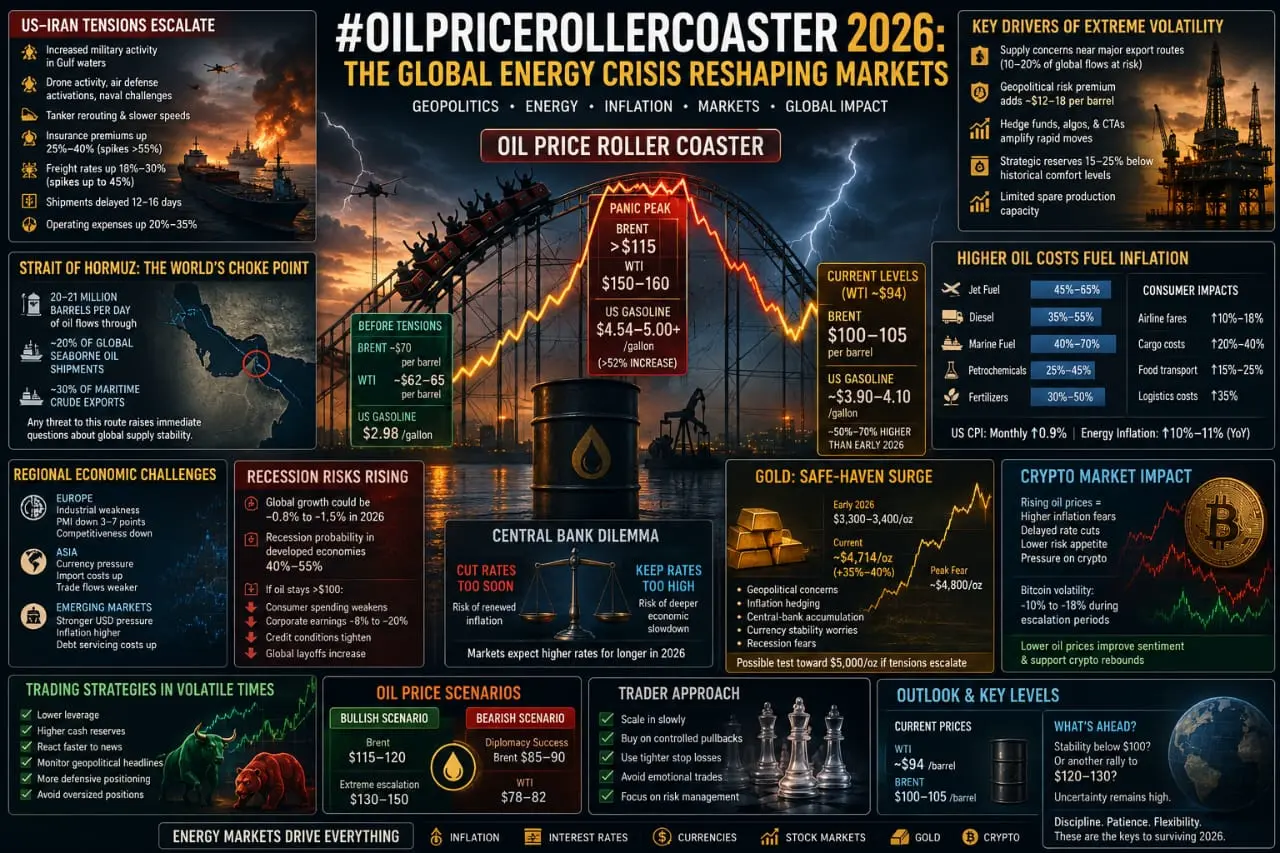
#OilPriceRollerCoaster
#OilPriceRollerCoaster 2026: The Global Energy Crisis Reshaping Markets
Oil markets in 2026 have evolved into one of the most unpredictable and high-risk environments in modern financial history. A regional confrontation between the United States and Iran has expanded into a broad global economic disruption. This situation directly influences oil prices, inflation trends, interest rate decisions, currency values, stock market performance, gold prices, and cryptocurrency movements worldwide.
Energy remains the foundation of global commerce, so every military development,
HighAmbition
#OilPriceRollerCoaster
#OilPriceRollerCoaster 2026: The Global Energy Crisis Reshaping Markets
Oil markets in 2026 have evolved into one of the most unpredictable and high-risk environments in modern financial history. A regional confrontation between the United States and Iran has expanded into a broad global economic disruption. This situation directly influences oil prices, inflation trends, interest rate decisions, currency values, stock market performance, gold prices, and cryptocurrency movements worldwide.
Energy remains the foundation of global commerce, so every military development, naval movement, shipping incident, or diplomatic statement now triggers rapid reactions across financial systems. Traders and policymakers monitor updates in real time because supply concerns in key regions can quickly affect economies far beyond the Gulf.
Recent Developments in the US–Iran Tensions
Overnight reports indicate heightened military activity in Gulf waters. Observers noted increased drone activity, air defense system activations, and potential naval challenges close to critical shipping lanes. Several tanker operators have adjusted routes or reduced speeds to manage risks, leading to higher insurance costs for vessels operating in the area.
The Strait of Hormuz stands out as the primary area of concern. This narrow passage handles approximately 20 to 21 million barrels of oil per day, accounting for about 20 percent of global seaborne oil shipments and nearly 30 percent of maritime crude exports. Any threat to this route raises immediate questions about worldwide supply stability, even if actual disruptions remain limited so far.
In the latest phase of heightened tensions, industry data shows tanker insurance premiums rising by 25 to 40 percent, while some emergency routes experienced spikes above 55 percent. Freight rates have increased by 18 to 30 percent, and in certain cases nearly 45 percent during peak fear periods. Some shipments now face delays of 12 to 16 days while fuel transport operating expenses increased by 20 to 35 percent.
Energy traders have moved quickly to adjust hedging strategies, while futures contracts experienced sharp volatility with intraday price swings frequently exceeding 8 to 10 percent. During panic sessions some oil contracts briefly moved 12 to 14 percent within hours.
Importantly, current market behavior reflects anticipation of possible future problems rather than confirmed large-scale supply losses. This forward-looking fear has amplified price movements beyond what fundamental supply and demand data alone would suggest.
Understanding the Oil Price Roller Coaster
Before tensions increased significantly, benchmark prices remained relatively stable. Brent crude traded near 70 dollars per barrel, while West Texas Intermediate hovered between 62 and 65 dollars. Average gasoline prices in the United States stood around 2.98 dollars per gallon.
As the situation escalated, prices climbed rapidly. Brent moved above 115 dollars, and WTI saw brief spikes reaching 150 to 160 dollars during periods of intense uncertainty. These shifts represented gains of nearly 90 to 150 percent from pre-conflict levels depending on the benchmark and trading session.
As of the latest trading sessions, WTI trades near 94 dollars while Brent sits in the 100 to 105 dollar range. This still represents gains of approximately 50 to 70 percent compared with earlier 2026 levels.
US gasoline prices surged from 2.98 dollars toward 4.54 dollars per gallon during the strongest panic phase, representing an increase of more than 52 percent. Some high-cost regions briefly experienced gasoline prices above 5 dollars per gallon.
The term “Oil Price Roller Coaster” captures the pattern of sharp rises and partial pullbacks driven by alternating headlines including reports of increased military presence followed by rumors of diplomatic talks or updates on shipping flows. Such swings create both opportunities and substantial risks for participants.
Key Factors Driving Extreme Volatility
Several interconnected elements explain the intensity of price movements.
First supply concerns center on potential interruptions near major export routes. A sustained issue in the Strait of Hormuz could temporarily disrupt between 10 and 20 percent of globally traded oil flows.
Second a geopolitical risk premium now applies to oil contracts. Buyers pay extra to account for uncertainty, pushing prices higher even without immediate physical shortages. Analysts estimate this premium alone currently adds roughly 12 to 18 dollars per barrel.
Third active participation from large hedge funds commodity trading desks and algorithmic systems contributes to rapid reactions. These players often respond within seconds to headlines magnifying short-term fluctuations.
Fourth inventory levels in strategic reserves across major economies remain lower than historical comfort periods. Several reserve systems are estimated 15 to 25 percent below earlier crisis-cycle averages.
Fifth spare production capacity from major producers cannot easily compensate for extended route disruptions limiting quick supply responses.
Together these dynamics create conditions where prices react strongly to both facts and possibilities.
How Higher Oil Costs Fuel Global Inflation
Elevated energy prices transmit cost increases through multiple channels. Transportation fuels industrial inputs and consumer goods all feel the pressure.
Specific sector impacts include: Jet fuel costs rising by 45 to 65 percent Diesel increasing by 35 to 55 percent Marine shipping fuel climbing 40 to 70 percent Petrochemical products increasing 25 to 45 percent Fertilizer prices jumping 30 to 50 percent
Food transportation costs increased 15 to 25 percent while logistics expenses in some trade corridors rose nearly 35 percent.
At the consumer level airline fares increased by 10 to 18 percent in many regions while cargo transportation costs climbed 20 to 40 percent. Manufacturing companies reported profit margin compression of 15 to 25 percent because rising energy prices directly increased operating expenses.
In the United States recent consumer price index readings accelerated sharply. Monthly CPI moved nearly 0.9 percent higher while energy-related inflation surged roughly 10 to 11 percent year over year.
European industrial sectors experienced production weakness with several manufacturing PMI readings falling by 3 to 7 points during the energy shock period.
Regional Economic Challenges and Recession Concerns
Different parts of the world face distinct pressures from sustained higher energy costs.
European economies with heavy import dependence encounter major challenges in industrial production and manufacturing competitiveness. Several industrial sectors already face declining export competitiveness because of elevated operating costs.
Asian economies deal with increased import expenses pressure on local currencies and weaker trade flows. Energy-importing nations in South Asia experienced currency declines ranging from 5 to 12 percent against the US dollar during volatile phases.
Emerging economies face additional issues including stronger dollar valuations capital movement shifts elevated inflation and higher costs for servicing external debt.
Analysts estimate that global economic growth for 2026 could be reduced by approximately 0.8 to 1.5 percentage points due to energy-related pressures. Recession probability estimates in developed economies increased toward the 40 to 55 percent range.
If oil prices remain above 100 dollars for extended periods: Consumer spending may weaken significantly Corporate earnings could decline by 8 to 20 percent in vulnerable sectors Credit conditions may tighten further Global layoffs could increase across transportation manufacturing and logistics industries
Central Bank Policy Dilemmas
Monetary authorities face complex choices. Rapid rate reductions could encourage renewed price pressures if energy costs stay elevated. Maintaining restrictive policies however might deepen economic slowdown risks.
Current market expectations point toward elevated interest rates remaining in place longer than previously anticipated. Futures markets now reflect reduced probability of aggressive easing cycles during 2026.
This environment creates pressure across: Housing markets Consumer lending Corporate borrowing Small business financing Global liquidity conditions
Gold as a Safe-Haven Asset
Precious metals responded strongly to uncertainty. Gold prices rose from approximately 3,300 to 3,400 dollars per ounce earlier in the year toward around 4,714 dollars currently representing gains of roughly 35 to 40 percent.
During peak fear sessions gold futures briefly approached 4,800 dollars while institutional inflows into gold-related products increased nearly 25 to 40 percent.
Factors supporting this strength include: Geopolitical concerns Inflation hedging Central-bank accumulation Currency stability worries Recession fears
In scenarios involving further escalation analysts increasingly discuss possible tests toward 5,000 dollars per ounce.
Effects on Cryptocurrency Markets
Energy price movements indirectly influence digital assets because inflation expectations affect liquidity and monetary policy outlooks.
Periods of rising oil prices often coincide with: Higher inflation concerns Delayed expectations for rate cuts Reduced risk appetite Pressure on speculative assets
Bitcoin initially experienced sharp volatility during conflict escalations with some sessions seeing declines of 10 to 18 percent before recovery attempts emerged.
At the same time lower oil prices tend to improve sentiment supporting rebounds in Bitcoin and broader crypto markets.
Trading Approaches in the Current Environment
Experienced market participants emphasize careful risk control over large directional commitments.
Common adjustments include: Lower leverage usage Higher cash reserves Faster reactions to intraday developments Closer monitoring of geopolitical headlines More defensive portfolio structures
For energy-specific trading many avoid oversized positions because daily price swings remain extreme
Bullish oil scenario: Brent could revisit 115 to 120 dollars Extreme escalation scenarios may target 130 to 150 dollars
Bearish oil scenario: Successful diplomacy could push Brent toward 85 to 90 dollars WTI could retreat toward 78 to 82 dollars
Current trader behavior increasingly favors: Scaling positions slowly Buying during controlled pullbacks Using tighter stop losses Avoiding emotional trades
Considerations for Different Investor Types
Short-term participants often wait for clearer signals because daily swings of 5 to 10 percent remain common.
Swing traders may gradually build positions during retracements if major support levels hold.
Long-term investors remain cautious recognizing that prolonged economic weakness could eventually reduce global oil demand growth later in 2026 and into 2027.
Broader Implications and Outlook
The developments of 2026 extend far beyond energy markets. They connect military risks supply-chain stability inflation monetary policy safe-haven demand digital assets equity valuations exchange rates and global growth expectations into one interconnected macroeconomic challenge.
Current prices near: 94 dollars for WTI 100 to 105 dollars for Brent
Show that markets continue pricing significant uncertainty despite occasional diplomatic optimism.
The weeks ahead may determine whether oil stabilizes below 100 dollars or enters another major rally toward 120 to 130 dollars.
Until greater certainty develops investors traders and institutions must navigate one of the most volatile macroeconomic periods of recent years where discipline patience and flexible positioning remain critical for survival in global markets.
repost-content-media
  • Reward
  • Comment
  • Repost
  • Share
#CryptoMarketRecovery
#GateSquareMayTradingShare
Why the Crypto Market Is Recovering Strongly in 2026
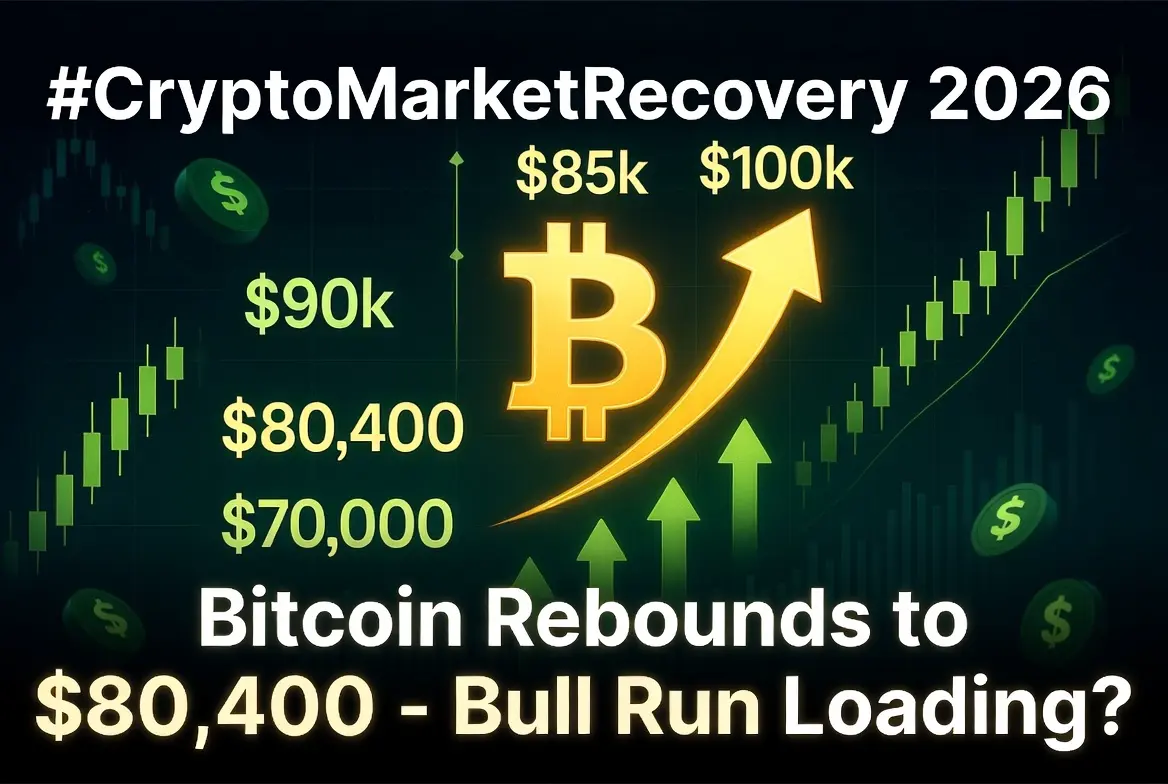
The cryptocurrency market is showing robust signs of recovery in 2026 after a period of intense volatility, fear-driven selling, and macroeconomic headwinds. Bitcoin has climbed back to around $80,400, rebounding from local lows near the $70,000–$72,000 zone. This represents a 10–15% recovery from the correction lows and short-term gains of 2–4% in recent sessions, with some rebound phases delivering 8–12% moves from deeper panic levels
This rebound is rebuilding optimism among traders, ins
BTC-1.42%
ETH-2.21%
HighAmbition
#CryptoMarketRecovery
#GateSquareMayTradingShare
Why the Crypto Market Is Recovering Strongly in 2026
The cryptocurrency market is showing robust signs of recovery in 2026 after a period of intense volatility, fear-driven selling, and macroeconomic headwinds. Bitcoin has climbed back to around $80,400, rebounding from local lows near the $70,000–$72,000 zone. This represents a 10–15% recovery from the correction lows and short-term gains of 2–4% in recent sessions, with some rebound phases delivering 8–12% moves from deeper panic levels
This rebound is rebuilding optimism among traders, institutions, and long-term holders, sparking fresh discussions about the next potential bullish phase
What “Crypto Market Recovery” Means
A crypto market recovery occurs when digital assets regain strength following a correction or sharp decline. Key features include:
Rising prices across Bitcoin, Ethereum, and major altcoins
Improving investor confidence
Increased buying volume and liquidity
Positive momentum and reduced selling pressure
Current conditions display many of these traits.
Bitcoin’s Recovery from Fear Zones
Bitcoin faced heavy selling during macro uncertainty, including geopolitical tensions, oil price spikes, persistent inflation concerns, delayed rate-cut expectations, and widespread leveraged liquidations
During the sharpest correction, BTC dropped from higher levels into the $70,000–$72,000 support area. Daily declines reached 10–15% at times, with billions in leveraged positions wiped out across futures platforms
The current rebound to $80,400 marks a solid comeback:
+10–15% from the recent lows
Strong defense of key support levels
Psychological boost from reclaiming the $80,000 round-number zone
Holding above $80,000 is acting as a major confidence signal, reducing fear and supporting expectations of moves toward higher resistance
Key Drivers Behind the Recovery
1. Strong Institutional ETF Inflows
Bitcoin ETFs continue attracting significant capital, with single-day inflows frequently hitting $400M–$500M, and occasionally exceeding $600M. These inflows improve liquidity, absorb selling pressure, and reduce available circulating supply. Institutional participation has become a core structural pillar for Bitcoin’s price stability in 2026
2. Stabilizing Fear Sentiment
The Fear & Greed Index dropped into extreme fear territory (around 30–38) earlier this year amid corrections and global tensions. Sentiment is now stabilizing as Bitcoin holds key supports, spot demand improves, and volatility moderates. Recoveries often start while fear is still elevated but selling momentum fades
3. Short Sellers Losing Momentum
Aggressive short positions targeting $75,000, $70,000, or even $60,000 were common during the decline. Repeated defense of support levels triggered short squeezes, forcing covering and accelerating upward moves with rapid momentum spikes
4. Improving Macro Outlook
Markets are adapting to higher oil prices and geopolitical risks while anticipating possible softer monetary policy later in 2026 if economic slowdown signals grow. This is boosting risk appetite for crypto, tech stocks, and growth assets
5. Robust Stablecoin Liquidity
Stablecoin market capitalization remains elevated, providing substantial “dry powder.” These reserves enable fast buying on dips and quick capital rotation when confidence ticks higher
Altcoin Recovery Signals
Bitcoin dominance remains strong, but altcoins are stabilizing. Ethereum has posted gains after underperforming, while several major altcoins have recovered 8–20% from local lows. Sectors like AI tokens, select meme coins, and gaming assets show higher trading volumes and renewed retail interest, though altcoins overall lag Bitcoin due to the ongoing preference for safety and liquidity
Bitcoin Technical Outlook
Current Price: ~$80,400
Key Support Levels: $79,200 → $78,000 → $76,500
Major Resistance Levels: $81,300 → $82,000 → $84,000 → $85,000
A decisive break above $82,000–$84,000 could open the door to $85,000, $90,000, and $95,000 — representing 12–18% upside from current levels. Bullish scenarios even discuss $100,000+ later in 2026 if ETF inflows stay strong, rate-cut expectations rise, and macro conditions improve
Volatility remains a factor — sudden 5–10% pullbacks are still possible.
Why the $80,000 Level Matters
The $80,000 zone is both psychologically and technically significant:
Heavy institutional positioning nearby
Clustering of important moving averages
Major sentiment shift above or below it
Sustained trading above $80,000 keeps the broader bullish structure intact, while repeated breakdowns could reignite fear and liquidation risk
Smart Trading Approaches Right Now
Professional traders are emphasizing discipline:
Lower leverage usage
Partial profit-taking
Larger stablecoin reserves for opportunities
Buying confirmed pullbacks instead of chasing rallies
Tight risk management with 3–5% stop-losses and gradual position scaling
Bullish traders target $84,000–$85,000 and potentially $90,000 if momentum holds. Cautious participants wait for confirmed closes above resistance and monitor ETF flows plus macro news
Can the Recovery Continue?
Yes — if ETF inflows remain robust, macro risks stay contained, inflation expectations moderate, and spot buying strengthens
Risks to watch:
Oil price shocks
Renewed central bank tightening
Equity market weakness
Geopolitical escalations
Global recession concerns
Crypto remains highly sensitive to macro developments
Shifting Market Psychology
The narrative is evolving from fear, capitulation, and bearish predictions to recovery, accumulation, institutional demand, and long-term adoption. This psychological shift often fuels stronger capital inflows as confidence returns
Long-Term Perspective
Many investors continue viewing Bitcoin as digital gold, an inflation hedge, and a strategic institutional asset. Rising global uncertainties around currencies, debt, inflation, and geopolitics reinforce Bitcoin’s narrative. With growing adoption and fixed supply, new cycle highs remain possible in the coming years
Final Takeaway
The 2026 Crypto Market Recovery demonstrates resilience after significant volatility and macro stress. At approximately $80,400, Bitcoin is rebuilding strength while supported by institutional inflows, stabilizing sentiment, improving liquidity, and short-covering activity
If key supports hold and resistance levels are cleared, the market could advance toward $85,000–$90,000 and higher. However, high volatility and external risks mean disciplined risk management, patience, and flexibility remain essential.
The crypto recovery story is one of the defining financial narratives of 2026.
repost-content-media
  • Reward
  • Comment
  • Repost
  • Share
#JapanTokenizesGovernmentBonds
Japan is advancing one of the decade’s most important financial innovations by preparing to bring Japanese Government Bonds (JGBs) onto blockchain networks, with 24/7 trading infrastructure targeted as early as 2026. This institutional shift goes far beyond headlines — it could fundamentally reshape global capital markets, tokenized securities, Real World Assets, stablecoins, and settlement systems.
Japan manages one of the world’s largest government bond markets. Outstanding sovereign debt exceeds $7–9 trillion (with total public debt around 1,342 trillion yen
RWA-1.09%
LINK-3.43%
HighAmbition
#JapanTokenizesGovernmentBonds
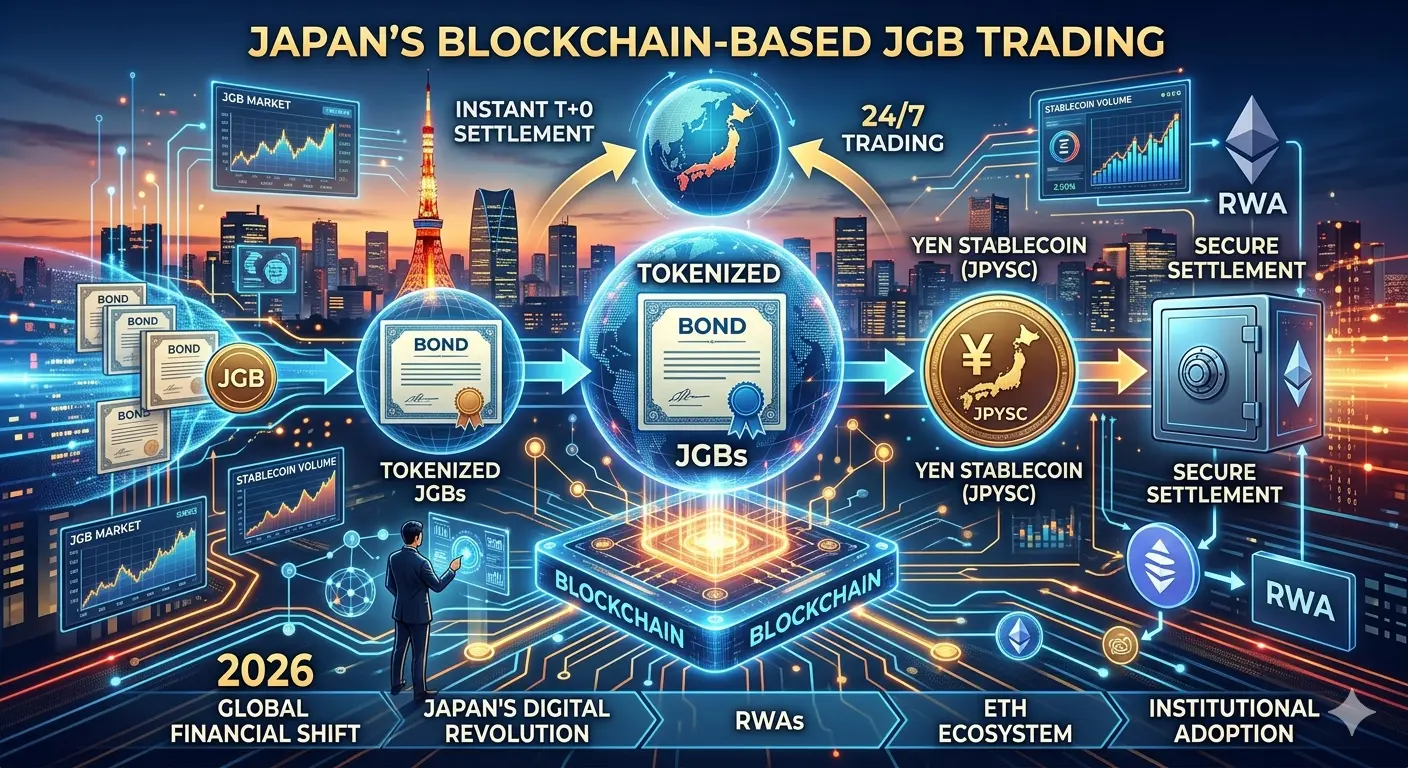
Japan is advancing one of the decade’s most important financial innovations by preparing to bring Japanese Government Bonds (JGBs) onto blockchain networks, with 24/7 trading infrastructure targeted as early as 2026. This institutional shift goes far beyond headlines — it could fundamentally reshape global capital markets, tokenized securities, Real World Assets, stablecoins, and settlement systems.
Japan manages one of the world’s largest government bond markets. Outstanding sovereign debt exceeds $7–9 trillion (with total public debt around 1,342 trillion yen or roughly $8.6–9 trillion in recent figures). This move places Japan at the forefront of the expanding Real World Asset sector.
What Japan Is Actually Doing
Major institutions including Mizuho Financial Group, Nomura Holdings, Japan Securities Clearing Corporation (JSCC), and partners like Digital Asset are actively piloting tokenized JGBs. The first phase centers on repo transactions — short-term secured funding using bonds as collateral.
The global repo market is enormous, with daily volumes reaching up to $4 trillion and outstanding figures often cited around $16 trillion. Japan represents a significant share (around 10% in some repo segments), making this transformation highly impactful.
Settlement evolution:
Traditional: T+1 or T+2 (1–2 business days delay)
Blockchain target: T+0 near-instant settlement
Expected gains: Faster capital recycling, substantially lower operational costs through automation, improved liquidity, reduced counterparty risk, and continuous global trading. Tokenized bonds will support 24/7 operations, moving beyond traditional banking hours.
Plans also include yen-denominated stablecoin settlements for on-chain efficiency.
Why This Is Significant for Crypto and Finance
This initiative delivers sovereign-level validation for blockchain in core financial infrastructure. It advances use cases long discussed in the industry: tokenized bonds, stocks, real estate, commodities, and payments.
The global tokenized treasury and bond sector has expanded rapidly. Tokenized RWAs reached approximately $19.3 billion by Q1 2026 (a 256.7% increase from $5.42 billion at the start of 2025). Tokenized U.S. Treasuries alone grew 225.5% in that period, adding about $9 billion and holding roughly 67% market share within RWAs. Other reports place total tokenized RWA value between $19–30 billion depending on methodology. Analysts project the sector could scale to hundreds of billions or trillions over the coming decade.
Yen Stablecoins: Emerging Opportunity
Using yen stablecoins for settlements could expand digital yen liquidity, speed up institutional adoption, and enhance cross-border efficiency.
Current stablecoin landscape (as of recent 2026 data):
USDT market cap: approximately $189–190 billion
USDC: around $79–80 billion
Total stablecoin market: over $300–315 billion
Yen-pegged stablecoins remain small currently (tens of millions), but Japan’s push could introduce a meaningful new institutional layer, boosting Asian liquidity and regulated digital asset demand.
24/7 Markets: Structural Transformation
Traditional bond markets operate within limited hours. Blockchain enables continuous trading, collateral management, and liquidity provision. Institutions stand to gain:
Higher capital efficiency with less idle capital
Round-the-clock funding and hedging
Reduced delays from settlement windows and intermediaries
This represents one of the most meaningful infrastructure upgrades in modern finance.
Cross-Chain Infrastructure and Key Players
SBI Holdings (with over $200 billion in assets under management) is collaborating with Chainlink on tokenized assets, stablecoins, cross-chain communication, and Proof of Reserve solutions. Institutions require seamless movement across blockchains without fragmentation, which boosts liquidity, accessibility, and participation.
Benefits for RWA Projects
RWA continues as one of the strongest sectors. Institutions seek yield-generating, government-backed, regulated, and transparent assets. Tokenized JGBs align perfectly.
Successful implementation could encourage other countries to follow, accelerating institutional on-chain adoption, tokenized finance, and DeFi integration.
Likely beneficiaries: Tokenization protocols, stablecoin platforms, Ethereum and Layer 2 ecosystems, infrastructure providers, and custody solutions.
Current Crypto Market Snapshot (early May 2026)
Bitcoin: Trading around $80,000–$81,000
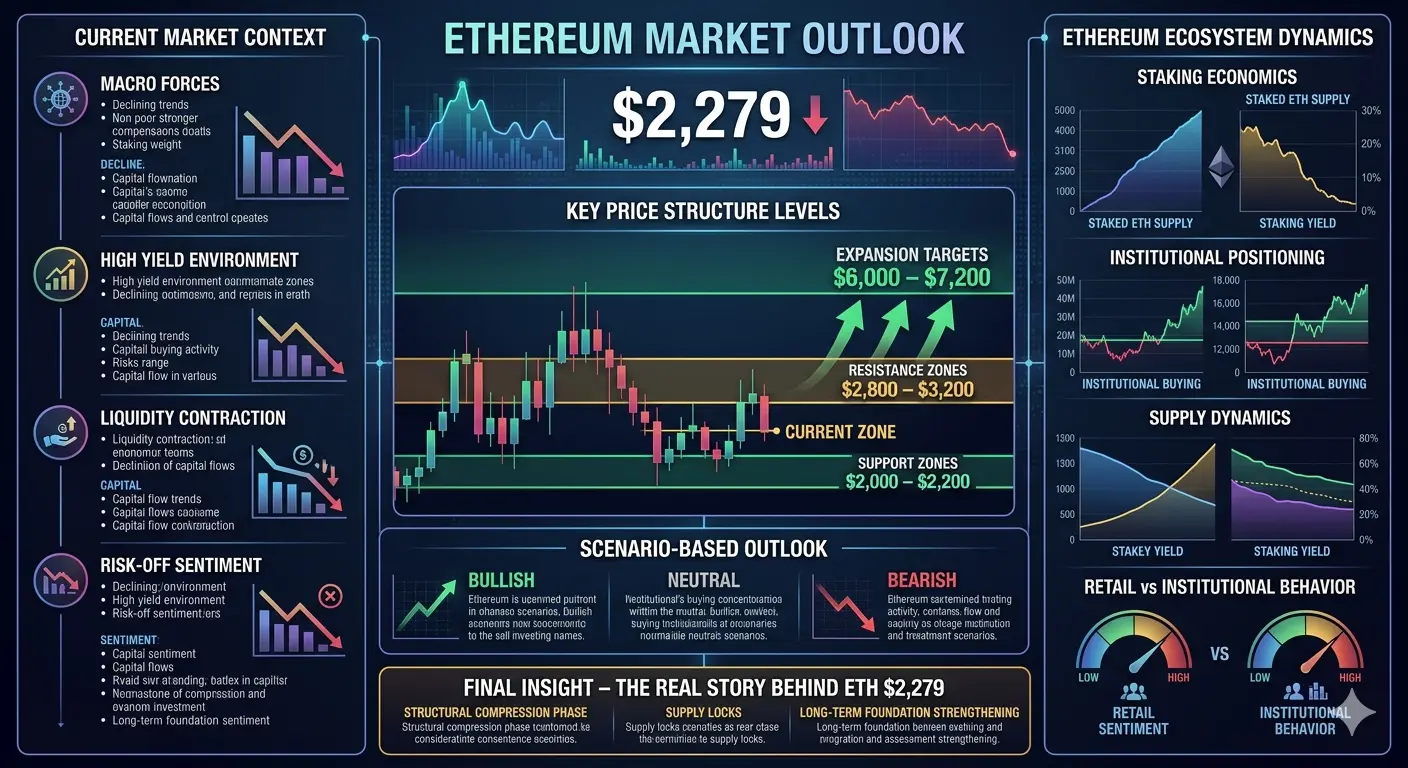
Ethereum: Around $2,280–$2,310
The market is showing recovery signs supported by strengthening institutional developments. Japan’s initiative adds a powerful long-term positive signal, highlighting blockchain’s role as financial infrastructure rather than just speculation.
Positive potential effects include greater institutional confidence, increased capital flows into blockchain ecosystems, expanded stablecoin usage, growth in tokenized products, and broader regulated digital asset adoption.
Three Scenarios Analysts Are Discussing
Rapid Institutional Acceleration: Successful 2026 launch drives fast global adoption, sharp RWA expansion, and stronger investment in crypto infrastructure projects.
Gradual Implementation: Regulatory approvals, testing, and integration take time, leading to steady rather than explosive growth.
Global Competitive Race: Japan’s progress pressures financial hubs in Singapore, Hong Kong, Europe, the Middle East, and the United States to accelerate their own tokenization efforts.
Broader Future of Finance
Blockchain is increasingly merging with traditional finance as settlement, collateral, payment, and market infrastructure. This hybrid approach may define coming global markets — more continuous, efficient, and accessible.
Projections (e.g., from firms like BCG) suggest tokenized assets could reach $10–16 trillion by 2030, capturing a notable share of global financial activity.
Key Risks
Challenges include high reliability needs for sovereign-scale systems, smart contract security, regulatory timelines, integration complexity, cybersecurity, and possible liquidity fragmentation. Any disruption in large sovereign debt infrastructure demands careful management to maintain stability.
Final Outlook
Japan’s JGB tokenization initiative — targeting 24/7 trading, instant settlement, stablecoin integration, smart contract automation, and tokenized collateral by 2026 — stands as a landmark development in institutional blockchain adoption.
If implemented successfully, Japan could establish a global benchmark for sovereign tokenized finance. This opens an era where traditional markets and digital assets function together seamlessly, without time or geographic limits.
The long-term implications for liquidity, efficiency, innovation, and institutional participation are substantial. Market participants are closely watching RWA platforms, tokenization technologies, stablecoin ecosystems, and related infrastructure for opportunities in this evolving landscape.
This development reinforces blockchain’s deepening integration into global finance.
repost-content-media
  • Reward
  • Comment
  • Repost
  • Share
#DailyPolymarketHotspot
Polymarket Cuba Controversy: Whale Trade Sparks Manipulation and Insider Trading Debate
The sudden surge in Polymarket bets on a possible US-Cuba conflict has become one of the most debated financial stories of 2026. What began as a low-volume geopolitical market quickly turned into heated discussions about whale influence, market manipulation, insider information, and the overall reliability of prediction platforms.
The key contract asks whether the United States will invade Cuba in 2026. Before the spike, the market had limited liquidity and low visibility. Then an a
HighAmbition
#DailyPolymarketHotspot
Polymarket Cuba Controversy: Whale Trade Sparks Manipulation and Insider Trading Debate
The sudden surge in Polymarket bets on a possible US-Cuba conflict has become one of the most debated financial stories of 2026. What began as a low-volume geopolitical market quickly turned into heated discussions about whale influence, market manipulation, insider information, and the overall reliability of prediction platforms.
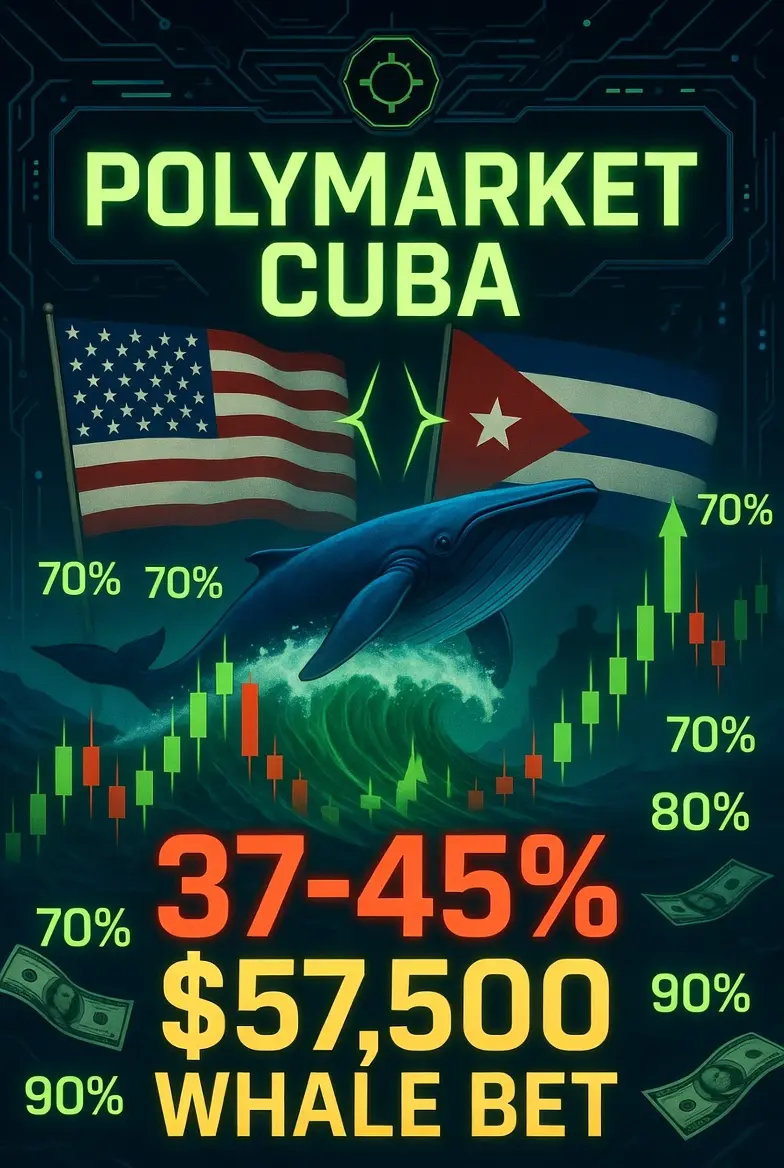
The key contract asks whether the United States will invade Cuba in 2026. Before the spike, the market had limited liquidity and low visibility. Then an anonymous trader known as “JeffHK” placed a large $57,500 bet on the invasion outcome in a single aggressive move.
This trade dramatically shifted pricing.
Probabilities jumped from low single digits to the 37–45% range across related Cuba contracts. For context, the US military action against Colombia contract traded near 6%, while other regional escalation markets stayed mostly below 10%. The Cuba market immediately stood out.
The execution raised eyebrows: the market was extremely thin, so the large order caused significant slippage. The trader paid progressively higher prices as the position filled, instead of scaling in gradually with limit orders. Observers called it either a high-conviction bet, an execution error, or an urgent push for maximum exposure regardless of cost.
The Marco Rubio Timing
Attention intensified due to timing. On May 5, Secretary of State Marco Rubio described the Cuba situation as “unacceptable” and said the US would address it “but not today.” Though no military action was announced, prediction markets reacted sharply.
Unlike traditional finance, these platforms combine headline momentum, low liquidity, social media amplification, whale positioning, and fear-driven speculation — producing fast probability swings.
Insider Trading and Whale Concerns
The episode revived major questions: Are prediction markets true crowd wisdom tools, or are they vulnerable to insiders and large players with information advantages?
Critics point to opportunities for politically connected traders to profit ahead of announcements. Recent examples include suspicious positioning in energy markets before Iran-related developments, where large trades (hundreds of millions in some reports) preceded sharp moves in oil prices. WTI crude saw intraday volatility of 8–12%, while Brent crude swung between $94 and $115 in short periods.
Thin Liquidity Problem
In small geopolitical markets, a single whale can heavily influence odds. Before JeffHK’s $57,500 trade, the Cuba contract had limited interest.
After the buy:
Probabilities surged to 37–45%
Social media volume exploded
Retail momentum followed
This created a feedback loop where the price move itself became the story. Prediction markets are often read as probability forecasts, but thin liquidity means they can instead reflect whale conviction, speculative fear, and narrative momentum.
Why 37–45% Appears Extreme
Most geopolitical analysts consider a direct US invasion of Cuba highly unlikely due to massive diplomatic costs, regional instability risks, economic fallout, international backlash, domestic political pressure, and competing military priorities. Historical patterns show such invasions rarely occur without clear prior escalation.
Yet prediction markets price fear, uncertainty, headlines, and trader psychology — not just base-case likelihoods. This explains the disconnect between analyst consensus and current 37–45% odds.
Trader Divide and Market Psychology
Traders split into two camps:
Skeptics: Odds are irrationally high due to whale impact and weak liquidity. They expect normalization lower over time.
Believers: The whale may have information advantages, and political rhetoric could escalate further. Pricing may reflect hidden signals.
This debate fuels extra volatility through aggressive positioning and counter-trades. The markets blend financial speculation, news flow, political analysis, and crowd behavior — creating crypto-like emotional swings, FOMO, and narrative-driven moves.
Regulatory and Broader Implications
The controversy is raising calls for greater scrutiny of prediction platforms, including transparency rules, whale disclosures, insider trading safeguards, and liquidity standards. As these markets grow, regulators may treat them more like traditional exchanges, potentially adding reporting requirements and compliance measures.
For the wider crypto sector, weakened trust in prediction markets — one of its fastest-growing areas — could slow participation and institutional adoption. Conversely, improvements in liquidity and transparency could position them as valuable forecasting tools in the coming years.
Bottom Line
A single $57,500 whale trade in a low-liquidity market moved Cuba invasion odds to 37–45%, triggered global discussion, exposed structural weaknesses, and fueled manipulation fears.
The real question is no longer just whether a US-Cuba conflict will happen. It is whether prediction markets can reliably distinguish genuine information from liquidity imbalances, whale conviction, and emotional speculation — especially as geopolitical risks rise throughout 2026.
repost-content-media
  • Reward
  • Comment
  • Repost
  • Share
#GateSquareMayTradingShare
GT token is the core utility asset of Gate.io ecosystem designed to connect trading activity platform usage and long term value creation inside one system Gate.io is a global crypto exchange where users trade invest and interact with multiple financial products while GT acts as the internal fuel that powers discounts rewards and ecosystem access
The key idea behind GT is simple • more Gate.io usage means more GT demand
• more GT burn means less supply over time
• more ecosystem growth means more utility for GT
So GT is not only a trading token it is a full ecosystem
GT-1.51%
HighAmbition
#GateSquareMayTradingShare
GT token is the core utility asset of Gate.io ecosystem designed to connect trading activity platform usage and long term value creation inside one system Gate.io is a global crypto exchange where users trade invest and interact with multiple financial products while GT acts as the internal fuel that powers discounts rewards and ecosystem access
The key idea behind GT is simple • more Gate.io usage means more GT demand
• more GT burn means less supply over time
• more ecosystem growth means more utility for GT
So GT is not only a trading token it is a full ecosystem utility asset
Gate.io Exchange Strength and Ecosystem Role
Gate.io is a high liquidity crypto exchange offering spot trading futures trading margin trading copy trading staking launchpad participation and advanced trading tools It supports a wide range of crypto assets and provides fast execution which is important for both retail and professional traders
Main strengths of Gate.io • high liquidity across major trading pairs
• advanced futures and derivatives market
• launchpad access for early token opportunities
• staking and passive income products
• strong VIP tier system linked with GT holdings
• fast order execution for active traders
This makes Gate.io a full trading ecosystem not just a basic exchange platform
GT Token Supply Structure and Scarcity Model
GT token has a fixed maximum supply of 300000000 GT and no additional minting is possible This creates a hard capped supply structure from the beginning
Current supply breakdown • Total maximum supply 300000000 GT
• Total burned more than 187377156 GT
• Supply destroyed approximately 60.7 percent
• Circulating supply around 106000000 GT
• Locked or frozen supply around 14800000 GT
• Long term mining allocation around 21300000 GT
This means more than half of total supply is already permanently removed making GT one of the most reduced supply exchange tokens in the market
Scarcity impact in simple terms • original supply 300M
• current active supply near 106M
• effective reduction more than 60 percent
• supply continues decreasing every quarter
This creates long term structural scarcity pressure
GT Price History and Market Performance Breakdown
GT reached its all time high near 25.38 dollars in January 2025 during strong exchange activity high trading volume and strong market sentiment
After that cycle peak GT experienced a major correction • ATH 25.38 dollars
• current range approximately 7.40 to 8.20 dollars
• total decline from peak around 65 to 70 percent
Even during this correction burn activity increased which clearly shows that price movement is not directly controlled by supply reduction alone but depends heavily on demand liquidity and market sentiment
GT Burn Mechanism and Real Financial Scale
Gate.io burns GT every quarter using platform revenue generated from trading fees listing income derivatives activity and ecosystem earnings
Burn system details • fully transparent
• on chain verifiable
• permanently irreversible
• funded from real exchange revenue
Recent burn cycles • Q1 2025 around 1.54 million GT burned worth approximately 33.84 million dollars
• Q2 2025 around 1.92 million GT burned worth approximately 39.01 million dollars
• Q3 2025 around 2.10 million GT burned worth approximately 35 million dollars
• Q4 2025 around 2.16 million GT burned worth approximately 26.92 million dollars
Important observation • token burn increased from 1.5M to 2.1M GT per quarter
• USD value changed due to price movement not burn strength
• total burn trend is increasing over time
Annual Burn Impact and Long Term Deflation Effect
Estimated annual burn rate • around 8 million GT per year
• equals approximately 7 to 8 percent of circulating supply annually
Long term projection if trend continues • after 3 years around 20 to 25 percent of current supply removed
• after 5 years around 35 to 40 percent supply reduction possible
• max supply still fixed at 300M so deflation continues permanently
This creates compounding scarcity which becomes stronger every year
Why GT Price Does Not Always Follow Burn Immediately
Important truth in market structure
GT price is not controlled by burn alone
Price depends on • demand from traders
• exchange activity volume
• overall crypto market sentiment
• liquidity conditions
• investor confidence
Even if supply reduces by 7 to 8 percent annually demand can fall by 20 to 50 percent in bearish cycles which can easily push price down despite strong burn activity
This is why GT fell from around 22 dollars to near 7.40 dollars even while burn size increased significantly
Gate.io Utility and Real GT Demand Drivers
GT is deeply integrated into Gate.io ecosystem and provides real functional benefits
Main utility features • trading fee discounts up to 25 to 50 percent depending on VIP level
• VIP tier upgrades for better trading conditions
• launchpad participation for new token sales
• staking rewards and passive income programs
• ecosystem access for exclusive features
This creates continuous real demand because traders need GT for practical usage not only speculation
Gate Layer L2 Expansion and Future Demand Growth
Gate Layer is a Layer 2 blockchain built on OP Stack where GT is used as gas token
This changes everything because • every transaction requires GT
• more network activity increases GT usage
• GT becomes part of on chain ecosystem economy
• burn pressure increases automatically with usage
Simple explanation • more users = more transactions
• more transactions = more GT used
• more GT used = stronger long term scarcity
This makes GT burn model dynamic instead of fixed quarterly system
Trading Behavior and Market Structure
GT behaves like a mid cap exchange token with moderate to high volatility
Current market behavior • trading range approximately 7.40 to 8.20 dollars
• support zone near lower range
• resistance near upper range
• frequent range based movement
Trader approach • short term traders use range trading strategy
• long term investors accumulate during dips
• many use hybrid strategy combining both
Risk conditions • volatility increases during market fear
• leverage trading increases liquidation risk
• sentiment changes affect price quickly
Benefits of Holding GT Token
Holding GT provides dual advantage system
Trading benefits • reduced trading fees up to 50 percent
• higher profit efficiency for active traders
• VIP level upgrades
• faster trading execution advantages
Holding benefits • exposure to continuous supply reduction
• long term scarcity effect
• ecosystem growth participation
• passive utility rewards
This makes GT both a trading tool and long term holding asset
Final Extended Conclusion
GT token represents a full ecosystem driven asset inside Gate.io with three main pillars
• fixed supply of 300 million GT with more than 60 percent already burned
• continuous quarterly burn system removing around 7 to 8 percent supply annually
• strong utility demand through trading discounts VIP access and launchpad participation
Short term price is driven by demand sentiment liquidity and market cycles while long term value is driven by supply reduction ecosystem growth and increasing platform usage
If Gate.io continues expanding user base and Gate Layer adoption increases GT could see stronger long term demand pressure while supply keeps shrinking creating a strong structural scarcity model over time making GT a utility driven exchange token with long horizon potential rather than a purely speculative asset
repost-content-media
  • Reward
  • Comment
  • Repost
  • Share
#GateSquareMayTradingShare
Altcoin Sector Rotation — AI Tokens vs DeFi Recovery
1. Core Market Concept
Altcoin sector rotation refers to capital moving between different crypto narratives instead of flowing evenly across the market.
In 2026, the two strongest competing narratives are:
AI tokens (high momentum, speculative growth)
DeFi recovery (slow structural rebuild, yield-driven demand)
This rotation is shaping short-term volatility and sector performance more than overall market direction.
AI Tokens — High Momentum Speculative Cycle
2. Current Performance Snapshot
AI-focused tokens remai
BTC-1.42%
  • Reward
  • Comment
  • Repost
  • Share
#GateSquareMayTradingShare
Ethereum at $2,279 is not just a price point — it represents a macro liquidity reset zone, where valuation, staking behavior, and institutional positioning are all interacting at the same time. This creates a complex environment where short-term sentiment looks weak, but long-term structural positioning is quietly strengthening.
1. Current Market Position — Where ETH Really Stands
Ethereum is currently trading in a deep corrective phase compared to its previous cycle highs.
ETH price: $2,279
Previous cycle peak range: $3,500 – $4,000
Drawdown from highs: -30% to -45
ETH-2.21%
BTC-1.42%
HighAmbition
#GateSquareMayTradingShare
Ethereum at $2,279 is not just a price point — it represents a macro liquidity reset zone, where valuation, staking behavior, and institutional positioning are all interacting at the same time. This creates a complex environment where short-term sentiment looks weak, but long-term structural positioning is quietly strengthening.
1. Current Market Position — Where ETH Really Stands
Ethereum is currently trading in a deep corrective phase compared to its previous cycle highs.
ETH price: $2,279
Previous cycle peak range: $3,500 – $4,000
Drawdown from highs: -30% to -45%
Market structure: mid-cycle correction + accumulation formation
This level is historically important because ETH has previously formed strong accumulation zones in similar deep retracement phases before large expansion cycles.
2. Macro Market Context — Why ETH Dropped Here
The decline toward $2,279 is not isolated; it is driven by combined macro forces:
(1) High Yield Environment
Treasury yields: ~4.5% – 5.3%
Risk-free return competition reduces crypto appetite
Capital prefers low-risk yield instruments over volatile assets
(2) Liquidity Contraction
Stablecoin liquidity contraction: -15% to -25%
Exchange reserves declining
Reduced fresh inflows into crypto markets
(3) Risk-Off Sentiment
Retail exit pressure: -20% to -35% participation drop
Altcoin liquidity collapse: -40% to -70% in weaker sectors
BTC dominance increasing during uncertainty phases
ETH is therefore not weak alone — it is reacting to global liquidity tightening conditions.
3. Ethereum Staking System — The Hidden Structural Engine
Ethereum is no longer just a tradable asset; it is also a yield-bearing network asset.
Staking Metrics:
ETH staked supply: ~28% – 32% of total supply
Average staking yield: ~3.0% – 4.2%
Yield compression trend: -10% to -18% decline
Why Yield is Compressing
Even though demand for staking is rising, yield per validator is decreasing due to:
Increased number of validators
More ETH locked in staking contracts
Fixed reward distribution across larger base
This creates a paradox: ➡️ More participation
➡️ Lower individual returns
But this is actually bullish structurally, because it increases locked supply.
4. Institutional Behavior — Quiet Accumulation Phase
At $2,279, institutional investors are behaving differently than retail.
Institutional Activity:
Accumulation range: $2,000 – $2,600
Estimated inflow growth: +15% to +25%
Long-term allocation increase: +10% to +18% portfolio shift
Why Institutions Are Buying ETH Here
Institutions are not focused on short-term price movement. They are focused on:
Discounted infrastructure value
Future tokenization ecosystem
Staking yield even at 3%–4%
Long-term scarcity via staking lock
At lower prices: ➡️ Same staking yield becomes more attractive in USD terms
➡️ Entry cost improves future return potential
5. Supply Dynamics — The Silent Bullish Factor
Ethereum supply behavior is becoming increasingly constrained.
Supply Metrics:
Staked ETH: 28% – 32% locked
Exchange supply trend: declining
Long-term holding accumulation: +5% to +10% yearly increase
Why This Matters
When supply is locked and price is low:
Selling pressure reduces naturally
Market becomes sensitive to demand spikes
Small inflows can create large price moves
This is called: ➡️ Supply compression structure
6. Market Psychology — Retail vs Institutional Behavior
Retail Behavior:
Panic during -3% to -7% moves
Reduced exposure after drawdowns
Shift toward short-term altcoin trading
Exit behavior increases in volatility spikes
Estimated retail impact:
Participation decline: -20% to -35%
Altcoin exposure reduction: -40% to -70%
Institutional Behavior:
Accumulation during dips
No emotional reaction to volatility
Focus on 1–3 year horizon
Systematic buying in ranges
This creates: ➡️ Weak hands exit
➡️ Strong hands accumulate
7. Volatility Environment — Why ETH Feels “Heavy”
At this stage:
Daily volatility: 4% – 8%
Flash moves: +8% to +12% possible
Downside flushes: -10% to -18% possible
Market behavior:
Slow grind downward during liquidity stress
Fast relief rallies when buying appears
Choppy sideways structure in accumulation zones
8. Key Price Structure Levels
Support Zones:
$2,000 – $2,200 → strong accumulation base
Psychological support: $2,000 level
Current Zone:
$2,200 – $2,400
Resistance Zones:
$2,800 – $3,200
$3,500 – $4,000 (major cycle resistance)
Expansion Targets (if liquidity returns):
$4,500 – $5,500
$6,000 – $7,200 (+50% to +120% cycle upside potential)
9. Ethereum’s Dual Identity — Asset + Infrastructure
ETH is unique compared to other crypto assets because it has two roles:
(1) Investment Asset
Price speculation
Trading volatility
Market cycles
(2) Infrastructure Asset
Smart contracts
DeFi ecosystem
Tokenization layer for real-world assets
Staking yield system
This dual identity creates: ➡️ Strong long-term demand even in bearish phases
10. Market Cycle Interpretation
At $2,279 ETH is in:
Phase Type:
Mid-cycle correction
Liquidity reset
Accumulation formation zone
What Usually Happens After This Phase:
Historical structure suggests:
Accumulation phase extends 3–9 months
Then liquidity expansion begins
Followed by rapid breakout phase
11. Scenario-Based Outlook
Bullish Scenario:
If liquidity returns:
ETH reclaims $2,800 – $3,200
Breakout above $3,500
Expansion toward $5,000 – $7,200
Potential upside: +50% to +120%
Neutral Scenario:
Range between $2,000 – $3,200
Slow accumulation
Low momentum environment
Bearish Scenario:
If liquidity tightens further:
Retest $2,000 support
Possible wick toward $1,800–$1,900
Extended consolidation phase
Final Insight — The Real Story Behind ETH $2,279
Ethereum at $2,279 is not a collapse phase — it is a structural compression phase.
Key hidden forces:
Staking locks reduce circulating supply
Institutions are accumulating at discount levels
Retail participation is declining
Liquidity is temporarily restricted
This combination creates a condition where:
➡️ Price looks weak
➡️ But structural foundation is strengthening
If macro liquidity shifts positive again, ETH has historically high probability of entering a strong expansion phase, with potential upside toward:
$4,000 → $5,500 → $7,000 range (+50% to +120% cycle expansion scenario)
repost-content-media
  • Reward
  • Comment
  • Repost
  • Share
#GateSquareMayTradingShare
📊 Bitcoin Range Compression & Breakout Pressure (BTC $79,825)
Bitcoin is currently trading around $79,825, showing a tight consolidation phase where price movement is compressed and volatility is significantly reduced. This type of structure usually signals that the market is building energy for a major directional move.
⚡ 1. Reduced Volatility = Breakout Setup Building
BTC volatility has contracted sharply compared to previous swings.
Market Behavior:
Daily price movement is narrowing into a tight range
Volatility drop estimated around 25%–40% lower than recent im
BTC-1.42%
HighAmbition
#GateSquareMayTradingShare
📊 Bitcoin Range Compression & Breakout Pressure (BTC $79,825)
Bitcoin is currently trading around $79,825, showing a tight consolidation phase where price movement is compressed and volatility is significantly reduced. This type of structure usually signals that the market is building energy for a major directional move.
⚡ 1. Reduced Volatility = Breakout Setup Building
BTC volatility has contracted sharply compared to previous swings.
Market Behavior:
Daily price movement is narrowing into a tight range
Volatility drop estimated around 25%–40% lower than recent impulsive phases
Candle bodies are smaller, with frequent wicks on both sides
Market is rejecting both upside and downside attempts
Interpretation: This is not a weak market — it is a coiled structure where liquidity is being stored before expansion.
Trading Insight:
Low volatility does NOT mean low opportunity
It usually precedes large breakout moves (5%–12%+ within short timeframes)
📊 2. ETF Inflows vs Profit-Taking Balance
Bitcoin is currently caught between institutional inflows and short-term profit-taking pressure.
ETF Flow Dynamics:
Positive inflows still present but slowing momentum
Estimated inflow impact: +2% to +5% price support bias
Long-term holders are still accumulating
Profit-Taking Pressure:
Short-term traders locking gains around resistance zones
Estimated selling pressure causing -1.5% to -3% intraday pullbacks
Repeated rejection near upper range
Net Effect:
Market remains in equilibrium
No strong dominance from bulls or bears
Price stuck in compression zone
🧱 3. Resistance Zones Acting as Liquidity Traps
Current BTC structure shows clear resistance zones repeatedly absorbing price.
Key Observations:
Price attempts to break resistance have failed multiple times
Each rejection creates liquidity above resistance
Short positions accumulate near breakout attempts
Stop-loss clusters form above resistance levels
Liquidity Trap Behavior:
Breakout attempts often trigger fake moves
Market hunts liquidity before reversing or expanding
Volatility spikes occur around these zones
Impact:
Creates false breakout risk
Increases probability of sharp moves once liquidity is cleared
🚀 4. Break Above Range = Altcoin Expansion Trigger
If BTC breaks out of the current range, the altcoin market will likely react strongly.
Bullish Breakout Scenario:
BTC breakout above resistance → +5% to +10% potential move
Market confidence increases sharply
Capital rotates into higher beta assets
Altcoin Reaction:
Mid-cap altcoins can move +10% to +25%
High volatility tokens may spike +20% to +50%
Market-wide liquidity expansion phase begins
Why This Happens:
BTC stability reduces risk pressure
Traders rotate profits into altcoins for higher returns
Leverage increases across derivatives market
📉 5. Breakdown Scenario (Risk Side)
If BTC fails to break upward:
Bearish Structure:
Loss of support may trigger -4% to -8% correction
Stop-loss cascades from leveraged longs
Liquidity vacuum below range support
Altcoin Impact:
Altcoins typically drop -8% to -20% faster than BTC
Market-wide risk-off sentiment returns
🧠 6. Strategy Insight for Current Phase
📦 Accumulation Zone Trading
Current range is best suited for range trading, not trend chasing
Buy near support, sell near resistance
Focus on quick swings instead of long holds
⚠️ Avoid Over-Leveraging Inside Range
Choppy structure increases liquidation risk
Fake breakouts are common in compressed volatility
Even small moves can trigger liquidation cascades
⏳ Wait for Confirmed Breakout Structure
A valid breakout should include:
Strong candle close above resistance
Volume expansion (ideally +30% to +60% increase)
No immediate rejection wick back into range
📊 Final Market Summary
BTC Price: $79,825
Market Phase: High compression / low volatility
Expected Move Potential: ±5% to ±12% breakout range
Sentiment: Neutral equilibrium with bullish bias building
Key Focus: Liquidity zones above resistance and below support
🔥 Core Insight
Bitcoin is not trending right now — it is loading volatility beneath the surface.
The longer this compression continues, the stronger the eventual breakout move will be.
repost-content-media
  • Reward
  • Comment
  • Repost
  • Share
#GateSquareMayTradingShare
Range-Bound BTC — The Market Is Quiet, But Pressure Is Building
Bitcoin is currently trading around $79,800–$80,700, remaining trapped inside a tight range-bound structure after earlier periods of strong volatility expansion. Instead of continuing a clear bullish or bearish trend, BTC has entered a consolidation phase where price repeatedly reacts between major support and resistance zones.
Right now, the market is balancing between:
Institutional accumulation
Profit-taking pressure
Liquidity compression
Leveraged positioning
Macro uncertainty
The result is a market
BTC-1.42%
HighAmbition
#GateSquareMayTradingShare
Range-Bound BTC — The Market Is Quiet, But Pressure Is Building
Bitcoin is currently trading around $79,800–$80,700, remaining trapped inside a tight range-bound structure after earlier periods of strong volatility expansion. Instead of continuing a clear bullish or bearish trend, BTC has entered a consolidation phase where price repeatedly reacts between major support and resistance zones.
Right now, the market is balancing between:
Institutional accumulation
Profit-taking pressure
Liquidity compression
Leveraged positioning
Macro uncertainty
The result is a market that looks calm on the surface but is internally building tension for a much larger move ahead.
Current BTC Range Structure
Bitcoin continues holding support around:
$78,000–$79,500
While resistance remains active near:
$82,000–$84,000
Buyers aggressively defend dips near support, while sellers repeatedly reject rallies near resistance. Neither side has complete control, creating repeated oscillations of roughly 2%–4% inside the current range.
Earlier in the cycle, BTC experienced:
6%–10% intraday swings
High volatility breakouts
Rapid momentum expansion
Now volatility has compressed significantly:
Daily moves mostly reduced to 1.5%–3.5%
Smaller candle bodies
Lower momentum continuation
Reduced breakout follow-through
Historically, these low-volatility environments often appear before major market expansion phases.
Why This Compression Matters
Range-bound Bitcoin markets are not “dead markets.”
They are usually preparation phases.
During sideways consolidation:
Liquidity accumulates
Stop-loss clusters grow
Leverage increases
Market makers identify liquidation zones
Traders become impatient
The longer BTC remains compressed, the more powerful the eventual breakout can become.
Previous BTC compression phases have often resulted in:
8%–20% directional moves
Large liquidation cascades
Strong altcoin rotation
Rapid sentiment shifts
This is why many professional traders closely monitor volatility contraction periods.
ETF Inflows Continue Supporting BTC
One major reason BTC remains structurally stable is ongoing institutional demand.
Spot Bitcoin ETFs collectively hold:
Roughly 757,000+ BTC
Estimated cumulative inflows exceeding $59B–$60B+
Daily ETF flow activity still fluctuates:
Strong sessions: +$100M to +$500M inflows
Weak sessions: occasional -$170M to -$275M outflows
Despite temporary fluctuations, institutional positioning continues supporting the broader market.
Large investors increasingly view BTC as:
A macro hedge
A digital reserve asset
Long-term portfolio exposure
Strategic liquidity storage
This helps reduce the probability of immediate deep collapses below major support zones.
Profit-Taking Is Limiting Upside Momentum
Although institutional demand supports BTC, aggressive profit-taking continues limiting breakout attempts.
Current selling pressure comes from:
Swing traders exiting near resistance
Earlier buyers securing profits
High-leverage traders reducing exposure
Short-term momentum traders rotating capital
This creates repeated rejection zones around:
$81,500
$82,500
$83,000
Psychological resistance near $85,000
BTC repeatedly pushes upward, encounters sell pressure, and falls back toward support.
The market remains trapped between accumulation and distribution.
Liquidity Traps Are Everywhere
Range-bound environments are heavily influenced by liquidity mechanics.
Liquidity currently sits:
Above $82,500–$84,000
Below $77,500–$78,000
Around psychological levels like $80K and $85K
This creates conditions for:
Fake breakouts
Stop hunts
Sudden reversals
Long liquidations
Short liquidations
Market makers often target these zones because traders place predictable stop losses there.
Example: BTC briefly breaks resistance → traders enter longs → liquidity gets absorbed → price reverses sharply → liquidations accelerate.
This cycle continues until the market finally establishes real directional momentum.
Derivatives Market Adds More Risk
Open interest remains elevated across BTC futures markets.
Current conditions include:
Fluctuating funding rates
High leverage positioning
Growing liquidation clusters
Aggressive short-term speculation
Even small BTC moves:
1%–2% candles can trigger:
10%–20%+ leveraged liquidations
This makes compressed ranges extremely dangerous for emotional or overleveraged traders.
Low volatility often creates false confidence before sudden expansion phases begin.
Trader Psychology During Sideways Markets
Range-bound conditions frustrate most traders.
Why? Because:
Breakouts repeatedly fail
Momentum disappears quickly
Fake moves increase
Emotional trading rises
Common mistakes:
Overtrading
Chasing every breakout candle
Excessive leverage
Revenge trading after losses
Ignoring risk management
Ironically, many traders lose more money during sideways markets than during trending environments.
Patience becomes more valuable than aggression.
Bullish Breakout Scenario
If BTC successfully breaks above:
$82,000–$83,000 with strong volume confirmation, momentum could accelerate rapidly.
Possible upside targets:
$84,000
$85,500
$86,000
Extended targets near $88,000–$90,000+
Potential expansion:
Initial move: +4% to +7%
Larger continuation: +10% to +15%
A successful breakout could trigger:
Short squeezes
Increased ETF optimism
Retail FOMO
Strong altcoin rotation
Potential altcoin reactions:
Large-cap alts: +8% to +18%
Mid-cap alts: +15% to +35%
High-beta sectors: +30% to +60%
Bearish Breakdown Scenario
If BTC loses:
$78,000–$79,000 support decisively, downside volatility could accelerate.
Potential downside targets:
$76,000
$75,000
$72,000–$73,000
Possible correction size:
BTC: -5% to -10%
Altcoins: -10% to -25%+
Possible bearish triggers:
Macro tightening
Stronger USD
ETF inflow slowdown
Heavy profit-taking
Increased market fear
Smart Trading Strategy During Range Conditions
1. Buy Support, Reduce Near Resistance
Current market structure favors tactical range trading instead of emotional breakout chasing.
2. Lower Leverage
Compressed volatility can suddenly expand without warning.
3. Wait for Confirmation
A valid breakout usually requires:
Strong candle close
Volume expansion
Follow-through continuation
Successful retest
4. Protect Capital
Professional traders survive sideways markets by preserving liquidity and avoiding emotional decisions.
Macro Conditions Still Matter
Bitcoin remains highly connected to:
Interest rate expectations
Global liquidity conditions
Institutional flows
Risk-on / risk-off sentiment
Dollar strength trends
BTC may continue ranging until a larger macro catalyst forces directional expansion.
Final Outlook
Bitcoin near $80,000 is currently sitting inside a compressed equilibrium zone where:
Buyers defend support
Sellers protect resistance
ETF demand remains stable
Profit-taking remains active
Volatility continues shrinking
This phase may appear slow, but beneath the surface liquidity pressure continues building.
Every rejection adds tension.
Every fake breakout traps more traders.
Every sideways session compresses the market further.
And historically, the longer Bitcoin remains range-bound, the stronger the eventual breakout move tends to become.
repost-content-media
  • Reward
  • Comment
  • Repost
  • Share
#美伊冲突再升级
US-Iran Tensions Escalate: BTC Falls Below $80K, Oil Explodes Higher, NFP Data in Focus
Global financial markets entered a fresh wave of volatility on May 8 after geopolitical tensions between the United States and Iran intensified near the Strait of Hormuz. Reports surrounding US military responses to Iranian activity immediately triggered panic across equities, crypto, commodities, and risk-sensitive assets.
The timing of this geopolitical shock could not be more critical because it arrived only hours before the highly anticipated US Non-Farm Payrolls (NFP) report — a macro event
BTC-1.42%
HighAmbition
#美伊冲突再升级
US-Iran Tensions Escalate: BTC Falls Below $80K, Oil Explodes Higher, NFP Data in Focus
Global financial markets entered a fresh wave of volatility on May 8 after geopolitical tensions between the United States and Iran intensified near the Strait of Hormuz. Reports surrounding US military responses to Iranian activity immediately triggered panic across equities, crypto, commodities, and risk-sensitive assets.
The timing of this geopolitical shock could not be more critical because it arrived only hours before the highly anticipated US Non-Farm Payrolls (NFP) report — a macro event capable of reshaping Federal Reserve rate-cut expectations and short-term market direction globally.
US-Iran fears quickly pushed markets into a classic “risk-off” environment: • US stocks erased intraday gains • Nasdaq and S&P 500 futures weakened sharply • Bitcoin dropped below the critical $80,000 level • Gold strengthened on safe-haven demand • Oil prices exploded higher in a violent V-shaped reversal
At the center of the discussion now stands one major question:
Can the bulls regain control, or is deeper volatility still ahead?
━━━━━━━━━━━━━━ 1️⃣ Will the US-Iran situation escalate further? What key developments are markets watching? ━━━━━━━━━━━━━━
The Strait of Hormuz remains one of the most important energy corridors globally, responsible for nearly 20% of worldwide oil shipments. Any military escalation in this region instantly impacts energy markets and inflation expectations.
Current market fears include: • Supply disruption risks • Military retaliation scenarios • Higher energy inflation • Reduced global risk appetite • Delayed Federal Reserve easing
Because of these fears, Wall Street reversed lower despite earlier bullish momentum.
Dow Jones: • Fell around -0.63% • Dropped nearly -313 points • Hovered near 49,597
S&P 500: • Slipped roughly -0.38% • Lost around -28 points • Traded near 7,337
Nasdaq: • Pulled back approximately -0.13% • Tech profit-taking accelerated • Risk sentiment weakened sharply
If tensions continue escalating: • Oil could surge toward $100+ • Inflation fears may intensify • Stocks and crypto may remain under pressure • Safe-haven demand for gold could accelerate
However, if diplomacy stabilizes conditions: • Oil prices could cool rapidly • Equity markets may rebound • Crypto sentiment could improve significantly
For now, markets remain extremely headline-sensitive.
━━━━━━━━━━━━━━ Oil’s Massive V-Shaped Reversal ━━━━━━━━━━━━━━
Oil became the strongest immediate winner from the geopolitical shock.
WTI crude initially traded weak before reversing violently higher as traders priced in supply disruption risks.
Current Oil Action: • WTI trading near $94–$95 • Intraday swings from ~$93.80 to above $98.60 • Brent crude also surged sharply
This V-shaped reversal reflects: • Panic short covering • Aggressive geopolitical repricing • Fear of supply interruptions
Bullish Oil Scenario: • WTI targets: $98–$100 • Brent targets: $100–$105
Bearish Oil Scenario: • Diplomatic de-escalation could trigger sharp pullbacks
Energy markets are now moving almost entirely on geopolitical headlines.
━━━━━━━━━━━━━━ Gold Strengthens on Fear Demand ━━━━━━━━━━━━━━
Gold also benefited from the geopolitical uncertainty.
Spot gold traded near: • $4,710–$4,730 • Up roughly +0.3% to +0.8% intraday
Investors are rotating toward defensive assets because of: • Rising geopolitical instability • Inflation fears • Market uncertainty • Volatile Treasury yields
If tensions worsen further: • Gold may push toward fresh highs • Institutional hedging demand could rise significantly
━━━━━━━━━━━━━━ 2️⃣ Can Bitcoin withstand the pressure and reclaim $80K? ━━━━━━━━━━━━━━
Bitcoin faced immediate selling pressure as traders reduced exposure to volatile assets.
BTC dropped below the major psychological $80,000 zone and currently fluctuates around: • $79,800–$80,300 • Daily decline roughly -0.5% to -2%
The breakdown below $80K triggered: • Long liquidations • Panic selling • Short-term bearish momentum
However, larger market structure still matters greatly.
Key BTC Support Levels: • $79,500 • $78,200 • $76,800 • $75,000 major psychological support
Key BTC Resistance Levels: • $80,000 immediate barrier • $81,500 short-term resistance • $83,000 breakout zone • $85,000 bullish continuation target
Bullish BTC Scenario: If BTC quickly reclaims and holds above $80K: • Short liquidations could fuel upside momentum • Bulls may target $83K–$85K • Sentiment may recover rapidly
Bearish BTC Scenario: If sellers maintain pressure below $80K: • BTC may revisit $78K–$76K • Altcoins could face sharper volatility • Fear sentiment may increase
Institutional demand through ETFs and long-term accumulation still remains active despite short-term panic.
Historically, geopolitical shocks often create temporary crypto volatility before larger macro trends resume.
━━━━━━━━━━━━━━ 3️⃣ Will tonight’s NFP data be bullish or bearish? How will it affect Fed rate-cut expectations? ━━━━━━━━━━━━━━
Tonight’s Non-Farm Payrolls report may become the biggest volatility catalyst of the week.
Markets are closely watching: • Payroll growth • Unemployment rate • Wage inflation • Labor-force participation
The data could significantly reshape Federal Reserve expectations.
━━━━━━━━━━━━━━ Strong NFP Scenario — Bearish for Crypto & Risk Assets ━━━━━━━━━━━━━━
If jobs data comes in hotter than expected: • Inflation fears may remain elevated • The Fed could delay rate cuts • Treasury yields may rise • The US dollar could strengthen
Potential market reaction: • BTC could revisit $78K or lower • Nasdaq volatility may increase • High-risk assets may weaken further
Combined with rising oil prices, strong labor data would create a difficult environment for bulls.
━━━━━━━━━━━━━━ Weak NFP Scenario — Bullish for Crypto & Stocks ━━━━━━━━━━━━━━
If payroll data disappoints: • Markets may expect faster Fed easing • Bond yields could cool • Liquidity expectations may improve • Risk appetite could recover
Potential market reaction: • BTC may reclaim $80K+ • Nasdaq could rebound strongly • Altcoins may stabilize
Under this scenario: • BTC upside targets become $83K–$85K again • Short squeezes may accelerate bullish momentum
However, geopolitical headlines could still override macro optimism at any moment.
━━━━━━━━━━━━━━ Final Market Outlook ━━━━━━━━━━━━━━
Markets are currently facing a dangerous combination of: • Geopolitical instability • Oil volatility • Federal Reserve uncertainty • Labor-market pressure • Rising inflation fears • Fragile risk sentiment
The US-Iran escalation shocked markets at a highly sensitive moment. Bitcoin’s battle near $80K reflects growing uncertainty across speculative assets, while oil’s explosive rally highlights how quickly geopolitical risk can reshape inflation expectations.
For now: • Oil remains highly sensitive to military headlines • Gold continues benefiting from fear demand • Stocks remain fragile • Bitcoin stands at a critical psychological battlefield
The next 24–48 hours — driven by NFP data and any new diplomatic developments — may decide whether bulls regain control or whether global markets enter a deeper corrective phase.
repost-content-media
  • Reward
  • Comment
  • Repost
  • Share
#美伊冲突再升级
US-Iran Tensions Escalate: BTC Falls Below $80K, Oil Explodes Higher, NFP Data in Focus
Global financial markets entered a fresh wave of volatility on May 8 after geopolitical tensions between the United States and Iran intensified near the Strait of Hormuz. Reports surrounding US military responses to Iranian activity immediately triggered panic across equities, crypto, commodities, and risk-sensitive assets.
The timing of this geopolitical shock could not be more critical because it arrived only hours before the highly anticipated US Non-Farm Payrolls (NFP) report — a macro event
BTC-1.42%
HighAmbition
#美伊冲突再升级
US-Iran Tensions Escalate: BTC Falls Below $80K, Oil Explodes Higher, NFP Data in Focus
Global financial markets entered a fresh wave of volatility on May 8 after geopolitical tensions between the United States and Iran intensified near the Strait of Hormuz. Reports surrounding US military responses to Iranian activity immediately triggered panic across equities, crypto, commodities, and risk-sensitive assets.
The timing of this geopolitical shock could not be more critical because it arrived only hours before the highly anticipated US Non-Farm Payrolls (NFP) report — a macro event capable of reshaping Federal Reserve rate-cut expectations and short-term market direction globally.
US-Iran fears quickly pushed markets into a classic “risk-off” environment: • US stocks erased intraday gains • Nasdaq and S&P 500 futures weakened sharply • Bitcoin dropped below the critical $80,000 level • Gold strengthened on safe-haven demand • Oil prices exploded higher in a violent V-shaped reversal
At the center of the discussion now stands one major question:
Can the bulls regain control, or is deeper volatility still ahead?
━━━━━━━━━━━━━━ 1️⃣ Will the US-Iran situation escalate further? What key developments are markets watching? ━━━━━━━━━━━━━━
The Strait of Hormuz remains one of the most important energy corridors globally, responsible for nearly 20% of worldwide oil shipments. Any military escalation in this region instantly impacts energy markets and inflation expectations.
Current market fears include: • Supply disruption risks • Military retaliation scenarios • Higher energy inflation • Reduced global risk appetite • Delayed Federal Reserve easing
Because of these fears, Wall Street reversed lower despite earlier bullish momentum.
Dow Jones: • Fell around -0.63% • Dropped nearly -313 points • Hovered near 49,597
S&P 500: • Slipped roughly -0.38% • Lost around -28 points • Traded near 7,337
Nasdaq: • Pulled back approximately -0.13% • Tech profit-taking accelerated • Risk sentiment weakened sharply
If tensions continue escalating: • Oil could surge toward $100+ • Inflation fears may intensify • Stocks and crypto may remain under pressure • Safe-haven demand for gold could accelerate
However, if diplomacy stabilizes conditions: • Oil prices could cool rapidly • Equity markets may rebound • Crypto sentiment could improve significantly
For now, markets remain extremely headline-sensitive.
━━━━━━━━━━━━━━ Oil’s Massive V-Shaped Reversal ━━━━━━━━━━━━━━
Oil became the strongest immediate winner from the geopolitical shock.
WTI crude initially traded weak before reversing violently higher as traders priced in supply disruption risks.
Current Oil Action: • WTI trading near $94–$95 • Intraday swings from ~$93.80 to above $98.60 • Brent crude also surged sharply
This V-shaped reversal reflects: • Panic short covering • Aggressive geopolitical repricing • Fear of supply interruptions
Bullish Oil Scenario: • WTI targets: $98–$100 • Brent targets: $100–$105
Bearish Oil Scenario: • Diplomatic de-escalation could trigger sharp pullbacks
Energy markets are now moving almost entirely on geopolitical headlines.
━━━━━━━━━━━━━━ Gold Strengthens on Fear Demand ━━━━━━━━━━━━━━
Gold also benefited from the geopolitical uncertainty.
Spot gold traded near: • $4,710–$4,730 • Up roughly +0.3% to +0.8% intraday
Investors are rotating toward defensive assets because of: • Rising geopolitical instability • Inflation fears • Market uncertainty • Volatile Treasury yields
If tensions worsen further: • Gold may push toward fresh highs • Institutional hedging demand could rise significantly
━━━━━━━━━━━━━━ 2️⃣ Can Bitcoin withstand the pressure and reclaim $80K? ━━━━━━━━━━━━━━
Bitcoin faced immediate selling pressure as traders reduced exposure to volatile assets.
BTC dropped below the major psychological $80,000 zone and currently fluctuates around: • $79,800–$80,300 • Daily decline roughly -0.5% to -2%
The breakdown below $80K triggered: • Long liquidations • Panic selling • Short-term bearish momentum
However, larger market structure still matters greatly.
Key BTC Support Levels: • $79,500 • $78,200 • $76,800 • $75,000 major psychological support
Key BTC Resistance Levels: • $80,000 immediate barrier • $81,500 short-term resistance • $83,000 breakout zone • $85,000 bullish continuation target
Bullish BTC Scenario: If BTC quickly reclaims and holds above $80K: • Short liquidations could fuel upside momentum • Bulls may target $83K–$85K • Sentiment may recover rapidly
Bearish BTC Scenario: If sellers maintain pressure below $80K: • BTC may revisit $78K–$76K • Altcoins could face sharper volatility • Fear sentiment may increase
Institutional demand through ETFs and long-term accumulation still remains active despite short-term panic.
Historically, geopolitical shocks often create temporary crypto volatility before larger macro trends resume.
━━━━━━━━━━━━━━ 3️⃣ Will tonight’s NFP data be bullish or bearish? How will it affect Fed rate-cut expectations? ━━━━━━━━━━━━━━
Tonight’s Non-Farm Payrolls report may become the biggest volatility catalyst of the week.
Markets are closely watching: • Payroll growth • Unemployment rate • Wage inflation • Labor-force participation
The data could significantly reshape Federal Reserve expectations.
━━━━━━━━━━━━━━ Strong NFP Scenario — Bearish for Crypto & Risk Assets ━━━━━━━━━━━━━━
If jobs data comes in hotter than expected: • Inflation fears may remain elevated • The Fed could delay rate cuts • Treasury yields may rise • The US dollar could strengthen
Potential market reaction: • BTC could revisit $78K or lower • Nasdaq volatility may increase • High-risk assets may weaken further
Combined with rising oil prices, strong labor data would create a difficult environment for bulls.
━━━━━━━━━━━━━━ Weak NFP Scenario — Bullish for Crypto & Stocks ━━━━━━━━━━━━━━
If payroll data disappoints: • Markets may expect faster Fed easing • Bond yields could cool • Liquidity expectations may improve • Risk appetite could recover
Potential market reaction: • BTC may reclaim $80K+ • Nasdaq could rebound strongly • Altcoins may stabilize
Under this scenario: • BTC upside targets become $83K–$85K again • Short squeezes may accelerate bullish momentum
However, geopolitical headlines could still override macro optimism at any moment.
━━━━━━━━━━━━━━ Final Market Outlook ━━━━━━━━━━━━━━
Markets are currently facing a dangerous combination of: • Geopolitical instability • Oil volatility • Federal Reserve uncertainty • Labor-market pressure • Rising inflation fears • Fragile risk sentiment
The US-Iran escalation shocked markets at a highly sensitive moment. Bitcoin’s battle near $80K reflects growing uncertainty across speculative assets, while oil’s explosive rally highlights how quickly geopolitical risk can reshape inflation expectations.
For now: • Oil remains highly sensitive to military headlines • Gold continues benefiting from fear demand • Stocks remain fragile • Bitcoin stands at a critical psychological battlefield
The next 24–48 hours — driven by NFP data and any new diplomatic developments — may decide whether bulls regain control or whether global markets enter a deeper corrective phase.
repost-content-media
  • Reward
  • Comment
  • Repost
  • Share
#GateSquareMayTradingShare
BTC Trading Plan
Current Price: $80,370
Bitcoin is currently consolidating after a volatile move around the $80K psychological zone. Market is in a key decision area where both breakout and rejection scenarios are possible depending on liquidity and macro triggers (NFP + geopolitics).
Market Structure
BTC still holds broader bullish structure above major support zones
Price is struggling near $80K psychological resistance
Volatility increasing → liquidity hunt expected
Market in accumulation / distribution decision phase
Key Levels
Resistance Zones:
$80,800 – $81
BTC-1.42%
NFP-3.67%
HighAmbition
#GateSquareMayTradingShare
BTC Trading Plan
Current Price: $80,370
Bitcoin is currently consolidating after a volatile move around the $80K psychological zone. Market is in a key decision area where both breakout and rejection scenarios are possible depending on liquidity and macro triggers (NFP + geopolitics).
Market Structure
BTC still holds broader bullish structure above major support zones
Price is struggling near $80K psychological resistance
Volatility increasing → liquidity hunt expected
Market in accumulation / distribution decision phase
Key Levels
Resistance Zones:
$80,800 – $81,500 (short-term resistance)
$83,000 (strong breakout confirmation zone)
$85,000+ (bullish expansion target)
Support Zones:
$79,500 (first support)
$78,200 (strong demand zone)
$76,800 (major accumulation zone)
$75,000 (deep support / fear zone)
Trading Plan
Dip Buying Strategy (Low Risk Entry)
Entry 1: $79,500
Entry 2: $78,200
Entry 3: $76,800
Targets:
$81,500 → $83,000 → $85,000
✔ Best strategy: accumulate dips, avoid chasing highs
Breakout Strategy
Only enter after strong close above $81,500
Entry on retest: $81,200 – $81,500
Targets:
$83,000 → $85,000+
Stop Loss: below $80,000
Range Trading Strategy
If BTC stays sideways:
Buy: $78,200 – $79,500
Sell: $80,800 – $81,500
Works until breakout confirmation
Position Management
30% capital → dip entries
40% → trend confirmation trades
30% → breakout momentum
Risk Management
Risk per trade: 5–10% max
Always use stop loss
Avoid full entry at one level
Take partial profits at resistance
Market Insight
BTC still bullish on higher timeframe
But short-term overheating near $80K zone
Liquidity hunt likely before next major move
NFP + geopolitical news = high volatility trigger
Pullbacks = opportunity, not weakness in structure.
Final Outlook
Bullish Case
Hold above $78K → move toward $83K–$85K
⚪ Range Case
$78K – $81.5K consolidation → best swing zone
Bearish Case
Break below $78K → correction toward $76K–$75K
Final Strategy
Buy dips, don’t chase pumps
Wait for confirmation before breakout entries
Respect structure, not emotions
Smart risk management beats aggressive trading
repost-content-media
  • Reward
  • Comment
  • Repost
  • Share
#GateSquareMayTradingShare
TON Trading Plan — Smart Money Approach
Current Price: $2.61
TON is currently trading in a consolidation phase after recent volatility, with price stabilizing near the mid-range zone. Market is preparing for its next directional move, where liquidity grab and breakout structure can define the trend.
Market Structure
TON is in a neutral-to-bullish consolidation structure
Price is moving inside a defined range after recent volatility
Buyers are defending lower support zones
Market is waiting for breakout confirmation above resistance
Current phase = accumulation / ra
TON-2.93%
HighAmbition
#GateSquareMayTradingShare
TON Trading Plan — Smart Money Approach
Current Price: $2.61
TON is currently trading in a consolidation phase after recent volatility, with price stabilizing near the mid-range zone. Market is preparing for its next directional move, where liquidity grab and breakout structure can define the trend.
Market Structure
TON is in a neutral-to-bullish consolidation structure
Price is moving inside a defined range after recent volatility
Buyers are defending lower support zones
Market is waiting for breakout confirmation above resistance
Current phase = accumulation / range compression
Key Levels
Resistance Zones:
$2.70 – $2.78 (short-term supply zone)
$2.90 (strong breakout level)
$3.10 – $3.25 (bullish expansion target)
Support Zones:
$2.55 (first support / local demand)
$2.40 – $2.35 (strong accumulation zone)
$2.20 (deep support / major re-entry zone)
Trading Plan
Dip Buying Strategy (Low Risk Entry)
Entry 1: $2.55
Entry 2: $2.40
Entry 3: $2.20
Targets:
$2.78 → $2.90 → $3.10
Best approach: accumulate dips, avoid chasing pumps
Breakout Strategy
Only enter after strong daily close above $2.78
Entry on retest: $2.75 – $2.78
Targets:
$2.90 → $3.10 → $3.25
Stop Loss: below $2.60
Range Trading Strategy
If price remains sideways:
Buy: $2.40 – $2.55
Sell: $2.70 – $2.78
Effective until breakout confirmation
Position Management
30% capital → dip accumulation
40% → trend confirmation trades
30% → breakout momentum entries
Risk Management
Risk per trade: 5–10% max
Always use stop loss
Avoid full capital entry at single level
Take partial profits at resistance zones
Market Insight
TON is showing controlled consolidation
Volatility is compressed → breakout expected soon
Volume will be key confirmation factor
Market structure still neutral but leaning bullish above $2.55
Pullbacks = opportunity in current structure, not weakness.
Final Outlook
Bullish Case
Hold above $2.55 → move toward $2.90–$3.10
⚪ Range Case
$2.40 – $2.78 sideways → ideal swing trading zone
Bearish Case
Break below $2.40 → possible move toward $2.20
Final Strategy
Buy dips, avoid emotional entries
Wait for breakout confirmation
Follow structure, not noise
Smart risk control = consistent profitability
repost-content-media
  • Reward
  • Comment
  • Repost
  • Share
#ADPBeatsExpectationsRateCutPushedBack
U.S. ADP Jobs Report Shock
Labor Strength, Fed Rigidity, Liquidity Tightening & Crypto Market Transmission Analysis
1. Executive Summary — A Macro Regime Confirmation Event
The April 2026 U.S. ADP private payrolls report delivered a clear upside surprise, with employment rising by +109,000 jobs, significantly above consensus expectations of ~84,000–99,000. This marks the strongest monthly gain since early 2025 and reinforces the narrative that the U.S. labor market remains structurally resilient despite global geopolitical instability and restrictive mo
HighAmbition
#ADPBeatsExpectationsRateCutPushedBack
U.S. ADP Jobs Report Shock
Labor Strength, Fed Rigidity, Liquidity Tightening & Crypto Market Transmission Analysis
1. Executive Summary — A Macro Regime Confirmation Event
The April 2026 U.S. ADP private payrolls report delivered a clear upside surprise, with employment rising by +109,000 jobs, significantly above consensus expectations of ~84,000–99,000. This marks the strongest monthly gain since early 2025 and reinforces the narrative that the U.S. labor market remains structurally resilient despite global geopolitical instability and restrictive monetary conditions.
At the same time, March figures were revised lower to +61,000 (-3% adjustment), but the broader trend still signals stable employment expansion rather than cyclical deterioration.
This report should not be interpreted as a routine labor update. Instead, it functions as a macro regime signal, directly impacting interest rate expectations, global liquidity conditions, currency strength, and risk asset pricing.
Core Macro Implications:
Strengthens the “higher-for-longer” interest rate regime
Pushes Fed rate cut expectations further out (likely mid–late 2027 scenario pricing increases)
Reinforces U.S. dollar strength and global liquidity compression
Increases volatility pressure across crypto and high-beta assets
Signals continued economic resilience despite inflationary risks
In essence, the data confirms a macro environment where growth remains stable, inflation remains sticky, and monetary easing is structurally delayed.
2. Labor Market Structure — Defensive Strength, Not Cyclical Boom
The composition of job gains provides deeper insight than the headline number.
Sector Breakdown:
Education & Health Services: +61,000 (~56% of total gains)
Small Businesses: ~+65,000 estimated contribution (dominant hiring driver)
Remaining sectors: moderate but stable contributions
This structure reflects a defensive labor cycle, not an expansionary boom cycle.
Key Interpretation:
Job growth is concentrated in non-cyclical sectors
Hiring remains stable in essential services rather than speculative industries
Labor market shows a “low-fire, low-hire equilibrium”
Corporate behavior reflects caution but not contraction
Even with monetary tightening, companies are not aggressively laying off workers, indicating balance sheet strength and demand stability.
3. Federal Reserve Policy Outlook — Easing Cycle Collapse
The Federal Reserve currently maintains a restrictive policy stance:
Fed Funds Rate: 3.50% – 3.75%
Policy stance: above neutral → restrictive tightening regime
Market Repricing After ADP Data:
June 2026 rate cut probability: collapsed to ~4%–6% (effectively zero)
Broader market expectation: no meaningful easing until 2027 or later
Some macro desks now consider extended rate plateau scenarios
Core Mechanism:
Stronger labor data → reduced recession risk → delayed easing → higher real yields → stronger USD → tighter global liquidity
Key Insight:
Monetary policy is now trapped between resilient growth and persistent inflation, limiting flexibility for near-term easing.
4. Inflation Regime — Structural Stickiness from External Shocks
Unlike previous cycles, inflation is no longer purely demand-driven.
Key Inflation Drivers:
Energy price volatility linked to geopolitical instability
Rising crude oil risk premiums
Global shipping and insurance cost increases
Supply chain inefficiencies across key trade routes
Macro Consequence:
Even if domestic demand stabilizes, external cost shocks keep inflation elevated.
This creates a policy constraint loop:
Strong jobs prevent cuts
High inflation prevents easing
Result: prolonged restrictive monetary environment
This is structurally consistent with a “policy trap regime” where Fed flexibility is significantly reduced.
5. USD Strength & Global Liquidity Compression Cycle
Stronger labor data reinforces expectations of higher yields for longer, which directly strengthens the U.S. dollar.
Liquidity Transmission Effects:
USD appreciation → global capital withdrawal from risk assets
Emerging markets face capital outflows
Carry trade positions unwind gradually
Risk appetite declines across speculative sectors
Core Principle:
Liquidity is the backbone of all risk assets.
When liquidity tightens:
Markets do not always crash immediately
Instead, they enter volatility compression phases followed by sudden liquidation events
6. Crypto Market Reaction — Liquidity Shock & Liquidation Cascade
Crypto markets reacted immediately and aggressively to the ADP surprise.
Market Impact:
Total liquidations: ~$2.1 billion
Traders affected: ~480,000 leveraged positions
Dominant liquidation type: long positions
Altcoin drawdowns: ~5% to 12% intraday in high-beta assets
Transmission Chain:
Strong jobs → rate cut delay → USD strength → liquidity contraction → risk asset decline → leveraged liquidation cascade → amplified volatility
Key Insight:
Crypto behaves as a high-beta liquidity proxy, meaning it reacts disproportionately to macro shifts.
7. Bitcoin & Crypto Structure — Relative Stability with High Sensitivity
Bitcoin traded in the $80,000–$83,000 range during and after the data shock, showing relative resilience compared to altcoins, but still experiencing volatility pressure.
Bitcoin Behavior Characteristics:
Higher liquidity = stronger relative stability vs altcoins
Still highly correlated to macro liquidity expectations
Acts as the first absorption layer for risk-off flows
Altcoins suffer first due to thin order books
Key Market Structure:
BTC dominance tends to rise during liquidity stress
Altcoins experience sharper drawdowns
DeFi and leveraged yield systems face capital contraction
8. Fed Internal Dynamics — Policy Fragmentation Increasing
The Federal Reserve is currently experiencing one of its highest levels of internal disagreement in decades.
Key Conditions:
Hawks prioritize inflation control
Doves emphasize growth stability
Record-level dissent across committee members
Forward guidance uncertainty increasing
Impact of ADP Data:
The strong labor report strengthens the hawkish bloc, shifting internal policy balance toward extended tightening bias.
9. Geopolitical Inflation Overlay — External Shock Amplifier
This cycle is uniquely influenced by geopolitical dynamics:
Energy supply disruptions
Oil shipping route risk premiums
Rising global insurance costs
Commodity volatility spillovers
Macro Effect:
Even if domestic demand cools, external shocks sustain inflation pressure.
This prevents traditional easing cycles from activating normally.
10. Forward-Looking Catalyst — Non-Farm Payrolls (NFP)
The next major macro catalyst is U.S. Non-Farm Payrolls.
Market Expectations:
Forecast: +62,000 to +73,000 jobs
Unemployment: ~4.3% stable range
Scenario Outcomes:
Strong NFP:
Reinforces restrictive Fed stance
Extends liquidity tightening
Increases crypto volatility downside risk
Weak NFP:
Temporary easing expectations
Short-term relief in risk assets
But inflation ceiling limits upside continuation
11. Strategic Market Interpretation — Macro Regime Reality
The current macro environment reflects a clear structural regime:
Strong labor market + sticky inflation + restrictive Fed = prolonged high-rate liquidity constraint cycle.
Market Consequences:
Elevated volatility across risk assets
Higher USD dominance
Lower speculative liquidity inflows
Increased sensitivity to macro data releases
Crypto Positioning Reality:
Crypto is operating in a data-driven volatility regime, where each macro release acts as a liquidity shock trigger rather than a gradual trend driver.
12. Final Conclusion — The Core Macro Truth
The April 2026 ADP report is not just a labor update — it is a liquidity regime confirmation signal.
It confirms:
U.S. economy remains resilient
Inflation remains structurally sticky
Fed remains constrained and restrictive
Global liquidity remains tight
Risk assets remain highly reactive to macro data
Final Insight:
This is not a trend market — it is a liquidity shock market, where every macro data point recalibrates global risk positioning.
Crypto remains one of the most sensitive asset classes in this structure, making macro awareness, risk control, and liquidity monitoring essential for navigating the current cycle.
repost-content-media
  • Reward
  • Comment
  • Repost
  • Share
  • Pinned