Pentingnya mekanisme pembobotan indeks terletak pada kenyataan bahwa indeks bukan sekadar alat observasi pasar—ia secara langsung memengaruhi harga ETF, dana indeks, dan CFD. Metode perhitungan indeks yang berbeda mengubah struktur volatilitas pasar dan aliran modal.
Artikel ini menguraikan logika perhitungan US500, mekanisme pembobotan kapitalisasi pasar, bagaimana saham konstituen mendorong perubahan, proses penyesuaian indeks, pembentukan likuiditas, serta interaksi antara pasar ETF dan CFD.
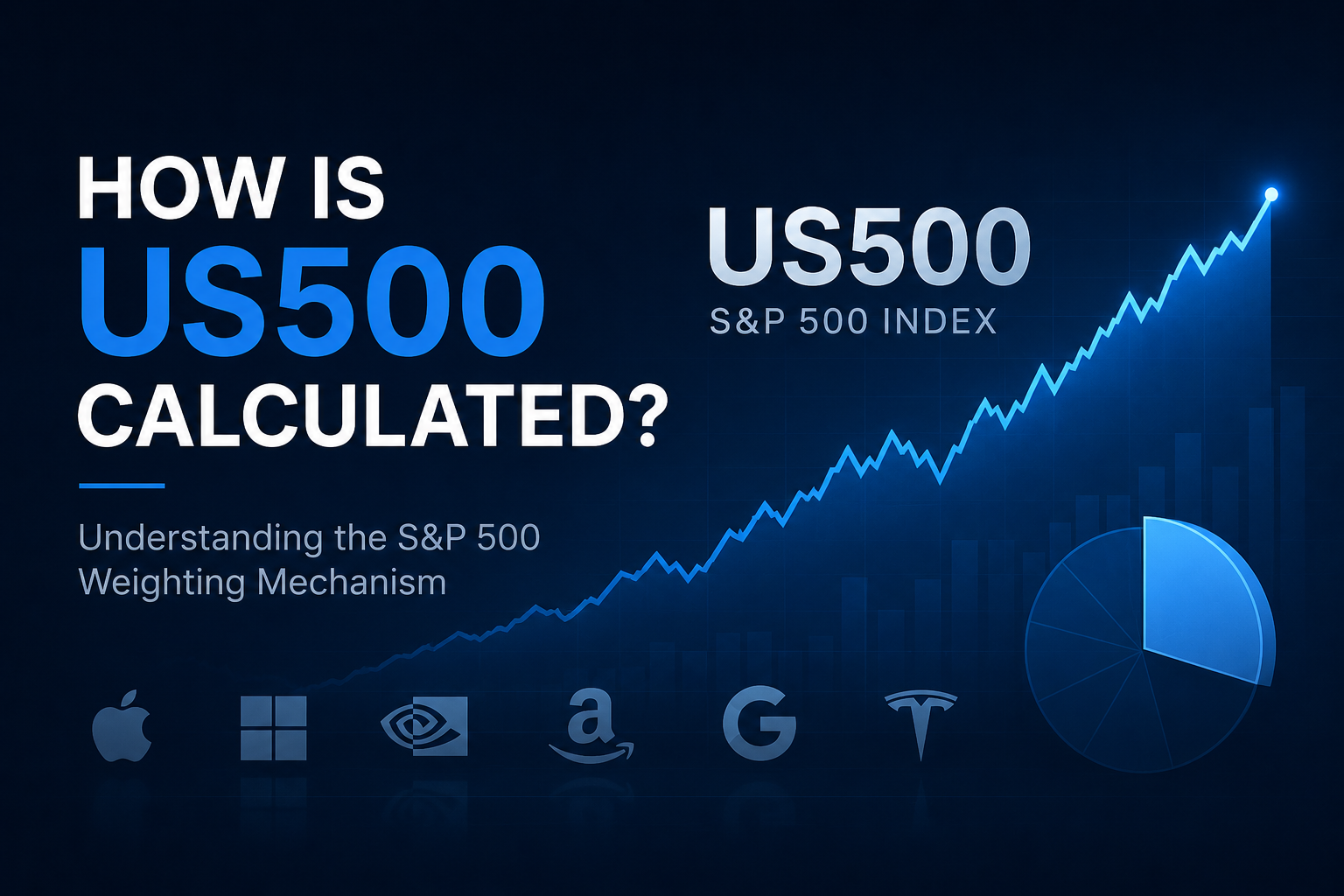
Apa Logika Perhitungan US500?
US500 dibangun dengan model tertimbang kapitalisasi pasar free-float. Sistem indeks menentukan bobot setiap perusahaan berdasarkan nilai pasar saham yang diperdagangkan secara bebas.
Pertama, komite indeks mengonfirmasi daftar konstituen US500. Kemudian, sistem menghitung jumlah saham free-float dan harga saham real-time setiap perusahaan.
Selanjutnya, sistem menghitung total kapitalisasi pasar free-float setiap perusahaan. Perusahaan yang lebih besar memiliki bobot indeks yang lebih tinggi, sehingga pergerakan harga mereka lebih berdampak pada US500.
Terakhir, sistem menggabungkan semua kapitalisasi pasar konstituen dan menerapkan divisor indeks untuk menghasilkan level indeks real-time.
Tabel di bawah menguraikan alur perhitungan inti US500:
| Langkah Perhitungan |
Tindakan Sistem |
Dampak pada Indeks |
| Penyaringan Konstituen |
Konfirmasi perusahaan indeks |
Membangun struktur indeks |
| Perhitungan Kapitalisasi Pasar |
Hitung kapitalisasi pasar free-float |
Tentukan alokasi bobot |
| Pembaruan Real-Time |
Sinkronkan perubahan harga saham |
Dorong fluktuasi indeks |
| Penyesuaian Divisor Indeks |
Koreksi perubahan struktural |
Pertahankan kontinuitas indeks |
Mekanisme ini berarti US500 cenderung mencerminkan kinerja kapitalisasi besar, bukan pergerakan rata-rata semua perusahaan yang terdaftar.
Bagaimana Mekanisme Pembobotan Kapitalisasi Pasar Mempengaruhi US500?
Pembobotan kapitalisasi pasar US500 memberikan porsi yang lebih besar kepada perusahaan besar. Semakin besar kapitalisasi pasar suatu perusahaan, semakin besar pengaruhnya terhadap US500.
Perusahaan teknologi besar sering memiliki kapitalisasi pasar tertinggi, sehingga nama-nama AI, cloud computing, dan semikonduktor cenderung membentuk arah keseluruhan US500.
Ketika saham perusahaan besar naik, sistem indeks mengangkat level keseluruhan secara bersamaan. ETF dan dana indeks kemudian menyesuaikan kepemilikan mereka agar sesuai dengan distribusi bobot baru.
Seiring masuknya modal ke perusahaan-perusahaan besar ini, bobot mereka dapat meningkat lebih lanjut, memperkuat struktur yang didorong oleh pemimpin yang jelas di US500.
Tidak seperti indeks berbobot sama, US500 tidak memberikan pengaruh yang sama kepada semua perusahaan. Kapitalisasi besar mendominasi pergerakan arah.
Keunggulan utama dari pengaturan ini adalah lebih akurat menangkap skala pasar kapitalisasi besar AS, meskipun juga meningkatkan ketergantungan indeks pada segelintir mega-cap.
Bagaimana Pergerakan Saham Konstituen Mempengaruhi Indeks?
Fluktuasi US500 terutama didorong oleh perubahan harga saham konstituennya. Karena kapitalisasi pasar perusahaan sangat bervariasi, dampaknya terhadap indeks berbeda secara signifikan.
Perdagangan pasar mendorong harga konstituen naik atau turun. Sistem indeks kemudian memperbarui total kapitalisasi pasar setiap perusahaan secara real-time.
Ketika saham perusahaan besar naik, US500 biasanya ikut naik. Penurunan pada nama besar juga dapat menarik indeks lebih rendah.
Efek gabungan dari semua konstituen pada akhirnya membentuk tren pasar keseluruhan US500.
Tabel berikut menggambarkan bagaimana perubahan konstituen berdampak pada US500:
| Perubahan Konstituen |
Reaksi Sistem Indeks |
Dampak pada US500 |
| Saham teknologi besar naik |
Bobot meningkat bersamaan |
Indeks naik signifikan |
| Saham keuangan turun |
Bobot sektor menurun |
Indeks tertekan |
| Banyak sektor naik bersamaan |
Risiko apresiasi menguat |
Indeks memperluas tren naik |
| Perusahaan terkemuka anjlok |
sentimen pasar melemah |
Volatilitas indeks meluas |
Struktur ini menegaskan bahwa US500 bukanlah rata-rata sederhana—ini adalah tolok ukur pasar yang didorong oleh kapitalisasi besar.
Seberapa Sering Indeks S&P 500 Menyesuaikan?
S&P 500 tidak mengikuti siklus rebalancing triwulanan tetap. Komite S&P secara dinamis menyesuaikan susunan konstituen berdasarkan kondisi pasar, ukuran perusahaan, dan representasi sektor.
Jika kapitalisasi pasar perusahaan berubah secara signifikan, komite dapat menilai kembali kelayakannya. Likuiditas yang menurun atau fundamental yang memburuk juga dapat memicu penghapusan.
Komite terus memantau data perusahaan yang terdaftar. Kemudian mengevaluasi apakah setiap perusahaan masih memenuhi ambang batas kapitalisasi pasar dan likuiditas US500.
Beberapa perusahaan dapat dikeluarkan dari indeks, sementara yang baru masuk berdasarkan representasi pasar.
Proses dinamis ini memastikan US500 tetap mewakili lanskap kapitalisasi besar AS.
Tidak seperti indeks statis, US500 terus memperbarui campuran sektornya, memungkinkan nama-nama AI, teknologi, dan ekonomi baru untuk secara bertahap mengklaim lebih banyak bobot.
Bagaimana Likuiditas US500 Terbentuk?
Likuiditas US500 berasal dari ukuran konstituen, ekosistem ETF, dan uang institusi global. Investor besar terus mengalokasikan sekitar indeks.
ETF adalah mesin likuiditas utama. Banyak ETF mereplikasi kepemilikan US500, sehingga mereka terus membeli dan menjual konstituen.
Dana indeks memegang saham sesuai dengan bobot US500. Penciptaan dan penebusan ETF kemudian mendorong aktivitas pasar.
Market maker turun tangan untuk menyediakan likuiditas, dan modal institusi global memperdalam volume perdagangan keseluruhan.
Struktur likuiditas US500 biasanya mencakup:
- Modal ETF
- Dana indeks
- Perdagangan market maker
- Alokasi institusi
Kerangka kerja ini menjadikan US500 salah satu indeks saham yang paling aktif diperdagangkan di dunia.
Mengapa Mekanisme Indeks Mempengaruhi Pasar ETF dan CFD?
Mekanisme indeks US500 secara langsung membentuk harga di ETF dan CFD. Kedua jenis produk bergantung pada pergerakan real-time US500.
ETF mencerminkan bobot konstituen US500, sehingga perubahan indeks secara langsung memengaruhi Nilai Aktiva Bersih (NAB) ETF. Kenaikan pada konstituen kapitalisasi besar mendorong ETF naik bersamaan.
CFD menyediakan eksposur perdagangan indeks berdasarkan harga langsung US500. Platform menyesuaikan kuotasi CFD sejalan dengan fluktuasi indeks.
Pertama, sistem indeks menghasilkan data pasar real-time. Platform ETF dan CFD kemudian menyinkronkan harga mereka.
Aliran modal kemudian memengaruhi volume dalam produk terkait indeks, dan volatilitas US500 merambat ke pasar ETF dan CFD.
Singkatnya, US500 bukan hanya alat indeks—ini adalah jangkar harga fundamental untuk pasar TradFi global.
Ringkasan
US500 menggunakan model tertimbang kapitalisasi pasar free-float untuk melacak nilai pasar perusahaan publik besar AS, mencerminkan kinerja keseluruhan perusahaan inti AS.
Perusahaan besar memiliki bobot lebih tinggi, sehingga nama-nama teknologi, keuangan, dan konsumen terkemuka biasanya menentukan arah indeks.
ETF, dana indeks, dan CFD semuanya membangun struktur mereka di sekitar US500. Akibatnya, logika perhitungannya tidak hanya memengaruhi indeks itu sendiri tetapi juga dinamika likuiditas dan penetapan harga aset di seluruh pasar TradFi global.
FAQ
Bagaimana US500 dihitung?
US500 dihitung menggunakan model tertimbang kapitalisasi pasar free-float. Sistem indeks secara dinamis menyesuaikan bobot setiap perusahaan berdasarkan nilai pasar saham yang diperdagangkan secara bebas.
Mengapa perusahaan besar mempengaruhi US500?
Perusahaan besar memiliki kapitalisasi pasar lebih tinggi dan karenanya bobot lebih tinggi di US500. Ketika saham teknologi besar naik atau turun, mereka biasanya memberikan dampak signifikan pada indeks.
Apakah US500 melakukan rebalancing pada jadwal tetap?
Komite S&P secara dinamis menyesuaikan konstituen US500 berdasarkan kapitalisasi pasar, likuiditas, dan representasi sektor. Tidak ada siklus rebalancing keseluruhan yang tetap.
Mengapa ETF dipengaruhi oleh US500?
Banyak ETF mereplikasi struktur konstituen US500, sehingga perubahan indeks secara langsung memengaruhi Nilai Aktiva Bersih (NAB) dan harga pasar ETF.
Bagaimana CFD melacak US500?
Platform CFD biasanya memperbarui harga produk berdasarkan data real-time US500, yang berarti fluktuasi US500 secara langsung memengaruhi kinerja pasar CFD.