The first five lessons covered roles and classifications, mechanism differences, depegging and runs, cost friction, and yield packaging risks. Lesson six does not introduce new concepts, but instead distills the content into repeatable disciplines: which type of stablecoin to use in which scenarios, how to avoid over-concentration in a single token or chain, how to adjust risk exposure before and after major events, and how to use brief records to capture experience.
1. Selection: Start with Purpose, Then Ask "Which Is Closer to $1"
Stablecoin selection should be based on use case, not market cap rankings or habit.
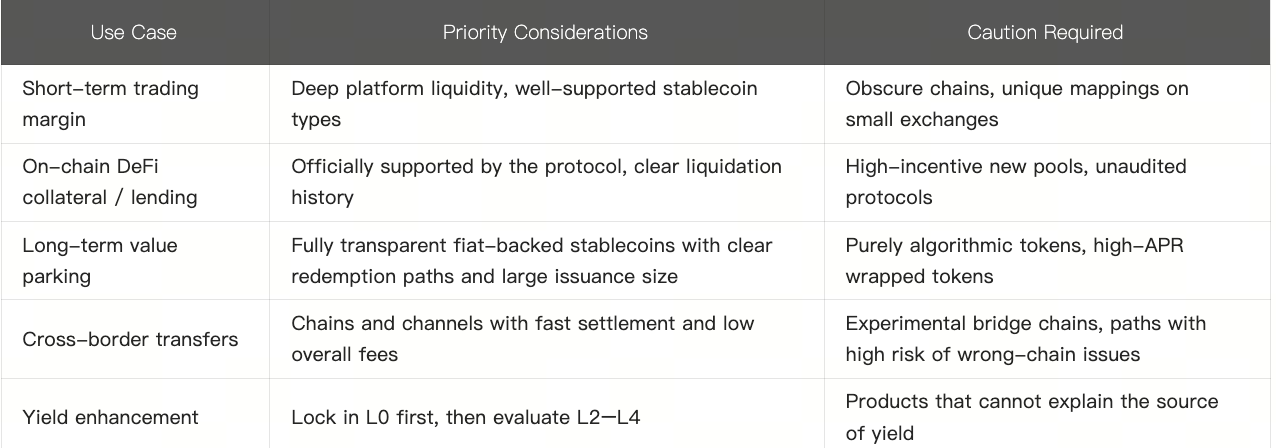
Three Selection Principles (General)
-
Mechanism Match: Fiat-collateralized, overcollateralized, and algorithmic types are not interchangeable in "roles" (see Lesson 2).
-
Path Match: Plan in advance which chain and platform the funds will ultimately settle on (see Lesson 4).
-
Risk Match: Do not take on risk levels beyond your understanding (see Lesson 5); higher yield means higher L-layer exposure.
2. Portfolio Diversification: Not Just "Buying More USDX," but Multi-Dimensional Diversification
Diversification should occur across multiple dimensions, not just by holding multiple tickers:
1. Issuance Mechanism Diversification
Diversifying among fiat-collateralized types (such as those with different disclosure structures) can reduce the impact of a single issuer event; however, note that correlation rises during crises—diversification is not immunity.
2. Chain and Channel Diversification
Avoid keeping all assets on a single L2 or bridge; retain at least one "mature exit path" (such as mainnet + major CEX channel).
The mix between exchanges, self-custody, and DeFi protocols reflects your counterparty risk tolerance; there is no absolute optimal—only what fits your goals.
4. Strategy Layer Diversification
Spot stablecoins, lending, LP, and yield aggregation positions should not be mixed in the same "cash" mental account; it is recommended to separate accounts or tags for "liquid cash" and "yield positions."
Misconceptions about Diversification
3. Concentration Red Lines: Set Your Own Limits
The following are for teaching illustration; actual ratios should be adjusted according to personal risk tolerance and do not constitute advice:
-
Single stablecoin (L0) cap as a proportion of crypto liquid assets: for example, not exceeding a self-set threshold (like 50%–70% as a starting point for consideration);
-
Single-chain stablecoin balance cap: avoid liquidity freeze from entire chain or bridge failure;
-
Single DeFi protocol yield position cap: protocol-level events may affect both deposits and collateral simultaneously;
-
Algorithmic or high-yield packaged stablecoins: classify separately as "high-risk experimental positions," isolated from cash positions.
The purpose of red lines is to reduce the need for forced one-off decisions when events occur.
4. Event Window Discipline
When multiple alerts appear on your monitoring checklist (price resonance depegging, redemption suspension rumors, large on-chain outflows, regulatory news, etc.), you can execute defensive discipline (not predictive trading):
Before the Event (calendar-known: macro data releases, regulatory hearings, major audit disclosures, etc.)
-
Reduce new exposure to any single stablecoin;
-
Avoid opening new high-leverage or long-term locked yield positions;
-
Check if withdrawal, bridge, and redemption channels are functioning normally.
During the Event
-
Rely on official announcements and on-chain data; avoid rebalancing solely based on social media;
-
Avoid large market sales during extremely poor liquidity;
-
Check DeFi collateral health and liquidation thresholds.
After the Event
-
Record: extent of depegging, duration, recovery method (redemption reopening or market making);
-
Update trust ratings for the coin/protocol;
-
Revise portfolio caps and ban lists (if applicable).
5. Weekly Review Template
It is recommended to spend 15–20 minutes each week filling out:
A. Position Snapshot
B. Price and Peg
C. Costs and Operations
-
Any high gas fees, withdrawal fees, or swap slippage this week;
-
Any wrong chain/delayed incidents.
D. News and Rules
-
Issuer disclosures, regulation, freezes, protocol upgrades;
-
Whether platforms changed margin requirements or delisted any tokens.
E. Discipline Self-Evaluation
F. Next Week's Actions
- Rebalancing, chain migration, reducing protocol exposure (planning only—not trade signals).
Keep the table long-term to identify personal weak points after multiple market cycles (such as always selling after depegging or always choosing high-gas chains).
6. Situations Unsuitable for Relying on Stablecoin "Cash Illusion"
Be alert or reduce reliance on stablecoins in these scenarios:
-
Unable to understand the mechanism and redemption of the held type;
-
Placing all liquid funds on a single chain and platform;
-
Treating high-yield DeFi positions as instantly accessible demand deposits;
-
Ignoring freezes, compliance, and regional restrictions;
-
Chasing "depegged stablecoins" during rumor periods without arbitrage channels or awareness of limits.
Stablecoins enable crypto markets to be denominated and transacted in near-dollar units, but each is a product with specific structures. Mature usage includes mechanism identification, cost accounting, depeg monitoring, yield stratification, portfolio discipline, and review.
Summary
Choose by use case; diversify consciously across mechanism, chain, platform, and strategy layers; set concentration red lines; reduce exposure during event windows with multi-source verification; and use weekly templates for review. The goal of a stablecoin portfolio is not maximum yield but maintaining liquidity, redeemability, and psychological tolerance within understandable risks. This concludes all six lessons: from "what it is" to "mechanism—depeg—cost—yield—discipline," forming a stablecoin management framework that can be continuously revised with market and product updates.