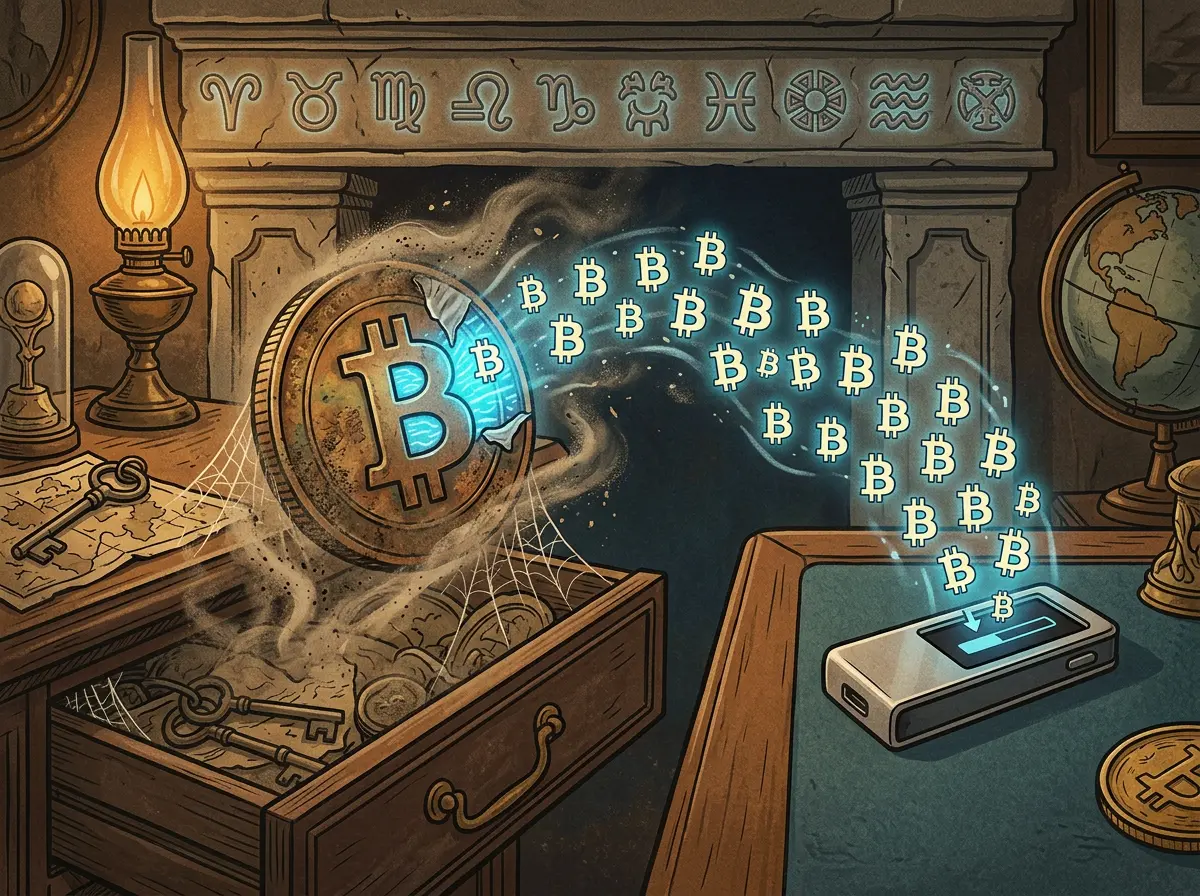
A Casascius physical bitcoin (model S1-COIN-25) holographic anti-counterfeit seal, minted between 2011 and 2013, was uncovered on June 3. The 25 stored BTC (about $1.78 million) were transferred to a new wallet address, with the transaction recorded on the Bitcoin blockchain at block 952,159. Introducing the private key by unsealing the holographic seal is an irreversible operation, and it also destroys the coin’s collectible value.
Casascius Coin Design Specifications and Scarcity Data
The main specifications and market status of Casascius coins:
Denomination series: 0.5, 1, 5, 10, 25, 100, 1,000 BTC
Design: The coin’s front shows a Bitcoin receiving address, while the private key is hidden under a tamper-evident holographic seal on the back
Redemption mechanism: Unsealing the holographic seal enables spending the Bitcoin, which is irreversible
1,000 BTC denomination version: Caldwell minted fewer than 20 coins; most are preserved in good condition, with each currently worth about $66 million
Current status: There are still thousands of unredeemed Casascius coins in circulation, covering various denominations
Background on Caldwell’s Production Shutdown: 2013 FinCEN Notice
In late 2013, Mike Caldwell received a notice from the U.S. Financial Crimes Enforcement Network (FinCEN), informing him that he was conducting related activities without holding the necessary money services business license, and he subsequently stopped production. Casascius coins that retain intact holographic seals hold a special position in the collectibles market: each coin carries both its Bitcoin face value and a collectible premium. The market price for the first-generation large-denomination fully intact coins typically exceeds their Bitcoin face value.
The Casascius project later inspired subsequent physical Bitcoin minting initiatives such as Lealana, Denarium, and BTCC, but Casascius remains the most heavily collected series.
Frequently Asked Questions
Why does redeeming a Casascius coin destroy its collectible value?
The collectible premium of Casascius coins depends on the integrity of the anti-tamper holographic seal. If the seal is intact, it indicates that the private key has not been used and that the Bitcoin is still stored within the coin. Introducing the private key by unsealing the seal is irreversible. Once carried out, the coin’s collectible condition is destroyed, turning it from a “collectible with premium” into “pure Bitcoin.”
Galaxy Research 為何在資料庫中將此地址標記為「Noah Doe #38977」?
According to a public tweet by Galaxy Research, this address belongs to a target address set in a lawsuit over abandoned property in New York involving Noah Doe (case number 153119/2026). Galaxy Research’s system has flagged and tracked related addresses.
How many Casascius coins are currently in existence?
According to reports, there are still thousands of unredeemed Casascius coins across various denominations in existence. The 1,000 BTC denomination version has fewer than 20 coins minted; most are preserved in good condition, with each currently worth about $66 million.


