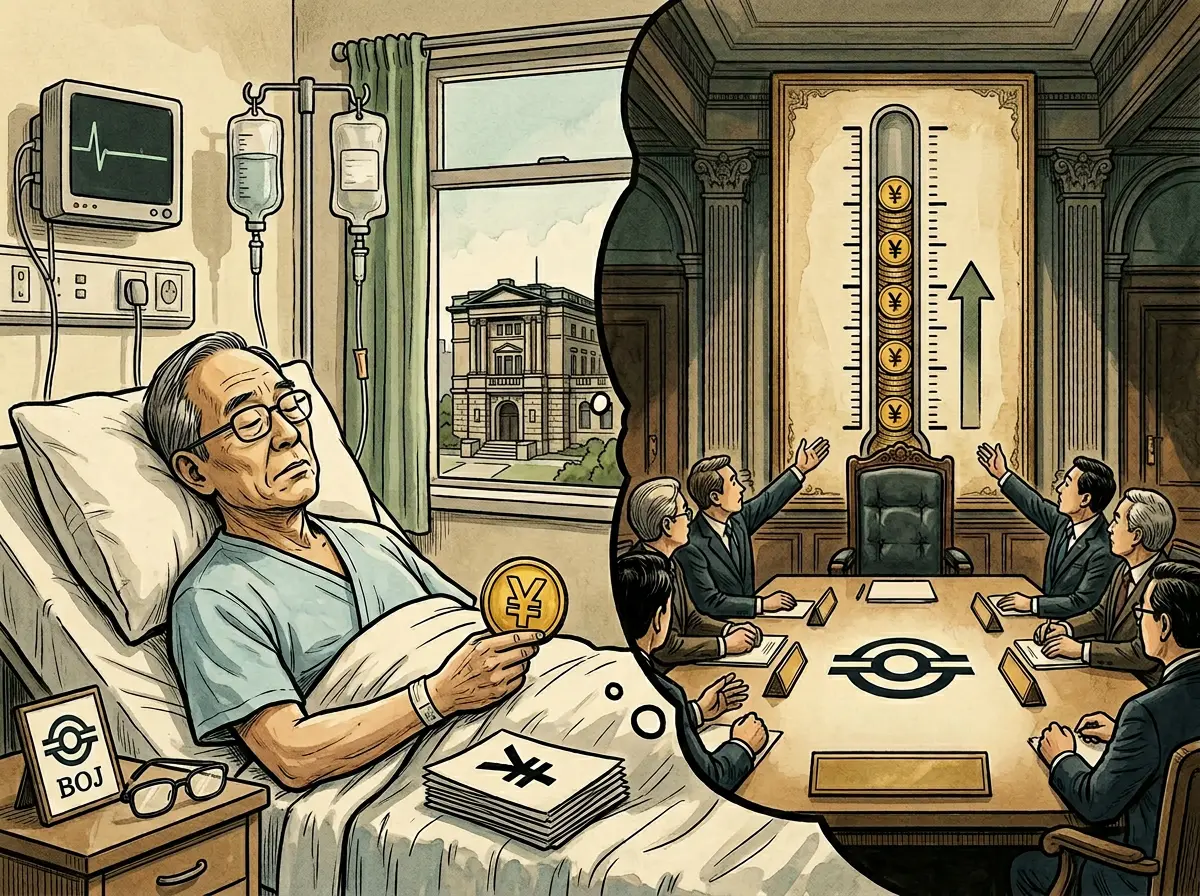
Reuters, based on data from the swaps market, shows that the probability of Japan’s central bank (BOJ) raising interest rates from 0.75% to 1% at its policy meeting on June 15-16 is 93%. This would be Japan’s highest policy rate since 1995. BOJ Governor Kazuo Ueda (74) was admitted to the hospital on June 10 due to an infection from a liver cyst, and will be absent from this two-day policy meeting; the meeting will be chaired by Deputy Governor Ryozo Hino.
Rate-hike expectations confirmed: Reuters poll and market pricing
Based on Reuters’ survey from June 2 to 8, 2026, 66 of 70 economists surveyed (94%) expect the rate to reach 1% by the end of June, up from 65% in the May survey. As of June 11, BlockBeats reported that market expectations were broadly for rates to reach 1%.
Nomura Securities’ executive interest-rate strategist Shinachi Iwashita told Reuters that, given the uncertainty around Ueda’s recovery timeline, the BOJ may not send clear signals about the future rate path. She said, “Whether the BOJ will raise rates again this year has become increasingly uncertain.”
Macro factors confirmed to support the rate hike
According to Reuters and related reports, the main confirmed factors driving this rate increase are:
Price pressure: Japan’s April wholesale prices rose 4.9% year-on-year; economists expect inflation to be far higher than the 2% target later this year
Yen depreciation: the yen fell below 160 against the U.S. dollar, triggering roughly 11.7 trillion yen (about $730 million) in currency intervention since late April
Energy costs: the Iran war has raised energy costs for Japan, which relies on energy imports
Widening rate differential: Federal Reserve Chair Kevin Warsh is expected to take a hawkish stance, further widening the rate gap between Tokyo and Washington
Shigeto Nagai, chief economist for Japan at Oxford Economics, told Reuters: “I believe the upcoming rate hike is a defensive measure aimed at preventing further yen depreciation.”
The next rate-hike path: market expectations confirmed by Reuters
According to the Reuters survey, more than 75% of respondents expect the rate to be raised again to 1.25% in the fourth quarter; two-thirds expect the rate to be raised to 1.5% by mid-2027.
Hiroyasu Nagata, head of global markets at Sumitomo Mitsui Financial Group, said the BOJ should set a clear normalization path to stabilize the bond market, noting that the 10-year government bond yield has already reached the highest level in 30 years.
On political risk: Prime Minister Sanae Takaichi, who advocates for loose fiscal and monetary policy, has influence over the BOJ’s future director appointments. The terms of two hawkish board members expire in July 2027. Takashi Ueno, senior economist at the NLI Research Institute, said: “Personnel changes next year could completely alter the internal balance of the board.”
Frequently asked questions
Why does it seem the rate-hike decision is still certain even after Ueda’s absence from the policy meeting?
According to reports, both Reuters’ rate-hike probability assessment (93%) and the consensus among 94% of economists had already formed before Ueda was hospitalized (June 10), and the above data show that market expectations for a rate hike were already highly priced in. A Nomura Securities analyst said that the key issue is “how the future rate path is communicated,” rather than the rate-hike decision itself.
Why is BTC/JPY one of the most active fiat-crypto trading pairs globally?
Based on the article, Japan’s long period of keeping interest rates near zero or negative, along with the speculative trading environment for yen-denominated cryptocurrencies, makes BTC/JPY one of the most active fiat-crypto trading pairs globally. bitFlyer accounts for about 38% of Japan’s cryptocurrency trading volume, highlighting the overall scale of the yen-denominated crypto market.
When did the BOJ’s rate-hike cycle begin?
According to the report, the BOJ ended its large-scale stimulus in 2024 and began tightening afterward; since then, it has raised rates multiple times. This rate hike to 1% will be another milestone in that tightening process, and also the highest policy rate level since 1995.


