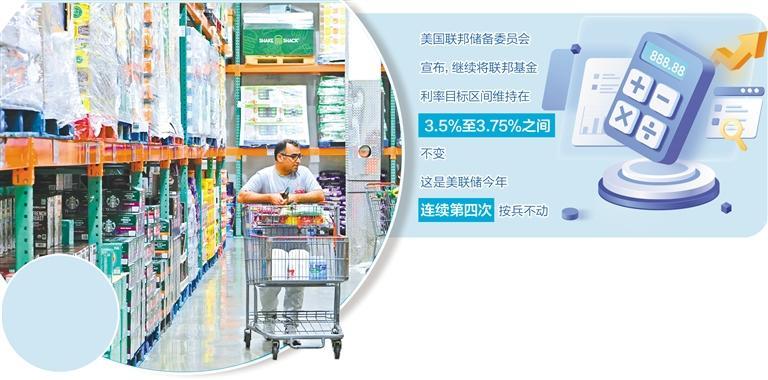
The Federal Reserve held its benchmark interest rate at 3.5% to 3.75% on June 18, marking the fourth consecutive meeting without a change, as new Chair Kevin Walsh introduced significant shifts in policy communication and inflation projections. The decision came after May inflation data showed the consumer price index rising 4.2% year-over-year and producer prices climbing 6.5%, prompting the Fed to raise its 2026 inflation forecast from 2.7% to 3.6%. Walsh reduced the policy statement from over 300 words to 130 words, eliminating forward guidance language that had characterized the previous chair's tenure. The policy shift reflects the Fed's assessment that inflation remains elevated despite stable employment and economic expansion, with Walsh stating the central bank has failed to meet its 2% inflation target for five consecutive years and must now 'take action to correct' that record.
Fed Reduces Policy Statement to 130 Words, Eliminates Forward Guidance
The Federal Reserve's June 18 policy statement contained only 130 words, a reduction from the over 300-word statements issued under previous Chair Powell. The statement removed all forward guidance language that previously signaled future policy direction, instead limiting itself to factual observations: the economy is expanding robustly, employment remains generally stable, inflation remains elevated, and the Fed will achieve price stability. Walsh stated during the press conference that forward guidance is not suitable for the current policy environment and that the Fed will no longer "write the script" for markets. The statement omitted standard language about evaluating policy stance based on incoming data.
Nine Officials Project Rate Increases in Latest Dot Plot
The June dot plot showed nine of 18 officials predicting at least one rate increase this year, with five supporting a 50-basis-point increase. This marked a shift from the March meeting when no officials projected rate increases. Walsh did not submit his own dot plot projection, stating it does not help with policy execution and suggesting the 14-year-old tool may be discontinued.
Fed Raises 2026 Inflation Forecast from 2.7% to 3.6%
The Federal Reserve raised its 2026 personal consumption expenditures inflation forecast from 2.7% in March to 3.6%, with core PCE inflation projections increasing from 2.7% to 3.3%. The upward revision represented one of the largest adjustments in recent years. The Fed lowered its economic growth forecast slightly to 2.2% while reducing the unemployment rate projection from 4.4% to 4.3%, indicating the economy is operating smoothly with a solid labor market but stalled inflation decline.
Energy Prices and AI Investment Drive Inflation Pressures
May consumer price index data showed prices rising 4.2% year-over-year and 0.5% month-over-month, with energy prices serving as the primary driver. The producer price index rose 1.1% month-over-month and 6.5% year-over-year, with final demand goods prices increasing 2.8% month-over-month. Fed data released Monday showed U.S. manufacturing output unchanged in May, ending four consecutive months of growth and falling below market expectations. Companies have announced over $1.5 trillion in data center construction plans, with the AI investment boom driving up prices for chips, high-tech equipment, and construction wages. Fed Governor Cook stated publicly that AI-driven investment demand may create additional price pressures. Walsh reiterated during the press conference that the 2% inflation target will not be loosened.
Walsh Establishes Five Reform Working Groups
Walsh announced the establishment of working groups in five areas: communication mechanisms, balance sheet, data sources, productivity and employment, and inflation framework. The groups will recruit experts from academia and industry to rebuild the Fed's operating system from foundational logic. Walsh stated that current official statistics rely on old survey methods producing data that diverges from the real economy in 2026, and that the Fed will introduce real-time data from the private sector and new analytical tools to base decisions on information closer to current conditions. The long-term impact of artificial intelligence on productivity and inflation has been included in dedicated research.
Japan and ECB Raise Rates Amid Global Inflation Concerns
Before the Fed meeting, the Bank of Japan raised rates to approximately 1.0%, the highest level in 31 years. The European Central Bank raised all three key eurozone interest rates by 25 basis points, marking the first rate increase since September 2023. Multiple central banks shifted toward tightening policies in response to widespread inflation rebound pressures.
FAQ
What did the Federal Reserve decide at its June 18 meeting?
The Federal Reserve held the federal funds rate target range at 3.5% to 3.75%, marking the fourth consecutive meeting without a rate change. Chair Kevin Walsh reduced the policy statement to 130 words and eliminated forward guidance language that previously signaled future policy direction.
Why did the Fed raise its 2026 inflation forecast?
The Fed raised its 2026 PCE inflation forecast from 2.7% to 3.6% after May data showed consumer prices rising 4.2% year-over-year and producer prices climbing 6.5%. Energy prices and AI-driven investment exceeding $1.5 trillion in data center construction contributed to persistent inflation pressures, with Walsh stating the Fed has failed to meet its 2% inflation target for five consecutive years.


