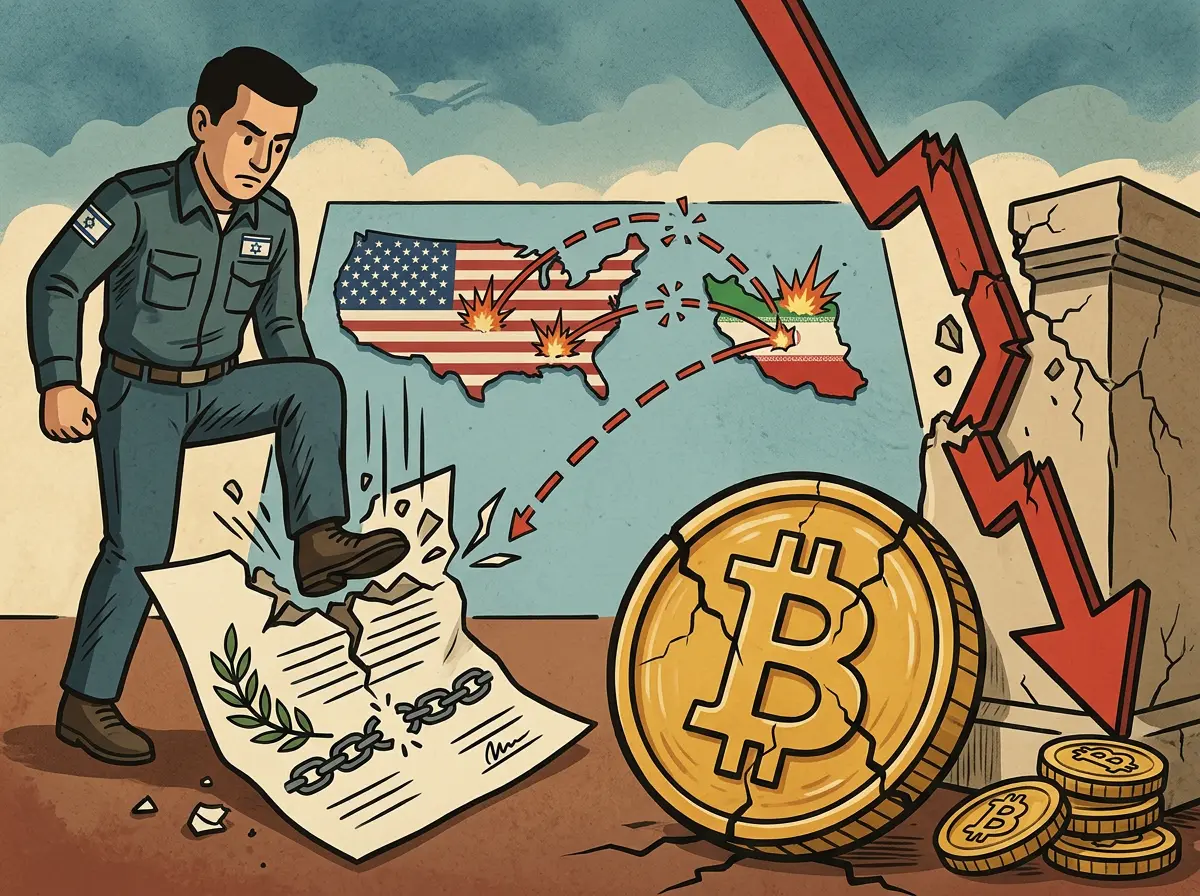
On June 17, during intraday trading, Bitcoin fell from a peak of about $66,900 to $65,720. Iran’s military accused Israel of repeatedly violating the ceasefire agreement in southern Lebanon since the announcement of the US-Iran agreement, and warned that if the attacks continued, it would provide a “severe response.” In addition, a two-day Federal Reserve policy meeting is underway, and markets generally expect interest rates to remain unchanged, but the outlook for newly appointed Fed Chair Kevin Walsh is unclear, suppressing traders’ risk appetite.
Israel-Lebanon tension developments
Iran’s military publicly accused that since the announcement of the US-Iran agreement, Israel has violated the ceasefire agreement dozens of times in southern Lebanon, and warned that if the above actions continue, it will deliver a “severe response.” Israel’s Prime Minister Netanyahu confirmed that although the US-Iran ceasefire agreement has been reached, Israeli forces will continue to occupy southern Lebanon.
The developments above weakened investors’ confidence in the long-term effectiveness of the US-Iran peace framework, and pressured the optimism the market had built ahead of the reopening of the Strait of Hormuz.
Fed meeting background: CPI at 4.2%, rate expectations unchanged
Markets generally expect the Fed to keep rates unchanged in this meeting. The latest CPI report confirmed that the year-over-year growth rate rose to 4.2%, showing that inflationary pressure is accelerating. The policy stance of Fed Chair Walsh remains unclear, increasing uncertainty in the market ahead of the decision.
Crypto analyst Ardi said that before the Fed meeting begins, whether Bitcoin can hold the $64,000 zone is crucial: “If the price holds this level, then even if a typical post-Fed meeting pullback occurs, the bulls can maintain the local structure and have a chance to extend the uptrend.”
Market technical data: CoinGlass liquidation distribution
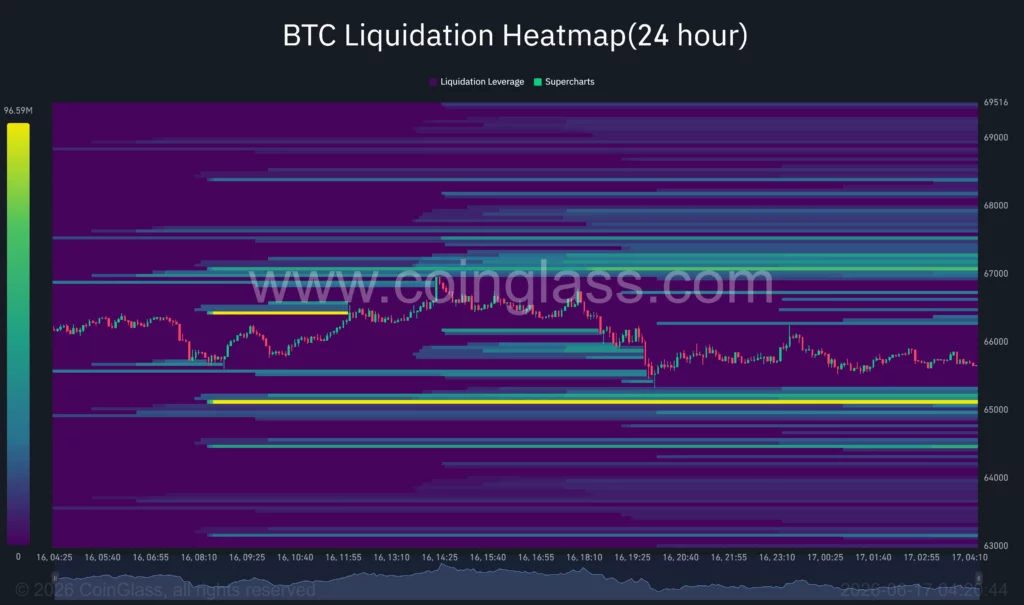 (Source: Coinglass)
According to CoinGlass liquidation data, over the past 24 hours, leveraged long positions have continued to accumulate around $65,000, forming one of the largest liquidity pools. If the price breaks below this zone, another liquidation concentration area could be exposed around $64,500. Short liquidations are concentrated between $67,000 and $68,500. If Bitcoin regains strength after the Fed decision, this range could become a magnet zone that pulls prices upward.
Analyst Daan Crypto Trades confirmed that Bitcoin is currently trading between the weekly 200-day moving average and the 200-day exponential moving average, and said, “Bulls hope the weekly closing price returns above the 200-day moving average, while also holding the 200-day moving average as support.”
FAQ
Why do Iran’s ceasefire accusations affect Bitcoin’s price?
Based on reports, after the US-Iran agreement was reached, the market had priced in the reopening of the Strait of Hormuz and improved energy supply as positive factors. Iran’s ceasefire accusations and confirmation that Israeli forces continue to occupy southern Lebanon lead the market to reassess the likelihood that the peace framework will hold, increasing geopolitical risk premium and prompting some investors to reduce exposure.
Why did oil fall more than 6%, but Bitcoin also dropped at the same time?
Under normal circumstances, a drop in oil prices is seen as a positive sign that inflation pressure is easing. But this time, the oil decline mainly reflects expectations that the Strait of Hormuz may reopen. Bitcoin’s simultaneous drop more reflects risk sentiment driven by the escalation of tensions between Israel and Lebanon, as well as the safe-haven sentiment ahead of the Fed’s policy decision; the driving factors differ.
Could the Fed cut rates this time?
According to market consensus, the Fed meeting is widely expected to keep interest rates unchanged. The latest CPI year-over-year growth of 4.2% indicates inflationary pressure has not eased further, further reducing the likelihood of a short-term rate cut.


