
On June 23, OpenAI announced its “Patch the Planet” initiative to conduct systematic security scans of key global open-source projects. According to OpenAI’s announcement, in the first week of the program it found hundreds of security vulnerabilities, submitted 64 pull requests, and opened 51 issues, spanning 19 open-source projects including cURL, Python, and PyPI.
Partners, AI Tools, and Resource Pack for Patch the Planet
 (Source: OpenAI website)
According to OpenAI’s announcement, the project partners are Trail of Bits (a cybersecurity company), HackerOne (a vulnerability rewards platform), and Calif; the two AI tools provided are Codex Security and GPT-5.5-Cyber.
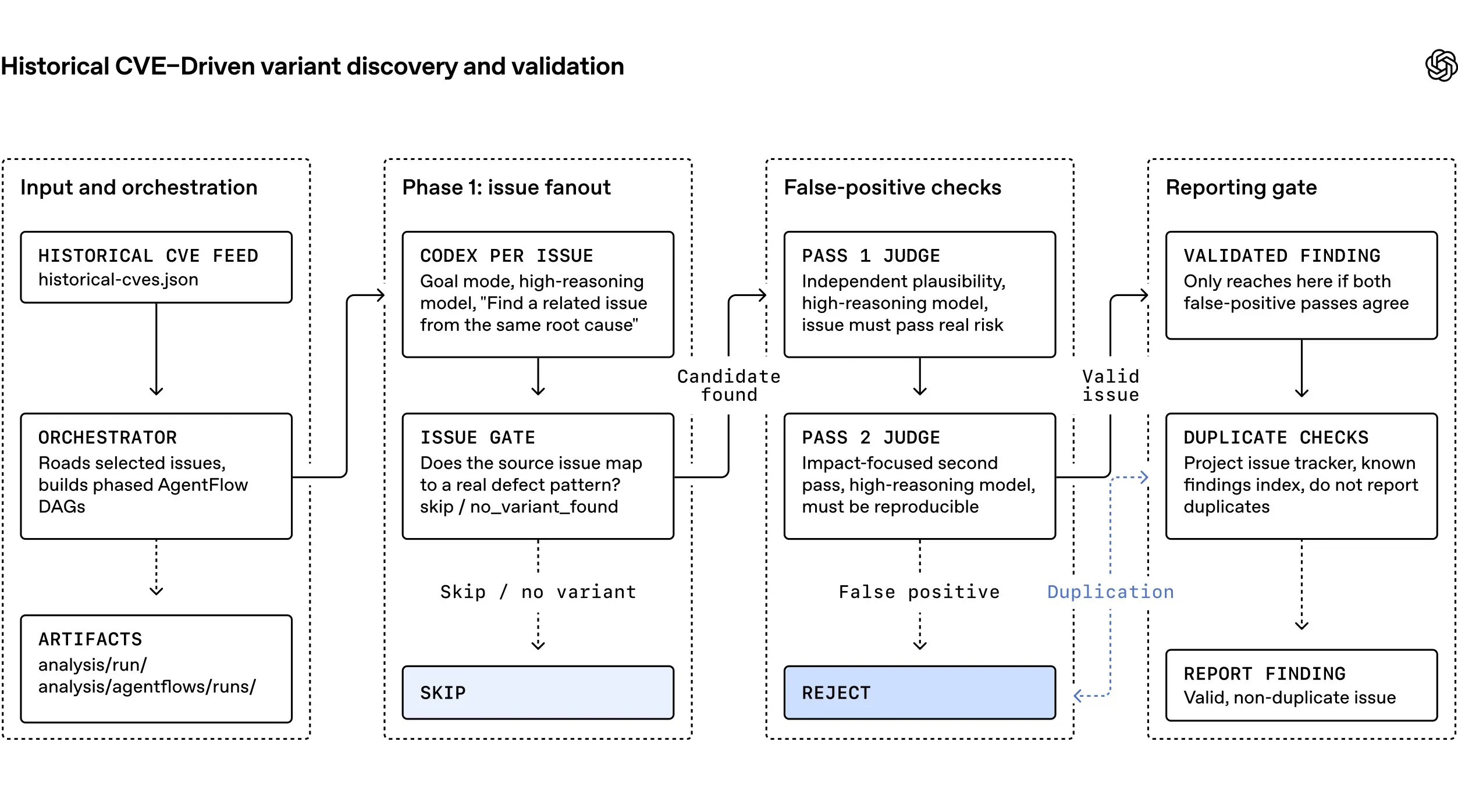
Participant resources include: ChatGPT Pro access rights; Codex Security conditional access; API credits; and security infrastructure (fuzzing harnesses [test frameworks that automatically feed random inputs to force out hidden bugs], a historical CVE analysis pipeline, differential testing system, threat modeling, and an extended testing suite).
The First Wave of 19 Target Open-Source Projects and Quantified Results for Week One
According to OpenAI’s announcement, the first wave covered 19 open-source projects, including cURL, Python, PyPI, urllib3, aiohttp, a Go project, freenginx, NATS, pyca, Sigstore, SimpleX, Valkey, RustCrypto, and python.org.
Quantified results for the first week (source: OpenAI announcement): hundreds of security vulnerabilities found; 64 pull requests submitted; 51 issues opened. The above results are the combined totals across the 19 projects; the vulnerability distribution by individual project was not disclosed item by item in the existing announcement.
Open-Source Cybersecurity Dilemmas and log4j’s Historical Context
The log4j vulnerability incident (December 2021): Apache log4j is a widely used logging tool in the Java ecosystem, and its security flaw was described by the U.S. Cybersecurity and Infrastructure Security Agency (CISA) as “one of the most severe vulnerabilities ever.”
Structural problem (original author’s analysis): The original text points out that the cybersecurity issues in the open-source ecosystem are fundamentally a manpower problem: in the global hundreds of thousands of open-source packages, maintainers often have only one or two people, making it impossible to conduct complete security audits of all code; vulnerabilities are often discovered only years after they appear. The original analysis framework is that AI’s advantage is not in finding genius-level vulnerabilities, but in continuously scanning large codebases at a density that human effort alone cannot sustain. These are the views of the original author, not official statements by OpenAI.
Frequently Asked Questions
Who disclosed the quantified results for Patch the Planet in its first week?
The figures “hundreds of vulnerabilities, 64 pull requests, 51 issues” come from OpenAI’s official announcement and are the combined total for the 19 open-source projects. Whether each open-source project has accepted and merged these patches must be verified based on that project’s repository update history.
How are Codex Security and GPT-5.5-Cyber different?
According to OpenAI’s announcement, the two are different AI cybersecurity tools provided by the program; Codex Security’s access method is labeled as “conditional access,” while GPT-5.5-Cyber is an updated version of the AI tool. Specific feature differences and technical specifications were not detailed in the existing announcement.
Why did OpenAI choose widely used infrastructure like cURL and Python rather than other projects?
The original text states that these are “the infrastructure of the entire modern internet”; the estimated global installation base of cURL exceeds 20 billion devices. In such widely used infrastructure, vulnerabilities have a far broader potential impact than in niche tools. This is the original author’s interpretation of the selection standard, not an explanation of OpenAI’s official selection.


