Snap launched its first consumer-facing AR glasses, SPECS, on June 16 at the Augmented World Expo (AWE 2026), with preorders opening immediately at $2195 and shipments planned for this fall in the United States, United Kingdom, and France. CEO Evan Spiegel described SPECS as marking "the beginning of a new era of computing" that brings computation into the surrounding world rather than requiring users to look down or remain stationary. The launch positions Snap in the competitive consumer AR market alongside Apple's $3499 Vision Pro and Meta's $799 smart glasses, though the high price point triggered a 9.63% stock decline on June 16.
SPECS Features 51-Degree Field of View and 4-Hour Battery Life
SPECS weighs 132 grams for the 47mm model and 136 grams for the 52mm model, constructed from Swiss TR90 material. The glasses use two Snapdragon processors—one for computer vision and one dedicated to running lenses—achieving 7-millisecond latency. The device features Snap's proprietary LCoS (Liquid Crystal on Silicon) display with a 51-degree field of view and 16 million color support. Lenses use electrochromic technology to automatically switch between transparent and tinted states within 10 seconds.
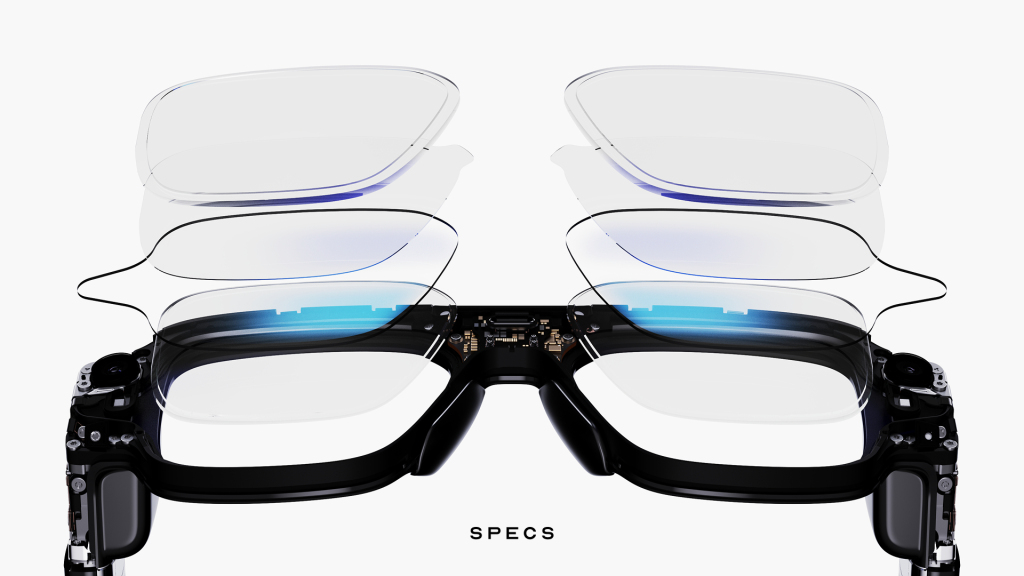
The glasses provide up to 4 hours of mixed-use battery life, with the included charging case offering four additional charges for a total of 20 hours. Beyond video playback and daily office application connectivity, SPECS includes a "contextual AI" feature allowing users to look at objects and ask questions, with the glasses retrieving relevant information about the observed subject.
Preorders require a $200 refundable deposit, with the full $2195 price due before shipment this fall.
Snap Stock Drops 9.63% Following $2195 Price Announcement
Snap (NYSE: SNAP) closed down 9.63% at $5.16 per share on June 16, bringing total market capitalization to $8.55 billion. The stock has declined over 36% this year.
IDC Research Manager Jitesh Ubrani stated that high inflation reducing consumer spending power makes this a poor time for any company to launch premium products. He noted that Snap's core audience skews younger, a demographic that typically does not purchase such expensive products.
Spiegel defended the pricing by noting that nearly 20 years after the iPhone's debut, people are ready to think about computing technology differently. He told media that Apple's 1984 Mac computer would cost approximately $8000 in today's currency. Spiegel acknowledged that the first-generation SPECS serves more as a smartphone supplement than a replacement.
SPECS Pricing Sits Between Meta's $799 Glasses and Apple's $3499 Vision Pro
The $2195 price point represents over 15 times the cost of Snap's previous product. Snap released Spectacles glasses with camera-only functionality in 2016 for $130, which failed to gain market acceptance. Since then, Snap has accumulated over 7,000 AR-related patents.
Among comparable consumer-facing advanced products, Apple's Vision Pro headset starts at $3499, while Microsoft's HoloLens and competitor Magic Leap both price between $2000 and $3500. Meta's latest smart glasses start at $799 but lack full AR functionality despite having built-in displays.
Apple continues searching for market acceptance of its premium device, while Magic Leap and Microsoft have ceased selling headset devices. Meta has achieved greater industry success with its lower pricing strategy.
FAQ
What did Snap announce on June 16?
Snap announced SPECS, its first consumer-facing AR glasses, at the Augmented World Expo (AWE 2026) on June 16. The glasses are priced at $2195 with a $200 refundable deposit required for preorders, and shipments are planned for this fall in the United States, United Kingdom, and France.
Why did Snap's stock price drop after the SPECS announcement?
Snap's stock dropped 9.63% to $5.16 per share on June 16 due to investor concerns about the $2195 price point. IDC Research Manager Jitesh Ubrani cited high inflation reducing consumer spending power and noted that Snap's younger core audience typically does not purchase such expensive products.
How does SPECS pricing compare to competitor AR devices?
SPECS is priced at $2195, positioned between Meta's $799 smart glasses (which lack full AR functionality) and Apple's Vision Pro at $3499. Microsoft's HoloLens and Magic Leap also price between $2000 and $3500, though both companies have ceased selling headset devices.


