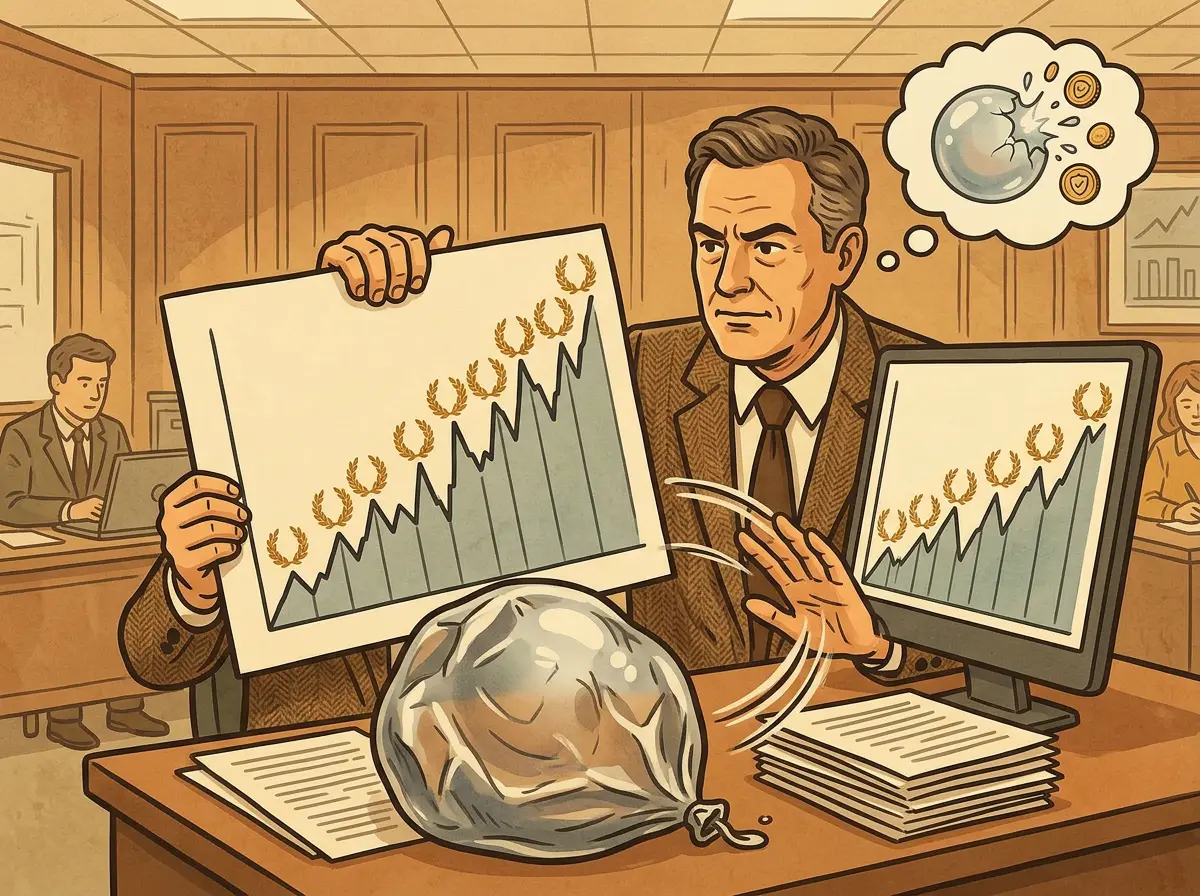
The S&P 500 hit 11 record closing highs in May, accounting for about half of all trading days in the month. Since the start of the year, it is up about 11%. Goldman Sachs and Morgan Stanley have recently raised their annual targets. Federated Hermes’ global equities deputy chief investment officer Steve Chiavarone said: “We don’t think we’re in a bubble. Based on historical data, long-term bull markets typically last 20 years.”
Confirmed Market Data
Gains in AI-related stocks were especially significant: Sandisk is up about 600% year-to-date in early 2026; Micron, Dell Technologies, Intel, Seagate, and Western Digital are up about 200%; Nvidia (NVIDIA, market cap $5 trillion) is up 13% year-to-date.
The S&P 500 has rebounded 57% from the market low triggered by the tariff announcement from April 2025, often referred to as “Liberation Day.” SpaceX released IPO filing documents last week. OpenAI and Anthropic are also expected to list, and investors view them as a test of the market’s ability to absorb more AI stocks.
Core Quotes From Bullish Analysts
Morgan Stanley’s chief U.S. equity strategist Mike Wilson said: “Is there excess? Yes, there’s crowding in the market. Individual stocks could see a pullback of 15% to 20%. There will be a bubble in the market, and then it will correct, but the market can still move forward.”
Goldman Sachs’ chief U.S. equity strategist Ben Snider said that “the conditions that usually signal the end of a bull market,” such as “speculative mania” and “margin compression,” or the Federal Reserve raising rates, “don’t exist.” Fidelity’s head of quantitative market strategy Dennis Chisholm said: “There is an active risk-reward trade-off in the stock market, mainly because I think earnings growth is much more durable than people expect.”
Bear Warnings: Confirmed Statements by Burry and Tudor Jones
Michael Burry has repeatedly warned that Wall Street’s unrestrained enthusiasm for AI is similar to the indiscriminate euphoria seen during the internet bubble period. Paul Tudor Jones, in a CNBC interview earlier this month, described market prosperity as a “crazy time,” and said: “If I had to pick a period, I think we can probably go on for another year or two. From a price-to-earnings ratio, earnings, and other factors, our situation now is pretty similar to October or November 1999.” (The Nasdaq internet-bubble peak was in March 2000.)
FAQs
Are the S&P 500’s 11 record highs in May historically comparable?
In May 2026, the S&P 500 recorded 11 record closing highs, accounting for about half of all trading days in the month. This data occurred in the context of first-quarter earnings far exceeding expectations and multiple large banks raising their annual targets, and it forms part of the 11% gain year-to-date.
How large is the gap between the current market valuation and the historical average?
FactSet data shows that the S&P 500’s current price-to-earnings ratio is about 21 times forward one-year expected earnings, above the past 30-year average of 17 times—an implied valuation premium of about 24%.
What do the IPOs of SpaceX, OpenAI, and Anthropic mean for the market?
SpaceX released IPO filing documents last week, and OpenAI and Anthropic are also expected to list, though the timeline is still to be confirmed. Investors view the IPO progress of these AI technology companies as the next important milestone testing the market’s ability to absorb them.


