
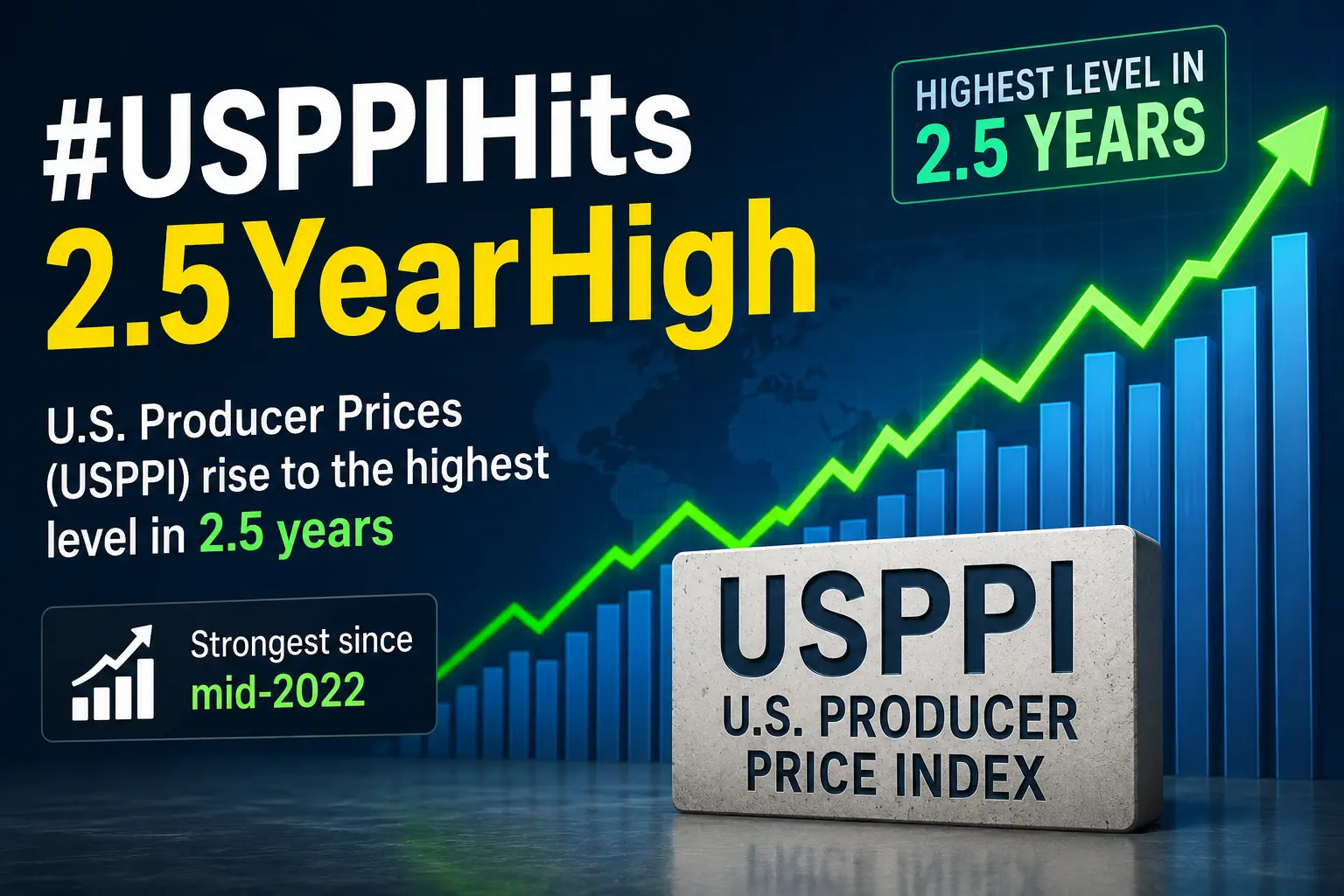
#USPPIHits2.5YearHigh
The latest U.S. Producer Price Index (PPI) report has become one of the most important macroeconomic developments for global markets this month. While many investors focus primarily on consumer inflation, producer inflation often provides an early signal of pricing pressures building within the economy. When businesses face rising production costs, those costs frequently find their way into the broader economy, influencing everything from consumer prices to corporate profitability and central bank policy decisions.
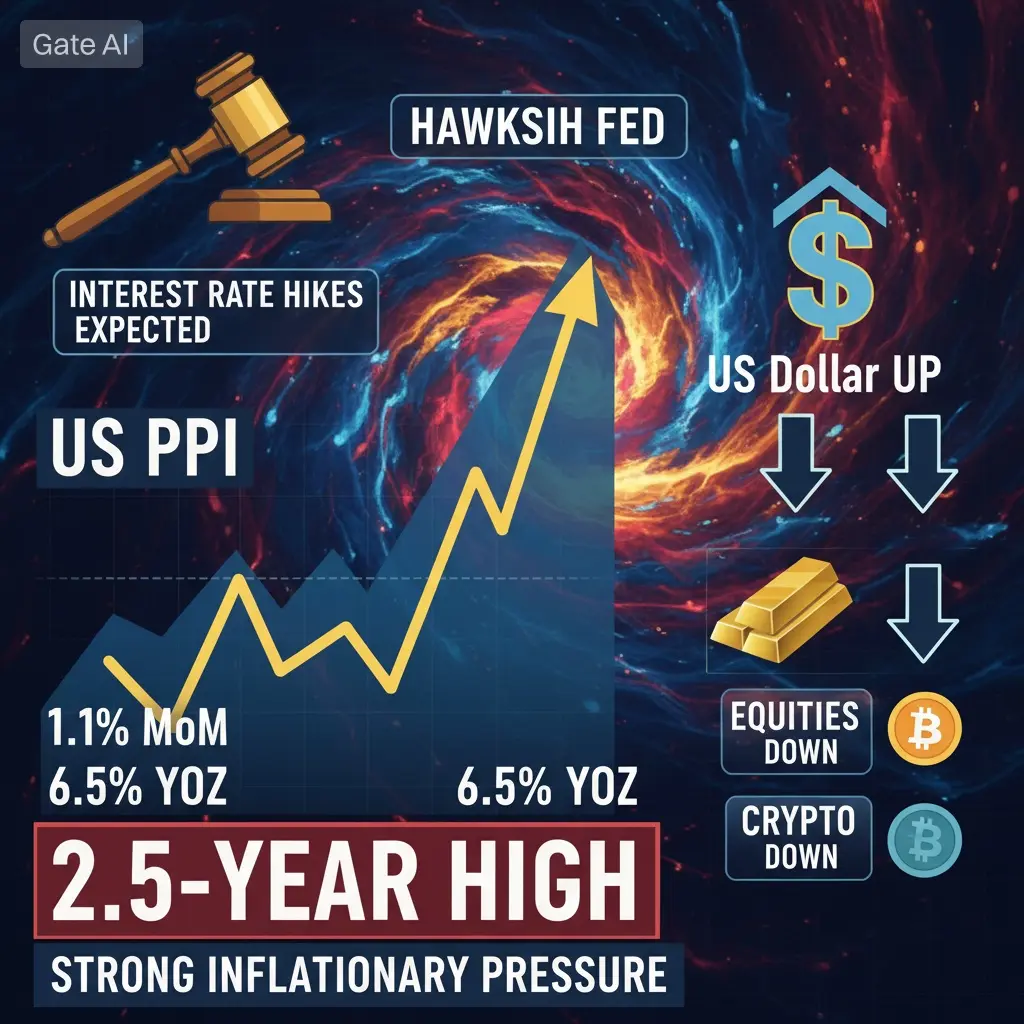
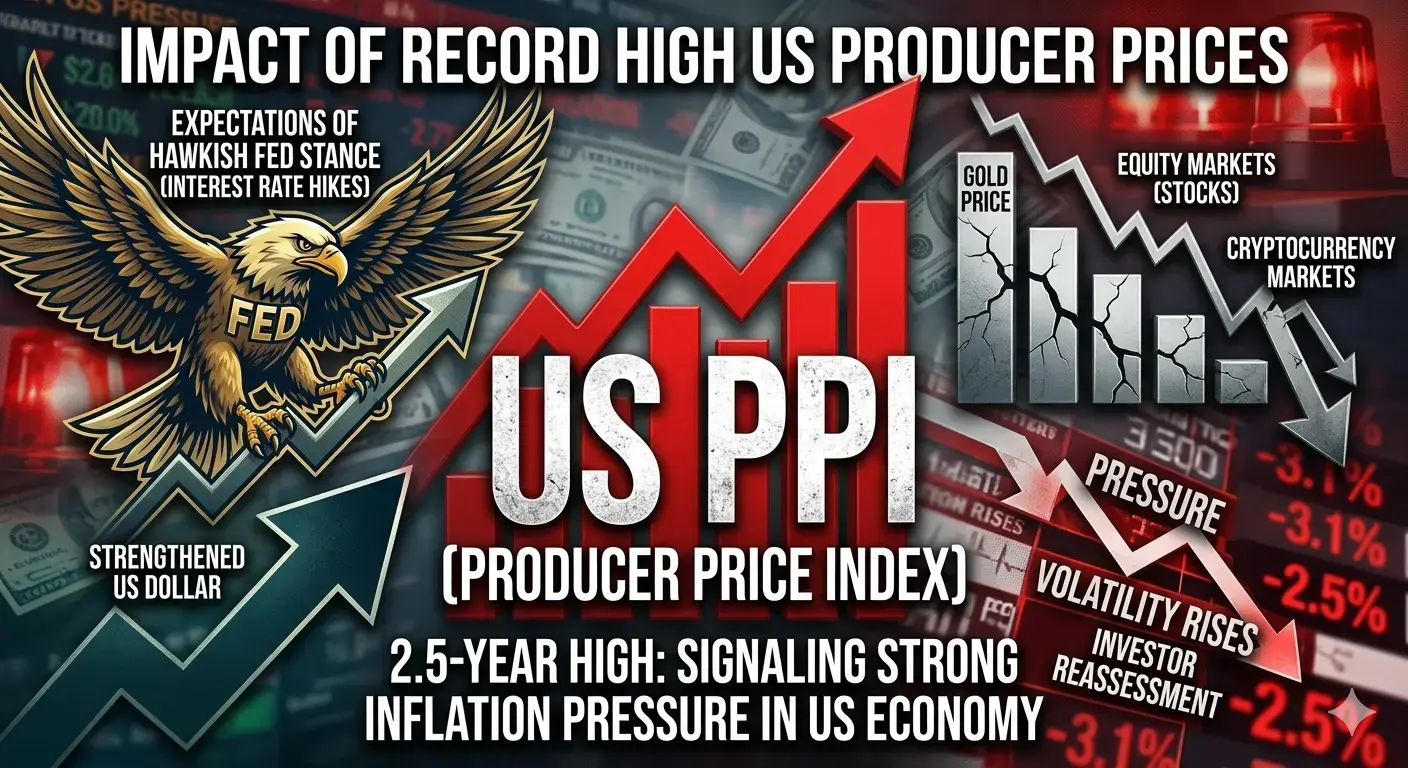
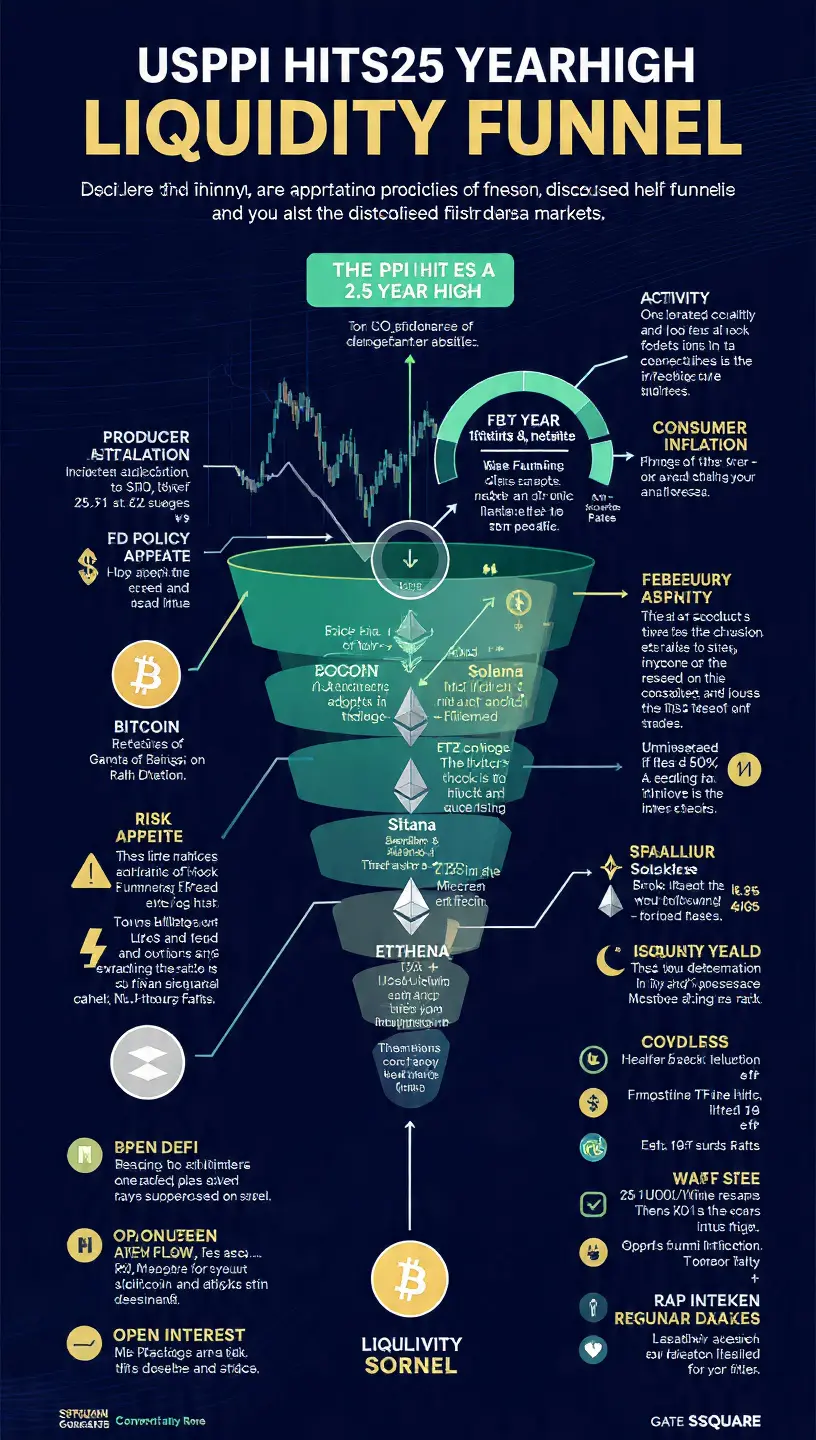
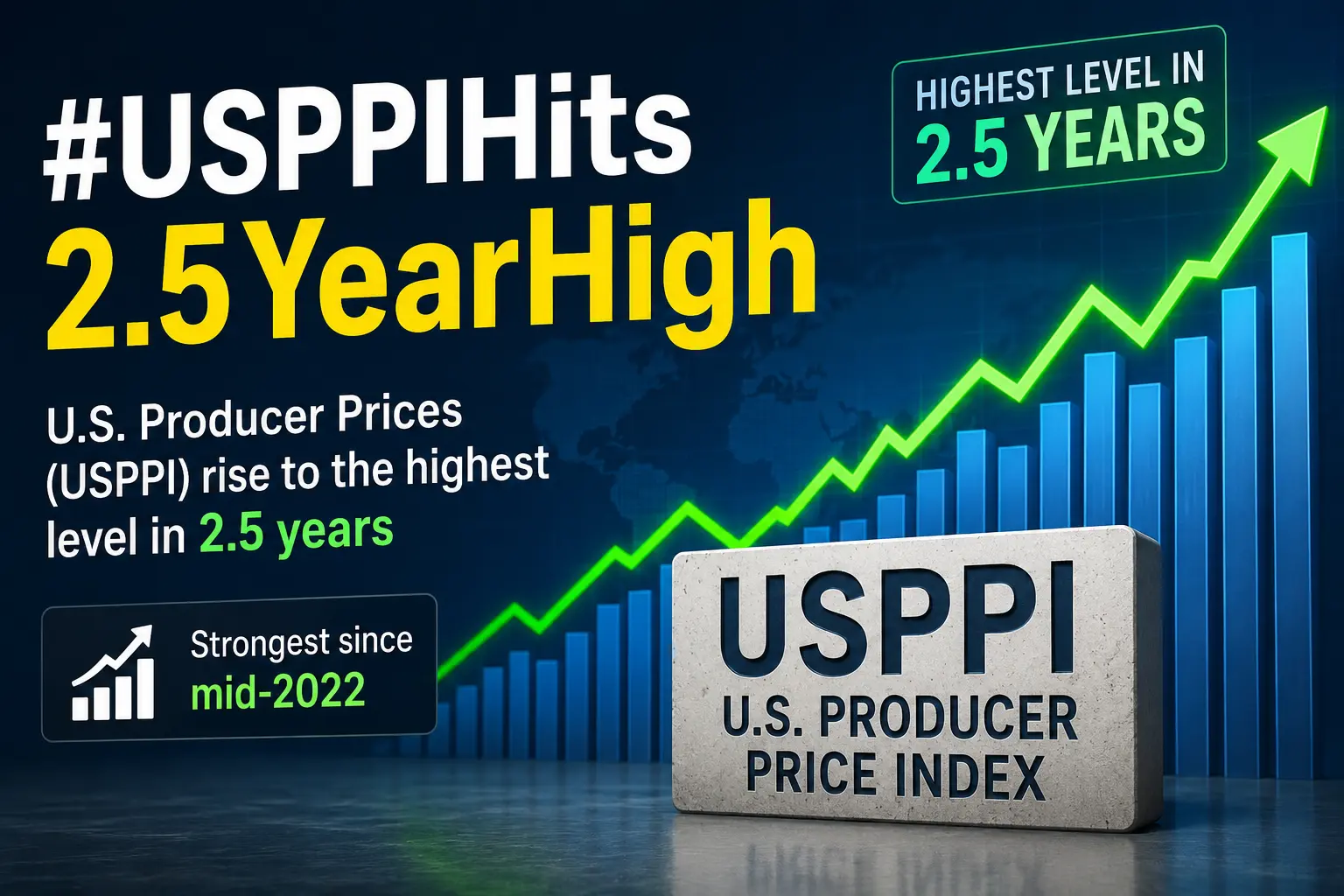
The fact that U.S. PPI has reached its highest level in approximately two and a half years is significant because it challenges the market narrative that inflation was steadily moving under control. For months, investors have been positioning themselves around the expectation of a more accommodative monetary environment. Higher producer prices, however, suggest that inflationary pressures may remain more persistent than previously anticipated, forcing policymakers to remain cautious.
Financial markets do not react only to economic data itself; they react to what that data implies for the future. A stronger-than-expected PPI reading immediately raises questions about the Federal Reserve's next moves. If inflationary pressures continue to build, the path toward lower interest rates could become more complicated. This matters because interest rate expectations influence liquidity conditions across nearly every major asset class, including equities, commodities, and cryptocurrencies.
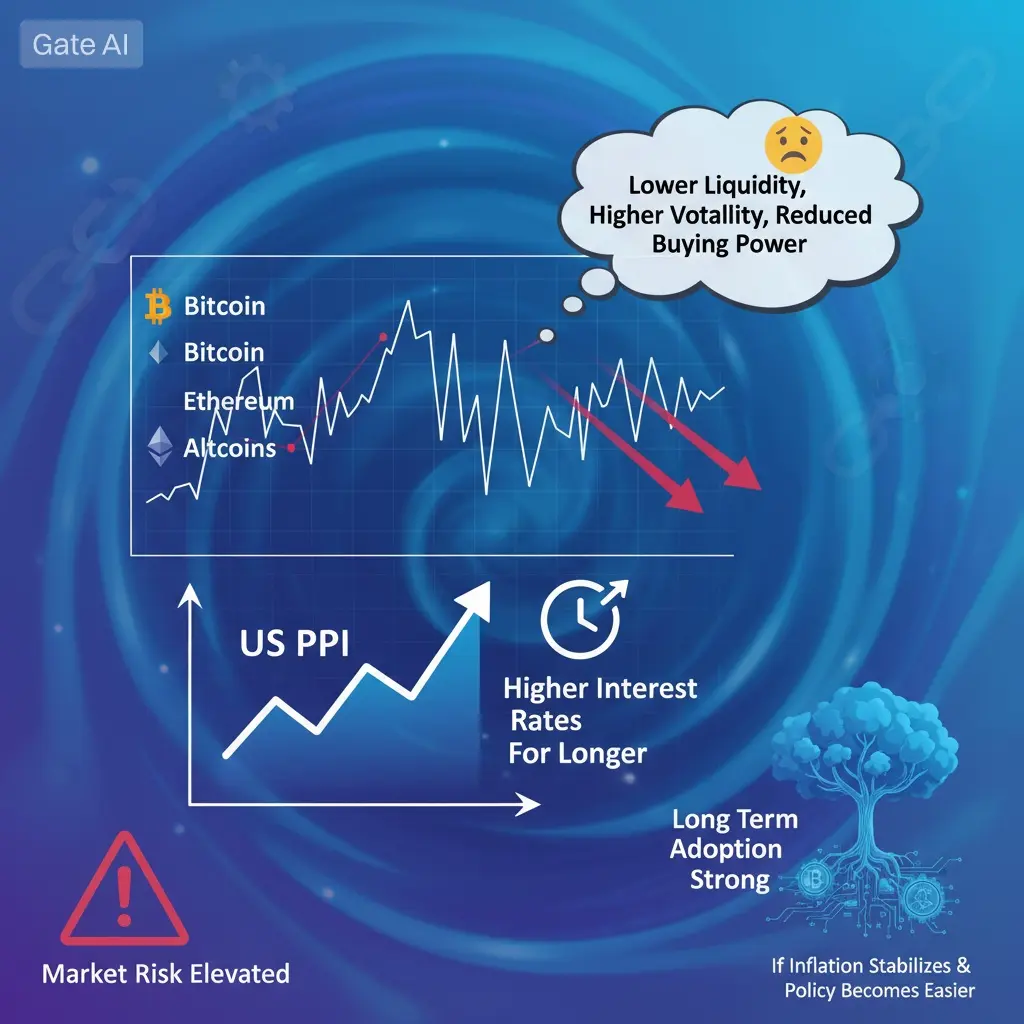
For the crypto market, macroeconomic indicators such as PPI have become increasingly important. Bitcoin and other digital assets are no longer isolated from traditional financial markets. Institutional participation has connected crypto more closely to global liquidity cycles, monetary policy expectations, and broader investor sentiment. When inflation data surprises the market, volatility often follows as investors reassess risk exposure and portfolio allocations.
What makes this moment particularly interesting is that markets are now balancing two competing narratives. On one side, economic resilience continues to support growth expectations. On the other, persistent inflation threatens to keep financial conditions tighter for longer. The interaction between these forces will likely shape market behavior in the months ahead.
Ultimately, the latest PPI report is not just another economic statistic. It is a reminder that inflation remains one of the most powerful drivers of global capital flows. Traders who understand the relationship between inflation, monetary policy, and market liquidity often gain a deeper perspective on where opportunities and risks may emerge next.
Do you think persistent producer inflation will delay the next major liquidity expansion, or will markets continue to look beyond short-term inflation pressures?
#PPI #Inflation #FederalReserve #MacroEconomy #USPPIHits2.5YearHigh
The latest U.S. Producer Price Index (PPI) report has become one of the most important macroeconomic developments for global markets this month. While many investors focus primarily on consumer inflation, producer inflation often provides an early signal of pricing pressures building within the economy. When businesses face rising production costs, those costs frequently find their way into the broader economy, influencing everything from consumer prices to corporate profitability and central bank policy decisions.
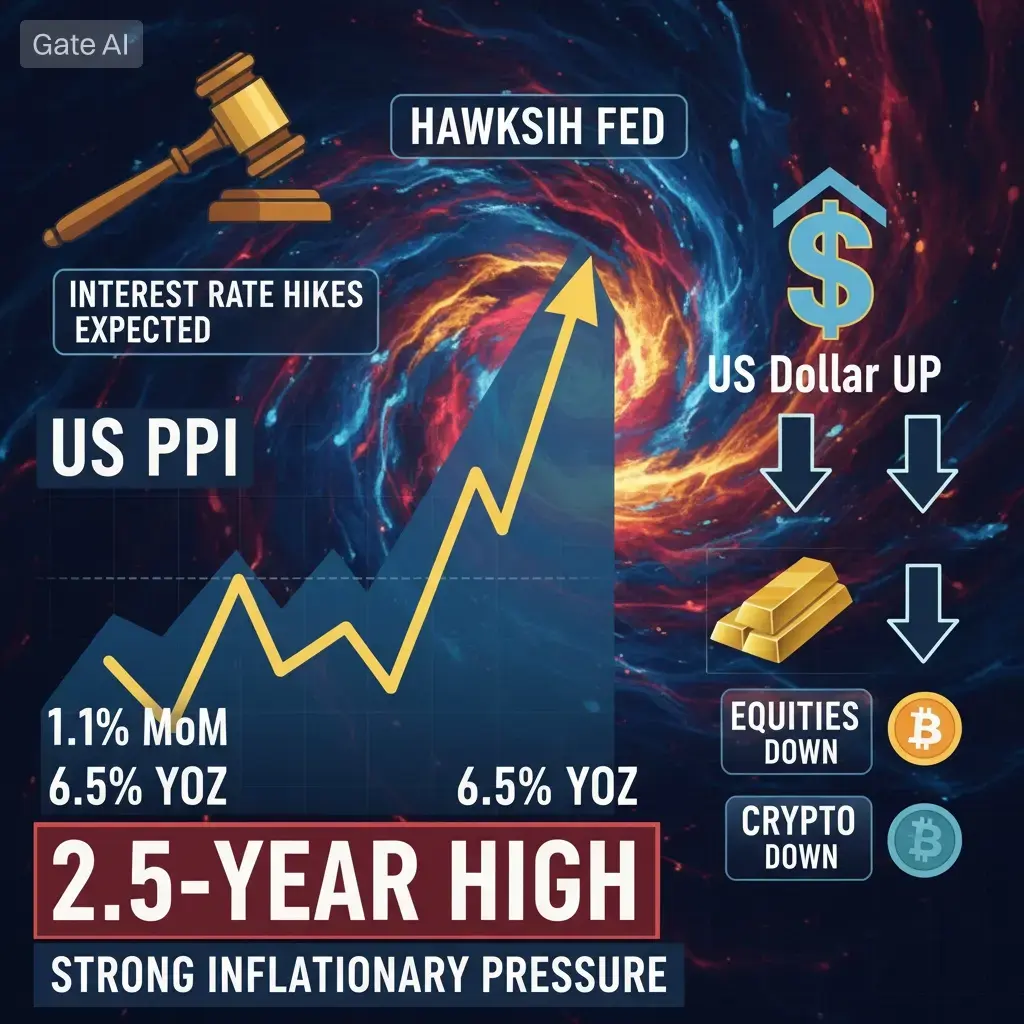
The fact that U.S. PPI has reached its highest level in approximately two and a half years is significant because it challenges the market narrative that inflation was steadily moving under control. For months, investors have been positioning themselves around the expectation of a more accommodative monetary environment. Higher producer prices, however, suggest that inflationary pressures may remain more persistent than previously anticipated, forcing policymakers to remain cautious.
Financial markets do not react only to economic data itself; they react to what that data implies for the future. A stronger-than-expected PPI reading immediately raises questions about the Federal Reserve's next moves. If inflationary pressures continue to build, the path toward lower interest rates could become more complicated. This matters because interest rate expectations influence liquidity conditions across nearly every major asset class, including equities, commodities, and cryptocurrencies.
For the crypto market, macroeconomic indicators such as PPI have become increasingly important. Bitcoin and other digital assets are no longer isolated from traditional financial markets. Institutional participation has connected crypto more closely to global liquidity cycles, monetary policy expectations, and broader investor sentiment. When inflation data surprises the market, volatility often follows as investors reassess risk exposure and portfolio allocations.
What makes this moment particularly interesting is that markets are now balancing two competing narratives. On one side, economic resilience continues to support growth expectations. On the other, persistent inflation threatens to keep financial conditions tighter for longer. The interaction between these forces will likely shape market behavior in the months ahead.
Ultimately, the latest PPI report is not just another economic statistic. It is a reminder that inflation remains one of the most powerful drivers of global capital flows. Traders who understand the relationship between inflation, monetary policy, and market liquidity often gain a deeper perspective on where opportunities and risks may emerge next.
Do you think persistent producer inflation will delay the next major liquidity expansion, or will markets continue to look beyond short-term inflation pressures?
#PPI #Inflation #FederalReserve #MacroEconomy #USPPIHits2.5YearHigh