# USMilitaryMaduroBettingScandal

566.2K
#USMilitaryMaduroBettingScandal
🚨 The US Military Maduro Betting Scandal: A Deep Structural Analysis of Power, Information, and Crypto Markets
There are rare moments when two completely different worlds collide in a way that forces everyone — from policymakers to traders — to rethink the systems they rely on, and this scandal is exactly one of those moments, where the lines between military intelligence, financial markets, and decentralized technology did not just blur, but fully intersect in a way that exposed both the power and the vulnerability of modern financial infrastructure.
The arre
HighAmbition
#USMilitaryMaduroBettingScandal
🚨 The US Military Maduro Betting Scandal: A Deep Structural Analysis of Power, Information, and Crypto Markets
There are rare moments when two completely different worlds collide in a way that forces everyone — from policymakers to traders — to rethink the systems they rely on, and this scandal is exactly one of those moments, where the lines between military intelligence, financial markets, and decentralized technology did not just blur, but fully intersect in a way that exposed both the power and the vulnerability of modern financial infrastructure.
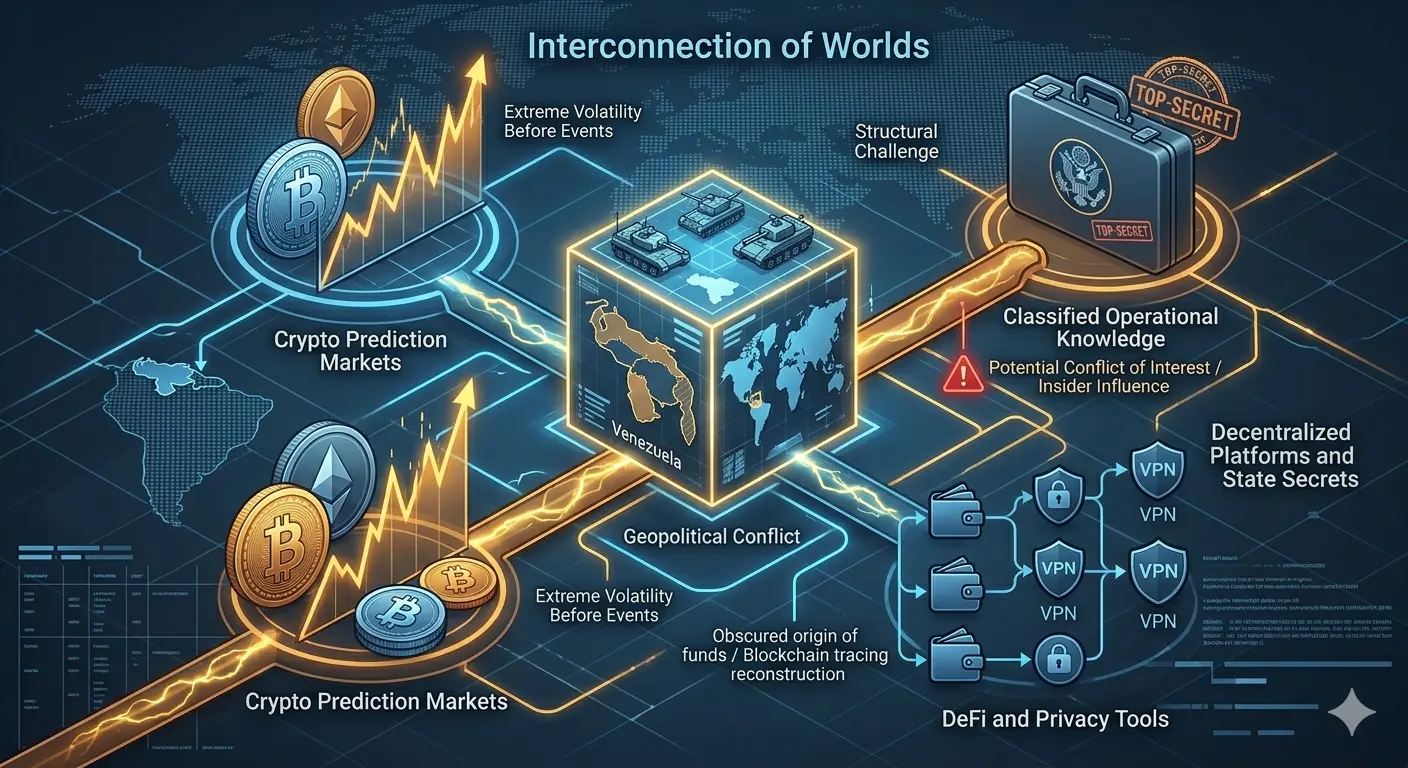
The arrest of Master Sergeant Gannon Ken Van Dyke is not simply a legal case, nor is it just a story about one individual making unethical decisions — it is a case study in how privileged information, when combined with emerging financial tools like blockchain-based prediction markets, can create a completely new category of risk that traditional systems were never designed to handle.
🔥 The Operation and the Bet — Where Intelligence Became Opportunity
At the center of this case lies Operation Absolute Resolve, a covert US military mission executed on January 3, 2026, targeting Venezuelan President Nicolás Maduro — an operation that, in traditional contexts, would have remained within classified channels and strategic briefings, far removed from public speculation or financial exploitation — but in this instance, something fundamentally different happened.
Van Dyke, who was not merely an observer but an active participant in planning and execution, possessed access to highly sensitive, nonpublic information, including precise timelines, operational scope, and intended outcomes — information that, under normal circumstances, would carry immense national security implications — yet instead of treating this knowledge as a responsibility, it was allegedly converted into a financial edge.
Over a period spanning late December 2025 to early January 2026, he engaged with a blockchain-based prediction platform, placing multiple positions totaling approximately 33,000 USDC, strategically targeting outcomes that were not uncertain to him, but already known — effectively transforming classified intelligence into predictable market outcomes, which ultimately generated profits exceeding 400,000 USDC within days.
And this is where the case shifts from being unusual to being historically significant — because this is not just insider trading, but insider trading executed on a decentralized, transparent, and globally accessible financial layer.
⚖️ Legal Framework — Old Laws, New Battlefield
The charges brought forward — including wire fraud, commodities fraud, and misuse of confidential information — are rooted in traditional financial law, yet they are now being applied to a completely new environment, where transactions are recorded on public ledgers, identities can be pseudonymous, and platforms operate across jurisdictions.
This creates a fascinating tension:
👉 The law is old
👉 The technology is new
👉 And enforcement is adapting in real time
What makes this case particularly powerful is that it demonstrates that decentralization does not eliminate accountability — instead, it transforms how accountability is enforced, because while blockchain systems offer pseudonymity, they also create permanent, traceable records that can be analyzed, reconstructed, and linked back to real-world identities when sufficient investigative resources are applied.
🔍 Blockchain Transparency — A Double-Edged Reality
One of the most misunderstood aspects of cryptocurrency is the belief that it guarantees anonymity, when in reality it offers something far more complex — transparency without immediate identity, which can create a temporary illusion of privacy, but not absolute invisibility.
In this case, investigators were able to track transaction flows, analyze timing patterns, correlate wallet activity with external behavior, and ultimately build a narrative that connected digital actions to a physical individual — highlighting a critical truth that many market participants overlook:
👉 Blockchain does not hide activity
👉 It records it forever
And in situations involving high-value, high-confidence trades tied to real-world events, those records become extremely powerful evidence.
🏛️ Political and Regulatory Shockwaves
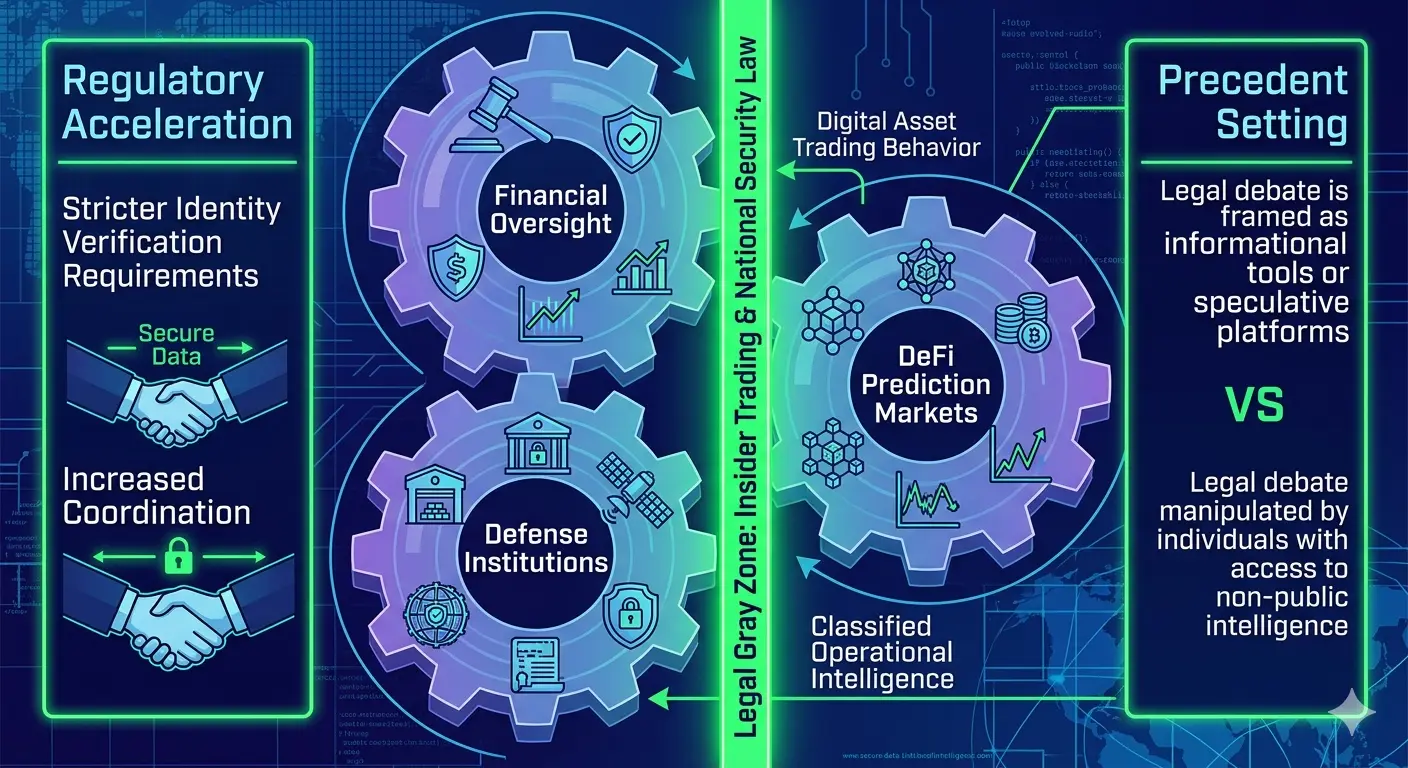
The response from political leadership, including comments from Donald Trump, reflects a broader uncertainty about how to approach this emerging space, where prediction markets can serve as tools for information aggregation on one hand, while simultaneously creating opportunities for exploitation on the other.
This duality is at the heart of the regulatory challenge — because banning such platforms outright may limit innovation, but ignoring them entirely creates systemic vulnerabilities that can be exploited by individuals with privileged access to information.
As a result, regulators are now being forced into a position where they must define clear boundaries for behavior in decentralized environments, rather than relying on assumptions that existing systems will naturally regulate themselves.
🏢 Platform Evolution — From Freedom to Controlled Integrity
Platforms like Polymarket and Kalshi are now entering a new phase of development, where pure decentralization is being balanced against the need for market integrity, surveillance, and compliance mechanisms that can prevent abuse without completely undermining accessibility.
This shift represents a broader trend within crypto:
👉 Early phase: Innovation without restriction
👉 Current phase: Innovation with accountability
👉 Future phase: Innovation with structured compliance
And the Van Dyke case may accelerate this transition significantly.
📊 Implications for the Crypto Market — Structural, Not Temporary
This scandal does not just impact prediction markets — it sends signals across the entire cryptocurrency ecosystem, particularly in areas like DeFi, derivatives, and event-based contracts, where information asymmetry can create unfair advantages if left unchecked.
It reinforces several key realities:
• Markets are not just driven by data — they are driven by who has access to that data first
• Decentralization reduces barriers — but does not eliminate ethical responsibility
• Transparency increases accountability — but only if enforcement follows
For institutional players, this case acts as both a warning and a validation — a warning that compliance risks are real, and a validation that enforcement mechanisms are becoming more effective.
🌍 Broader Market Dynamics — The Hidden Pattern
What makes this case even more important is that it is unlikely to be isolated, as similar trading patterns have already been observed around geopolitical and macro events, suggesting that prediction markets may increasingly attract participants who possess informational advantages — turning these platforms into battlegrounds between public speculation and private knowledge.
This raises a deeper question:
👉 Can a market truly be fair if some participants already know the outcome?
And more importantly:
👉 How do you regulate that in a decentralized system?
🚀 Future Outlook — Regulation Meets Reality
Looking forward, the impact of this case will likely extend far beyond the individuals involved, influencing regulatory frameworks, platform design, and user behavior across the crypto space.
We can expect:
• Increased monitoring of large, high-confidence trades
• Stronger collaboration between platforms and regulators
• Clearer legal definitions around insider activity in crypto
• Greater emphasis on identity-linked participation in certain markets
And while this may reduce some of the openness that defined early crypto, it may also increase trust, stability, and long-term adoption.
💬 Final Thought — The Real Lesson Behind The Scandal
This is not just a story about misuse of information, and it is not just a case about crypto regulation — it is a reflection of a deeper truth about modern markets:
👉 Technology evolves faster than behavior
👉 Access expands faster than understanding
👉 And opportunity often appears before rules are fully defined
The real question is not whether such incidents will happen again —
because they will —
The real question is:
👉 How quickly can systems adapt to ensure that innovation does not come at the cost of integrity?

repost-content-media
  • Reward
  • Comment
  • Repost
  • Share
#USMilitaryMaduroBettingScandal
🚨 The US Military Maduro Betting Scandal: A Deep Structural Analysis of Power, Information, and Crypto Markets
There are rare moments when two completely different worlds collide in a way that forces everyone — from policymakers to traders — to rethink the systems they rely on, and this scandal is exactly one of those moments, where the lines between military intelligence, financial markets, and decentralized technology did not just blur, but fully intersect in a way that exposed both the power and the vulnerability of modern financial infrastructure.
The arre
post-image
post-image
post-image
post-image
  • Reward
  • 15
  • Repost
  • Share
BlackRiderCryptoLord:
Ape In 🚀
View More
#USMilitaryMaduroBettingScandal
🚨 The US Military Maduro Betting Scandal: A Deep Structural Analysis of Power, Information, and Crypto Markets
There are rare moments when two completely different worlds collide in a way that forces everyone — from policymakers to traders — to rethink the systems they rely on, and this scandal is exactly one of those moments, where the lines between military intelligence, financial markets, and decentralized technology did not just blur, but fully intersect in a way that exposed both the power and the vulnerability of modern financial infrastructure.
The arre
HighAmbition
#USMilitaryMaduroBettingScandal
🚨 The US Military Maduro Betting Scandal: A Deep Structural Analysis of Power, Information, and Crypto Markets
There are rare moments when two completely different worlds collide in a way that forces everyone — from policymakers to traders — to rethink the systems they rely on, and this scandal is exactly one of those moments, where the lines between military intelligence, financial markets, and decentralized technology did not just blur, but fully intersect in a way that exposed both the power and the vulnerability of modern financial infrastructure.
The arrest of Master Sergeant Gannon Ken Van Dyke is not simply a legal case, nor is it just a story about one individual making unethical decisions — it is a case study in how privileged information, when combined with emerging financial tools like blockchain-based prediction markets, can create a completely new category of risk that traditional systems were never designed to handle.
🔥 The Operation and the Bet — Where Intelligence Became Opportunity
At the center of this case lies Operation Absolute Resolve, a covert US military mission executed on January 3, 2026, targeting Venezuelan President Nicolás Maduro — an operation that, in traditional contexts, would have remained within classified channels and strategic briefings, far removed from public speculation or financial exploitation — but in this instance, something fundamentally different happened.
Van Dyke, who was not merely an observer but an active participant in planning and execution, possessed access to highly sensitive, nonpublic information, including precise timelines, operational scope, and intended outcomes — information that, under normal circumstances, would carry immense national security implications — yet instead of treating this knowledge as a responsibility, it was allegedly converted into a financial edge.
Over a period spanning late December 2025 to early January 2026, he engaged with a blockchain-based prediction platform, placing multiple positions totaling approximately 33,000 USDC, strategically targeting outcomes that were not uncertain to him, but already known — effectively transforming classified intelligence into predictable market outcomes, which ultimately generated profits exceeding 400,000 USDC within days.
And this is where the case shifts from being unusual to being historically significant — because this is not just insider trading, but insider trading executed on a decentralized, transparent, and globally accessible financial layer.
⚖️ Legal Framework — Old Laws, New Battlefield
The charges brought forward — including wire fraud, commodities fraud, and misuse of confidential information — are rooted in traditional financial law, yet they are now being applied to a completely new environment, where transactions are recorded on public ledgers, identities can be pseudonymous, and platforms operate across jurisdictions.
This creates a fascinating tension:
👉 The law is old
👉 The technology is new
👉 And enforcement is adapting in real time
What makes this case particularly powerful is that it demonstrates that decentralization does not eliminate accountability — instead, it transforms how accountability is enforced, because while blockchain systems offer pseudonymity, they also create permanent, traceable records that can be analyzed, reconstructed, and linked back to real-world identities when sufficient investigative resources are applied.
🔍 Blockchain Transparency — A Double-Edged Reality
One of the most misunderstood aspects of cryptocurrency is the belief that it guarantees anonymity, when in reality it offers something far more complex — transparency without immediate identity, which can create a temporary illusion of privacy, but not absolute invisibility.
In this case, investigators were able to track transaction flows, analyze timing patterns, correlate wallet activity with external behavior, and ultimately build a narrative that connected digital actions to a physical individual — highlighting a critical truth that many market participants overlook:
👉 Blockchain does not hide activity
👉 It records it forever
And in situations involving high-value, high-confidence trades tied to real-world events, those records become extremely powerful evidence.
🏛️ Political and Regulatory Shockwaves
The response from political leadership, including comments from Donald Trump, reflects a broader uncertainty about how to approach this emerging space, where prediction markets can serve as tools for information aggregation on one hand, while simultaneously creating opportunities for exploitation on the other.
This duality is at the heart of the regulatory challenge — because banning such platforms outright may limit innovation, but ignoring them entirely creates systemic vulnerabilities that can be exploited by individuals with privileged access to information.
As a result, regulators are now being forced into a position where they must define clear boundaries for behavior in decentralized environments, rather than relying on assumptions that existing systems will naturally regulate themselves.
🏢 Platform Evolution — From Freedom to Controlled Integrity
Platforms like Polymarket and Kalshi are now entering a new phase of development, where pure decentralization is being balanced against the need for market integrity, surveillance, and compliance mechanisms that can prevent abuse without completely undermining accessibility.
This shift represents a broader trend within crypto:
👉 Early phase: Innovation without restriction
👉 Current phase: Innovation with accountability
👉 Future phase: Innovation with structured compliance
And the Van Dyke case may accelerate this transition significantly.
📊 Implications for the Crypto Market — Structural, Not Temporary
This scandal does not just impact prediction markets — it sends signals across the entire cryptocurrency ecosystem, particularly in areas like DeFi, derivatives, and event-based contracts, where information asymmetry can create unfair advantages if left unchecked.
It reinforces several key realities:
• Markets are not just driven by data — they are driven by who has access to that data first
• Decentralization reduces barriers — but does not eliminate ethical responsibility
• Transparency increases accountability — but only if enforcement follows
For institutional players, this case acts as both a warning and a validation — a warning that compliance risks are real, and a validation that enforcement mechanisms are becoming more effective.
🌍 Broader Market Dynamics — The Hidden Pattern
What makes this case even more important is that it is unlikely to be isolated, as similar trading patterns have already been observed around geopolitical and macro events, suggesting that prediction markets may increasingly attract participants who possess informational advantages — turning these platforms into battlegrounds between public speculation and private knowledge.
This raises a deeper question:
👉 Can a market truly be fair if some participants already know the outcome?
And more importantly:
👉 How do you regulate that in a decentralized system?
🚀 Future Outlook — Regulation Meets Reality
Looking forward, the impact of this case will likely extend far beyond the individuals involved, influencing regulatory frameworks, platform design, and user behavior across the crypto space.
We can expect:
• Increased monitoring of large, high-confidence trades
• Stronger collaboration between platforms and regulators
• Clearer legal definitions around insider activity in crypto
• Greater emphasis on identity-linked participation in certain markets
And while this may reduce some of the openness that defined early crypto, it may also increase trust, stability, and long-term adoption.
💬 Final Thought — The Real Lesson Behind The Scandal
This is not just a story about misuse of information, and it is not just a case about crypto regulation — it is a reflection of a deeper truth about modern markets:
👉 Technology evolves faster than behavior
👉 Access expands faster than understanding
👉 And opportunity often appears before rules are fully defined
The real question is not whether such incidents will happen again —
because they will —
The real question is:
👉 How quickly can systems adapt to ensure that innovation does not come at the cost of integrity?

repost-content-media
  • Reward
  • Comment
  • Repost
  • Share
#USMilitaryMaduroBettingScandal
🚨 The US Military Maduro Betting Scandal: A Deep Structural Analysis of Power, Information, and Crypto Markets
There are rare moments when two completely different worlds collide in a way that forces everyone — from policymakers to traders — to rethink the systems they rely on, and this scandal is exactly one of those moments, where the lines between military intelligence, financial markets, and decentralized technology did not just blur, but fully intersect in a way that exposed both the power and the vulnerability of modern financial infrastructure.
The arre
HighAmbition
#USMilitaryMaduroBettingScandal
🚨 The US Military Maduro Betting Scandal: A Deep Structural Analysis of Power, Information, and Crypto Markets
There are rare moments when two completely different worlds collide in a way that forces everyone — from policymakers to traders — to rethink the systems they rely on, and this scandal is exactly one of those moments, where the lines between military intelligence, financial markets, and decentralized technology did not just blur, but fully intersect in a way that exposed both the power and the vulnerability of modern financial infrastructure.
The arrest of Master Sergeant Gannon Ken Van Dyke is not simply a legal case, nor is it just a story about one individual making unethical decisions — it is a case study in how privileged information, when combined with emerging financial tools like blockchain-based prediction markets, can create a completely new category of risk that traditional systems were never designed to handle.
🔥 The Operation and the Bet — Where Intelligence Became Opportunity
At the center of this case lies Operation Absolute Resolve, a covert US military mission executed on January 3, 2026, targeting Venezuelan President Nicolás Maduro — an operation that, in traditional contexts, would have remained within classified channels and strategic briefings, far removed from public speculation or financial exploitation — but in this instance, something fundamentally different happened.
Van Dyke, who was not merely an observer but an active participant in planning and execution, possessed access to highly sensitive, nonpublic information, including precise timelines, operational scope, and intended outcomes — information that, under normal circumstances, would carry immense national security implications — yet instead of treating this knowledge as a responsibility, it was allegedly converted into a financial edge.
Over a period spanning late December 2025 to early January 2026, he engaged with a blockchain-based prediction platform, placing multiple positions totaling approximately 33,000 USDC, strategically targeting outcomes that were not uncertain to him, but already known — effectively transforming classified intelligence into predictable market outcomes, which ultimately generated profits exceeding 400,000 USDC within days.
And this is where the case shifts from being unusual to being historically significant — because this is not just insider trading, but insider trading executed on a decentralized, transparent, and globally accessible financial layer.
⚖️ Legal Framework — Old Laws, New Battlefield
The charges brought forward — including wire fraud, commodities fraud, and misuse of confidential information — are rooted in traditional financial law, yet they are now being applied to a completely new environment, where transactions are recorded on public ledgers, identities can be pseudonymous, and platforms operate across jurisdictions.
This creates a fascinating tension:
👉 The law is old
👉 The technology is new
👉 And enforcement is adapting in real time
What makes this case particularly powerful is that it demonstrates that decentralization does not eliminate accountability — instead, it transforms how accountability is enforced, because while blockchain systems offer pseudonymity, they also create permanent, traceable records that can be analyzed, reconstructed, and linked back to real-world identities when sufficient investigative resources are applied.
🔍 Blockchain Transparency — A Double-Edged Reality
One of the most misunderstood aspects of cryptocurrency is the belief that it guarantees anonymity, when in reality it offers something far more complex — transparency without immediate identity, which can create a temporary illusion of privacy, but not absolute invisibility.
In this case, investigators were able to track transaction flows, analyze timing patterns, correlate wallet activity with external behavior, and ultimately build a narrative that connected digital actions to a physical individual — highlighting a critical truth that many market participants overlook:
👉 Blockchain does not hide activity
👉 It records it forever
And in situations involving high-value, high-confidence trades tied to real-world events, those records become extremely powerful evidence.
🏛️ Political and Regulatory Shockwaves
The response from political leadership, including comments from Donald Trump, reflects a broader uncertainty about how to approach this emerging space, where prediction markets can serve as tools for information aggregation on one hand, while simultaneously creating opportunities for exploitation on the other.
This duality is at the heart of the regulatory challenge — because banning such platforms outright may limit innovation, but ignoring them entirely creates systemic vulnerabilities that can be exploited by individuals with privileged access to information.
As a result, regulators are now being forced into a position where they must define clear boundaries for behavior in decentralized environments, rather than relying on assumptions that existing systems will naturally regulate themselves.
🏢 Platform Evolution — From Freedom to Controlled Integrity
Platforms like Polymarket and Kalshi are now entering a new phase of development, where pure decentralization is being balanced against the need for market integrity, surveillance, and compliance mechanisms that can prevent abuse without completely undermining accessibility.
This shift represents a broader trend within crypto:
👉 Early phase: Innovation without restriction
👉 Current phase: Innovation with accountability
👉 Future phase: Innovation with structured compliance
And the Van Dyke case may accelerate this transition significantly.
📊 Implications for the Crypto Market — Structural, Not Temporary
This scandal does not just impact prediction markets — it sends signals across the entire cryptocurrency ecosystem, particularly in areas like DeFi, derivatives, and event-based contracts, where information asymmetry can create unfair advantages if left unchecked.
It reinforces several key realities:
• Markets are not just driven by data — they are driven by who has access to that data first
• Decentralization reduces barriers — but does not eliminate ethical responsibility
• Transparency increases accountability — but only if enforcement follows
For institutional players, this case acts as both a warning and a validation — a warning that compliance risks are real, and a validation that enforcement mechanisms are becoming more effective.
🌍 Broader Market Dynamics — The Hidden Pattern
What makes this case even more important is that it is unlikely to be isolated, as similar trading patterns have already been observed around geopolitical and macro events, suggesting that prediction markets may increasingly attract participants who possess informational advantages — turning these platforms into battlegrounds between public speculation and private knowledge.
This raises a deeper question:
👉 Can a market truly be fair if some participants already know the outcome?
And more importantly:
👉 How do you regulate that in a decentralized system?
🚀 Future Outlook — Regulation Meets Reality
Looking forward, the impact of this case will likely extend far beyond the individuals involved, influencing regulatory frameworks, platform design, and user behavior across the crypto space.
We can expect:
• Increased monitoring of large, high-confidence trades
• Stronger collaboration between platforms and regulators
• Clearer legal definitions around insider activity in crypto
• Greater emphasis on identity-linked participation in certain markets
And while this may reduce some of the openness that defined early crypto, it may also increase trust, stability, and long-term adoption.
💬 Final Thought — The Real Lesson Behind The Scandal
This is not just a story about misuse of information, and it is not just a case about crypto regulation — it is a reflection of a deeper truth about modern markets:
👉 Technology evolves faster than behavior
👉 Access expands faster than understanding
👉 And opportunity often appears before rules are fully defined
The real question is not whether such incidents will happen again —
because they will —
The real question is:
👉 How quickly can systems adapt to ensure that innovation does not come at the cost of integrity?

repost-content-media
  • Reward
  • Comment
  • Repost
  • Share
#USMilitaryMaduroBettingScandal
🚨 The US Military Maduro Betting Scandal: A Deep Structural Analysis of Power, Information, and Crypto Markets
There are rare moments when two completely different worlds collide in a way that forces everyone — from policymakers to traders — to rethink the systems they rely on, and this scandal is exactly one of those moments, where the lines between military intelligence, financial markets, and decentralized technology did not just blur, but fully intersect in a way that exposed both the power and the vulnerability of modern financial infrastructure.
The arre
HighAmbition
#USMilitaryMaduroBettingScandal
🚨 The US Military Maduro Betting Scandal: A Deep Structural Analysis of Power, Information, and Crypto Markets
There are rare moments when two completely different worlds collide in a way that forces everyone — from policymakers to traders — to rethink the systems they rely on, and this scandal is exactly one of those moments, where the lines between military intelligence, financial markets, and decentralized technology did not just blur, but fully intersect in a way that exposed both the power and the vulnerability of modern financial infrastructure.
The arrest of Master Sergeant Gannon Ken Van Dyke is not simply a legal case, nor is it just a story about one individual making unethical decisions — it is a case study in how privileged information, when combined with emerging financial tools like blockchain-based prediction markets, can create a completely new category of risk that traditional systems were never designed to handle.
🔥 The Operation and the Bet — Where Intelligence Became Opportunity
At the center of this case lies Operation Absolute Resolve, a covert US military mission executed on January 3, 2026, targeting Venezuelan President Nicolás Maduro — an operation that, in traditional contexts, would have remained within classified channels and strategic briefings, far removed from public speculation or financial exploitation — but in this instance, something fundamentally different happened.
Van Dyke, who was not merely an observer but an active participant in planning and execution, possessed access to highly sensitive, nonpublic information, including precise timelines, operational scope, and intended outcomes — information that, under normal circumstances, would carry immense national security implications — yet instead of treating this knowledge as a responsibility, it was allegedly converted into a financial edge.
Over a period spanning late December 2025 to early January 2026, he engaged with a blockchain-based prediction platform, placing multiple positions totaling approximately 33,000 USDC, strategically targeting outcomes that were not uncertain to him, but already known — effectively transforming classified intelligence into predictable market outcomes, which ultimately generated profits exceeding 400,000 USDC within days.
And this is where the case shifts from being unusual to being historically significant — because this is not just insider trading, but insider trading executed on a decentralized, transparent, and globally accessible financial layer.
⚖️ Legal Framework — Old Laws, New Battlefield
The charges brought forward — including wire fraud, commodities fraud, and misuse of confidential information — are rooted in traditional financial law, yet they are now being applied to a completely new environment, where transactions are recorded on public ledgers, identities can be pseudonymous, and platforms operate across jurisdictions.
This creates a fascinating tension:
👉 The law is old
👉 The technology is new
👉 And enforcement is adapting in real time
What makes this case particularly powerful is that it demonstrates that decentralization does not eliminate accountability — instead, it transforms how accountability is enforced, because while blockchain systems offer pseudonymity, they also create permanent, traceable records that can be analyzed, reconstructed, and linked back to real-world identities when sufficient investigative resources are applied.
🔍 Blockchain Transparency — A Double-Edged Reality
One of the most misunderstood aspects of cryptocurrency is the belief that it guarantees anonymity, when in reality it offers something far more complex — transparency without immediate identity, which can create a temporary illusion of privacy, but not absolute invisibility.
In this case, investigators were able to track transaction flows, analyze timing patterns, correlate wallet activity with external behavior, and ultimately build a narrative that connected digital actions to a physical individual — highlighting a critical truth that many market participants overlook:
👉 Blockchain does not hide activity
👉 It records it forever
And in situations involving high-value, high-confidence trades tied to real-world events, those records become extremely powerful evidence.
🏛️ Political and Regulatory Shockwaves
The response from political leadership, including comments from Donald Trump, reflects a broader uncertainty about how to approach this emerging space, where prediction markets can serve as tools for information aggregation on one hand, while simultaneously creating opportunities for exploitation on the other.
This duality is at the heart of the regulatory challenge — because banning such platforms outright may limit innovation, but ignoring them entirely creates systemic vulnerabilities that can be exploited by individuals with privileged access to information.
As a result, regulators are now being forced into a position where they must define clear boundaries for behavior in decentralized environments, rather than relying on assumptions that existing systems will naturally regulate themselves.
🏢 Platform Evolution — From Freedom to Controlled Integrity
Platforms like Polymarket and Kalshi are now entering a new phase of development, where pure decentralization is being balanced against the need for market integrity, surveillance, and compliance mechanisms that can prevent abuse without completely undermining accessibility.
This shift represents a broader trend within crypto:
👉 Early phase: Innovation without restriction
👉 Current phase: Innovation with accountability
👉 Future phase: Innovation with structured compliance
And the Van Dyke case may accelerate this transition significantly.
📊 Implications for the Crypto Market — Structural, Not Temporary
This scandal does not just impact prediction markets — it sends signals across the entire cryptocurrency ecosystem, particularly in areas like DeFi, derivatives, and event-based contracts, where information asymmetry can create unfair advantages if left unchecked.
It reinforces several key realities:
• Markets are not just driven by data — they are driven by who has access to that data first
• Decentralization reduces barriers — but does not eliminate ethical responsibility
• Transparency increases accountability — but only if enforcement follows
For institutional players, this case acts as both a warning and a validation — a warning that compliance risks are real, and a validation that enforcement mechanisms are becoming more effective.
🌍 Broader Market Dynamics — The Hidden Pattern
What makes this case even more important is that it is unlikely to be isolated, as similar trading patterns have already been observed around geopolitical and macro events, suggesting that prediction markets may increasingly attract participants who possess informational advantages — turning these platforms into battlegrounds between public speculation and private knowledge.
This raises a deeper question:
👉 Can a market truly be fair if some participants already know the outcome?
And more importantly:
👉 How do you regulate that in a decentralized system?
🚀 Future Outlook — Regulation Meets Reality
Looking forward, the impact of this case will likely extend far beyond the individuals involved, influencing regulatory frameworks, platform design, and user behavior across the crypto space.
We can expect:
• Increased monitoring of large, high-confidence trades
• Stronger collaboration between platforms and regulators
• Clearer legal definitions around insider activity in crypto
• Greater emphasis on identity-linked participation in certain markets
And while this may reduce some of the openness that defined early crypto, it may also increase trust, stability, and long-term adoption.
💬 Final Thought — The Real Lesson Behind The Scandal
This is not just a story about misuse of information, and it is not just a case about crypto regulation — it is a reflection of a deeper truth about modern markets:
👉 Technology evolves faster than behavior
👉 Access expands faster than understanding
👉 And opportunity often appears before rules are fully defined
The real question is not whether such incidents will happen again —
because they will —
The real question is:
👉 How quickly can systems adapt to ensure that innovation does not come at the cost of integrity?

repost-content-media
  • Reward
  • Comment
  • Repost
  • Share
#USMilitaryMaduroBettingScandal
The US Military Maduro Betting Scandal:
This incident represents one of the most significant cases involving insider trading on cryptocurrency-based prediction markets, with far-reaching implications for both regulatory frameworks and the crypto industry.
The Core Incident
On April 23, 2026, US Army Master Sergeant Gannon Ken Van Dyke, an active-duty Green Beret stationed at Fort Bragg, North Carolina, was arrested and charged by the Department of Justice. The charges stem from his alleged use of classified information about Operation Absolute Resolve, the US
HighAmbition
#USMilitaryMaduroBettingScandal
The US Military Maduro Betting Scandal:
This incident represents one of the most significant cases involving insider trading on cryptocurrency-based prediction markets, with far-reaching implications for both regulatory frameworks and the crypto industry.
The Core Incident
On April 23, 2026, US Army Master Sergeant Gannon Ken Van Dyke, an active-duty Green Beret stationed at Fort Bragg, North Carolina, was arrested and charged by the Department of Justice. The charges stem from his alleged use of classified information about Operation Absolute Resolve, the US military operation that captured Venezuelan President Nicolas Maduro in early January 2026.
According to federal prosecutors, Van Dyke created a Polymarket account on December 26, 2025, and proceeded to place approximately 13 bets totaling around 33,000 dollars on outcomes related to Maduro's removal from power. These bets were placed between December 8, 2025, and January 26, 2026, a period during which Van Dyke was directly involved in planning and executing the military operation. Despite having signed nondisclosure agreements prohibiting the disclosure of classified information, he allegedly used his access to sensitive, non-public details about the mission's timing to inform his trading decisions.
When the raid was successfully executed on January 3, 2026, and President Trump subsequently announced Maduro's capture, the prediction markets resolved in Van Dyke's favor. He reportedly profited between 400,000 and 409,000 dollars from these trades. Following the operation, he allegedly attempted to cover his tracks by moving funds through cryptocurrency channels and requesting that Polymarket delete his account on January 6, falsely claiming he had lost access to his email.
Legal Charges and Proceedings
The Department of Justice has charged Van Dyke with multiple federal offenses including commodities fraud for violating the Commodity Exchange Act, wire fraud, unlawful use of confidential government information for personal gain, theft of nonpublic government information, and unlawful monetary transactions. The case is being prosecuted in Manhattan federal court. Additionally, the Commodity Futures Trading Commission has filed civil charges against him.
FBI Director Kash Patel publicly commented on the arrest, describing it as a case where a soldier allegedly took advantage of his position to profit from what he called a righteous military operation. President Trump, when asked about the incident, stated he had not heard about the alleged betting but would look into the matter.
Polymarket's Response and Platform Integrity
Polymarket, one of the largest cryptocurrency-powered prediction markets globally, responded to the incident by stating that insider trading has no place on their platform. They confirmed they had identified someone trading on classified government information, alerted the Department of Justice, and cooperated fully with the investigation. This marks the first known case of military insider trading on a prediction market, though it follows a similar incident in February 2026 when two Israeli soldiers were charged with using classified information to place bets on Polymarket.
Legislative Response
The scandal has prompted immediate legislative action. Congressman Ritchie Torres, a Democrat from New York, introduced a bill on April 21, 2026, seeking to ban government employees from trading on prediction markets if they possess material nonpublic information related to a bet. This legislative response highlights growing concerns about the intersection of government service and speculative trading on prediction platforms.
Impact on Cryptocurrency Markets
The scandal carries several significant implications for the cryptocurrency market. First, it brings renewed regulatory scrutiny to prediction markets and decentralized finance platforms. The case demonstrates how cryptocurrency-based platforms can be used to monetize classified information, potentially triggering stricter oversight from agencies like the CFTC and SEC.
Second, the incident may accelerate regulatory efforts to apply traditional securities laws to crypto platforms. Dennis Kelleher, chief executive at Better Markets, a non-partisan financial reform advocacy group, noted that this particular bet had all the hallmarks of a trade based on inside information. This characterization suggests that regulators may increasingly view prediction market trading through the lens of existing securities regulations.
Third, the scandal highlights the transparency paradox of blockchain-based platforms. While cryptocurrency transactions are recorded on public ledgers, the pseudonymous nature of wallet addresses can make it difficult to identify insider traders without platform cooperation. Polymarket's decision to report suspicious activity to authorities represents a significant step in self-regulation, but it also raises questions about user privacy and platform obligations.
Fourth, the case could influence market sentiment regarding the legitimacy and maturity of cryptocurrency-based prediction markets. The association with illegal insider trading may deter some institutional participants while potentially attracting regulatory frameworks that could either legitimize or restrict these platforms.
Fifth, the incident underscores the growing intersection between political events and cryptocurrency markets. Prediction markets have surged in popularity in recent years, with platforms like Polymarket and Kalshi allowing users to bet on everything from sports outcomes to political developments. The involvement of Donald Trump Jr in advisory roles at both Kalshi and Polymarket adds a political dimension to the regulatory response.
Broader Implications
Beyond immediate market impacts, this scandal raises fundamental questions about the ethics of prediction markets, the adequacy of existing regulations to address crypto-based insider trading, and the responsibilities of platform operators to monitor and report suspicious activity. The case demonstrates that even military personnel with access to classified information may be tempted to exploit cryptocurrency platforms for personal gain, highlighting the need for robust compliance frameworks and potential legislative updates to address these emerging risks.
The scandal also serves as a cautionary tale about the risks of insider trading in the digital age. While traditional financial markets have established surveillance systems and reporting requirements, the decentralized and often pseudonymous nature of cryptocurrency platforms presents unique challenges for detecting and preventing market manipulation based on nonpublic information.
As the case proceeds through the federal court system, its outcome will likely establish important precedents for how insider trading laws apply to cryptocurrency prediction markets and may influence the development of regulatory frameworks governing these emerging financial instruments.
repost-content-media
  • Reward
  • 1
  • Repost
  • Share
HighAmbition:
To The Moon 🌕
In April 2026, a major controversy emerged at the intersection of military operations, prediction markets, and cryptocurrency, centered around allegations that a U.S. Special Forces soldier profited from classified information linked to a covert operation in Venezuela. The case quickly gained global attention because it was not just a financial scandal, but also a national security incident involving real-world military action and digital betting markets operating on blockchain infrastructure.
According to federal authorities, the soldier identified as Gannon Ken Van Dyke was involved in plann
post-image
post-image
post-image
  • Reward
  • 9
  • Repost
  • Share
StylishKuri:
Diamond Hands 💎
View More
#USMilitaryMaduroBettingScandal
Secret Operation, Crypto Bets, and Insider Trading Allegations
In April 2026, one headline dominated global finance and defense circles: A U.S. Special Forces soldier made over $400,000 by placing bets on Polymarket just hours before a covert operation to capture Venezuelan President Nicolás Maduro. The incident went viral under the #USMilitaryMaduroBettingScandal hashtag and became the first major federal case where prediction markets intersected with national security.
What Happened? Operation and Bet Timing
According to the U.S. Department of Justice, Speci
post-image
post-image
  • Reward
  • 18
  • Repost
  • Share
Falcon_Official:
LFG 🔥
View More
🚨 BREAKING: A U.S. Army soldier just got indicted in a massive Polymarket insider trading scandal!
Authorities claim confidential info was used to profit from prediction markets… and now the DOJ is stepping in HARD.
Is this the beginning of a bigger crypto crackdown?
👉 Follow for real-time crypto updates
👉 Comment: “REGULATION” if you think stricter laws are coming
#WCTCTradingKingPK
#CryptoMarketSeesVolatility
#US-IranTalksStall
#USMilitaryMaduroBettingScandal
post-image
  • Reward
  • Comment
  • Repost
  • Share
#USMilitaryMaduroBettingScandal
The US Military Maduro Betting Scandal:
This incident represents one of the most significant cases involving insider trading on cryptocurrency-based prediction markets, with far-reaching implications for both regulatory frameworks and the crypto industry.
The Core Incident
On April 23, 2026, US Army Master Sergeant Gannon Ken Van Dyke, an active-duty Green Beret stationed at Fort Bragg, North Carolina, was arrested and charged by the Department of Justice. The charges stem from his alleged use of classified information about Operation Absolute Resolve, the US
post-image
post-image
  • Reward
  • 1
  • Repost
  • Share
ybaser:
Just charge forward 👊
Load More