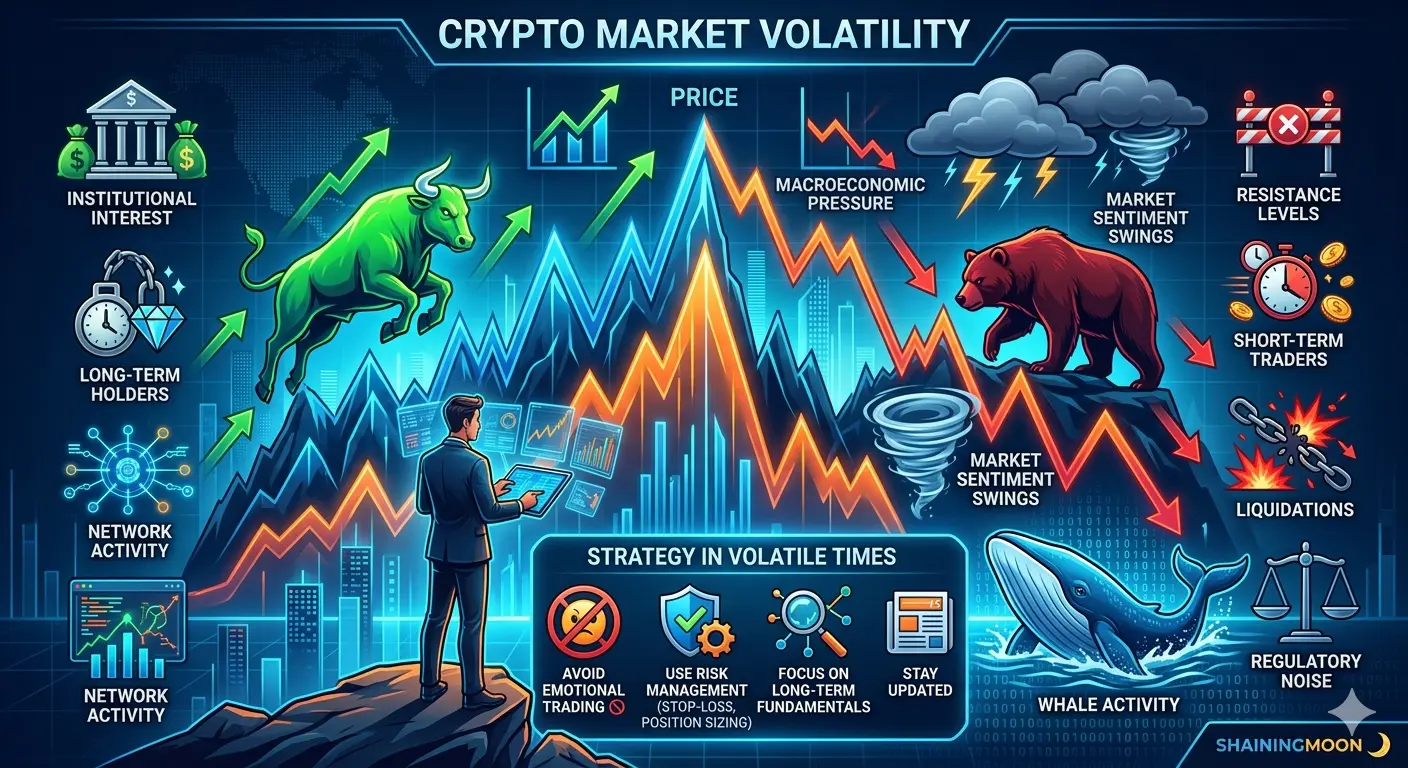
# CryptoMarketSeesVolatility

176.56K
Macro Economy Is Now Running Crypto
You think you are reading a crypto chart. You are actually reading the Federal Reserve.
This is not a metaphor. It is the single most important structural shift in digital asset markets over the last five years — and most retail investors still have not priced it in.
———
The Day Everything Changed
March 2020. Global markets collapsed in eleven days. Stocks, gold, oil — everything sold. Bitcoin dropped from nine thousand dollars to under four thousand in a matter of hours.
The narrative at the time was simple: crypto is a hedge. A decentralized store of value
BTC0,55%
xxx40xxxvip
Crypto Volatility: Risk or a System Feature?
Bitcoin drops thirty percent in a week. The next month, it rises fifty percent.
Most investors call this “risk” and stay away. But the most consistent winners in the market expect exactly this kind of movement, plan for it, and build positions around it.
The difference is perspective. And perspective changes everything.
———
Volatility Is Not a Bug, It’s a Language
Traditional finance defines volatility as deviation — price moving away from where it “should” be. In that framework, volatility is a risk factor to be managed.
The crypto market rejects that definition.
Price movements in Bitcoin and other crypto assets are not random. They are shaped by on-chain data, liquidity dynamics, macroeconomic cycles, and the collective behavior of market participants. These movements may look chaotic — but they carry an underlying structure that can be read.
Volatility is how this market expresses itself. Not a malfunction, but a language.
———
Bitcoin Price Cycles: What History Shows
When you examine Bitcoin’s price history, a clear cyclical structure emerges.
In 2017, Bitcoin reached around twenty thousand dollars, then dropped eighty percent to below three thousand. In the 2020–2021 cycle, it surpassed sixty thousand. During the 2022 bear market, it lost over seventy percent, falling to around sixteen thousand. In 2024, it climbed back above sixty thousand.
Each cycle follows the same pattern: explosive growth, sharp correction, accumulation, new highs.
These cycles are not random. The Bitcoin halving mechanism cuts supply by four. Institutional capital increases structural demand. Macro liquidity conditions — interest rates, the dollar index, risk appetite — affect all asset classes, with crypto amplifying the effect.
Volatility is the visible surface of these underlying drivers.
———
Crypto Risk Management: Three Critical Mistakes
Volatility itself is not the risk. Misunderstanding volatility is.
Three core mistakes repeat in the crypto market:
Wrong time horizon. Focusing on daily price movements while missing the long-term cycle. Investors who sold Bitcoin at the depths of 2022 watched the 2024 recovery without a position.
Uncontrolled position sizing. Allocating an entire portfolio into a single asset in a high-volatility environment turns corrections into unrecoverable losses. Crypto portfolio management requires fundamentally different principles from traditional asset management.
Emotion-driven decisions. The Fear and Greed Index hit 84 (“Extreme Greed”) in November 2021 — just days before Bitcoin’s cycle peak. In May 2022, it dropped to 8, marking a market bottom zone. Historically, these extremes align with the worst possible entry and exit points.
———
Dollar-Cost Averaging: Turning Volatility into an Advantage
With the right strategy, volatility becomes an advantage.
Dollar-cost averaging — investing a fixed amount at regular intervals — is one of the most proven methods. When price drops, you acquire more units; when it rises, fewer. Entry timing becomes irrelevant.
A concrete example: An investor who bought Bitcoin monthly throughout 2022 maintained an average cost around twenty thousand dollars. When Bitcoin moved above sixty thousand in 2024, that position nearly tripled in value. Meanwhile, an investor who bought near the peak in a single transaction was still around breakeven.
The difference is discipline. The volatility was the same for both.
———
On-Chain Data: Turning Noise into Signal
Reacting to price is a reactive approach. Tracking on-chain data allows you to anticipate structural shifts.
Large wallet movements signal accumulation or distribution phases. Bitcoin flowing into exchanges indicates potential selling pressure. Growth in stablecoin supply points to fresh capital waiting on the sidelines.
When these three indicators are read together, they provide early signals about market direction — often before price action makes it obvious.
Platforms like Gate Square sit at the center of this information flow. Market analysis, on-chain insights, and community discussions create the infrastructure to interpret volatility with context instead of panic.
———
Conclusion: The Market Doesn’t Change — Your Perspective Does
Volatility is the most misunderstood feature of the crypto market.
Those who see it only as risk sell during every correction and arrive late to every rally. Those who understand it as part of the system move not within cycles, but ahead of them.
When perspective changes, the market doesn’t. But your relationship with the market changes completely.
And in finance, that difference is everything.
———
This content is for informational purposes only and does not constitute investment advice.
#GateSquareAprilPostingChallenge #WeekendCryptoHoldingGuide #CryptoMarketSeesVolatility #BitcoinMiningIndustryUpdates #GateSquare

repost-content-media
  • Reward
  • 6
  • Repost
  • Share
discoveryvip:
LFG 🔥
View More
#CryptoMarketSeesVolatility
VOLATILITY IS NOT THE PROBLEM. NOT UNDERSTANDING IT IS.
Right now Bitcoin is at $67,081. Ethereum is at $2,052. The fear and greed index is 12 — that is Extreme Fear, and it has been sitting there for weeks. Most people looking at these numbers are asking the wrong question. They are asking "when does it recover?" The better question — the one that actually protects your capital and positions you correctly for what comes next — is "what is specifically driving this volatility, and what would have to change for it to stop?"
This post answers that question with data.
BTC0,55%
ETH0,29%
SOL-0,8%
DRIFT25,17%
Luna_Starvip
#CryptoMarketSeesVolatility
VOLATILITY IS NOT THE PROBLEM. NOT UNDERSTANDING IT IS.
Right now Bitcoin is at $67,081. Ethereum is at $2,052. The fear and greed index is 12 — that is Extreme Fear, and it has been sitting there for weeks. Most people looking at these numbers are asking the wrong question. They are asking "when does it recover?" The better question — the one that actually protects your capital and positions you correctly for what comes next — is "what is specifically driving this volatility, and what would have to change for it to stop?"
This post answers that question with data. Not vibes. Not predictions. Data.
The Sentiment Picture Is At A Multi-Week Extreme
Santiment published data today showing that bearish social media chatter around Bitcoin has reached its highest level in five weeks. Their exact words: "FUD has crept back in with the community showing a key lack of optimism." Here is the part most people skip over when they read that headline — Santiment also noted that this level of community pessimism is "usually a common ingredient for prices rebounding." That is not a contradiction. It is how sentiment cycles work. Maximum bearishness does not mean the price goes lower forever. It means the people most likely to sell have already sold, and the remaining holders are the ones with actual conviction. The ratio of bullish to bearish voices on Bitcoin right now is roughly 2:1 — 82 bullish accounts tracked versus 40 bearish, out of 142 active voices. That 2:1 ratio at a fear index of 12 tells you the bulls have not been completely washed out. They are just quiet.
The On-Chain Data Tells A Specific Story
Glassnode data published this week showed that Bitcoin holders in the 100 to 1,000 BTC range — what analysts call "sharks" — and holders in the 1,000 to 10,000 BTC range — the "whales" — have been realizing average daily losses of approximately $188.5 million and $147.5 million respectively. Combined, that is roughly $337 million in realized losses per day from large holders alone. Cumulative realized losses for the year have already hit $30.9 billion — approaching the levels seen during the 2022 bear market bottom.
CryptoQuant's five-data-source analysis published this week reached the same conclusion from multiple angles: Bitcoin demand is contracting at negative 63,000 BTC per month. Large holders have distributed nearly 188,000 BTC over the past year. The Coinbase premium is negative. Mid-sized holder growth is running at 429,000 BTC versus approximately 1 million in late 2025. The market, in CoinDesk's phrasing, is "thinning from the inside" — the structural demand base is narrowing even as institutional names continue buying in public.
In the past 24 hours alone, Coinglass data shows $59.82 million in total liquidations across the market. Short liquidations accounted for $38.93 million versus $20.89 million in long liquidations — meaning the market caught more shorts off-guard than longs in the most recent session, which is a micro-signal worth watching. When short liquidations begin consistently exceeding long liquidations during a period of maximum fear, it is an early indication that the directional pressure is beginning to shift.
The Macro Drivers Are Not Going Away Overnight
Everything happening on-chain is happening inside a macro environment that is genuinely hostile to risk assets right now. The Iran situation remains active and unresolved — Trump has signaled continued military operations while Iran has been in diplomatic talks with Oman over Hormuz traffic management. WTI crude oil has been trading between $110 and $115 per barrel in volatile sessions this week. JPMorgan told CNBC that Iran's maximum economic leverage on global markets would be felt within weeks as the oil shock works through supply chains. Larry Fink said $150 oil means 100% recession probability. The Federal Reserve cannot cut rates into an oil-driven inflation environment without risking overheating. Bitcoin needs global liquidity expansion for a sustained price recovery. Global liquidity remains constrained as long as oil is elevated and the Fed is paralyzed between its two mandates.
Add to that the Drift Protocol exploit — $200 to $285 million drained from a Solana-based derivatives platform in a pre-planned attack with an eight-day preparation window — and the Google quantum computing paper establishing a 2029 deadline for Bitcoin's cryptographic migration. Neither of these is an immediate existential threat to Bitcoin. Both of them add uncertainty premium to positions and contribute to the sustained elevated fear reading that has defined this entire quarter.
What The Structural Support Actually Looks Like
Here is the honest version of where the floor sits. Bitcoin's 200-week moving average is at $59,268. The realized price — the average cost basis of every Bitcoin holder on-chain — is at $54,177. Both levels have held through all of Q1 2026. Some analysts are calling for a potential bottom zone between $40,000 and $50,000 under a severe scenario where ETF outflows accelerate and leverage fully unwinds. That scenario is plausible but requires a sequence of simultaneous failures — oil continuing toward $150, institutional outflows reversing, and leveraged liquidations cascading through multiple sessions — that has not yet materialized.
What has materialized on the other side of the ledger: ETH derivatives recorded their first net positive buy pressure since the 2023 bear market bottom this week — $104 million in net buying. Strategy is buying 44,000 BTC per month regardless of price. Bitmine added 40,000 ETH to its balance sheet this week at current prices. The halving cycle historically points toward recovery in the 12 to 18 months following the April 2024 halving event — which puts the structural window somewhere between mid and late 2026. Long-term holders are still realizing losses at approximately $200 million per day, which sounds bearish until you recognize that in every prior cycle, the point of maximum long-term holder pain has preceded the recovery by approximately one to two quarters.
The One Thing Volatility Always Rewards
Volatility rewards the people who understand it more than the people who fear it. The traders who panic-sold Bitcoin in November 2018 when every data point looked as bad as it does today missed the entire 2019 to 2021 cycle. The ones who held through the fear index readings in the single digits in 2022 were positioned for the recovery into 2024. That is not a guarantee that history repeats identically. It is an observation that the psychological conditions required to shake out weak hands — maximum FUD, sustained fear readings, bearish social media chatter at multi-week highs, whale distribution — have historically coincided more closely with bottoms than with the continuation of downward moves.
The volatility you are watching right now is not chaos. Every movement has a named cause, a documented data source, and a knowable threshold at which it resolves. The Iran situation resolves when Hormuz fully reopens and oil falls below $90. The leverage overhang resolves when open interest returns to neutral and funding rates stabilize. The on-chain distribution pressure resolves when realized losses approach the exhaustion levels seen in prior cycles. None of those thresholds have been reached yet. All of them are visible and measurable in real time.
Watch the thresholds. Not the candles.
#CryptoMarketSeesVolatility #Gate广场四月发帖挑战 #GateSquare
repost-content-media
  • Reward
  • 4
  • Repost
  • Share
User_anyvip:
You're awesome, my friend, this is a really high-quality and informative post. Great work, thank you for the information.

坚定HODL 💎

Diamond Hands 💎

2026 GOGOGO 👊

To The Moon 🌕

LFG 🔥

1000x Vibes 🤑

DYOR 🤓

It's valuable to see content like this, I'm following you. I wish you continued success.
View More
#WeekendCryptoHoldingGuide
The evolution of the crypto economy cannot be understood through price movements alone. Markets fluctuate, often dramatically, but volatility is not the defining feature of a system’s maturity. What matters more is function—what the system actually does, how it operates, and the role it plays in a broader economic context. By that standard, crypto is no longer what it once was. It is transitioning from a speculative arena into a foundational layer of modern financial infrastructure.
In its earliest phase, crypto was driven almost entirely by speculation. Bitcoin int
BTC0,55%
ETH0,29%
post-image
  • Reward
  • 2
  • Repost
  • Share
Youngichowvip:
LFG 🔥
View More
#CryptoMarketSeesVolatility
The Storm Has Arrived
April 5, 2026 will be remembered as one of the most turbulent days the cryptocurrency market has seen in recent memory. The Crypto Fear and Greed Index has crashed to a staggering **12 out of 100**, firmly in the territory of Extreme Fear — a number that tells the story of a market under intense psychological and financial pressure. Bitcoin is trading at **$66,941**, down **0.40%** in the last 24 hours, with its daily range swinging between **$66,610** and **$67,547**. Ethereum is not faring much better, sitting at **$2,040**, down **0.64%**,
BTC0,55%
ETH0,29%
DRIFT25,17%
TRX0,27%
post-image
post-image
  • Reward
  • 4
  • Repost
  • Share
Yusfirahvip:
To The Moon 🌕
View More
🚨 ETHUSDT Trade Setup 🚨
Ethereum is moving in a tight range and preparing for a breakout.
💰 Entry Zone: $2000 – $2020
🎯 Targets: $2080 / $2120
🛑 Stop Loss: $1970
⚡ Leverage: 10x (Safe)
📊 Market Structure: Sideways → Breakout soon
🔥 Best for low-risk traders$ETH #GateSquareAprilPostingChallenge #WeekendCryptoHoldingGuide #CryptoMarketSeesVolatility #OilPricesRise
ETH0,29%
post-image
post-image
post-image
  • Reward
  • Comment
  • Repost
  • Share
#CryptoMarketSeesVolatility
What’s Driving the Market Swings?
The cryptocurrency market is once again experiencing heightened volatility, leaving traders and investors navigating a landscape filled with both risks and opportunities. Sharp price movements across major assets like Bitcoin and Ethereum are signaling uncertainty, but they also highlight the dynamic nature of the crypto space.
📊 What’s Causing the Volatility?
Several factors are contributing to the current market fluctuations. Macroeconomic conditions, including inflation concerns and interest rate expectations, continue to infl
BTC0,55%
ETH0,29%
post-image
post-image
  • Reward
  • Comment
  • Repost
  • Share
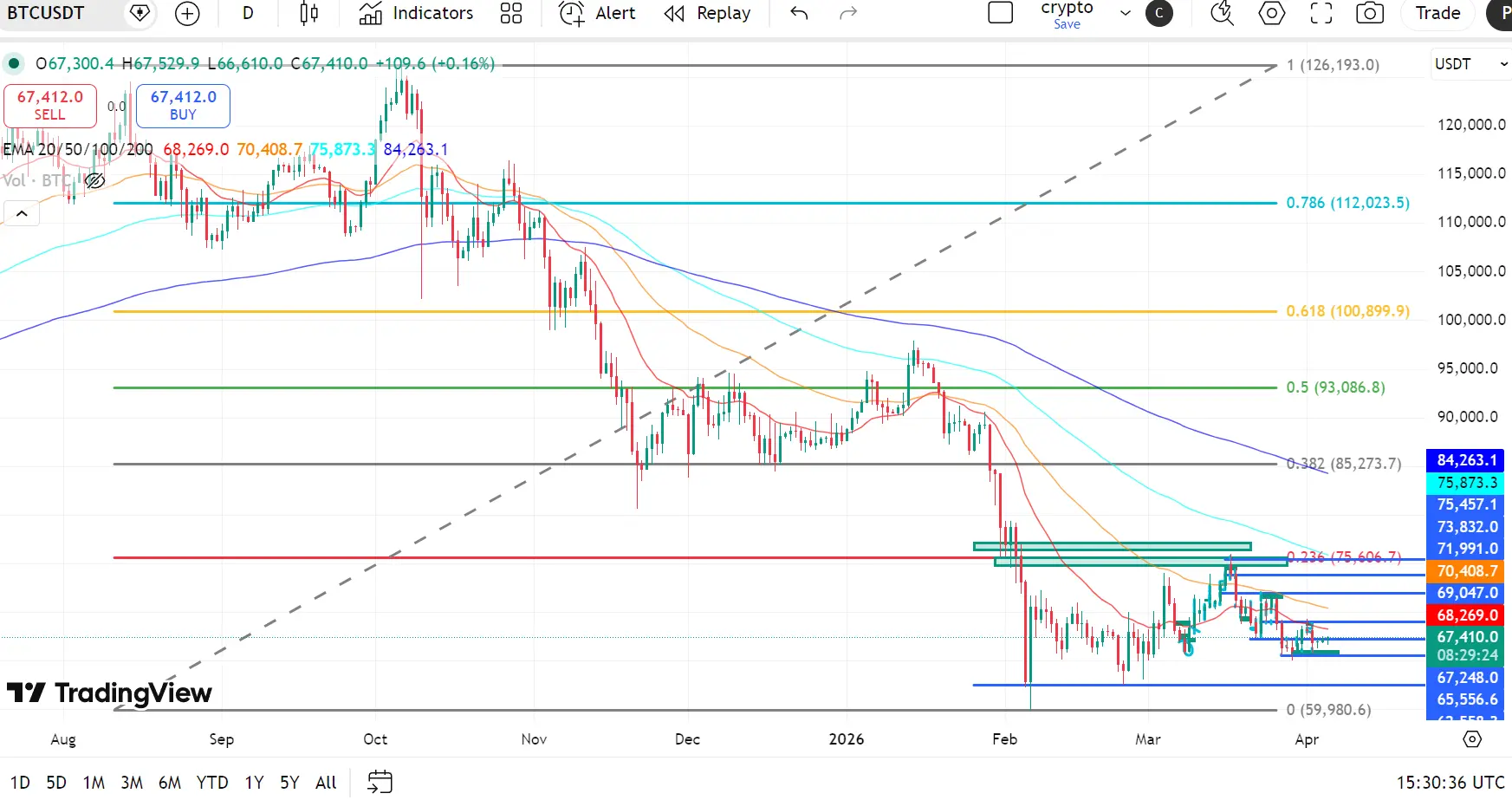
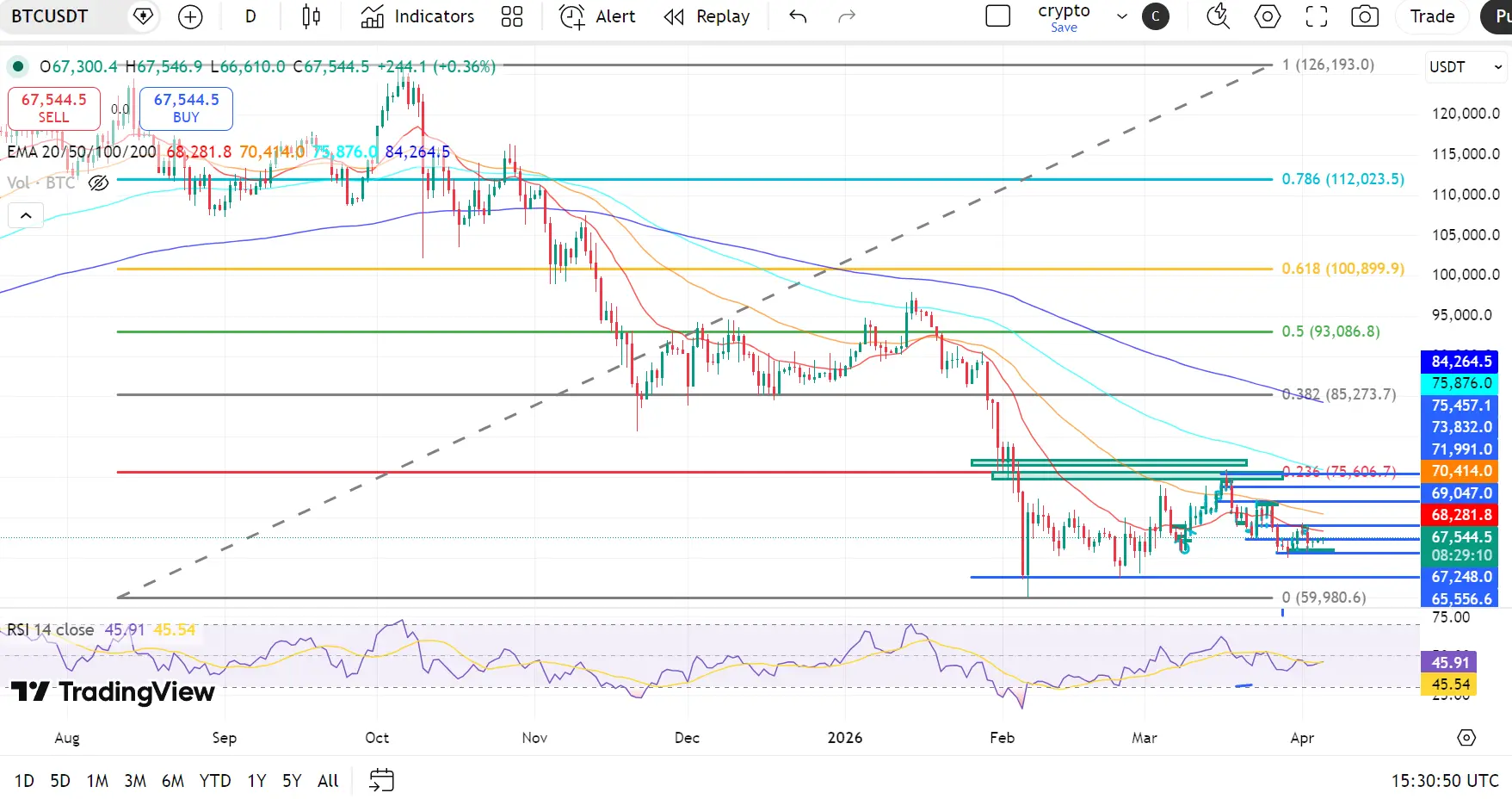
BTC Technical Outlook: Bearish Consolidation Below Key Resistance
BTC continues to trade within a broader downtrend structure, with recent price action showing sideways consolidation beneath a key resistance zone — a setup that often leads to continuation in the direction of the trend.
Currently, BTC is trading around $67,000–$69,000, struggling to break above immediate resistance while holding a fragile short-term support base.
EMA Structure (Sustained Bearish Trend)
20 EMA: $68,200
50 EMA: $70,400
100 EMA: $75,000+
200 EMA: $84,000+
Price remains below all major EMAs
Repeated rejection from
BTC0,55%
post-image
post-image
  • Reward
  • 1
  • Repost
  • Share
Yusfirahvip:
To The Moon 🌕
🚨 90% PEOPLE LOSE MONEY IN CRYPTO BECAUSE THEY SKIP THIS
Before you ape into ANY coin, read this:
1. No Narrative = Dead Coin
If it’s not trending (AI, RWA, DePIN) → nobody cares.
2. Fake Hype vs Real Users
Big followers ≠ real adoption.
Check usage, not noise.
3. Token Unlock = Silent Killer
If VCs unlock soon → you are exit liquidity.
4. Smart Money Always Early
Track wallets.
If whales aren’t buying → why should you?
5. If It Already Pumped… You’re Late
Don’t buy green candles.
Patience prints money.
💣 Hard Truth:
You don’t lose because of bad luck.
You lose because you don’t filter.
🧠 M
BTC0,55%
post-image
post-image
  • Reward
  • 1
  • Repost
  • Share
Crypto_MANvip:
DYOR 🤓
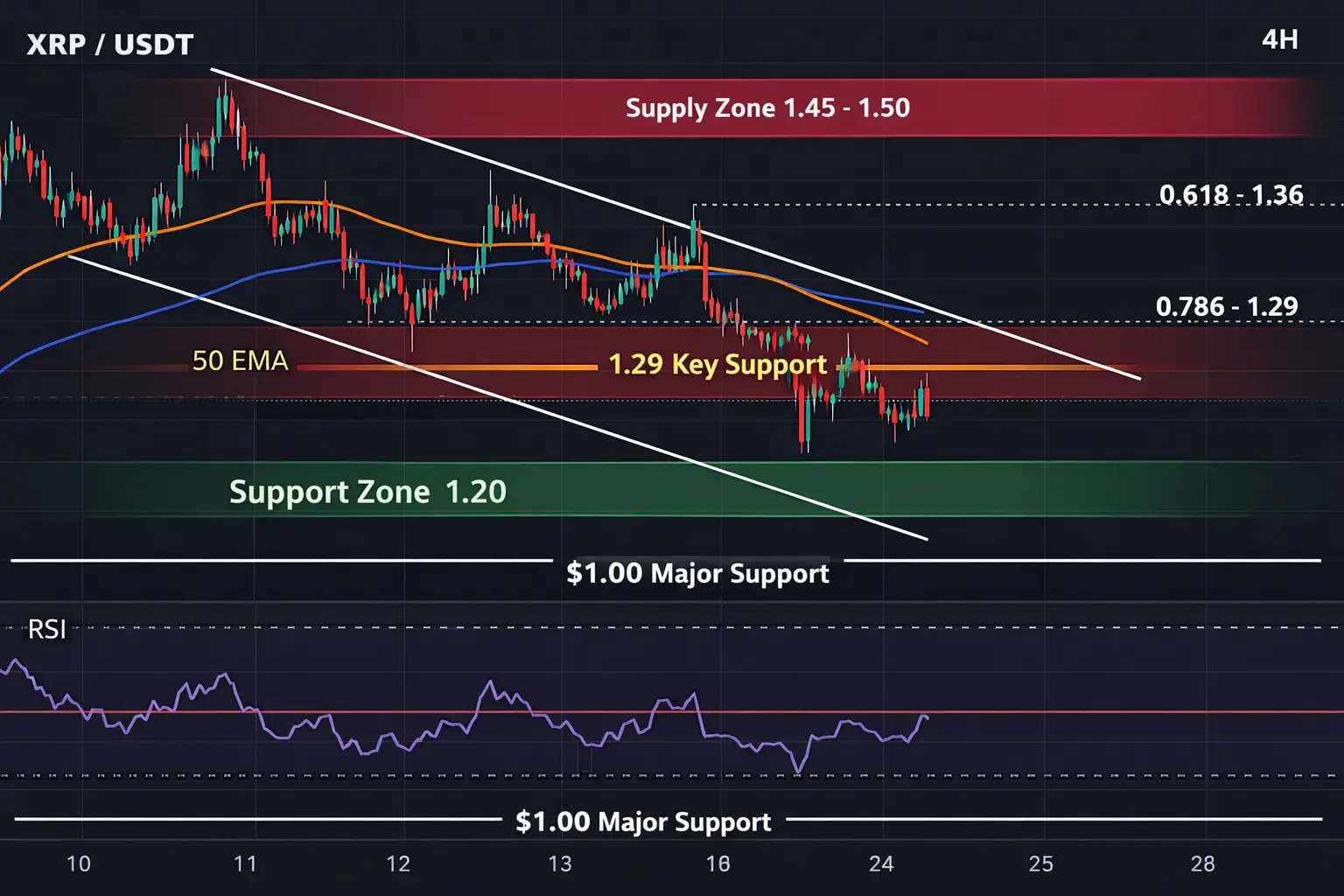
👉$XRP
In the global crypto market, the XRP price movement continues to stabilize at a critical technical threshold.
The long-standing descending channel structure has not yet been broken, and the market structure maintains its weak appearance with a lower high formation.
The death cross trend formed in the EMA confirms that it is under downward pressure in the medium term, while the price remaining below the main moving averages causes the upward movements to be limited.
According to Fibonacci analysis, the 1.29 level stands out as a critical threshold, and if this region is lost, sharp li
XRP-0,91%
post-image
post-image
post-image
  • Reward
  • 3
  • Repost
  • Share
discoveryvip:
LFG 🔥
View More
#CryptoMarketSeesVolatility
Crypto markets rarely move randomly. What looks like chaos on the surface is often a structured flow of capital beneath it. One of the most important forces driving this movement is narrative rotation — the continuous shift of money from one sector to another.
Right now, the market gives a perfect example. While Bitcoin sits relatively stable around the $67K range and the broader sentiment remains in extreme fear territory, certain sectors are exploding. The Meme sector has surged dramatically, while others like Layer 1 remain almost unchanged. This contrast is not
BTC0,55%
MEME-3,4%
DEFI-6,95%
RWA-1,25%
post-image
post-image
  • Reward
  • 5
  • Repost
  • Share
CryptoEyevip:
LFG 🔥
View More
Load More

Join 40M users in our growing community

⚡️ Join 40M users in the crypto craze discussion
💬 Engage with your favorite top creators
👍 See what interests you
  • Pin