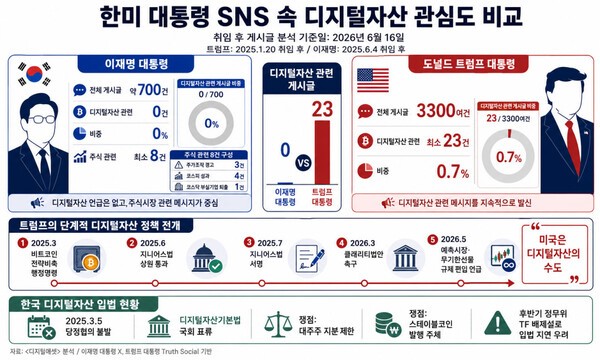
South Korean President Lee Jae-myung has made zero social media mentions of digital assets since his June 4, 2025 inauguration through June 16, 2026, while U.S. President Donald Trump referenced them at least 23 times in the same period, according to an AI-assisted analysis of their posts. The stark contrast—0% of Lee's ~700 posts versus 0.7% of Trump's ~3,300 posts—reflects divergent policy priorities as South Korea's Digital Asset Basic Act remains stalled since a March 5 party-government meeting collapse, while the U.S. enacted the GENIUS Act for stablecoin regulation and advances the Clarity Act. Lee instead focused on stock market reforms, mentioning equities at least 8 times as KOSPI surged 223% to 8726.6 from June 2, 2025 to June 16, 2026, driven by Commercial Act amendments and aggressive enforcement against market manipulation.
AI Analysis Reveals 0% vs 0.7% Digital Asset Mention Rate
Digital Asset analyzed the social media activity of both presidents from their respective inauguration dates—Trump from January 20, 2025 and Lee from June 4, 2025—through June 16, 2026. The analysis used Grok for Lee's X posts and ChatGPT plus the Trump's Truth archive service for Trump's Truth Social posts. During this period, Lee posted approximately 700 times with zero digital asset mentions, while Trump posted approximately 3,300 times with at least 23 digital asset references. Calculated as a percentage of total posts, Lee's digital asset mention rate is 0% compared to Trump's 0.7%.
Lee Jae-myung Prioritizes Stock Market with 8 Mentions and Legislative Reforms
Lee's social media activity included at least 8 stock-related posts during the analysis period. Three posts warned against stock price manipulation, four highlighted KOSPI normalization achievements, and one addressed KOSDAQ delisting of underperforming companies. This demonstrates that domestic policy priorities center on stock market normalization rather than digital asset market development. KOSPI rose 223% from June 2, 2025 to 8726.6 on June 16, 2026, exceeding Lee's pre-inauguration target of 5,000 and setting consecutive record highs.
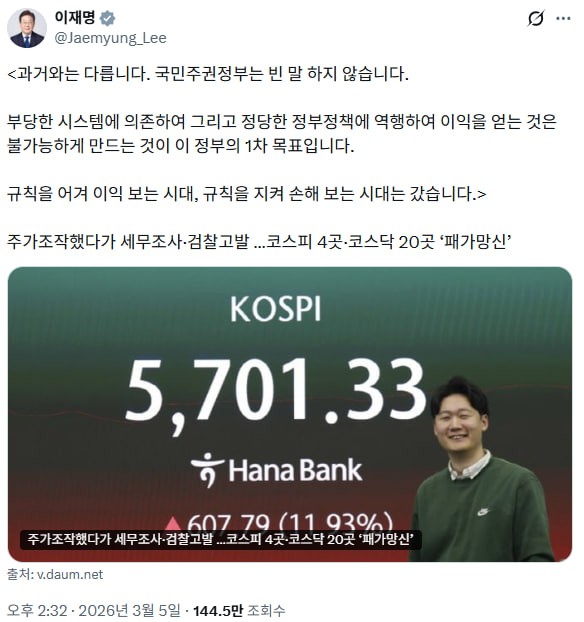
The stock market surge followed aggressive legislative action. A Commercial Act amendment promulgated in July expanded directors' fiduciary duties from the company to both company and shareholders, and extended the 3% voting rights cap for largest shareholders in outside director auditor elections. A second Commercial Act amendment passed in September mandated cumulative voting for large listed companies and expanded separate auditor elections. Lee's administration also implemented a one-strike-out system for stock manipulation, imposing up to double penalties and market bans of up to 5 years. These legislative measures, combined with semiconductor industry growth, attracted substantial foreign capital inflows.
The government views Capital Markets Act revision as the next legislative priority. In March, Lee unusually criticized the National Assembly's Policy Committee during a Cabinet meeting, asking "Can nothing be done when the opposition holds the chairmanship?" The committee is currently chaired by People Power Party member Yoon Han-hong, and faces criticism for holding fewer plenary sessions compared to other standing committees led by the ruling party.
Meanwhile, the Digital Asset Basic Act remains adrift. The ruling party and government attempted to advance the bill at a March 5 digital asset council meeting, but discussions collapsed citing Middle East developments. Prior disagreements within the Democratic Party of Korea centered on major shareholder stake limits and stablecoin issuer qualifications. Party leadership aligned with the government's proposal for 20-34% stake limits and bank-centered issuance, while the party task force opposed this as potentially stifling innovation, reflecting industry-friendly views. The basic act is scheduled for second-half parliamentary discussion but faces potential delays behind other priorities including consumer finance and capital markets legislation.
Lee has not mentioned digital assets in public appearances since his inauguration. Consequently, none of his 21st presidential election campaign promises have been implemented. Lee's campaign featured KRW stablecoin and spot exchange-traded funds as major pledges. The published manifesto also included digital asset issuance authorization and token securities authorization. Token securities await February 2027 implementation following bill passage. However, stablecoins and digital asset issuance remain unaddressed due to basic act delays, while spot ETF discussions have not commenced, overshadowed by basic act deliberations.
Trump Advances Staged Digital Asset Policy from Bitcoin Reserve to Prediction Markets
Unlike South Korea, the U.S. demonstrated staged policy development progressing from Bitcoin to stablecoins to perpetual futures and prediction markets. This progression appears in Trump's social media posts. On March 3, Trump mentioned a digital asset strategic reserve including Bitcoin. On March 8 and 9, he shared videos from the Digital Asset Summit event, which discussed a Bitcoin reserve executive order and stablecoin legislation.
Trump issued an executive order on March 6, 2025 designating Bitcoin as a strategic reserve asset. The core provision requires the government to retain rather than sell seized and forfeited Bitcoin. On March 11, the BITCOIN Act was introduced in the Senate, proposing phased purchases totaling 1 million Bitcoin. Subsequently, the ARMA Act was introduced in the House, incorporating discretionary authority instead of mandatory annual purchases, aligning more closely with the executive order.
Stablecoin regulation followed Bitcoin strategic reserve policy. In June, Trump announced Senate passage of the GENIUS Act, comprehensive stablecoin regulation, and confirmed his signature in July. The GENIUS Act mandates reserve asset holdings, introduces dual federal-state licensing, includes non-bank issuers under federal supervision, and prohibits stablecoin interest. In August, Trump cited the GENIUS Act alongside the Big Beautiful Bill as a major legislative achievement, emphasizing the law's importance.
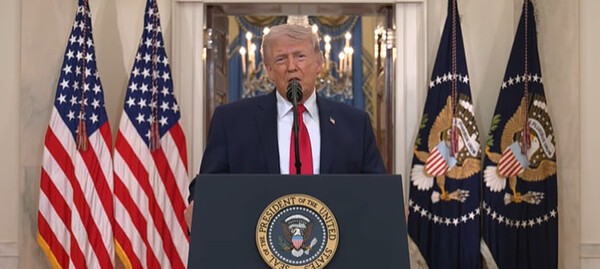
After approximately seven months without digital asset mentions, posts urging Clarity Act passage appeared in March 2026. Trump referenced the interest debate surrounding the Clarity Act, criticized the banking sector for delaying legislation, and urged swift bill passage. At that time, the industry favored allowing stablecoin interest or rewards, while the banking sector opposed it, causing legislative delays. The issue was resolved by permitting only rewards, and the bill remains pending in the Senate.
Subsequent posts criticized the previous administration while addressing perpetual futures and prediction market regulation. In March, Trump shared a Coinbase video referencing business contraction under the Biden administration's strict policies. In May, he emphasized the need to regulate prediction markets and perpetual futures, explicitly stating in the prediction market post that "the U.S. is the capital of digital assets," signaling plan realization.
Trump indicated both products require Commodity Futures Trading Commission (CFTC) regulation. Following Trump's remarks, the CFTC authorized perpetual futures products from Kalshi and Coinbase. For prediction markets, the CFTC signaled regulatory incorporation by specifying existing Commodity Exchange Act provisions.
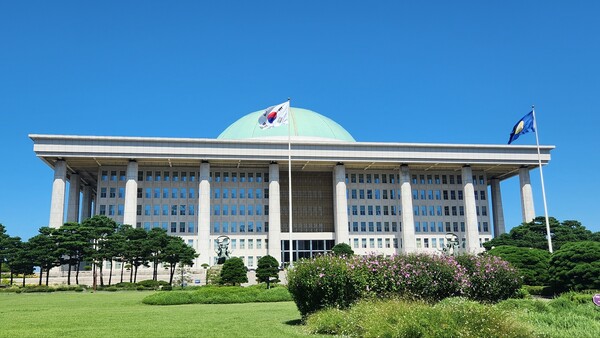
South Korea's Digital Asset Basic Act Faces Renewed Delays in Second-Half Parliament
Domestic legislative pace faces unavoidable criticism compared to U.S. momentum. The outlook for South Korea's Digital Asset Basic Act is not promising. Following the March 5 party-government council collapse, discussions shifted to the second-half parliament due to local election schedules.
However, speculation that "Digital Asset Task Force members may be excluded from the Policy Committee" in second-half parliamentary composition raises concerns about further legislative delays. Multiple National Assembly Policy Committee officials stated, "There is talk that Digital Asset Task Force members may be excluded from the second-half Policy Committee." This suggests potential exclusion of task force members who disagreed with party leadership.
Regarding this development, concerns arise that if standing committee composition changes, new members will require time to understand, analyze, and legislate for the digital asset market, which is a newly emerged sector requiring specialized expertise. A digital asset industry official stated, "We are concerned about the time required to restart legislative discussions from scratch and insufficient consideration of industry opinions."
FAQ
What did the AI analysis reveal about Lee Jae-myung's digital asset mentions on social media?
The AI-assisted analysis found that President Lee Jae-myung made zero mentions of digital assets across approximately 700 social media posts from his June 4, 2025 inauguration through June 16, 2026, representing a 0% mention rate.
How many times did Donald Trump mention digital assets on social media compared to Lee Jae-myung?
President Trump mentioned digital assets at least 23 times in approximately 3,300 posts from his January 20, 2025 inauguration through June 16, 2026, representing a 0.7% mention rate, compared to Lee's 0% rate.
Why has South Korea's Digital Asset Basic Act been delayed?
The Digital Asset Basic Act has been stalled since a March 5 party-government meeting collapsed, with prior disagreements within the Democratic Party of Korea over major shareholder stake limits and stablecoin issuer qualifications, and the bill now faces potential delays in second-half parliament behind other legislative priorities including consumer finance and capital markets legislation.


