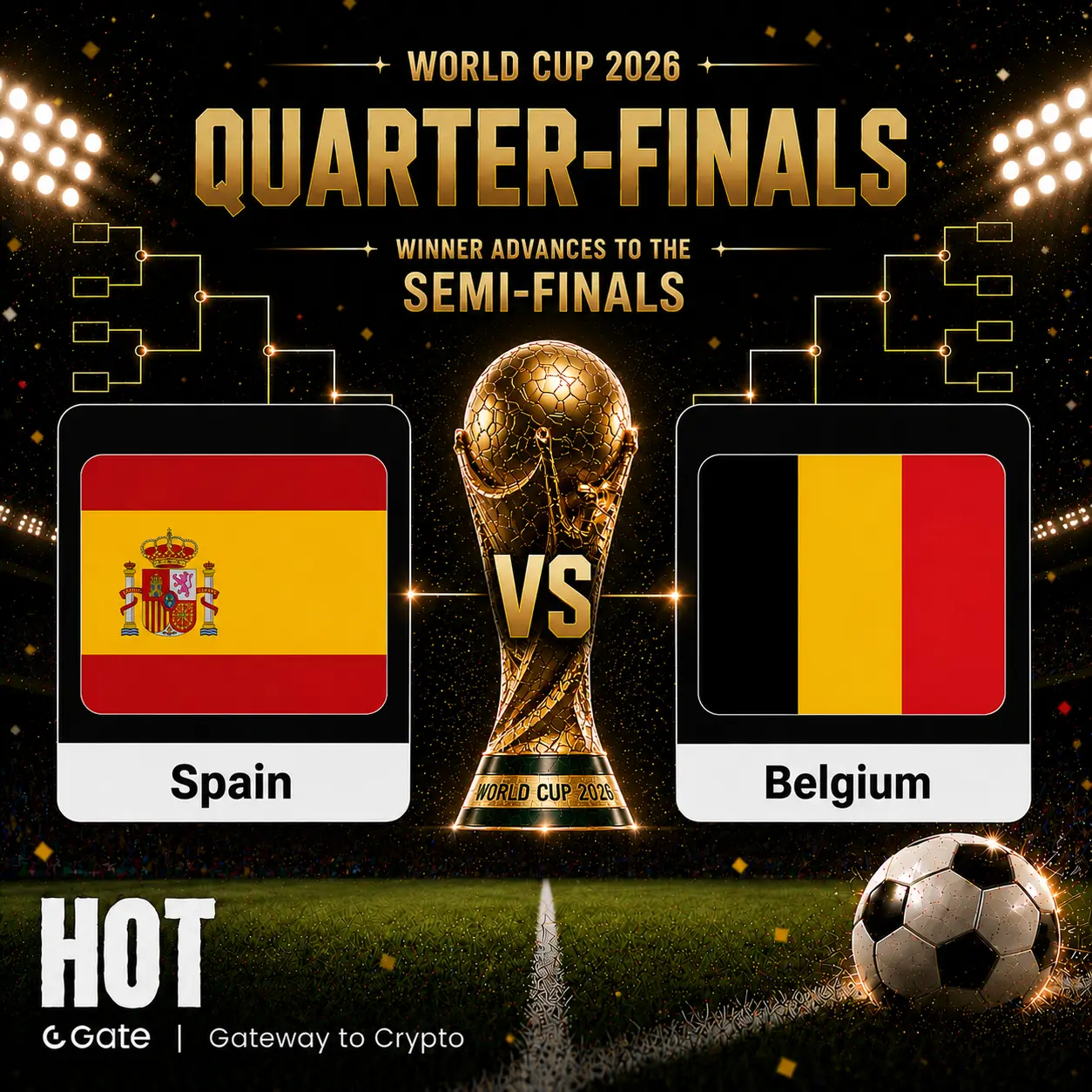
Spain: Defensive dominance behind 609 minutes of clean sheets
Spain is the only team in this World Cup that has yet to concede a goal. Goalkeeper Unai Simón has extended his personal record of consecutive clean sheets in World Cup finals to 609 minutes. This is not only the highest in this tournament but also rewrites World Cup history—Spain becomes the first team to keep a clean sheet in all six matches of a single World Cup.
In terms of defensive efficiency, Spain’s expected goals against (xGA) per game is only 0.30, the lowest recorded in a single World Cup finals tournament. Central defenders Laporte and Kubalsi both rank in the top 10 among tournament players. Spain has allowed only 21 shots in five matches, averaging fewer than 5 shots per game, the best among the quarter-final teams.
Ranked No. 2 in the world, Spain’s total team value is €1.22 billion, maintaining the core squad that won the 2024 European Championship, with an average age of just 24.7. Head coach De la Fuente employs a fluid 4-3-3 possession-based system, with an average ball possession rate over 65%, and the highest passing success rate in the tournament. In the round of 16, Spain secured a 1-0 victory over Portugal with a goal from Merino in the 91st minute, marking their sixth consecutive clean sheet in the World Cup.
However, Spain’s attacking efficiency raises concerns. The team has scored 9 goals in five matches, with 7 coming from dominant wins over Saudi Arabia and Austria. Against Cape Verde (0-0) and Portugal (1-0), their possession and passing advantage did not fully translate into goals. Lacking traditional target strikers, they struggle to convert deep defensive setups. Full-backs pushing high may leave space behind, exploited by Belgium’s fast counterattacks.
Belgium: Counterattack sharpness beyond the golden era
Ranked No. 9 globally, Belgium’s team value is €548 million. Despite being less formidable on paper than Spain, Belgium has demonstrated strong attacking firepower—13 goals in six matches, second only to France. Their shot conversion rate is 12.1%, the second-highest in Belgium’s World Cup history, after 15.2% in 2018 Russia. They average 21.4 shots per game, ranking second in the tournament.
Head coach Roberto Martínez employs a 4-2-3-1 or flexible 5-4-1 counterattack system, abandoning ineffective possession for a less than 45% average ball control. The core tactic is to win the ball and execute quick transitions within five seconds, avoiding prolonged midfield exchanges. Kevin De Bruyne’s precise long passes, Doku’s speed on the flanks, and Lukaku’s hold-up play form Belgium’s three-pronged counterattack.
In the round of 16, Belgium defeated host USA 4-1. De Ketelaere scored twice and assisted once, standing out. Notably, De Bruyne, Lukaku, and Doku all started on the bench in that match. De Bruyne had started 37 consecutive matches for Belgium before this game but was rested. This allowed key players to conserve energy for the quarter-finals. Lukaku’s three goals in the tournament all came from off-the-bench appearances, second only to Roger Milla’s four for Cameroon in 1990.
However, Belgium’s vulnerabilities are evident. Key midfielder Amadou Onana suffered a torn ACL in the 1/8 match and will be out long-term. His absence is a blow to Belgium’s midfield defense—remaining options are 33-year-old Laszkin and 37-year-old Vázquez. Facing Spain’s star-studded midfield of Rodri, Pedri, and Olmo, this gap could be decisive. Additionally, De Bruyne and Lukaku’s stamina can only sustain the first 60 minutes, with their movement and passing accuracy likely declining later.
Yamal: Beyond the stats, a commanding presence
Yamal, 18, is one of the most watched young players in this World Cup. He scored his first World Cup goal in the group stage against Saudi Arabia, becoming the second youngest player to score in both the World Cup and European Championship at 18 years and 343 days.
In the knockout stage, Yamal’s scoring streak is on hold. Despite not scoring or assisting in the 3-0 Round of 16 win over Austria, he was named man of the match with 6 shots (4 on target), 5 successful dribbles, and excellent ball control. Data shows he averages 12 dribbles per 90 minutes, the highest among players with over 200 minutes in a single World Cup since Nigeria’s Okocha in 1998. Against Austria, he became the youngest player since 1966 to have at least 10 touches inside the penalty area (14) and 10 dribbles (10) in a single World Cup match.
In the 1-0 victory over Portugal in the round of 16, Yamal recorded 3 shots (2 on target), 6 dribble attempts (3 successful), and a pass success rate of 78.1%, along with 5 tackles and 1 interception. Spain’s coach De la Fuente stated before the match that Yamal is not yet at his peak, and the team has practiced penalties specifically. Yamal himself admits his performance has not yet met expectations but is confident of delivering better in the remaining matches.
Against Belgium, Yamal will face an aging Belgian defense on the right flank. The age and agility of Belgium’s center-back pairing could be exploited. Spain’s tactical plan likely continues the “feint and strike” approach used against Saudi Arabia—drawing defenders to the right to create space on the left. Yamal may not need to score himself but his ability to draw defenders and create space is one of Spain’s most strategic weapons.
Historical encounters and market predictions
The two teams have met 23 times historically, with Spain winning 12, losing 5, and drawing 6, holding a clear advantage. In World Cup history, they have each won once—Belgium eliminated Spain on penalties in the 1986 quarter-finals, while Spain beat Belgium in the 1990 group stage. Spain has won all six recent encounters. However, their last official match was nearly ten years ago, limiting its predictive value.
Opta’s supercomputer simulation indicates Spain has a 59.3% chance of beating Belgium within 90 minutes in pre-match forecasts. The predicted qualification probabilities are 69.5% for Spain and 30.5% for Belgium. The Gate prediction market data (Spain 60%, Belgium 17%, draw 25%) aligns with Opta’s directional forecast, though Belgium’s win probability in Gate is slightly lower than Opta’s. This discrepancy may stem from the market’s pricing mechanism, which incorporates not only team strength but also market sentiment and capital flow.
The Gate market also offers a broader view of the championship odds: France leads at 33%, Argentina and Spain both at 19%, and England at 16%. Spain’s defensive record makes it a favorite for the title. Large investors are shifting funds out of the Argentina championship market, favoring France. Spain’s championship odds are on par with Argentina, but its zero-goal conceded record gives it a different competitive edge among the favorites.
Tactical variables in play
The outcome of this quarter-final can be analyzed through three tactical dimensions.
Ball possession vs. counterattack efficiency. Spain is expected to control over 65% of possession, using lateral switches and wide play to dismantle Belgium’s defensive shape. Belgium’s strategy is to give up possession and focus on quick transitions—winning the ball and releasing De Bruyne for long passes, with Doku’s speed exploiting the space behind Spain’s full-backs. The decision of Spain’s full-backs to push high or stay back will be crucial: pressing forward widens the attack but leaves space behind; dropping back may reduce offensive threat.
Midfield control vs. counter-control. Rodri must perform both deep-lying playmaking and interception duties. Belgium’s Tillemans and Laszkin will double-team him, using physicality to disrupt Spain’s short passing rhythm. Onana’s absence significantly reduces Belgium’s resilience in this area—only Laszkin (33) and Wits (37) are available. Facing Spain’s star-studded midfield of Rodri, Pedri, and Olmo, this gap could be decisive. If Rodri can distribute effectively, Pedri and Olmo’s lateral switches will help break down Belgium’s defensive shape.
Stamina tipping point and substitute depth. The 65th minute is seen as a critical juncture. Belgium’s aging players may experience a sharp decline in stamina afterward, while Spain’s average age of 24.7 gives it a clear advantage in physical reserves. If Spain maintains a clean sheet in the first half, sustained pressure in the second half could be the key to breaking the deadlock. For Belgium, Lukaku’s role as a substitute has proven effective—his three goals in the tournament all came from off-the-bench appearances. Their substitutes have scored a total of 5 goals, the most among the quarter-final teams.
Beyond probabilities: knockout logic
The 60% win probability for Spain from the Gate market indicates it is the favored team, but the 17% chance for Belgium and 25% for a draw combine to about 42% that Spain will not win in regular time.
Spain’s advantage is rooted in historic defensive data—609 minutes without conceding, an average of only 0.30 expected goals against, and six consecutive clean sheets. These figures are statistically significant, indicating Spain’s defensive performance is not coincidental but a result of tactical discipline and player execution. Belgium’s attack relies on transition efficiency and star power—averaging 21.4 shots per game, a 12.1% conversion rate, and the counterattack link-up of De Bruyne and Doku. The clash of these football philosophies makes this one of the most tactically intriguing matches of the tournament.
From a market pricing perspective, the 60%-17%-25% distribution reflects both team strength assessments and the market’s pricing of knockout unpredictability. The 25% draw probability is notably higher than typical football matches (usually 20-22%), indicating the market perceives a significant uncertainty in the outcome within 90 minutes. This aligns with the tactical profiles—Spain’s possession system is good at neutralizing threats but may struggle to break down deep defenses; Belgium’s counterattack can be lethal but lacks consistency in creating sustained chances.
FAQ
What is the source of the 60% win probability for Spain in the Gate prediction market?
It comes from aggregated trading data on Gate’s prediction platform (such as Polymarket). Market prices are set by participant buy-sell actions, reflecting collective judgment on the event’s likelihood. A 60% win probability indicates the market believes Spain has a six-in-ten chance to beat Belgium within 90 minutes.
What is the “World Cup Prophet King” on Gate, and how can users participate in sharing the $100,000 USDT prize pool by predicting Spain vs. Belgium?
Gate launched a limited-time event called “世界杯预言王者赛” during the knockout stage, running from July 2 to July 21, 2026. Users can log in, register, and trade on prediction markets for match outcomes, handicaps, total goals, and champion odds in the World Cup section of Polymarket. Valid single bets of at least $10 USDT and total bets of at least $50 USDT qualify for scoring. The system awards points based on return multiples: points = (return multiple - 1) × 100. There are two leaderboards—match predictions and fun quizzes—each with a prize pool of $50,000 USDT. Participants can join both, with cumulative rewards totaling $100,000 USDT.
How many goals has Yamal scored in this World Cup? How much can he influence Belgium’s defense?
Yamal has scored 1 goal in this World Cup, in the group stage against Saudi Arabia. He has not scored or assisted in the knockout rounds yet, but with an average of 12 dribbles per game and strong defensive influence, he is a key strategic element in Spain’s attack. His ability to break through Belgium’s aging defense will be a critical factor.
How much will Onana’s absence affect Belgium’s midfield defense?
Onana is Belgium’s only traditional defensive midfielder. His injury significantly weakens their interception and defensive shield. Facing Spain’s star-studded midfield of Rodri, Pedri, and Olmo, only Laszkin (33) and Wits (37) are available, which could be a decisive disadvantage.
How does Spain’s clean sheet record compare historically in the World Cup?
Spain is the first team in World Cup history to keep a clean sheet in all six matches of a single tournament. Simón’s 609-minute clean sheet streak is the longest in World Cup history. Their average of 0.30 expected goals against per game is the lowest ever recorded in a single World Cup, making their defensive record statistically significant.
Under what conditions might Belgium pull off an upset?
Belgium would need to successfully limit Spain’s possession and passing, exploit counterattacks led by De Bruyne and Doku, and capitalize on limited chances with Lukaku’s finishing. If Spain struggles to break down deep defenses and the match extends into extra time or penalties, the unpredictability increases.