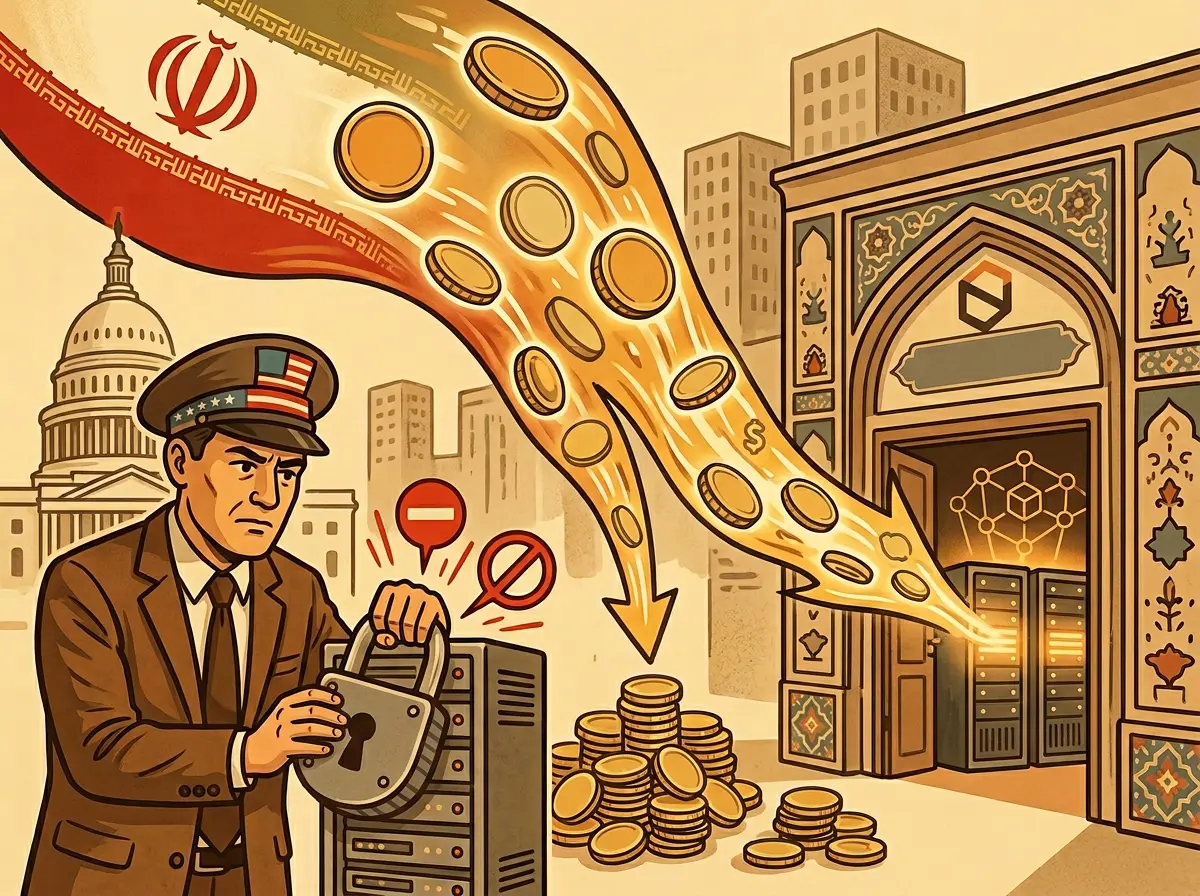
On May 13, the U.S. Department of the Treasury’s Office of Foreign Assets Control (OFAC) imposed sanctions on Iran’s largest cryptocurrency exchange, Nobitex, as well as the Iranian trading platforms Wallex, Bitpin, and Ramzinex, adding the four entities to the Specially Designated Nationals (SDN) List. OFAC accused Nobitex of handling more than 50% of Iran’s digital-asset inflows in 2025.
Sanction Targets: OFAC Accusations Against Four Exchanges and Four Individuals
Institutional level (per an OFAC statement):
Nobitex: Accused as a “key participant” in sanction evasion, terrorist financing, and IRGC-related activity, processing over 50% of Iran’s digital-asset inflows in 2025
Wallex, Bitpin, Ramzinex: Accused of facilitating transactions for the IRGC and other sanctioned entities
Individual level (per an OFAC statement):
Amir Hossein Rad: Chairman and co-founder of Nobitex
Seyed Ali Khoee: Current CEO of Nobitex
Ali and Mohammad Kharrazi: Co-founders of Nobitex, one of Iran’s closest political-connected families
A Reuters investigative report published last month said that the Kharrazi brothers are relatives of Iran’s top leadership, and reported that hundreds of millions of dollars tied to sanctioned Iranian entities were transferred through their accounts.
Amounts Seized: Differences Before and After the Official Statement
Treasury Secretary Bessent said less than a week before the sanctions announcement that the U.S. had seized about $1 billion in Iranian crypto assets, up from about $500 million disclosed at the end of April. However, in the May 13 sanctions statement released by OFAC, the seized amount returned to the early estimate of “nearly $500 million.” As of the time of the report, the Treasury Department had not provided an explanation for the numerical discrepancy between the two public statements.
Frequently Asked Questions
What are the direct legal consequences of being added to the OFAC SDN list?
Any U.S. person or entity within the United States may not engage in transactions with, or provide services to, entities on the SDN list without an OFAC license. Major global cryptocurrency exchanges typically follow OFAC sanctions lists, freezing relevant accounts and transaction execution for sanctioned entities or refusing to process them.
Why is there a discrepancy between the $1 billion and $500 million figures in the official statements regarding the amounts seized?
Treasury Secretary Bessent publicly cited the $1 billion figure last week, but OFAC’s formal sanctions statement used the early estimate of “nearly $500 million.” As of The Block’s May 13, 2026 report, the Treasury Department has not provided an official explanation for the difference between the two numbers.
Why was Nobitex long kept outside Western sanctions lists?
According to reports, although blockchain analytics firms and lawmakers have kept Nobitex under close watch for years, it was only formally added to the OFAC SDN list in May 2026. The OFAC statement did not explain the specific reasons it had not been sanctioned earlier.


