BabaJi

vip
Age 1.1 Year
Peak Tier 5
Web3 Content Creator Active in Global Crypto Events & Campaigns Airdrops • Trading • Research • Community Growth
#MyGateTradeStory My Gate Trading Moment: I didn’t lose because of the market… I lost because I refused to accept I was wrong.
DragonFlyOfficial
#MyGateTradeStory
My Gate Trading Moment: I didn’t lose because of the market… I lost because I refused to accept I was wrong.
I used to think trading is about predicting direction.
But now I understand something much more dangerous:
The market doesn’t destroy traders with one big move.
It destroys them slowly… by giving them hope at every wrong decision.
I have seen it in my own trades:
At first, I thought I was early.
Then I thought I was averaging smart.
Then I thought one more add will fix everything.
But every “one more add” was not strategy — it was denial.
And denial is the most expensive position in trading.
What hurt the most was not the loss itself.
It was watching small losses turn into big ones… because I refused to accept a simple truth:
👉 Being wrong is not the problem. Staying wrong is.
On Gate, I started noticing something interesting.
Trading is no longer just charts and entries.
It is:
people sharing real positions
traders exposing their mistakes
narratives forming before price moves
emotions moving faster than candles
For the first time, I realized:
The real edge is not information…
It is interpretation under pressure.
Most traders don’t fail because they lack opportunities.
They fail because they cannot control themselves when opportunity becomes emotional.
Now my approach has changed completely:
I don’t ask “will it go up?”
I ask “what if I am wrong?”
Because survival is not about catching every move.
It is about staying in the game long enough to catch the right one.
The biggest lesson I learned through Gate trading experience is simple:
👉 The market rewards discipline, not confidence
👉 And punishes ego, not ignorance
Today I am not trying to prove anything to the market.
I am only trying to survive it better than yesterday.
That is my real trading moment.

repost-content-media
  • Reward
  • Comment
  • Repost
  • Share
#USPPIHits2.5YearHigh US Inflation Shock: PPI Surge to 2.5-Year High Rewrites Fed Rate Cut Narrative
DragonFlyOfficial
#USPPIHits2.5YearHigh
US Inflation Shock: PPI Surge to 2.5-Year High Rewrites Fed Rate Cut Narrative
On June 11, the latest US Producer Price Index (PPI) data delivered a stronger-than-expected inflation shock, adding fresh pressure on markets already unsettled by sticky consumer prices.
The report showed:
Year-over-year PPI rose 5.2%, the highest since November 2022
Monthly increase came in at 0.8%, well above expectations
Energy prices jumped 3.9% month-over-month, acting as the primary inflation driver
This comes immediately after a hotter-than-expected CPI print, confirming a pattern rather than a one-off surprise.
Why This Data Matters More Than CPI Noise
Markets often overreact to CPI, but PPI is more structural because it reflects:
Input costs for producers
Future consumer price pressure
Corporate margin compression risk
In simple terms:
If PPI stays high, CPI cannot sustainably cool down later.
That’s why this report is a bigger problem for policy expectations than many traders realize.
Fed Rate Cut Narrative Is Breaking Down
Before this data, the market was still pricing multiple rate cuts for the year.
Now the shift is sharp:
Rate cut expectations are being pushed further out
Probability of a rate hike this year has climbed to ~43%
Bond yields are reacting with upward pressure
Equity valuations are getting compressed
This is not just a macro headline — it directly impacts liquidity across all risk assets.
What’s Driving Inflation Again?
The key culprit in this report is clear:
Energy prices surged 3.9% MoM
But the deeper issue is not just energy.
What the market is really seeing is:
Sticky cost pressures across supply chains
Limited disinflation momentum after previous tightening
Demand not slowing as much as expected
This combination creates a dangerous zone for central banks:
Inflation is not accelerating violently — but it is refusing to fall cleanly.
Market Reaction: Why Stocks Are Under Pressure
Equity markets are reacting because higher inflation means:
Higher-for-longer interest rates
Lower valuation multiples for growth stocks
Reduced liquidity support from the Fed
Increased volatility in risk assets
Sectors most sensitive:
High-growth tech
AI and semiconductor names
Long-duration growth equities
Crypto and speculative assets
This creates a direct link between macro data and risk asset performance.
The Hidden Market Shift (Most Traders Miss This)
This is not just “bad inflation data”.
This is a regime confirmation signal:
We are moving from:
“Inflation is cooling, policy easing soon”
To:
“Inflation is sticky, policy stays restrictive longer”
That single shift changes everything in positioning.
Bull vs Bear Scenario
Bull Case (Soft Landing Path):
Energy inflation stabilizes
Core inflation slowly declines
Fed holds rates but avoids hikes
Markets stabilize after volatility spike
Bear Case (Re-Inflation Risk):
Energy prices remain elevated
CPI follows PPI higher
Fed forced to reconsider tightening
Risk assets face deeper correction
Right now, the market is moving closer to the bear scenario pricing, even if it hasn’t fully committed yet.
Trading Reality (Where Most People Lose Money)
The mistake retail traders make here is predictable:
They treat inflation data as a short-term news spike.
Institutions treat it as:
Liquidity direction signal
Valuation reset trigger
Risk appetite switch
That difference is why sharp moves often continue after the initial reaction.
Final Takeaway
The US PPI surge is not just an economic statistic — it is a signal that the disinflation path is no longer smooth.
With both CPI and PPI surprising to the upside, the market is being forced to reconsider the entire Fed easing timeline.
And in markets, when liquidity expectations shift, everything from stocks to crypto to commodities re-prices — fast and aggressively.
Question for You
If inflation remains sticky for another 2–3 months, do you think markets are still underestimating the risk of delayed or even reversed rate cuts?
repost-content-media
  • Reward
  • Comment
  • Repost
  • Share
#USMayCPIHits3YearHigh US CPI Shock: Energy-Led Inflation Re-Accelerates, Fed Policy Expectations Shift Sharply
DragonFlyOfficial
#USMayCPIHits3YearHigh
US CPI Shock: Energy-Led Inflation Re-Accelerates, Fed Policy Expectations Shift Sharply
On June 10, the latest US Consumer Price Index (CPI) report surprised markets with a clear upside inflation push, driven primarily by energy costs rather than broad-based demand pressure.
Key figures from the report:
Headline CPI rose 4.2% YoY, highest since April 2023
Up from 3.8% in April, showing re-acceleration
Energy prices jumped 3.9% MoM, contributing over 60% of headline inflation increase
Core CPI rose 2.9% YoY
Monthly core inflation came in at 0.2%, slightly below expectations
This creates an important split signal: headline inflation is rising again, but underlying inflation remains relatively contained.
The Real Story: Inflation Is Not Uniform Anymore
This report is not simply “inflation is high again.” It is more complex:
Headline inflation is being driven by energy volatility
Core inflation is still moderating slowly
That divergence matters because the Federal Reserve does not react equally to all inflation components.
Energy-driven spikes are often viewed as:
Temporary
Supply-driven
Less policy-responsive
But sustained energy pressure can still filter into broader prices if it persists.
Market Reaction: Rate Cut Narrative Under Pressure
Following the CPI release:
Market pricing for a potential rate hike this year rose to ~43%
Expectations for near-term rate cuts were pushed further out
Bond yields moved higher
Equity futures showed pressure, especially in growth-sensitive sectors
This is not just sentiment change — it is a repricing of the liquidity path.
Why Energy Is Now the Critical Variable
The dominant driver in this CPI print was energy:
Oil and fuel costs are directly lifting headline inflation
Energy accounted for more than 60% of the monthly CPI increase
This creates a fragile inflation structure: volatile but impactful
If energy remains elevated:
Inflation stays sticky even if core cools
Fed policy flexibility becomes limited
Markets remain sensitive to every macro print
In simple terms:
Energy is now the swing factor for global risk assets.
Core CPI: The Hidden Relief Signal
Despite the headline shock, there is an important counterpoint:
Core CPI at 2.9% YoY is still below headline pressure
Monthly core increase of 0.2% is relatively controlled
This suggests:
Demand-side inflation is not overheating
Disinflation trend is not fully broken
The economy is not in runaway inflation mode
So the situation is not pure inflation panic — it is a mixed macro signal.
Fed Positioning: Why This Data Is Politically Sensitive
The upcoming June 17 Fed meeting becomes more important after this report:
First major decision under new Chair Kevin Warsh
Markets will look for tone shifts on “higher for longer”
Any hint of concern about energy inflation will matter
The Fed is now trapped between:
Controlling inflation credibility
Avoiding overtightening into slowing core demand
This balance is becoming harder with each volatile energy-driven print.
Market Structure Impact (What Smart Money Is Watching)
This CPI report affects asset classes differently:
Equities: valuation pressure returns, especially high-growth stocks
Bonds: yields supported by higher inflation expectations
Crypto: liquidity sensitivity increases
Commodities: energy strength reinforces inflation loop narrative
In this environment, markets become data-reactive instead of trend-driven.
Bull vs Bear Interpretation
Bull Case:
Energy spike is temporary
Core inflation continues to cool
Fed avoids additional tightening
Markets stabilize after volatility phase
Bear Case:
Energy inflation persists
Headline CPI stays elevated above 4%
Fed forced into prolonged restrictive stance
Risk assets face sustained repricing
Right now, the market is leaning toward uncertainty pricing, not a clear direction.
Trading Reality Check
Most retail reactions fail here because they confuse:
“Temporary headline spike” with
“Policy regime shift”
Institutions don’t trade the number — they trade the reaction function of the Fed.
And that reaction function just became less predictable.
Final Takeaway
The US CPI report is signaling a key shift: inflation is no longer a clean downward trend. Instead, it is becoming energy-driven, volatile, and policy-sensitive again.
Even though core inflation remains controlled, headline pressure is enough to:
Delay rate cuts
Support higher yields
Increase market volatility
This is the phase where macro data stops being background noise and becomes the primary driver of market direction.
repost-content-media
  • Reward
  • Comment
  • Repost
  • Share
#BitmineAddsAnother25KEther Bitmine’s $42M ETH Accumulation: Aggressive Conviction or Emerging Liquidity Risk?
ETH-0.21%
DragonFlyOfficial
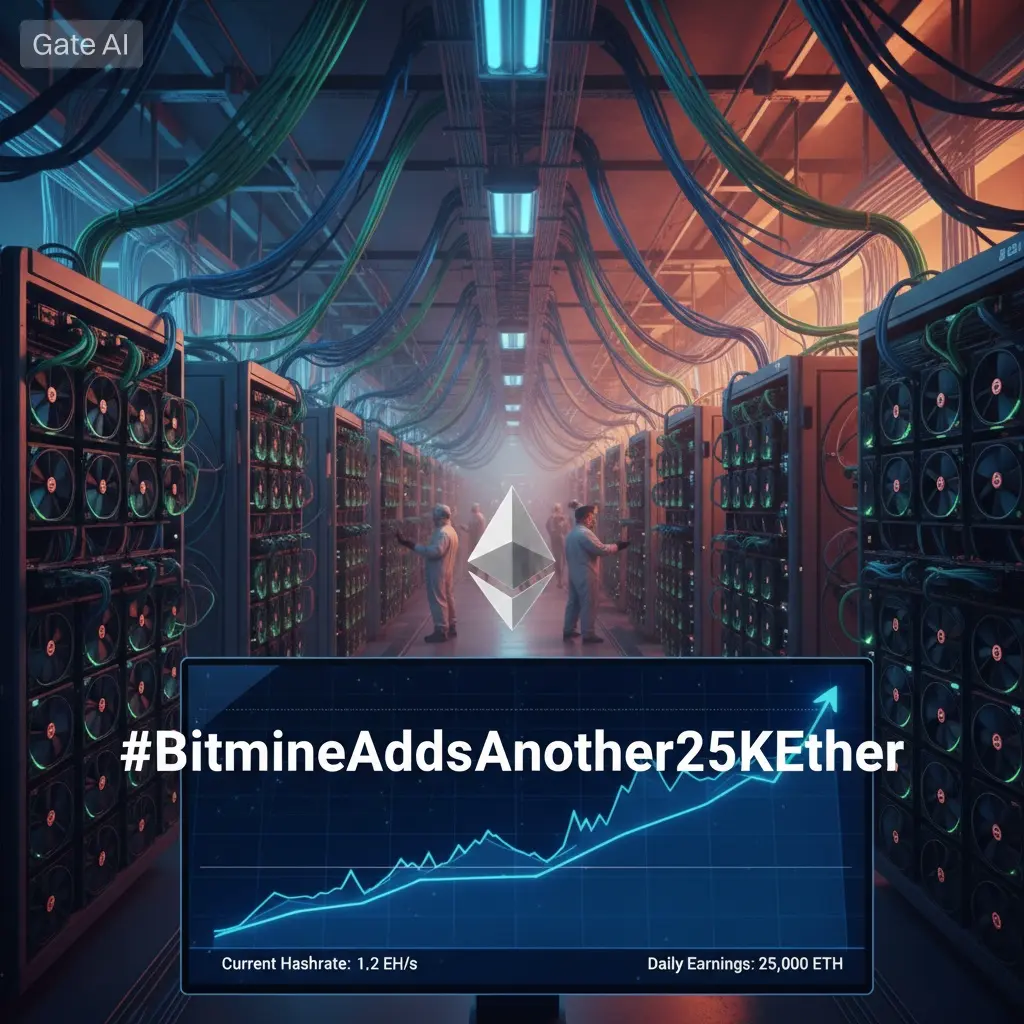
#BitmineAddsAnother25KEther
Bitmine’s $42M ETH Accumulation: Aggressive Conviction or Emerging Liquidity Risk?
On June 10, on-chain data confirmed that Ethereum saw another major treasury accumulation move as Bitmine purchased 25,000 ETH (~$42M) while price traded below $1,700.
This is not an isolated buy. It is part of a sustained accumulation strategy that now defines one of the most aggressive institutional ETH positioning stories in the current market cycle.
Scale That Changes Market Structure
Bitmine’s positioning is no longer just “large” — it is systemically meaningful:
Total holdings: ~5.42 million ETH
Share of circulating supply: ~4.5%
Staked portion: 85%+
Estimated staking yield: ~$230M annualized
At this scale, Bitmine is not just a holder. It is becoming a structural force in Ethereum’s supply dynamics.
When a single entity controls nearly 5% of supply, the question shifts from “why are they buying?” to:
“What happens to market liquidity if this position is never fully released?”
The Flywheel Narrative (But With a Hidden Dependency)
The bullish argument is straightforward:
Buy ETH during weakness
Stake majority of holdings
Earn yield (~$230M/year)
Recycle returns into further accumulation
This creates a self-reinforcing loop:
capital → ETH accumulation → staking yield → more capital
But this mechanism only works under one condition:
ETH price stability or long-term appreciation.
If price trends sharply lower, the flywheel weakens even if staking yield remains.
The Real Market Impact No One Talks About
This type of accumulation introduces a structural shift:
1. Liquid supply compression
With 85% staked, tradable ETH becomes tighter over time.
2. Price sensitivity increases
Smaller demand shifts can create larger price moves due to reduced float.
3. Centralization risk emerges
A single treasury holding ~4.5% of supply introduces dependency risk into staking dynamics.
Bull Case: Strategic Accumulation Phase
If Bitmine’s thesis plays out:
ETH is in long-term undervaluation zone
Institutional accumulation continues during volatility
Staking yield strengthens treasury compounding
Reduced liquid supply creates upward price pressure over time
In this scenario, Bitmine is early — not late — and becomes a major structural beneficiary of Ethereum’s long-term adoption curve.
Bear Case: Liquidity Trap Formation Risk
However, the risk side is not theoretical:
Heavy accumulation during weak price cycles can extend drawdowns
Concentrated holdings increase exit pressure sensitivity
Staking reduces liquidity flexibility in stress events
Market may misread accumulation as guaranteed demand support
If macro liquidity tightens, large positions like this can shift from “support” to latent volatility amplifiers.
Key Insight: This Is No Longer Just Accumulation
The important shift in interpretation is this:
This is not a normal treasury buy strategy anymore.
It is evolving into a supply structure transformation event inside Ethereum’s market microstructure.
The key debate is no longer:
“Is Bitmine bullish on ETH?”
It is:
“Does concentrated staking create long-term price stability or hidden systemic fragility?”
Final Takeaway
Bitmine’s continued accumulation of Ethereum represents one of the strongest conviction signals in the market — but also one of the most structurally impactful positioning events in recent cycles.
Large-scale staking + aggressive accumulation is simultaneously:
bullish for long-term scarcity
and sensitive for short-term liquidity stability
The outcome depends not on buying alone, but on whether the broader market can absorb reduced liquid supply without volatility spikes.
repost-content-media
  • Reward
  • Comment
  • Repost
  • Share
#GateLaunchesHongKongStockTrading Gate Launches Hong Kong Stock Trading: A Quiet Fintech Shift Toward Global Asset Unification
DragonFlyOfficial
#GateLaunchesHongKongStockTrading
Gate Launches Hong Kong Stock Trading: A Quiet Fintech Shift Toward Global Asset Unification
On June 11, Gate.io officially expanded its ecosystem by launching Hong Kong stock trading, allowing users to access over 1,000 HK-listed stocks directly inside the app.
This includes major names like:
Tencent
Meituan
Xiaomi
BYD
But the real story is not the stock list — it is the infrastructure shift behind it.
The Core Disruption: USDT Becomes a Multi-Market Settlement Layer
The key change is structural:
Users can trade HK stocks using USDT
No fiat conversion required
No traditional brokerage account needed
US + HK stocks unified under one account system
This effectively turns crypto capital into a cross-market liquidity bridge.
In simple terms:
Crypto is no longer isolated. It is being plugged into traditional equity markets.
Why This Matters More Than a “Feature Launch”
Most traders will see this as convenience. That is a mistake.
This move signals three deeper shifts:
1. Tokenized liquidity expansion
USDT is becoming a functional settlement currency beyond crypto.
2. Brokerage disintermediation
Traditional currency conversion + brokerage layers are being compressed.
3. Cross-asset capital mobility
Crypto wallets can now rotate directly into equities without exiting ecosystem.
This is the beginning of asset convergence infrastructure.
Strategic Impact on Market Structure
If adoption scales, this creates:
Faster capital rotation between crypto and equities
Higher correlation between digital assets and stock volatility
New arbitrage loops between US and HK markets
Increased dominance of stablecoin liquidity rails
The key shift:
Liquidity is no longer tied to geography — it is tied to platforms.
Bull Case Scenario
If Gate’s model scales successfully:
More global equities could be token-accessible
USDT becomes a dominant settlement layer in retail trading
Emerging markets gain easier access to global stocks
Capital efficiency increases across asset classes
In this scenario, Gate becomes not just an exchange — but a multi-asset financial gateway.
Bear Case Risks
However, this model is not frictionless:
Regulatory pressure on crypto-to-equity bridges
Liquidity fragmentation across markets
Counterparty and custody complexity
User misunderstanding of cross-asset risk exposure
The biggest hidden risk:
Users may treat all assets as one ecosystem without understanding underlying market differences.
That creates behavioral risk, not just technical risk.
Trading & Market Insight
From a market perspective, this is important because:
It increases “always-on liquidity” behavior
Encourages cross-market speculation loops
Reduces friction for capital rotation during volatility events
Historically, when friction drops, volatility increases, not decreases.
Final Takeaway
This launch is not just about adding Hong Kong stocks.
It represents a deeper shift toward:
Unified trading ecosystems where crypto capital, equities, and fiat rails merge into one platform layer.
The long-term implication is simple but powerful:
Financial markets are slowly moving from separate systems → interconnected liquidity networks.
repost-content-media
  • Reward
  • Comment
  • Repost
  • Share
#SpaceXIPOAttractsOver250BillionInOrders SpaceX IPO Frenzy: $250B Orders Signal Extreme Liquidity Compression in High-Conviction Assets
DragonFlyOfficial
#SpaceXIPOAttractsOver250BillionInOrders
SpaceX IPO Frenzy: $250B Orders Signal Extreme Liquidity Compression in High-Conviction Assets
The reported IPO demand for SpaceX has crossed $250 billion in orders, massively overshooting the $75 billion target and implying roughly 3.5–4x oversubscription.
This is not just a strong IPO story — it is a liquidity signal event.
What the Numbers Actually Mean (Beyond Headlines)
On the surface:
Huge demand
Oversubscription
Strong investor appetite
But structurally, this signals something deeper:
Capital concentration is shifting toward “rare access assets”
SpaceX is not behaving like a normal IPO — it is behaving like a scarcity-driven capital magnet.
Why Investors Are Overbidding So Aggressively
Three structural drivers explain the demand:
1. Space Infrastructure Narrative
SpaceX is no longer just rockets:
Satellite internet (Starlink)
Orbital logistics
Long-term space-based connectivity infrastructure
This positions it as a future utility-layer company, not just aerospace.
2. Supply Scarcity Effect
Unlike public equities:
Limited float
High institutional lock-up participation
Controlled distribution
This creates artificial scarcity, which drives oversubscription intensity.
3. AI + Space Convergence Theme
Market is now pricing convergence of:
AI data infrastructure
Satellite communication networks
Global low-latency connectivity systems
SpaceX sits at the intersection of all three.
The Real Market Signal (Most Traders Miss This)
This IPO demand is not just about SpaceX.
It reflects:
A global rotation into “next-generation infrastructure monopolies”
Capital is increasingly chasing:
platform dominance
network effects
physical + digital hybrid systems
Not traditional growth stocks.
Bull Case Scenario
If this demand translates into post-IPO performance:
SpaceX becomes a benchmark “future infrastructure” stock
Starlink monetization accelerates valuation expansion
Space-based data systems attract institutional infrastructure capital
IPO becomes reference point for other mega-private listings
Result:
A new valuation tier for space + telecom convergence assets
Bear Case Risks
However, extreme oversubscription also creates structural risk:
1. Overpricing at IPO launch
Early hype can front-run real earnings maturity
2. Expectations mismatch
Starlink profitability still scaling phase-dependent
3. Liquidity exit pressure
When unlock periods begin, volatility can spike sharply
4. Narrative saturation
“Future monopoly” pricing often precedes consolidation phases
Market Impact Beyond SpaceX
This IPO event also affects broader markets:
Tech liquidity gets partially redirected from public equities
Private market valuations re-anchor higher
Risk appetite increases across AI + infrastructure names
Secondary IPO pipelines may accelerate
In simple terms:
One IPO is becoming a liquidity reference point for the entire growth sector.
Trading Reality (Critical Insight)
Retail mistake here would be:
Treating IPO hype as guaranteed upside
Ignoring post-listing volatility cycles
Assuming oversubscription = low risk
Institutional reality:
Oversubscription often signals future volatility, not stability.
Final Takeaway
The SpaceX IPO demand surge is not just a company-specific event.
It represents:
extreme capital concentration
scarcity-driven pricing behavior
and a shift toward infrastructure monopoly narratives
The key question is not whether demand is strong — it clearly is.
The real question is:
Can long-term fundamentals justify this level of forward pricing after liquidity normalizes?
repost-content-media
  • Reward
  • Comment
  • Repost
  • Share
#SpaceXIPOAttractsOver250BillionInOrders $250 Billion Chasing One Company: Is SpaceX the Next Infrastructure Giant or the Most Crowded Trade of the Year?
DragonFlyOfficial
#SpaceXIPOAttractsOver250BillionInOrders
$250 Billion Chasing One Company: Is SpaceX the Next Infrastructure Giant or the Most Crowded Trade of the Year?
According to Reuters, SpaceX has attracted more than $250 billion in subscription demand ahead of its IPO, compared with a target raise of approximately $75 billion. That means demand is running at roughly 3.5–4 times the available allocation, making it one of the most anticipated public offerings ever.
At first glance, this looks like a simple success story.
But the real question investors should be asking is:
Are markets pricing the future of global infrastructure, or are they pricing perfection before the company even starts trading?
Why Is Demand So Extreme?
Most IPOs attract attention.
Very few attract a quarter-trillion dollars in demand.
The reason is that investors are not looking at SpaceX as a traditional aerospace company.
They are looking at three powerful growth engines:
1. Rocket Launch Dominance
SpaceX has fundamentally changed the economics of space launches through reusable rockets.
Lower launch costs have allowed the company to dominate commercial launch activity while creating barriers that are difficult for competitors to overcome.
This business generates revenue today and helps fund future expansion.
2. Starlink's Global Network
Starlink is no longer an experiment.
It has evolved into a global communications infrastructure platform capable of providing internet access across regions where traditional telecom networks struggle to operate.
Many investors believe Starlink alone could become one of the world's most valuable communications businesses over the next decade.
3. The Data Infrastructure Opportunity
The most overlooked part of the SpaceX story may be its role in future data infrastructure.
As AI adoption grows, demand for connectivity, low-latency communication, and global data transmission continues to expand.
Some investors believe satellite-based infrastructure could eventually become a strategic component of the AI economy.
If that thesis proves correct, SpaceX may benefit from multiple technology trends at the same time.
What the Market Is Really Saying
A $250 billion order book is not just a sign of excitement.
It is a signal that capital is desperately searching for scarce, high-conviction growth assets.
In recent years, investors have poured money into AI, cloud computing, semiconductors, and digital infrastructure.
Now many see SpaceX as a combination of all those themes:
Infrastructure
Connectivity
Technology
AI enablement
Global scale
That combination is rare.
And rare assets often attract extraordinary demand.
The Bull Case
The optimistic scenario is straightforward.
If SpaceX continues executing successfully:
Rocket launches keep expanding
Starlink grows its subscriber base
New commercial opportunities emerge
AI-related connectivity demand increases
Then today's valuation may eventually appear conservative compared to future cash flows.
In this scenario, SpaceX could become one of the defining infrastructure companies of the next generation.
The Bear Case Nobody Wants to Discuss
Extreme demand does not eliminate risk.
In fact, it can create new risks.
Valuation Risk
When expectations become too high, even strong results may disappoint investors.
IPO Volatility
Historically, some of the most anticipated IPOs experienced significant volatility after listing.
Execution Risk
Space infrastructure requires massive capital investment, long development cycles, and constant innovation.
Crowded Positioning
When nearly everyone is bullish, future upside becomes harder because optimism is already reflected in the price.
The Key Insight
Most people are focusing on the $250 billion demand number.
I think the more important number is the oversubscription ratio.
Why?
Because it shows investors are willing to compete aggressively for exposure before the company even begins public trading.
That level of demand reflects confidence.
But it also reflects expectations that are becoming increasingly difficult to exceed.
My View
This IPO is bigger than a single stock listing.
It represents a battle between two powerful forces:
Innovation vs Valuation.
The innovation story is extraordinary.
The valuation question remains unanswered.
Investors are clearly betting that SpaceX can become a foundational piece of future global infrastructure.
Whether that belief proves correct will determine if this IPO becomes a historic success story—or a lesson in how quickly excitement can outrun fundamentals.
Dragon Fly Official believes the most important thing to watch after listing is not the opening price.
It is whether the company can continue delivering growth fast enough to justify the expectations embedded in that $250 billion demand.
Dragon Fly Official is watching closely because this IPO may tell us more about investor psychology than any other market event this year.
Discussion
Did you subscribe to the SpaceX IPO?
What price do you think SPCX will open at?
Will you hold for the long term, or take profits shortly after listing?
Risk Warning
This post is for educational and discussion purposes only. IPOs can be highly volatile, and strong subscription demand does not guarantee positive post-listing performance. Always conduct your own research and manage risk carefully.
#SpaceX认购规模超2500亿美元
repost-content-media
  • Reward
  • Comment
  • Repost
  • Share
#SpotSilverUp10PercentForTheWeek Silver Explodes Higher: Is This the Start of a New Bull Run or Just a Relief Rally?
DragonFlyOfficial
#SpotSilverUp10PercentForTheWeek
Silver Explodes Higher: Is This the Start of a New Bull Run or Just a Relief Rally?
Spot silver surged more than 10% in a week, breaking above $67 per ounce and reaching an intraday high near $67.56. Meanwhile, silver futures gained more than 5.8% in a single session, dramatically outperforming gold.
At first glance, this looks like another precious metals rally.
But beneath the surface, silver's move may be signaling something much bigger about global liquidity, economic expectations, and the future of industrial demand.
Why Silver Suddenly Took Off
The immediate catalyst was a shift in geopolitical sentiment.
Markets had been pricing a familiar chain reaction:
Geopolitical Tension → Higher Oil Prices → Higher Inflation → More Hawkish Central Banks
That narrative weakened after reports that US-Iran negotiations were progressing and potential military escalation was avoided.
As geopolitical risk premiums eased:
Oil prices cooled
Treasury yields declined
The US Dollar Index fell below 100
Precious metals recovered sharply
Silver became the biggest beneficiary.
Why Silver Is Outperforming Gold
This is where things get interesting.
Unlike gold, silver is not just a monetary metal.
Silver has a dual identity:
Monetary Asset
Investors buy silver as:
Inflation protection
Currency hedge
Store of value
Industrial Metal
Silver is heavily used in:
Solar panels
Electric vehicles
Advanced electronics
Energy infrastructure
Semiconductor manufacturing
Because of this, silver often reacts more aggressively than gold when economic expectations improve.
Gold responds to fear.
Silver responds to both fear and growth.
That combination can create explosive rallies.
The Green Energy Factor
One of the strongest long-term drivers remains the energy transition.
Global investment continues to flow into:
Solar energy projects
Grid modernization
Electric transportation
Advanced manufacturing
Silver remains a critical input for many of these industries.
Even if investment demand fluctuates, industrial demand continues creating a strong fundamental base.
This is one reason many analysts view silver differently from traditional precious metals.
What the Dollar Is Telling Us
Another major contributor to silver's strength is the weakening US dollar.
Historically:
Strong dollar = pressure on metals
Weak dollar = support for metals
With the Dollar Index falling below 100, international buyers gain purchasing power, helping support commodity prices.
At the same time, lower Treasury yields reduce the opportunity cost of holding non-yielding assets like precious metals.
Together, these factors create a highly favorable environment for silver.
The Bull Case
If current trends continue:
Industrial demand remains strong
Solar adoption expands globally
Dollar weakness persists
Yields remain contained
Then silver could continue attracting both industrial buyers and investors simultaneously.
That combination is relatively rare and potentially powerful.
In this scenario, silver may continue outperforming gold.
The Bear Case
Investors should not ignore risks.
Geopolitical Uncertainty
The market's optimism depends heavily on successful US-Iran negotiations.
Any breakdown could quickly reverse sentiment.
Volatility Risk
Silver is historically more volatile than gold.
Sharp rallies often lead to equally aggressive corrections.
Economic Slowdown
Industrial demand assumptions depend on continued economic activity.
A global slowdown would challenge part of the bullish thesis.
Policy Risk
If inflation reaccelerates and yields move higher again, metals could face renewed pressure.
The Key Insight Most Traders Miss
Many people are treating silver as a precious metals story.
I believe this is increasingly an industrial demand story disguised as a precious metals rally.
Gold primarily reflects monetary conditions.
Silver reflects monetary conditions plus manufacturing activity, energy investment, and technology expansion.
That is why silver can sometimes move much faster than gold.
My View
The most important signal isn't that silver crossed $67.
The most important signal is that silver significantly outperformed gold during the move.
That suggests markets are not only reducing fear.
They are also becoming more optimistic about future industrial activity.
If that interpretation proves correct, silver may continue attracting attention from investors looking for exposure to both precious metals and the global energy transition.
Dragon Fly Official believes the next major test will be whether silver can maintain momentum once the immediate geopolitical headlines fade.
Dragon Fly Official is watching industrial demand indicators closely because they may ultimately matter more than short-term political developments.
Discussion
Do you think silver's rally is being driven more by:
A) Falling geopolitical risks and weaker dollar
or
B) Long-term industrial demand from solar, EVs, and new energy infrastructure?
And can silver continue outperforming gold through the rest of the year?
Risk Warning
This content is for educational purposes only and is not financial advice. Commodity markets can be highly volatile. Always conduct your own research and manage risk appropriately before making investment decisions.
repost-content-media
  • Reward
  • Comment
  • Repost
  • Share
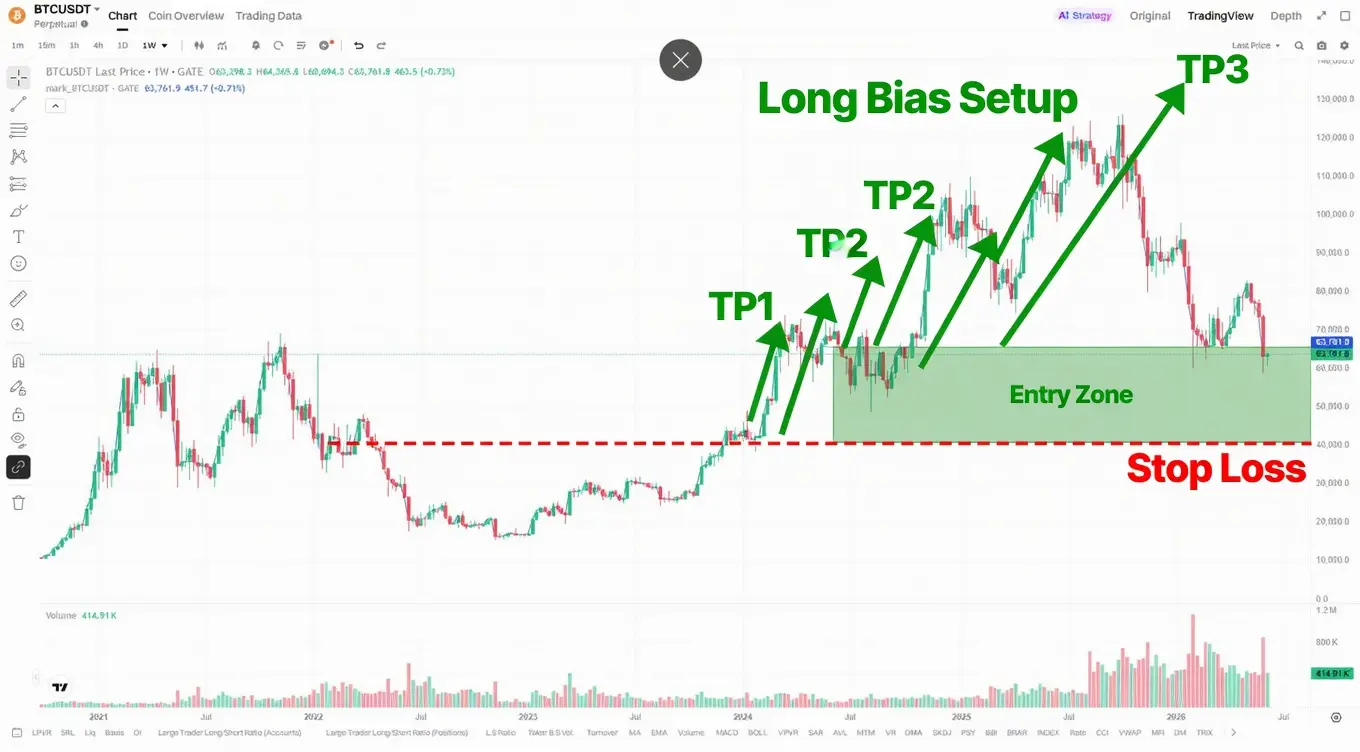
BTC Weekly Analysis | 13 June 2026 Bitcoin is currently trading around $63,700 on the weekly timeframe. After reaching a high near $126,000 in 2025, the market has been going through a major correction phase.
BTC0.84%
DragonFlyOfficial
BTC Weekly Analysis | 13 June 2026
Bitcoin is currently trading around $63,700 on the weekly timeframe. After reaching a high near $126,000 in 2025, the market has been going through a major correction phase. At the moment, price continues to hold above the critical $60,000 support zone, which remains the most important level to watch.
Key Levels (Weekly Chart)
Strong Support: $60,000 (most important level)
Next Support Zone: $58,000 – $55,000
Immediate Resistance: $70,000
Major Resistance Zone: $75,000 – $78,000
Possible Swing Trade Setup
Current Bias: Long
Entry Zone: $61,500 – $62,800
Stop Loss: $58,200 (below weekly closing support)
Target 1: $70,000
Target 2: $78,000
Target 3: $88,000 – $90,000+
The risk-to-reward ratio remains attractive from the current area as long as Bitcoin continues to defend the $60,000 support region.
However, if BTC loses $60,000 and records a convincing weekly close below that level, the market structure could weaken significantly, opening the door for a move toward the $55,000–$52,000 region.
Market Outlook
For now, the $60,000 level is acting as a key defensive zone for buyers and may support a relief rally in the coming weeks. However, a confirmed break above $70,000 is still required before a broader bullish reversal can be considered in play.
What’s your view on Bitcoin from here?
Are you accumulating near support, waiting for confirmation above resistance, or expecting a deeper correction?
#Bitcoin #BTC #BTCUSDT #Gateio
Risk Warning: This analysis reflects a personal market view and is for educational purposes only. Cryptocurrency markets are highly volatile. Always conduct your own research and use proper risk management before entering any trade.
repost-content-media
  • Reward
  • Comment
  • Repost
  • Share
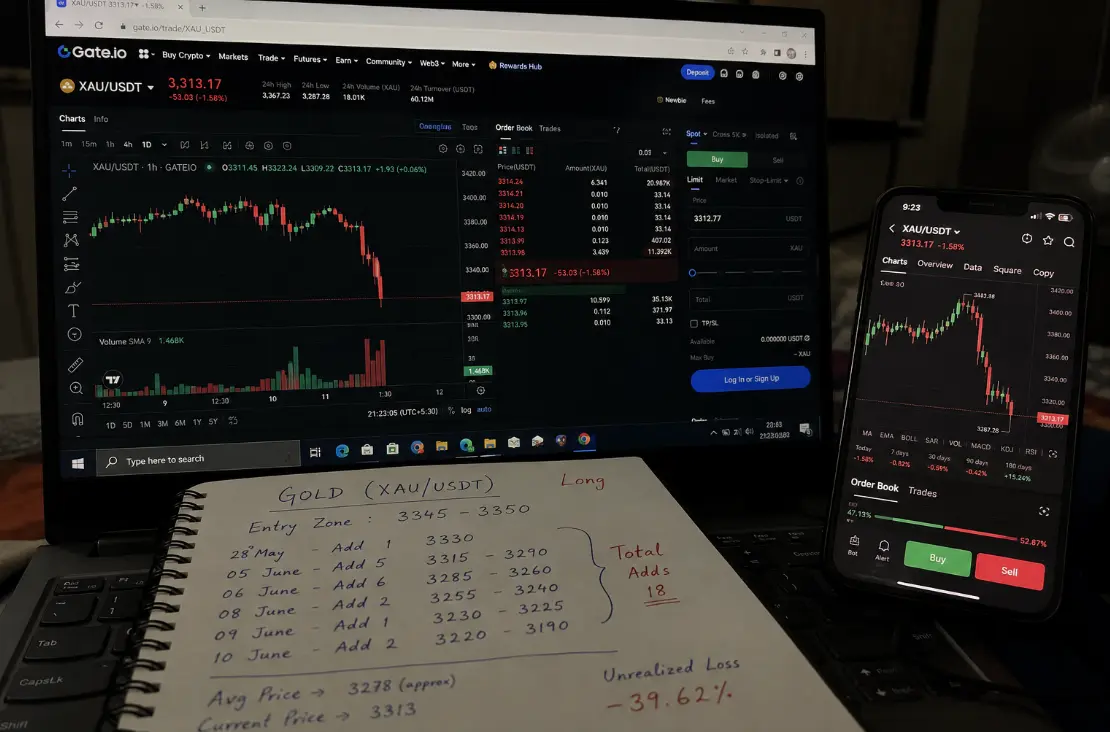
#我的Gate交易时刻 I stopped fighting Gold… and learned something different I used to treat Gold (XAUUSDT) like a battlefield.
XAU0.21%
DragonFlyOfficial
#我的Gate交易时刻
I stopped fighting Gold… and learned something different
I used to treat Gold (XAUUSDT) like a battlefield.
Every small move against me felt like a challenge — so I kept adding positions, trying to “win back control”.
But the market doesn’t care about control.
It only responds to structure.
One day I looked at my chart and realized something simple but powerful:
I wasn’t trading the market… I was reacting to it.
Instead of waiting for confirmation, I was building hope-based positions.
Instead of respecting trend, I was fighting it.
That’s when I changed my approach:
No more emotional averaging
No more revenge entries
Only structured entries with invalidation levels
Gold didn’t change.
I did.
And that shift alone saved me from repeating the same cycle again and again.
Now I’m not trying to predict every move…
I’m just waiting for clean setups.
Have you ever realized you were “fighting the market” instead of trading it?
#XAUUSDT #TradingMindset #MyGateTradingMoment
repost-content-media
  • Reward
  • Comment
  • Repost
  • Share
THE TRADE THAT CHANGED MY ENTIRE MARKET THINKING
DragonFlyOfficial
THE TRADE THAT CHANGED MY ENTIRE MARKET THINKING
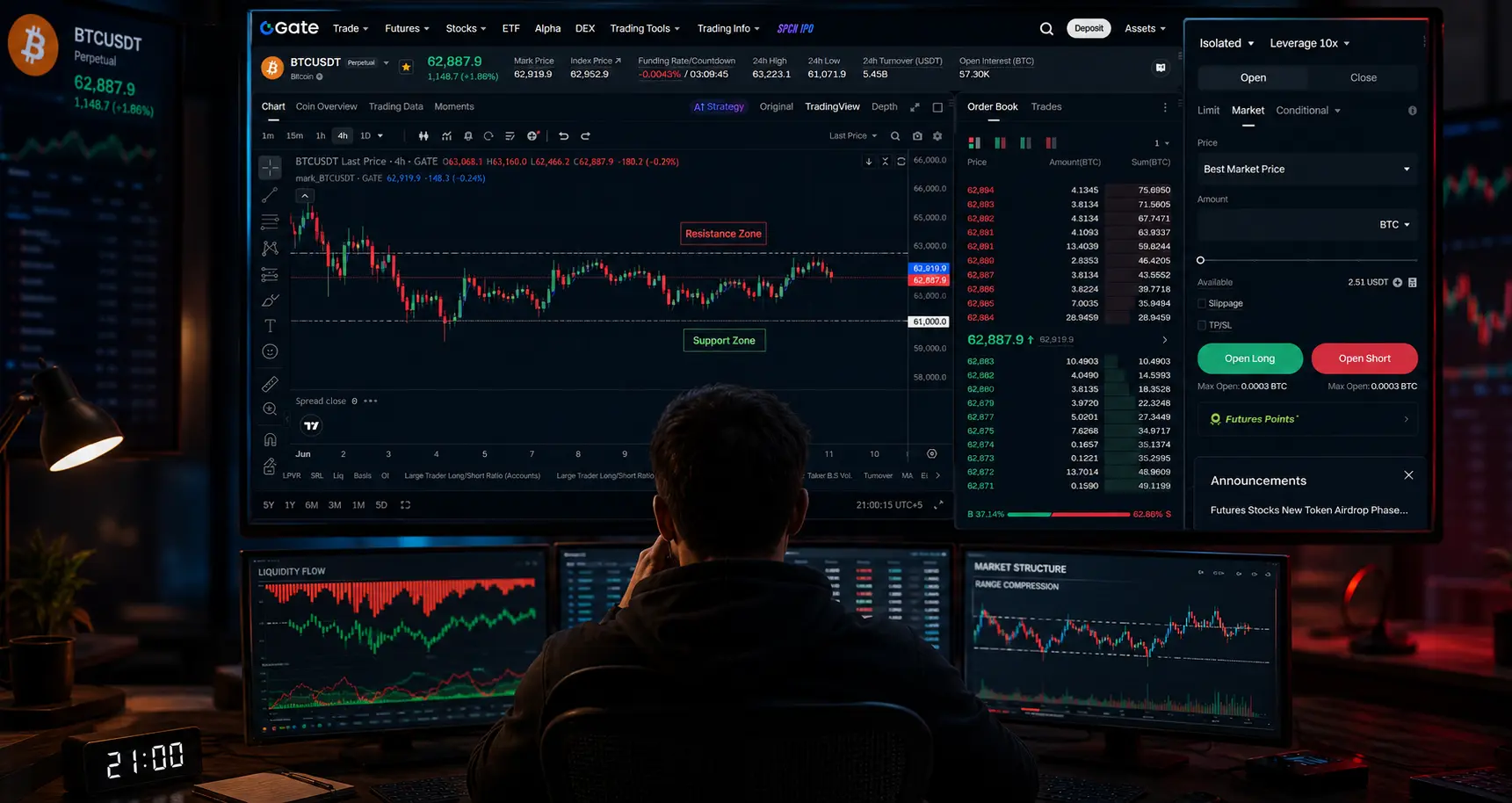
BTCUSDT is currently moving inside a consolidation range after a strong decline, with support near 61,000 and resistance around 63,000. The structure reflects liquidity accumulation rather than a clear trend, making false breakouts and rapid reversals common. The key lesson is to avoid overtrading, manage risk carefully, and wait for a confirmed expansion move instead of reacting to every candle.
repost-content-media
  • Reward
  • Comment
  • Repost
  • Share
#MyGateTradeStory
The Bitcoin Position That Completely Changed My Market Perspective
#我的Gate交易时刻
Every trader experiences a defining moment that reshapes the way markets are viewed. For me, that moment came through a Bitcoin position during a period of extreme uncertainty. Before that experience, market participation felt heavily focused on short-term price fluctuations, daily volatility, and constant attempts to predict every movement. After that trade, my entire investment framework evolved toward understanding liquidity cycles, capital flows, macroeconomic conditions, and long-term market
BTC0.84%
Yusfirah
#MyGateTradeStory
The Bitcoin Position That Completely Changed My Market Perspective
#我的Gate交易时刻
Every trader experiences a defining moment that reshapes the way markets are viewed. For me, that moment came through a Bitcoin position during a period of extreme uncertainty. Before that experience, market participation felt heavily focused on short-term price fluctuations, daily volatility, and constant attempts to predict every movement. After that trade, my entire investment framework evolved toward understanding liquidity cycles, capital flows, macroeconomic conditions, and long-term market structure.
Bitcoin has matured significantly over recent years. Institutional participation continues to expand, digital asset infrastructure continues to strengthen, and global awareness regarding decentralized financial systems continues to increase. These developments have transformed Bitcoin from a niche technology experiment into a globally recognized financial asset attracting attention from investors, corporations, funds, and policymakers.
My Market Observation in 2026
Throughout 2026, Bitcoin has demonstrated remarkable resilience despite periods of volatility. Every major correction has provided valuable information regarding buyer strength and market confidence. Large participants appear increasingly focused on accumulation strategies rather than speculative short-term activity. This behavior often signals confidence in future valuation growth.
From my perspective, current market conditions suggest that Bitcoin remains within a broader expansion phase. Volatility continues to create opportunities, yet the underlying trend still reflects strong investor interest. Capital entering digital assets increasingly seeks quality, liquidity, and long-term value preservation. Bitcoin remains the primary beneficiary of this trend.
Rather than focusing exclusively on daily price movements, I prefer examining liquidity conditions, institutional activity, macroeconomic developments, and long-term demand trends. These factors frequently provide stronger signals than short-term market noise.
My Bitcoin Prediction
Based on current market structure, institutional adoption trends, and ongoing demand dynamics, I believe Bitcoin possesses strong potential to maintain its long-term upward trajectory during the remainder of 2026.
Several factors support this outlook:
• Growing institutional participation continues to strengthen market depth.
• Increasing recognition of digital assets as a portfolio diversification tool supports demand.
• Expanding global awareness of decentralized financial infrastructure contributes to long-term adoption.
• Supply dynamics remain favorable as long-term holders continue demonstrating conviction during periods of volatility.
While temporary corrections remain a natural part of every market cycle, broader trends suggest continued investor interest in Bitcoin as a strategic asset.
The Three Lessons That Produced My Best Trading Results
1. Risk Management Creates Longevity
The most important lesson from my experience involves capital preservation. Exceptional opportunities always return. Capital lost through emotional decisions becomes much harder to recover.
Every position should begin with a clear risk framework. Position sizing, exposure limits, and disciplined execution consistently outperform emotional decision-making over extended periods.
2. Patience Often Delivers Greater Rewards Than Activity
Many traders associate success with constant action. My experience revealed a different reality. Some of the strongest returns emerged from waiting for high-conviction opportunities rather than participating in every market movement.
Patience allows traders to preserve emotional energy, maintain objectivity, and identify stronger setups.
3. Market Psychology Drives Price More Than Most Indicators
Charts provide valuable information, yet psychology frequently determines market direction. Fear, greed, optimism, and uncertainty influence decision-making across all asset classes.
Understanding investor behavior helped improve my results far more than adding additional indicators to a chart. Studying market sentiment, positioning, and capital flows provides a deeper understanding of potential future movements.
My Advice for Traders
Successful trading extends beyond predicting prices. It requires discipline, consistency, emotional control, and continuous learning. Markets reward preparation far more than prediction.
Focus on developing a repeatable process. Build conviction through research. Respect risk during every phase of the market cycle. Remain adaptable as conditions evolve.
Bitcoin continues to represent one of the most fascinating financial innovations of the modern era. Its journey has created opportunities, challenged conventional thinking, and transformed the way many investors view value, scarcity, and financial systems.
The trade that changed my perception ultimately taught a simple lesson: sustainable success comes from understanding the bigger picture rather than chasing every short-term movement. That lesson continues guiding every investment decision I make today.
repost-content-media
  • Reward
  • 4
  • Repost
  • Share
Yusfirah:
1000x VIbes 🤑
View More
Yusfirah
#MyGateTradeStory # My Gate Trading Moment: How One Ethereum Trade Rewired My Entire Investment Brain
The Trade That Shattered My Old Self
I used to be the kind of trader who chased green candles like a moth to flame. ETH pumps 15%? I'm late, but I buy anyway. ETH dips? I panic-sell before the dust settles. My portfolio was a rollercoaster of emotional decisions, and my PnL chart told the story better than any words could — a jagged mess of hope and regret. Then came one Ethereum trade on Gate that didn't just change my numbers. It changed who I am as an investor. This isn't a boast about a legendary win. It's a confession about how I finally learned to think before clicking, and why that single moment of restraint became the foundation of everything I do now.
understanding Market Cycles: The Map I Never Read
Before that trade, I treated every price movement as isolated. ETH goes up — bull market, right? ETH goes down — time to flee. I had no framework for understanding where we were in the cycle. The truth is Ethereum, like every asset, moves through macro phases: accumulation, expansion, distribution, and contraction. The on-chain data was screaming what phase we were in — declining exchange reserves meant smart money was pulling ETH off centralized platforms, staking rates were climbing, and gas usage patterns showed real economic activity, not just speculative rotation. But I was blind to all of it. I watched the chart and nothing else. That trade forced me to look at the full picture — the macro cycle, the on-chain signals, the institutional footprints — and realize that context is everything. A price is just a number. A cycle is a narrative, and if you don't know which chapter you're in, you're just guessing.
The Moment of Patience That Cost Me Nothing and Saved Me Everything
Here's the trade. ETH had just broken through a resistance level after weeks of sideways consolidation. The crowd was euphoric. Twitter was flooded with "ETH to 10K" posts. My finger was hovering over the buy button. My portfolio was already 70% ETH from previous impulsive entries, most of them at local tops. But this time, something was different. I had spent the previous month studying — not just charts, but Ethereum's fundamentals. I understood that the Layer-2 ecosystem was maturing, that ETH's value wasn't just as a speculative asset but as the economic backbone of a sprawling decentralized compute network. I knew the ETF narrative was building institutional demand slowly, not in one explosive candle. So instead of buying at the breakout, I waited. I let the impulse fade. I watched ETH retrace 12% over the next two weeks as overleveraged traders got flushed. And then, when the dust cleared and on-chain metrics confirmed the retrace was healthy — not a trend reversal — I entered. That patience didn't make me miss the move. It made me catch it at a level where my risk was defined, my conviction was grounded in data, and my position size reflected reality, not fantasy.
Risk Management: From Survival Mode to Strategic Architecture
That trade taught me something I had read a hundred times but never truly felt: risk management isn't about limiting losses. It's about designing the conditions under which losses become survivable and wins become meaningful. Before, I sized positions based on how much I wanted to make. After, I size them based on how much I can afford to lose without my strategy collapsing. On Gate, I now set my leverage with intention, not ambition. I define my stop before my entry. I calculate my max exposure as a percentage of total capital, not as a multiplier of potential profit. That ETH trade was small — just 15% of my portfolio — but it was structured so cleanly that even a 20% adverse move would have cost me less than 3% of my total net worth. The position eventually ran 40% in my favor, but the real victory wasn't the return. It was the fact that I had built a structure where I could survive the worst case and still be in the game to capture the best case. That's what risk management actually means. It's not a constraint. It's a liberation.
Capital Preservation: The Unsexy Skill That Separates Amateurs from Professionals
Every beginner dreams of the 10x trade. No beginner dreams of the 0.9x preservation. But here's what that ETH trade drilled into me: if you lose 50% of your capital, you need a 100% gain just to break even. If you lose 80%, you need a 400% gain. The math of recovery is brutal and asymmetric. Capital preservation is the foundation upon which all returns are built. Before that moment, I treated my portfolio like a casino chip — disposable, reloadable, expendable. After, I treated it like a business asset — finite, precious, to be deployed only when the probability profile justified the allocation. That shift in mentality alone probably saved me from at least five catastrophic trades I would have otherwise taken. Preservation isn't about fear. It's about respect for the resource that gives you the ability to play the game at all.
Ethereum Fundamentals: Why I Stopped Trading a Token and Started Investing in a Network
The deeper I dug into Ethereum before that trade, the more I realized I had been trading a symbol without understanding what it represented. ETH isn't just a price on a chart. It's the native currency of a network that processes millions of transactions daily, secures hundreds of billions in assets, and serves as the settlement layer for an entire ecosystem of financial, social, and computational protocols. The transition to proof-of-stake didn't just change the consensus mechanism — it changed ETH's economic model. Staking yields create a baseline demand. The burn mechanism from EIP-1552 creates a baseline supply contraction. Together, they give ETH a monetary premium that most other tokens simply don't have. When I understood this, I stopped viewing my ETH position as a trade and started viewing it as an allocation to a productive economic network. That reframing changed everything — my time horizon, my tolerance for volatility, my willingness to hold through drawdowns. I wasn't betting on a price. I was investing in infrastructure.
on chain Activity: The Truth Beneath the Chart
Charts lie. Not intentionally, but by omission. A price can look bullish while the underlying network activity is decaying. It can look bearish while smart money is quietly accumulating. Before that transformative trade, I never looked beneath the surface. Now, on-chain data is the first thing I check before any decision. I look at active addresses to gauge real usage, not speculative interest. I monitor staking deposit flows to understand long-term conviction from large holders. I track Layer-2 throughput metrics because Ethereum's value proposition increasingly lives in its rollup ecosystem, and if L2 activity is thriving, ETH demand is structurally supported. I watch exchange inflows because spikes often precede selling pressure. That ETH trade was my gateway into on-chain thinking, and it's now the lens through which I evaluate every move. Price tells you what happened. On-chain tells you why it happened and what might happen next.
ETF Impact: The Institutional Tide I Finally Learned to Read
When the Ethereum ETF narrative began building, I initially dismissed it as hype. "Institutions don't buy crypto," I told myself, echoing the tribal beliefs of the community I surrounded myself with. But that trade — and the research I did before entering — forced me to confront reality: institutional flows change the structural demand profile of an asset in ways that retail enthusiasm never can. ETF inflows create sustained, slow, compounding buying pressure that doesn't evaporate when Twitter sentiment flips negative. They bring new capital from participants who think in quarters, not minutes. They reduce volatility by introducing longer-holding-period investors into the market structure. I'm not saying ETFs make ETH immune to drawdowns — far from it. But they change the nature of those drawdowns. Instead of panic-driven cascades, you see more measured corrections as institutional holders rebalance rather than liquidate. Understanding this shifted my approach to timing. I no longer try to front-run ETF announcements. I position myself in the direction of the structural flow and let the tide do the heavy lifting.
stragic Decision-Making: From Reactive Chaos to Deliberate Architecture
The most profound change from that single trade wasn't in any specific technique. It was in how I make decisions. Before, my process was: see signal, feel emotion, execute action. After, my process became: observe context, analyze data, define risk, plan entry, execute only when all conditions align. This isn't just slower trading. It's fundamentally different trading. On Gate, I now approach every potential position with a framework: What cycle phase are we in? What do on-chain metrics say? What is my maximum acceptable loss? What is the structural narrative supporting this move? Where is my exit if my thesis is wrong? Where is my exit if my thesis is right? That checklist doesn't guarantee profits — nothing does. But it guarantees that every trade I take is intentional, reasoned, and survivable. The difference between a gambler and a strategist isn't the outcome of any single bet. It's the quality of the process that produced the bet.
long term Investment Lessons: The Compound Returns of Better Thinking
Here's the paradox: that ETH trade itself returned roughly 40%. Not bad, but not legendary. Yet the lessons it embedded have returned far more over the subsequent months and years — not in any single position, but in the cumulative effect of avoiding bad trades, sizing good trades correctly, and holding winners long enough for them to actually win. The true ROI of that moment isn't measured in ETH. It's measured in every subsequent decision that was better because of what I learned. I've drawn down less. I've recovered faster. I've held positions through volatility that I would have previously abandoned. I've walked away from setups that looked tempting but didn't meet my criteria. Each of these micro-decisions compounds, and over time, the gap between my old self and my current approach isn't just noticeable — it's transformative. Better thinking produces better outcomes, and better outcomes reinforce better thinking. That's the real compounding.
The Reflection I Carry Into Every Trade
When I open Gate today and look at the ETH chart, I don't see the same thing I saw two years ago. I don't see a random price line to gamble on. I see a network's economic signal, embedded in a macro cycle, influenced by institutional flows, validated or invalidated by on-chain truth. I see a risk-reward profile that I can define before I commit capital. I see an opportunity that I can take or leave based on whether it fits my framework, not my emotions. That one trade didn't teach me everything. But it taught me the most important thing: that the quality of your preparation determines the quality of your execution, and that the quality of your execution determines whether you survive long enough for preparation to matter. Ethereum gave me the lesson. Gate gave me the platform to apply it. And the lesson itself — patience grounded in knowledge, risk managed with discipline, capital preserved with respect — is now the architecture of every decision I make. That's my Gate trading moment. Not a trade. A transformation.
#我的Gate交易时刻 #Ethereum
repost-content-media
  • Reward
  • 4
  • Repost
  • Share
Yusfirah:
Buy To Earn 💰️
View More
Yusfirah
#TradFiCFDGoldMasters
THE GLOBAL CFD TRADING MASTERS: A PREMIER MULTI-ASSET COMPETITION FOR ELITE MARKET PRACTITIONERS
The financial markets have entered a new era of competitive trading where skill, discipline, and strategic acumen separate the exceptional from the ordinary. The Global CFD Trading Masters represents the pinnacle of this evolution—a comprehensive trading competition that brings together the world's most sophisticated market participants across multiple asset classes including gold, silver, crude oil, forex pairs, US equities, and major global indices.
**COMPETITIVE ARCHITECTURE AND PERFORMANCE METRICS**
At the heart of this competition lies a dual-leaderboard system designed to capture the full spectrum of trading excellence. The Trading Leaderboard ranks participants based on absolute profit generation, measuring the raw financial performance achieved through strategic market positioning. This metric rewards traders who can identify and capitalize on significant market movements across diverse instruments.
Complementing this is the Profit Rate Leaderboard, which emphasizes risk-adjusted returns and capital efficiency. This ranking system recognizes that sustainable trading success depends not merely on gross profits, but on the ability to generate consistent returns while preserving capital. Traders achieving superior profit rates demonstrate mastery of position sizing, leverage management, and the delicate balance between opportunity and exposure.
The competition structure acknowledges that modern markets demand versatility. Participants must navigate the unique characteristics of each asset class—gold's safe-haven dynamics and inflation sensitivity, silver's industrial demand profile and volatility patterns, crude oil's geopolitical sensitivity and supply-demand fundamentals, forex's interest rate differentials and macroeconomic drivers, and equity indices' correlation to corporate earnings and broader economic sentiment.
**MULTI-ASSET EXPOSURE AND STRATEGIC DIVERSIFICATION**
The inclusion of precious metals provides participants with exposure to tangible store-of-value instruments that historically demonstrate low correlation to traditional equity markets. Gold CFDs allow traders to speculate on price movements without physical ownership, offering leveraged exposure to one of the world's most liquid alternative assets. Silver adds a complementary dimension with its dual role as both precious metal and industrial commodity.
Energy markets through crude oil CFDs introduce participants to one of the most actively traded commodities globally, where supply disruptions, OPEC policy decisions, and shifting demand patterns create continuous trading opportunities. The forex component encompasses major, minor, and exotic currency pairs, exposing traders to the world's largest financial market where daily turnover exceeds six trillion dollars.
US stocks and global indices complete the asset universe, providing equity market exposure that responds to corporate fundamentals, earnings seasons, and macroeconomic data releases. This multi-asset framework rewards traders who can identify cross-market correlations and divergences, rotating capital efficiently between asset classes as market conditions evolve.
**REWARD MECHANISM AND INCENTIVE STRUCTURE**
The competition employs a sophisticated reward architecture centered on gold-based incentives that align participant interests with the underlying market theme. This approach creates natural synergy between trading performance and prize value, as successful gold traders simultaneously accumulate profits and enhance their reward potential.
Hourly and daily draw mechanisms introduce elements of accessibility and momentum, ensuring that participation remains engaging throughout the competition period. These time-sensitive opportunities reward consistent activity and strategic timing, recognizing that market opportunities emerge continuously rather than at predetermined intervals.
Milestone rewards acknowledge incremental achievement, providing recognition and incentives for traders who demonstrate sustained performance improvement. This tiered structure ensures that excellence at various levels receives appropriate acknowledgment, from emerging traders building their track records to established professionals cementing their market reputations.
**PARTICIPATION MECHANICS AND ELIGIBILITY**
Entry into the competition operates through multiple pathways, reflecting the diverse nature of modern trading communities. Trading activity serves as the primary qualification mechanism, ensuring that participants demonstrate genuine market engagement and commitment. This approach filters for serious practitioners while maintaining accessibility for dedicated traders across experience levels.
Task completion requirements introduce educational and engagement components, encouraging participants to deepen their understanding of market mechanics and platform capabilities. These structured activities build competency while creating additional reward opportunities beyond pure trading performance.
Referral and eligibility-based access pathways recognize the social dimension of trading communities, where knowledge sharing and network effects contribute to collective success. This multi-channel entry system ensures broad participation while maintaining standards of genuine trading activity.
**TIME-SENSITIVE MARKET DYNAMICS**
The competition unfolds against a backdrop of significant market developments that create both opportunity and challenge. Current macroeconomic conditions feature persistent inflation concerns, shifting central bank policies, and evolving geopolitical risk premiums that impact all asset classes. Gold markets have demonstrated remarkable resilience, with physical demand reaching multi-year highs as institutional and retail participants seek portfolio diversification.
Energy markets remain volatile amid supply chain complexities and geopolitical tensions, creating trading opportunities for those who can interpret fundamental developments and technical patterns. Forex markets respond to interest rate differentials and economic data surprises, rewarding traders who maintain awareness of scheduled releases and policy communications.
Equity indices navigate the tension between earnings growth expectations and valuation concerns, with sector rotation providing tactical opportunities for nimble participants. The convergence of these factors creates a rich trading environment where disciplined practitioners can identify asymmetric risk-reward opportunities.
**PROFESSIONAL TRADING PERSPECTIVE: STRATEGIC FRAMEWORKS FOR COMPETITIVE SUCCESS**
Experienced market participants understand that competition success requires more than technical analysis proficiency. The following strategic principles distinguish consistent performers from those who experience volatile results.
**Disciplined Risk Control as Foundation**
Professional traders approach competition with predetermined risk parameters that govern every position. This includes maximum exposure limits per trade, daily loss thresholds that trigger position reduction, and overall portfolio heat management. The discipline to honor these limits—particularly when experiencing losses that trigger emotional responses—separates professionals from amateurs.
Risk control extends beyond individual positions to correlation management across the multi-asset portfolio. Traders must recognize when positions in gold, oil, and equities create unintended concentration risk, adjusting exposures to maintain intended diversification benefits.
**Capital Preservation Mindset**
The mathematics of trading recovery demonstrate that preserving capital proves more valuable than pursuing aggressive returns. A twenty percent drawdown requires a twenty-five percent subsequent gain merely to return to breakeven, while a fifty percent drawdown demands a one hundred percent recovery. Professional traders prioritize capital preservation because they understand that sustainable participation requires surviving inevitable losing periods.
This mindset manifests in position sizing that reflects both opportunity assessment and worst-case scenario planning. Traders who size positions based on potential loss rather than potential gain maintain greater flexibility to navigate adverse market conditions.
**Consistency Over High-Risk Moves**
Competition leaderboards often feature traders who achieve dramatic single-trade returns, but sustainable ranking improvement typically comes from consistent positive expectancy rather than occasional home runs. Professional traders focus on high-probability setups with favorable risk-reward ratios, accumulating gains through repeated execution of proven strategies rather than speculative bets on low-probability outcomes.
This approach requires patience and emotional control, as markets do not always present optimal opportunities on demand. The discipline to remain inactive when conditions do not favor one's strategy proves as valuable as the ability to act decisively when opportunities emerge.
**Reading Macro and Sentiment Shifts in Real Time**
Multi-asset trading success requires continuous monitoring of macroeconomic developments and market sentiment indicators. Professional traders maintain awareness of scheduled economic releases, central bank communications, and geopolitical developments that could impact their positions. This situational awareness enables proactive position adjustment rather than reactive damage control.
Sentiment analysis complements fundamental awareness, as market positioning and crowd psychology often create short-term divergences from fundamental value. Traders who can identify extreme positioning or sentiment shifts gain opportunities to position for potential reversals or accelerations.
**CONCLUSION**
The Global CFD Trading Masters represents more than a competition—it serves as a proving ground for trading excellence in modern financial markets. Success requires mastery of multiple asset classes, disciplined risk management, and the psychological fortitude to execute consistently under pressure. For serious market practitioners, this competition offers not merely prizes, but the opportunity to validate their skills against a global field of peers and to refine their craft through structured, high-stakes engagement.
The markets await. The leaderboard beckons. The question is not whether opportunity exists, but whether you possess the discipline, strategy, and execution capability to capture it.
.
repost-content-media
  • Reward
  • 2
  • Repost
  • Share
Yusfirah:
To The Moon 🌕
View More
#BitmineAddsAnother25KEther
Bitmine’s Accelerating Ethereum Accumulation: A Deep Dive into Today’s Market-Shaping Development
In a market environment defined by volatility, macro pressure, and shifting institutional behavior, Bitmine Immersion Technologies has once again intensified its Ethereum accumulation strategy by adding another 25,000 ETH to its corporate treasury. This latest move continues a rapid expansion phase that has become one of the most closely watched institutional accumulation trends in 2026.
What stands out is not just the size of the purchase,
Yusfirah
#BitmineAddsAnother25KEther
Bitmine’s Accelerating Ethereum Accumulation: A Deep Dive into Today’s Market-Shaping Development
In a market environment defined by volatility, macro pressure, and shifting institutional behavior, Bitmine Immersion Technologies has once again intensified its Ethereum accumulation strategy by adding another 25,000 ETH to its corporate treasury. This latest move continues a rapid expansion phase that has become one of the most closely watched institutional accumulation trends in 2026.
What stands out is not just the size of the purchase, but the consistency and timing. Bitmine continues to accumulate aggressively during periods where broader sentiment remains fragile, reinforcing a long-term conviction framework centered around Ethereum’s structural value, network utility, and future adoption cycle.
---
A CONTINUOUS ACCUMULATION ENGINE IN MOTION
The addition of 25,000 ETH represents another layer in a multi-day accumulation wave that has already crossed well over 100,000 ETH in recent activity. This sustained buying pattern signals a structured treasury strategy rather than isolated opportunistic entries.
Instead of reacting to short-term volatility, Bitmine appears to be operating with a long-horizon capital deployment model that prioritizes supply absorption and balance sheet expansion. Each purchase incrementally reduces circulating liquidity while increasing long-term exposure to Ethereum’s network economics.
At current market valuation levels, this latest addition alone represents tens of millions of dollars in fresh capital allocation, reinforcing the scale at which institutional-grade accumulation is taking place.
---
TREASURY SCALE AND MARKET POSITIONING
With cumulative holdings now extending into multi-million ETH territory, Bitmine has positioned itself among the largest identifiable Ethereum holders globally.
At prevailing prices near the mid-$1,600 range, the company’s Ethereum treasury alone is valued in the multi-billion-dollar bracket. When combined with broader asset exposure across cash reserves and strategic equity positions, the total balance sheet footprint approaches the upper tier of digital asset treasury structures.
Bitmine’s growing share of Ethereum’s circulating supply places it in a structurally influential position. Approaching the 5% supply concentration threshold, the company’s actions begin to carry implications beyond portfolio management and into broader market liquidity dynamics.
---
THE STRATEGIC TARGET: “ALCHEMY OF 5%”
A defining element of Bitmine’s strategy is its publicly communicated long-term objective of reaching approximately 5% of total Ethereum supply.
This target is not symbolic alone. At current circulation estimates, reaching this threshold would require holding roughly 6 million ETH, positioning Bitmine as the single largest identifiable holder of Ethereum globally.
The strategic implication of such concentration is significant. It would reduce free-floating supply available for trading, increase staking concentration, and potentially amplify both upside and downside price sensitivity depending on macro conditions.
With current holdings already close to the mid-4% range, the remaining gap to target has narrowed substantially compared to earlier phases of accumulation.
---
MARKET CONTEXT: ACCUMULATION DURING MACRO STRESS
The latest purchase occurs within a macro environment characterized by elevated inflation pressure, restrictive monetary expectations, and cautious global liquidity conditions.
Risk assets across the board have experienced sustained volatility, and Ethereum has undergone a deep corrective phase from prior highs. In such conditions, institutional behavior typically trends toward capital preservation rather than expansion.
Bitmine’s continued buying activity therefore reflects a contrarian positioning approach. Rather than scaling back exposure during uncertainty, the company has increased allocation intensity, effectively treating market weakness as a structural entry opportunity.
This behavior highlights a long-term thesis anchored in Ethereum’s role as a foundational digital infrastructure layer rather than a short-term speculative asset.
---
STAKING YIELD AND PRODUCTIVE CAPITAL MODEL
A key differentiator in Bitmine’s Ethereum strategy is the ability to generate yield through staking mechanisms.
A large portion of the company’s ETH holdings is actively staked, contributing recurring network-based rewards that provide partial offset against operational costs and financial obligations. This introduces a productive yield component that does not exist in traditional reserve assets like Bitcoin.
Staking transforms the treasury from a passive holding structure into an active yield-generating system. While market price remains the dominant driver of valuation, staking introduces a secondary revenue stream that supports long-term sustainability and operational flexibility.
At scale, these rewards represent meaningful annual cash flow, reinforcing the rationale for maintaining and expanding ETH exposure rather than liquidating positions.
CAPITAL STRUCTURE AND FINANCING DYNAMICS
Bitmine’s accumulation strategy is supported by a layered capital structure combining equity market access, cash reserves, and structured preferred instruments.
The introduction of dividend-bearing preferred equity has enabled additional funding capacity while attracting yield-focused institutional participants. However, this structure introduces a spread between staking yields and dividend obligations, creating a financial balancing mechanism that depends on both market performance and capital efficiency.
This yield differential places importance on sustained staking performance, disciplined treasury management, and continued access to capital markets during varying market cycles.
SUPPLY IMPACT AND MARKET STRUCTURE SHIFT
As Bitmine’s holdings expand toward the 5% supply level, the structural impact on Ethereum’s market dynamics becomes increasingly relevant.
A concentrated holding of this scale reduces liquid supply available across exchanges, decentralized finance systems, and institutional circulation. This can create conditions where price movements become more sensitive to demand shocks due to reduced float.
At the same time, large-scale staking concentration introduces evolving considerations around validator distribution and network participation balance. While Ethereum remains decentralized in design, the presence of major institutional validators is reshaping how staking power is distributed across the ecosystem.
This trend reflects a broader shift toward institutional participation in blockchain infrastructure layers.
INSTITUTIONAL CONFIDENCE AND MARKET SIGNALS
Bitmine’s strategy continues to be supported by a range of institutional participants spanning venture capital, digital asset funds, and traditional investment entities.
This backing reinforces confidence in the long-term Ethereum thesis being advanced, particularly around tokenization, decentralized computing, and blockchain-based financial infrastructure expansion.
Institutional participation also contributes to liquidity depth in Bitmine’s equity, allowing large-scale positioning without structural friction, which is critical for maintaining capital flow into continued accumulation.
THREE-PATH OUTLOOK FOR ETHEREUM TREASURY STRATEGY
The trajectory of Bitmine’s accumulation strategy can be broadly framed across three scenarios:
In a recovery-driven environment, Ethereum price appreciation combined with staking yield expansion strengthens treasury valuation and validates long-term accumulation timing.
In a consolidation phase, Ethereum trades within a wide range while accumulation continues at moderated pace, supported by staking revenue that stabilizes operational requirements.
In a prolonged downside environment, sustained price weakness pressures treasury valuation metrics and increases reliance on capital markets to maintain accumulation pace and financial structure balance.
FINAL VIEW: WHAT TODAY’S 25,000 ETH PURCHASE REPRESENTS
The latest 25,000 ETH acquisition is not an isolated transaction but a continuation of a systematically executed treasury expansion strategy.
It reflects a consistent pattern of accumulation during volatility, reinforcing the view that Bitmine is positioning Ethereum as a core long-term reserve asset within its balance sheet architecture.
As holdings approach a structurally significant portion of total supply, each incremental purchase carries greater market relevance, influencing liquidity, sentiment, and supply distribution dynamics.
Whether this strategy ultimately defines a new institutional standard for Ethereum exposure or becomes a case study in cyclical timing will depend on how macro conditions evolve and how Ethereum’s network adoption unfolds over the coming years.
For now, the signal remains clear: accumulation continues, scale is expanding, and Ethereum’s supply landscape is being reshaped in real time.
repost-content-media
  • Reward
  • 3
  • Repost
  • Share
Yusfirah:
2026 GOGOGO 👊
View More
Yusfirah
#SpaceXIPOAttractsOver250BillionInOrders SpaceX IPO Latest Update (June 12, 05:00 UTC)
Today marks the official Nasdaq trading debut of SpaceX under the ticker SPCX, making it one of the most significant listings in market history.
The IPO price has been officially set at $135 per share, with approximately 555.6 million shares issued. This raises around $75 billion and values the company at nearly $1.77 trillion, positioning it as the largest IPO ever recorded, surpassing previous global benchmarks.
Investor demand has been extremely strong, with total subscription orders exceeding $250 billion, resulting in an oversubscription of about 3.5 to 4 times. Retail investors alone contributed over $100 billion in orders, while major institutional players placed multi-billion-dollar bids. The final pricing was fixed without a range adjustment, reflecting strong pre-market confidence.
Market expectations for the first trading session suggest a possible 20% upside, with estimated opening levels between $160 and $170. However, recent declines in gray market premiums indicate that sentiment is becoming more balanced ahead of listing. The stock is also expected to be fast-tracked into the Nasdaq-100 index, which could trigger additional passive fund inflows shortly after debut.
From a fundamental perspective, the company reported $187 billion in revenue in 2025, with Starlink remaining its only profitable segment and surpassing 10.3 million subscribers. Despite strong revenue growth, the company posted a net loss of $49.4 billion, largely due to aggressive investments in artificial intelligence and infrastructure expansion. Capital expenditure reached approximately $101 billion in Q1 2026, with a significant portion directed toward AI development. Meanwhile, Starlink’s average revenue per user has declined from $99 in 2023 to $66 in early 2026, reflecting pricing pressure and market expansion dynamics.
The overall outlook presents a mixed picture. On one hand, strong oversubscription, Nasdaq-100 inclusion potential, and long-term AI and space infrastructure narratives support bullish sentiment. On the other hand, extremely high valuation levels, ongoing losses, heavy cash burn, and weakening unit economics introduce substantial risk. Additionally, reduced gray market premiums suggest that some investors are becoming cautious at current pricing levels.
In summary, the first day of trading is expected to be highly volatile, with short-term price swings driven by sentiment and liquidity. Long-term performance will likely depend on execution in AI infrastructure, satellite internet growth, and the company’s ability to move toward sustainable profitability.
repost-content-media
  • Reward
  • 2
  • Repost
  • Share
Yusfirah:
LFG 🔥
View More
DragonFlyOfficial
#MyGateTradeStory
The Victory Tax: The Trade That Didn’t Just Make Money — It Rewired Me
The Trade That Looked Like Proof
The market never punished me for my biggest loss.
It punished me for my biggest win.
In November 2024, I caught a SOL breakout.
$4,200 turned into $31,800 in nine days.
It felt like validation — like my system finally worked.
But I misunderstood something important.
I didn’t just take a good trade.
I experienced an outlier my brain treated as normal.
The Silent Recalibration
After that win, something changed quietly.
Not my strategy — my standards.
A normal trade stopped feeling meaningful.
A small gain stopped feeling satisfying.
A standard setup stopped feeling worth it.
I wasn’t becoming reckless.
I was becoming miscalibrated.
My brain stopped comparing trades to averages.
It started comparing them to extremes.
Behavioral Trap: Outcome Distortion
Behavioral finance calls this outcome distortion bias.
One extreme win reshapes your internal definition of “normal.”
But in real trading, it doesn’t feel academic.
It feels emotional.
What used to feel good now feels small.
The Phantom Benchmark
Without realizing it, I stopped trading setups.
I started trading expectations.
Every opportunity was now compared to SOL.
And nothing matched it.
1:3 setups felt weak.
Small risks felt pointless.
Normal volatility felt boring.
And boredom is dangerous in trading.
Because boredom leads to forced decisions.
The BTC Breakdown
February 2025.
BTC consolidating above $94K.
Clean structure. Clean bias.
But emotionally distorted execution.
15x leveraged long.
Technically valid.
Psychologically wrong.
A normal wick removed the position.
-$14,300 gone in hours.
But the real loss was not financial.
It was awareness.
I wasn’t trading the system anymore.
I was chasing a memory.
The Rebuild Rule: Victory Tax Protocol
That moment forced a reset.
Not of strategy — of behavior.
Victory Tax Protocol
After any trade above 5R:
Reduce size by 50% for next 10 trades
No leverage increase
No deviation from system rules
No compensating behavior
The goal is simple:
Reset the mind after success before it negotiates with itself.
The Hidden Danger of Winning
Dragon Fly Official discussions helped clarify this insight.
The most dangerous moment in trading is not after loss.
It is after a win that feels too powerful.
Because after big wins:
discipline feels optional
risk feels smaller than reality
confidence inflates silently
rules start bending
This is where systems quietly break.
The Core Truth
The market never charged me for being wrong.
It charged me for believing I was permanently right.
Losses test your strategy.
Wins test your identity.
And identity is the hardest variable to control.
Final Insight
Dragon Fly Official taught me one thing that changed everything:
Survival is not about recovering from losses.
It is about staying unchanged after wins.
Because consistency is not built in pain.
It is built in success control.
Final Question
What if your biggest win was not your peak…
but the moment your discipline stopped leading your decisions?
#MyGateTradeStory #GateSquare
repost-content-media
  • Reward
  • 2
  • Repost
  • Share
Yusfirah:
Buy To Earn 💰️
View More
DragonFlyOfficial
#USMayCPIHits3YearHigh
🔥 US CPI Hits 3-Year High: When Inflation Stops Cooling and Starts Rewriting Fed Expectations
The May CPI print at 4.2% YoY is not just a deviation from forecasts—it is a structural reminder that disinflation was never a straight line. After months of markets pricing in a controlled inflation descent, this release reintroduces a more uncomfortable possibility: inflation is stabilizing at a higher baseline, not collapsing toward target.
What matters here is not only the headline number, but the composition underneath it. Because the structure of inflation tells you more about the future than the level itself.
The Real Driver: Energy Is Back in Control of the Narrative
Energy prices surged 3.9% month-over-month, contributing over 60% of the headline CPI increase.
That detail changes everything.
This is not broad-based demand inflation yet. Instead, it is energy-led inflation transmission, which behaves differently:
It impacts transportation first
Then production costs
Then consumer goods pricing
Then core inflation with a lag
So while the headline CPI is accelerating, the real question is whether this energy shock remains isolated—or becomes embedded in second-round effects.
That is where the risk begins to shift from “temporary volatility” to “inflation regime persistence.”
The Hidden Signal: Core CPI Is Still Weak (But That’s Not Fully Comforting)
Core CPI rose 2.9% YoY, with a monthly increase of just 0.2%, below expectations.
On the surface, this suggests that underlying inflation pressure is still contained. But markets are not pricing the present—they are pricing the transmission path.
Historically, when energy-driven CPI spikes occur:
Core inflation often lags
Then slowly adjusts upward if energy remains elevated
And finally stabilizes at a higher equilibrium
So the current divergence between headline inflation and core inflation is not necessarily bullish—it may simply be a delay mechanism in the inflation cycle.
Market Reaction: Fed Expectations Flip From “Cuts” to “Optionality Risk”
Following the release, market pricing for a Fed rate hike this year increased to around 43%.
This is the key repricing mechanism:
Markets are no longer confidently pricing easing. Instead, they are now pricing:
Policy uncertainty
Inflation persistence risk
And asymmetric Fed response flexibility
This shift matters more than the CPI number itself.
Because equity and credit markets are fundamentally built on one assumption: predictable liquidity trajectory.
Once that assumption weakens, valuation compression becomes unavoidable.
Structural Interpretation: This Is Not Demand Inflation—It Is Cost Transmission
A critical distinction must be made:
Demand inflation = economy overheating
Cost inflation = external price shocks (energy, supply chains)
This CPI print is primarily driven by cost-side pressure, not consumer excess demand.
But here is the problem:
Cost inflation can still damage markets if it:
Sustains long enough
Reaches core components
Alters wage expectations indirectly
That is why central banks monitor energy shocks carefully—not because they are immediately dangerous, but because they can seed future inflation persistence.
Fed Reaction Function: Why the June 17 Meeting Just Became More Complex
With the upcoming June 17 Fed meeting under new Chair Kevin Warsh, the policy dilemma intensifies:
Core inflation is still relatively controlled
But headline inflation is accelerating
Energy-driven pressures are dominant
Market expectations are unstable
This creates a classic central bank tension:
Do you react to current core stability or future inflation risk?
If the Fed ignores energy-driven CPI spikes, it risks credibility.
If it reacts too aggressively, it risks tightening into a potentially non-demand-driven inflation shock.
This is where policy becomes less mechanical and more judgment-based.
Bull vs Bear Case: Two Competing Macro Regimes
🟢 Bull Case: Transitory Energy Shock
If energy prices stabilize:
CPI naturally reverts lower
Core inflation remains anchored
Fed retains easing flexibility later in the year
Equity markets recover quickly from volatility
In this case, the CPI spike becomes a macro noise event, not a trend shift.
🔴 Bear Case: Energy Inflation Becomes Sticky
If energy prices remain elevated:
CPI remains structurally higher
Core inflation begins gradual upward drift
Fed delays rate cuts or maintains restrictive bias
Risk assets face sustained valuation pressure
This becomes a late-cycle inflation persistence scenario, where markets struggle to find directional clarity.
The Hidden Risk: Inflation Expectations Are the Real Battlefield
The most important variable is not CPI itself—it is inflation expectations behavior.
Once markets begin to believe that inflation is no longer trending toward target:
Wage demands adjust
Pricing power increases
Corporate margins compress
Risk premiums expand
This is how temporary inflation becomes structural.
And this is the line the Fed is trying to prevent from crossing.
Trader Mindset: CPI Is Not a Number, It Is a Regime Trigger
From a trading perspective, this CPI release is not a directional signal—it is a volatility regime indicator.
It tells you:
Trend confidence is weakening
Macro direction is less certain
Liquidity assumptions are unstable
Correlation between assets will increase
In such environments, the biggest mistake is assuming continuation of prior trends.
Because CPI shocks don’t create direction immediately—they create re-pricing phases.
Final Outlook
The May CPI at 4.2% is not alarming in isolation. But in sequence with energy-driven acceleration, it signals something more important:
Inflation is no longer collapsing—it is reorganizing around a higher volatility baseline.
The Fed is now forced into a more complex balancing act where:
Cutting too early risks credibility loss
Staying tight risks economic slowdown
And markets are caught in the middle of that uncertainty.
So the real question is not whether inflation is high today.
It is:
Is this a temporary energy shock—or the beginning of a second inflation stabilization phase above target?
repost-content-media
  • Reward
  • 2
  • Repost
  • Share
Yusfirah:
LFG 🔥
View More
DragonFlyOfficial
#BitmineAddsAnother25KEther
🔥 Bitmine Accumulates Another 25,000 ETH: When Price Weakness Becomes Institutional Conviction Signal
A $42 million ETH purchase during a market dip is not just accumulation—it is position reinforcement under volatility stress. Bitmine’s latest addition of 25,000 ETH, pushing total holdings to approximately 5.42 million ETH (≈4.5% of supply), reveals something deeper than simple buy-the-dip behavior.
It signals a structural belief: Ethereum’s price is misaligned with its long-term yield and network value trajectory.
And that divergence between price action and institutional positioning is where major cycle opportunities are usually formed.
The Real Signal: This Is No Longer Retail-Driven Flow
When an entity controls nearly 5% of circulating supply, the behavior stops being “investment” in the traditional sense. It becomes:
Strategic supply positioning
Yield-optimized capital deployment
Network-level exposure building
Especially important is the detail that over 85% of holdings are staked, generating approximately $230 million annualized staking income.
This changes the entire narrative structure:
Ethereum is not just being held.
It is being actively monetized as a yield-bearing macro asset.
Price Action vs Fundamentals: The $1,700 Breakdown Is Not the Story
ETH recently broke below $1,700, a level many traders interpreted as bearish continuation.
But institutional behavior is sending a different message:
Price is weak
Accumulation is aggressive
Staking yield is scaling
Supply concentration is increasing
This is a classic divergence pattern where short-term price discovery conflicts with long-term capital conviction.
In markets, these phases often occur when liquidity exits speculative hands but is simultaneously absorbed by long-horizon entities.
Supply Concentration Shift: Why 4.5% Matters More Than Price
Holding 4.5% of circulating ETH is not just a statistic—it alters market microstructure.
Key implications:
Reduced effective float available for trading
Increased sensitivity to demand shocks
Higher impact of marginal buying pressure
Lower liquidity in free-market circulation
When large portions of supply move into staking or long-term custody, the market transitions from liquid speculative pricing to semi-illiquid supply regime.
This is often the silent foundation of the next expansion phase.
Staking Yield as a Strategic Weapon, Not Passive Income
The reported $230 million annualized staking income is not just yield—it is compounding accumulation power.
This creates a feedback loop:
ETH is accumulated at lower prices
Staked immediately for yield
Yield reinvested into additional accumulation
Supply pressure increases further
This is a self-reinforcing capital flywheel.
Unlike speculative trading, this structure does not depend on price appreciation to justify existence—it generates internal returns regardless of short-term volatility.
Tom Lee’s Narrative: Fundamentals vs Market Psychology
Chairman Tom Lee’s statement that the pullback “does not reflect Ethereum’s strengthening fundamentals” highlights a key tension:
Market pricing = short-term liquidity + sentiment
Institutional view = long-term network monetization + supply scarcity
This gap is where mispricing exists.
Historically, when large holders continue accumulation during drawdowns, it often reflects one of two conditions:
Undervaluation of long-term network cash-flow potential
Expectation of future demand expansion outweighing current weakness
Either scenario implies that current price is not the equilibrium price.
Bull vs Bear Case: Two Competing Ethereum Regimes
🟢 Bull Case: Supply Shock + Yield Expansion Loop
If accumulation continues at scale:
Free float shrinks further
Staking percentage increases
Supply liquidity tightens
Demand shocks have amplified impact
ETH transitions into structural scarcity phase
In this case, current weakness becomes a pre-expansion accumulation zone.
🔴 Bear Case: Liquidity Exit Continues
If macro risk-off persists:
Retail demand weakens further
ETF/institutional inflows slow
ETH remains range-bound or lower
Accumulation absorbs but does not lift price
This becomes a long absorption phase, where capital is locked but not yet revalued.
Hidden Risk: Concentration Is Not Always Immediately Bullish
High supply concentration has a dual nature:
It reduces liquidity (bullish for scarcity)
But it increases systemic sensitivity to large holder behavior (risk factor)
If large holders pause accumulation or rebalance, volatility can spike sharply due to thin free float conditions.
So while accumulation is bullish structurally, it increases short-term fragility.
Trader Perspective: This Is a Liquidity Absorption Phase
From a trading standpoint, this environment is defined by:
Weak price trend
Strong underlying accumulation
High staking lock-up ratio
Reduced liquid supply
This is not a trend phase.
It is an absorption phase before repricing.
In such phases:
Breakouts often fail
Breakdowns get bought
Volatility increases without direction
Real trend emerges only after liquidity imbalance resolves
Final Outlook
Bitmine’s continued ETH accumulation below $1,700 is less about timing and more about structure:
It reflects a belief that Ethereum’s long-term value is not defined by current market pricing, but by its evolving role as a yield-generating, supply-constrained network asset.
The key question now is not whether ETH is cheap or expensive today.
It is:
How long can price remain disconnected from a supply structure that is steadily tightening?
Because when liquidity, staking, and accumulation align on one side, markets rarely stay in equilibrium for long.
repost-content-media
  • Reward
  • 2
  • Repost
  • Share
Yusfirah:
LFG 🔥
View More
#MarvellSurgesOver11%LeadingChipSectorWithAI
Marvell Technology (MRVL): The AI Chip Powerhouse Breaking Records
Marvell Technology has emerged as one of the most exciting stories in the semiconductor sector, delivering extraordinary returns for investors who recognized its pivotal role in the artificial intelligence revolution. The stock currently trades at 275.6, representing a remarkable journey from much lower levels just months ago.
Current Price Action and Market Performance
Marvell stock has been on an absolute tear, with shares more than tripling over the past twelve months. The stock
HighAmbition
#MarvellSurgesOver11%LeadingChipSectorWithAI
Marvell Technology (MRVL): The AI Chip Powerhouse Breaking Records
Marvell Technology has emerged as one of the most exciting stories in the semiconductor sector, delivering extraordinary returns for investors who recognized its pivotal role in the artificial intelligence revolution. The stock currently trades at 275.6, representing a remarkable journey from much lower levels just months ago.
Current Price Action and Market Performance
Marvell stock has been on an absolute tear, with shares more than tripling over the past twelve months. The stock recently hit an all-time intraday high of 324.20, demonstrating the incredible momentum behind this name. Even after some profit-taking, the current price of 275.6 still represents massive gains for early investors. The market capitalization has swelled to approximately 230 billion dollars, cementing Marvell's status as a large-cap technology leader.
The recent surge of over eleven percent in a single session shows the power of positive sentiment and institutional buying. When a stock moves this aggressively, it signals that major money managers are accumulating positions and betting on continued outperformance. This type of price action rarely happens by accident, it reflects real conviction about future growth prospects.
Key Price Levels and Trading Range
Understanding the technical landscape is crucial for traders and investors. Marvell has established a wide trading range over the past month, with prices swinging between 162.85 and 324.20. This volatility creates both opportunities and risks. Support levels have formed around 235.56, while resistance sits near 269.63 based on recent price action.
For those considering entry points, the 250 to 260 range could offer attractive accumulation zones on any pullbacks. The stock has shown remarkable resilience, bouncing off support levels as buyers step in aggressively. However, given the rapid ascent, some consolidation would be healthy and provide a more sustainable foundation for the next leg higher.
Wall Street Analyst Price Targets
Analysts have been scrambling to catch up with Marvell's price performance. The median price target among thirty-six Wall Street analysts stands at 240, but this figure is quickly becoming outdated as the stock powers higher. More aggressive targets include Stifel's recent upgrade to 321, representing significant upside from current levels.
The range of analyst forecasts spans from a conservative 110 to a bullish 321, showing the wide dispersion of opinions about fair value. As Marvell continues executing on its growth strategy, expect more analysts to raise targets and potentially push the consensus higher. The fact that thirty-eight analysts rate the stock as Buy while only six recommend Hold shows overwhelming bullish sentiment.
AI Demand Driving Explosive Growth
The artificial intelligence boom has created unprecedented demand for Marvell's specialized chips. The company's data center segment now generates approximately seventy-four percent of total revenue, up from much lower levels just a few years ago. This transformation positions Marvell at the epicenter of the most important technology trend of the decade.
Management has guided for data center revenue growth of at least twenty-five percent in calendar year twenty twenty-six and potentially forty percent in twenty twenty-seven. These are extraordinary growth rates for a company of this size. The custom chip business alone is projected to surpass ten billion dollars in revenue by fiscal year twenty twenty-nine, representing a massive opportunity.
Recent Catalysts and Market Developments
Several powerful catalysts have driven Marvell's recent performance. NVIDIA CEO Jensen Huang's endorsement calling Marvell the next trillion-dollar company provided a massive credibility boost. This recognition from the most important figure in AI chips validates Marvell's technology and market position.
The company's inclusion in the S&P 500 index starting June twenty-second represents another major milestone. Index inclusion typically triggers buying from passive funds and increases liquidity, providing underlying support for the stock price. This development marks Marvell's transition from a growth stock to a core large-cap holding.
Financial Performance and Growth Metrics
Marvell reported record quarterly revenue of 2.42 billion dollars in the fiscal first quarter of twenty twenty-seven, representing twenty-eight percent year-over-year growth. Management raised full-year guidance and provided ambitious targets for fiscal year twenty twenty-eight, including total revenue approaching fifteen billion dollars and non-GAAP earnings per share exceeding five dollars.
The gross margin expansion story remains compelling, with non-GAAP gross margins reaching approximately sixty percent. This profitability profile demonstrates the company's ability to capture value from its technology leadership and pricing power in high-demand markets.
Investment Strategy and Risk Management
For investors considering Marvell at current prices, position sizing becomes critically important. The stock's rapid appreciation means valuations have expanded significantly, with forward price-to-earnings multiples exceeding sixty-five times. While growth stocks often trade at premium valuations, investors should be prepared for potential volatility.
A dollar-cost averaging approach can help manage entry risk, building positions gradually rather than deploying all capital at once. Setting stop-loss orders below key support levels around 235 or 240 can protect capital in case of market corrections. Long-term investors should focus on the multi-year growth story rather than short-term price fluctuations.
Competitive Positioning and Market Leadership
Marvell has established itself as a leader in custom AI silicon and high-speed optical interconnects. The company's technology enables efficient data movement within AI clusters, addressing a critical bottleneck as models grow larger and more complex. This positioning creates competitive moats that protect market share and pricing power.
The acquisition of Celestial AI for three point two five billion dollars strengthens capabilities in photonic fabrics technology. This deal is expected to add five hundred million dollars in revenue by fiscal year twenty twenty-eight, scaling to one billion dollars by fiscal year twenty twenty-nine.
Risk Factors and Market Considerations
Several risks warrant attention when evaluating Marvell. Customer concentration represents a significant factor, with a substantial portion of revenue coming from a limited number of large technology companies. Any slowdown in spending from these major customers could impact financial results meaningfully.
Competition in the AI chip market is intensifying, with both established players and well-funded startups pursuing opportunities. While Marvell maintains strong relationships and technical capabilities, maintaining competitive advantages requires continuous innovation and investment.
Macroeconomic factors including interest rates and geopolitical tensions could impact technology spending broadly. The cyclical nature of the semiconductor industry means periods of strong growth can reverse when demand normalizes.
Future Outlook and Price Potential
The long-term investment thesis for Marvell remains compelling despite the stock's significant appreciation. If management executes on its guidance for fifteen billion dollars in revenue by fiscal year twenty twenty-eight, the stock could have substantial additional upside from current levels.
Analysts projecting prices of 300 to 320 or higher may prove conservative if AI infrastructure spending continues accelerating. The company's technology leadership and strategic partnerships position it to capture significant value from the ongoing AI transformation.
Conclusion
Marvell Technology represents a powerful investment opportunity for those seeking exposure to the artificial intelligence revolution. The current price of 275.6 reflects strong investor confidence and recognition of the company's strategic importance. While valuation multiples appear elevated, the growth trajectory and market positioning justify premium pricing for long-term investors.
The combination of technology leadership, strong financial performance, and powerful market catalysts creates a compelling setup for continued outperformance. Investors should monitor upcoming earnings reports and guidance updates for confirmation of growth trends. The artificial intelligence transformation continues to create opportunities for well-positioned companies, and Marvell appears exceptionally well-equipped to capitalize on this historic shift.@Gate_Square #MyGateTradeStory
repost-content-media
  • Reward
  • 1
  • Repost
  • Share
Yusfirah:
To The Moon 🌕
  • Pinned