
# USMayCPIHits3YearHigh

18.64K
#USMayCPIHits3YearHigh
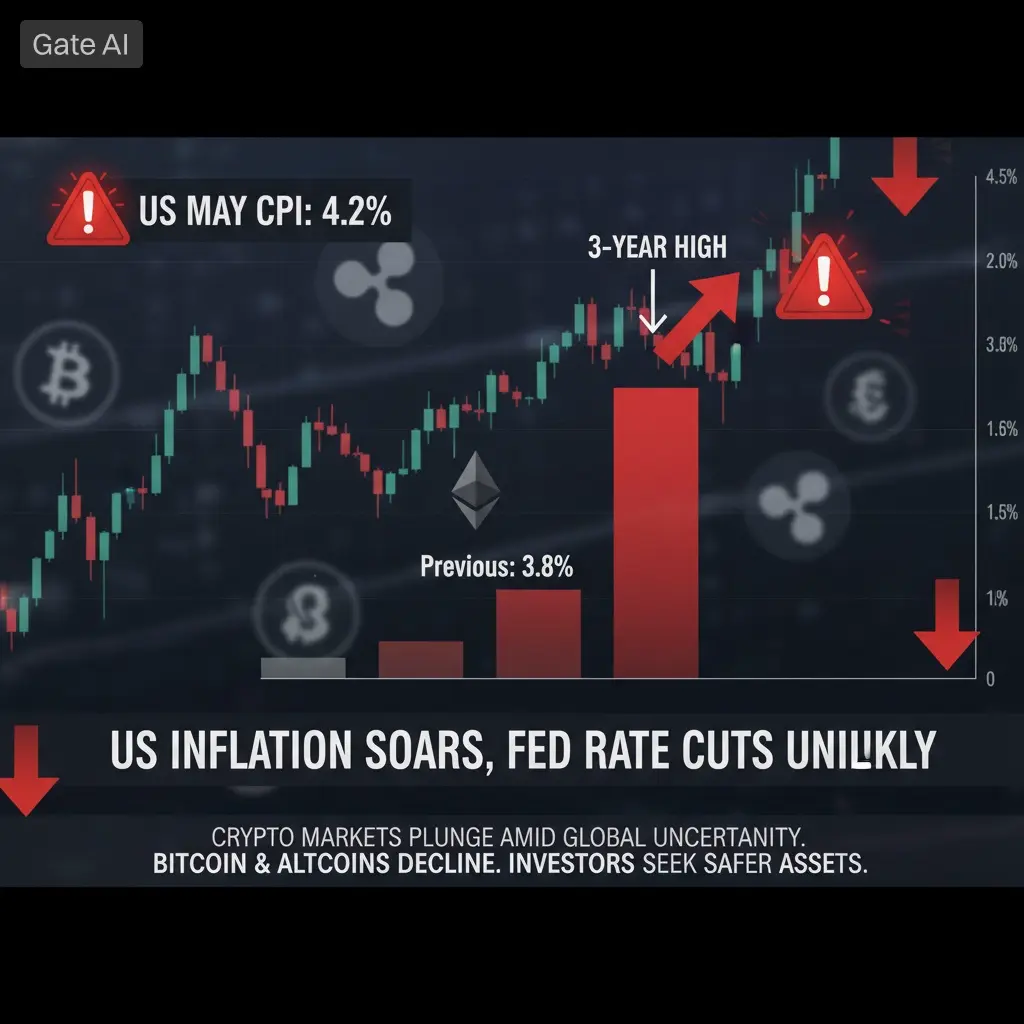
The United States Consumer Price Index (CPI) for May 2026 has surged to 4.2% year-over-year, marking the highest inflation level in three years since April 2023. This significant economic development has sent ripples through global financial markets, with particular implications for the cryptocurrency sector. This report provides a detailed examination of the CPI data, its underlying causes, and the multifaceted effects on digital asset prices, liquidity, and trading volumes.
Understanding the CPI Surge
The Consumer Price Index serves as the primary measure of inflation
post-image
post-image
post-image
  • Reward
  • 10
  • Repost
  • Share
BlackRiderCryptoLord:
To The Moon 🌕
View More
#USMayCPIHits3YearHigh
The latest U.S. Consumer Price Index (CPI) data has captured the attention of investors worldwide after inflation climbed to its highest level in nearly three years. The report highlights that inflationary pressures remain a major force shaping global financial markets, monetary policy expectations, and investor sentiment.
CPI is one of the most important economic indicators because it measures changes in the prices consumers pay for goods and services. When inflation accelerates, it directly impacts household spending, business costs, interest rates, and investment dec
BTC0.84%
ETH-0.21%
post-image
post-image
  • Reward
  • 4
  • Repost
  • Share
cryptoStylish:
good information
View More
#USMayCPIHits3YearHigh
The United States Consumer Price Index for May 2026 has surged to a three-year high of 4.2% year-over-year, marking the highest inflation reading since April 2023. This significant economic development carries profound implications across multiple asset classes, with particular attention required for cryptocurrency markets that have already experienced substantial volatility in recent weeks.
Understanding the CPI Surge
The Consumer Price Index serves as the primary gauge of inflation, measuring the average change in prices over time that consumers pay for a basket of go
HighAmbition
#USMayCPIHits3YearHigh
The United States Consumer Price Index for May 2026 has surged to a three-year high of 4.2% year-over-year, marking the highest inflation reading since April 2023. This significant economic development carries profound implications across multiple asset classes, with particular attention required for cryptocurrency markets that have already experienced substantial volatility in recent weeks.
Understanding the CPI Surge
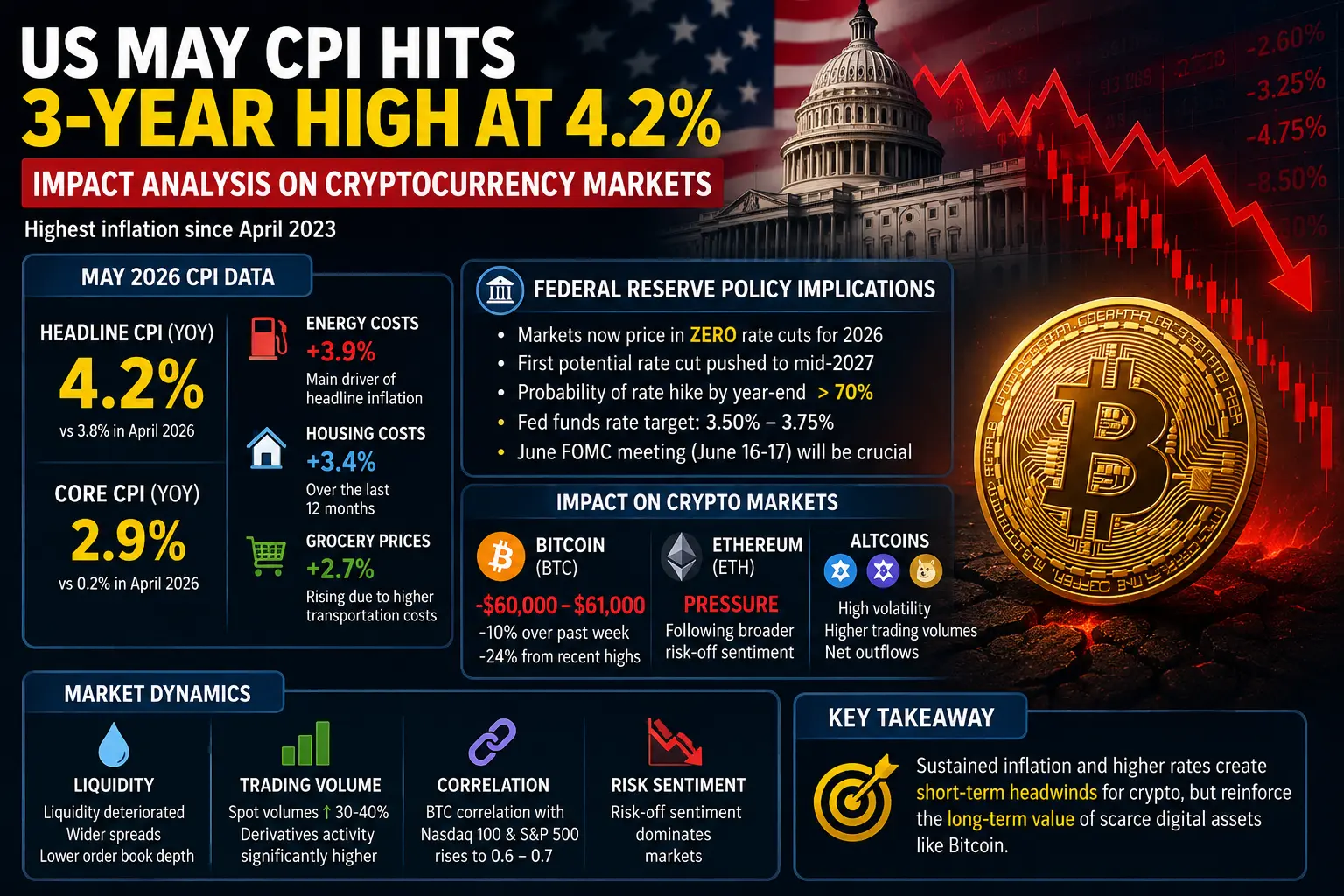
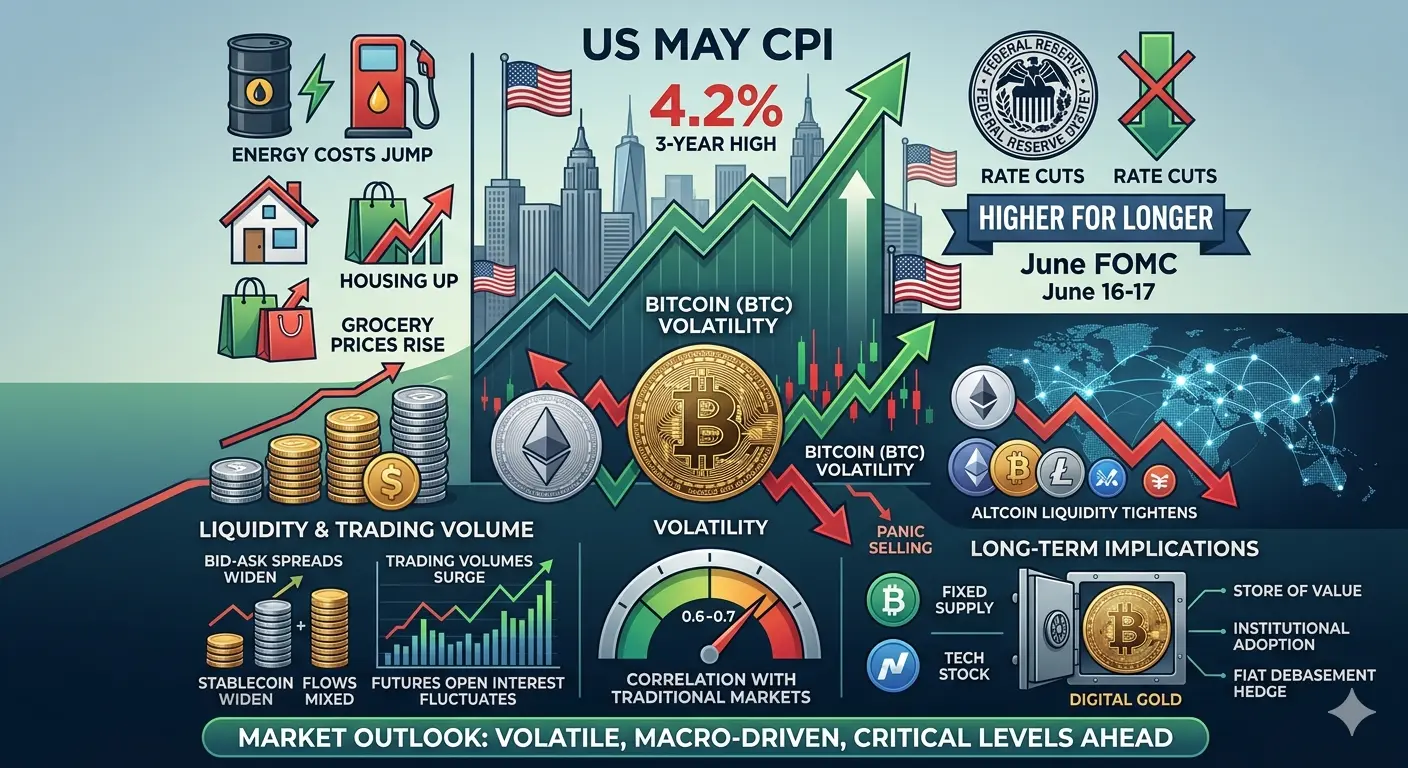
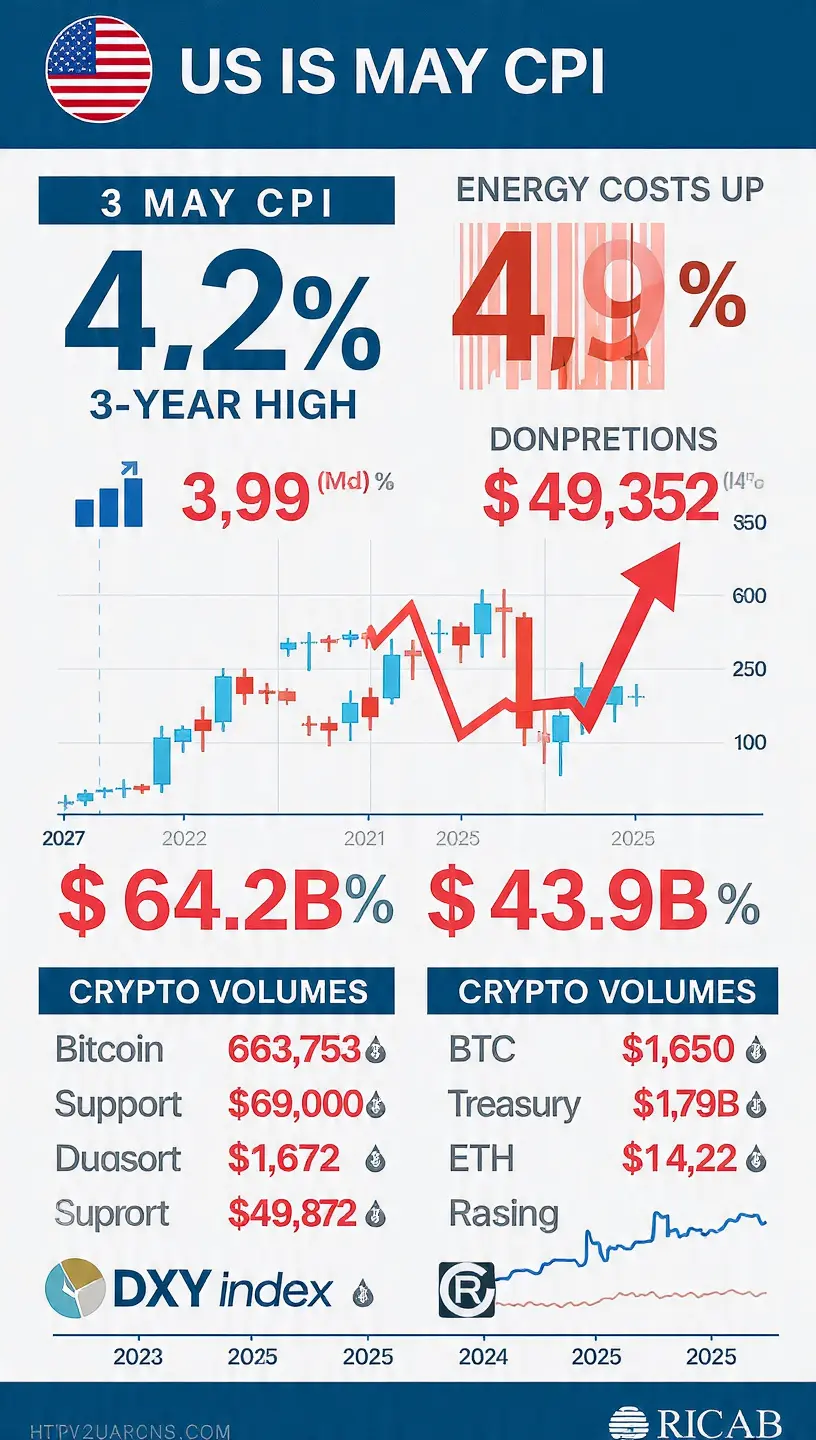
The Consumer Price Index serves as the primary gauge of inflation, measuring the average change in prices over time that consumers pay for a basket of goods and services. The May 2026 reading of 4.2% represents a notable acceleration from April's 3.8% and substantially exceeds the Federal Reserve's long-term target of 2%. This inflationary pressure stems primarily from escalating energy costs, with the Middle East conflict driving gasoline and related energy product prices upward. Energy goods prices jumped 3.9% in May alone, accounting for more than 60% of the monthly CPI increase.
The core CPI, which excludes volatile food and energy components, rose 0.2% month-over-month, slightly below expectations. However, the headline figure remains deeply concerning for monetary policymakers who have battled elevated inflation for over five years. The current inflation rate is roughly double the Fed's target, creating significant challenges for the central bank's policy trajectory.
Federal Reserve Policy Implications
The elevated CPI reading substantially complicates the Federal Reserve's monetary policy calculus. With inflation accelerating rather than moderating, the probability of interest rate cuts in the near term has diminished considerably. Market participants now anticipate the Fed may maintain current interest rate levels well into 2027, with some analysts even suggesting the possibility of rate hikes if inflationary pressures persist.
Higher interest rates typically strengthen the US dollar as foreign investors seek yield in dollar-denominated assets. A stronger dollar creates headwinds for risk assets, including cryptocurrencies, as it reduces the relative attractiveness of alternative investments and tightens global liquidity conditions.
Cryptocurrency Market Analysis
Bitcoin and Ethereum have demonstrated significant vulnerability to macroeconomic developments in recent weeks. Current market data reveals Bitcoin trading around $63,753, representing a recovery from recent lows near $59,000 but still substantially below previous highs above $80,000. Ethereum currently trades near $1,672, having recovered from lows around $1,500 but facing continued pressure.
The cryptocurrency market has experienced a severe correction, with Bitcoin declining approximately 23% from its January 2026 peak above $82,000. Ethereum has faced even more pronounced weakness, falling roughly 44% from highs above $2,400 to current levels. This bearish price action reflects deteriorating risk sentiment and concerns about tightening liquidity conditions.
Impact Assessment Across Market Segments
Bitcoin Price Dynamics
Bitcoin's price action demonstrates clear sensitivity to macroeconomic developments. The cryptocurrency has formed a bearish pennant pattern on daily charts, with key support now established around $61,000. A breakdown below this level could trigger further downside toward $49,000. The RSI indicator has fallen into oversold territory below 25, suggesting potential for technical bounces, though the broader trend structure remains bearish.
Current trading volume for Bitcoin futures exceeds $4.2 billion in daily quoted volume, with significant participation in perpetual contracts. The 24-hour price change shows modest recovery of approximately 0.45%, though this comes within a broader downtrend context.
Ethereum Performance
Ethereum has exhibited even greater volatility than Bitcoin, with sharper declines and more pronounced weakness in technical indicators. The cryptocurrency has broken below multiple support levels and faces ongoing pressure from bearish momentum indicators. Current daily trading volume exceeds $3.9 billion, reflecting sustained market interest despite declining prices.
Altcoin Sector
The broader altcoin market has experienced severe pressure as Bitcoin dominance increases. Total cryptocurrency market capitalization excluding Bitcoin and Ethereum remains under significant strain, with technical indicators suggesting continued downside risk. Stablecoin dominance has risen substantially, indicating risk-off positioning among market participants.
Liquidity and Volume Analysis
Cryptocurrency markets have maintained substantial trading volumes despite price declines, suggesting active repositioning by institutional and retail participants. Bitcoin daily trading volumes consistently exceed $4 billion across major exchanges, while Ethereum volumes regularly surpass $3.5 billion. This elevated volume during price declines indicates distribution rather than accumulation patterns.
Open interest in cryptocurrency derivatives has remained elevated, suggesting continued speculation and hedging activity. Funding rates have turned negative in recent sessions, reflecting bearish sentiment among perpetual futures traders.
Macroeconomic Correlation
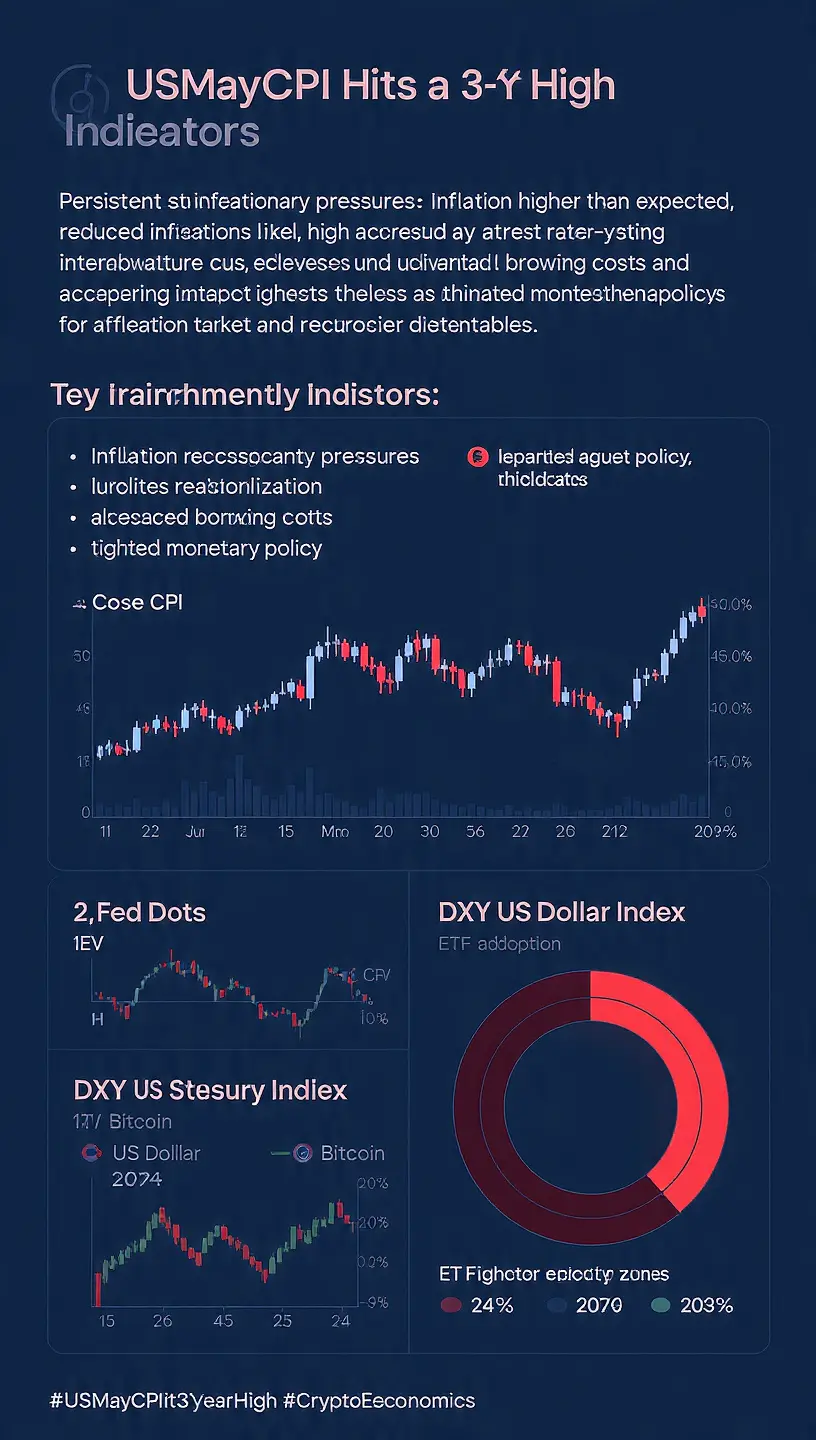
The correlation between cryptocurrency prices and traditional macroeconomic indicators has strengthened significantly in 2026. Bitcoin and Ethereum now demonstrate clear sensitivity to Federal Reserve policy expectations, inflation readings, and dollar strength. This increased correlation reduces the diversification benefits historically associated with cryptocurrency investments.
The US Dollar Index has maintained a strong bullish trajectory, pressing toward key resistance levels. This dollar strength creates additional headwinds for dollar-denominated risk assets, including cryptocurrencies. Treasury yields have risen in response to inflation concerns, further tightening financial conditions.
Risk Assessment and Outlook
The current market environment presents elevated risks for cryptocurrency investors. The combination of persistent inflation, hawkish Federal Reserve policy, and dollar strength creates a challenging macroeconomic backdrop. Technical indicators suggest continued downside risk, with key support levels vulnerable to breakdown.
Potential Downside Scenarios
Should inflation remain elevated and the Federal Reserve maintain restrictive policy, cryptocurrency prices could face additional pressure. Bitcoin support at $61,000 represents a critical level; failure to hold this zone could trigger accelerated selling toward $49,000. Ethereum faces similar risks, with support near $1,650 representing a key technical level.
Recovery Catalysts
Potential catalysts for recovery include evidence of moderating inflation, dovish shifts in Federal Reserve rhetoric, or resolution of geopolitical tensions affecting energy markets. Additionally, institutional adoption developments and regulatory clarity could provide fundamental support for cryptocurrency valuations.
Trading Strategy Considerations
In the current environment, risk management assumes paramount importance. Traders should consider reduced position sizes, wider stop-loss placements, and heightened awareness of correlation risks. Dollar-cost averaging strategies may suit long-term investors, while active traders should remain attentive to macroeconomic calendar events and Federal Reserve communications.
The elevated CPI reading and its implications for monetary policy suggest continued volatility in cryptocurrency markets. Participants should maintain flexible positioning and remain prepared for rapid shifts in market sentiment as new economic data emerges.
Conclusion
The May 2026 CPI reading represents a significant inflection point for financial markets, with clear negative implications for cryptocurrency valuations in the near term. The combination of accelerating inflation, restrictive monetary policy, and dollar strength creates a challenging environment for risk assets. Bitcoin and Ethereum have already experienced substantial corrections, and technical indicators suggest continued vulnerability.
Market participants should closely monitor upcoming economic data releases, Federal Reserve communications, and developments in the Middle East conflict that could influence energy prices and inflation expectations. The current environment demands cautious positioning and robust risk management as markets navigate this period of elevated uncertainty and volatility.@Gate_Square #MyGateTradeStory
repost-content-media
  • Reward
  • Comment
  • Repost
  • Share
#USMayCPIHits3YearHigh
🇺🇸 US May CPI Hits 3-Year High: What Does It Mean For Markets? 📊
The latest U.S. Consumer Price Index (CPI) data has surprised investors, with inflation climbing to its highest level in three years. This unexpected increase is sending shockwaves through global financial markets and forcing traders to rethink their strategies.
🔥 Why Is CPI So Important?
The Consumer Price Index (CPI) measures the average change in prices paid by consumers for goods and services. When CPI rises faster than expected, it signals that inflation is becoming stronger and more persistent.
A
BTC0.84%
ETH-0.21%
  • Reward
  • Comment
  • Repost
  • Share
#USMayCPIHits3YearHigh
The latest U.S. Consumer Price Index (CPI) report has delivered a powerful reminder that inflation remains one of the most influential forces shaping global financial markets. With May CPI reaching its highest level in nearly three years, investors are once again being forced to reconsider assumptions about interest rates, liquidity conditions, and the broader economic outlook.
For much of the past year, markets have been driven by expectations that inflation would gradually ease and create room for a more supportive monetary environment. Higher-than-expected CPI data c
BTC0.84%
post-image
  • Reward
  • 8
  • Repost
  • Share
discovery:
LFG 🔥
View More
#USMayCPIHits3YearHigh
The latest U.S. Consumer Price Index (CPI) data has captured the attention of investors, economists, and financial markets worldwide after inflation reached its highest level in three years. The report signals that price pressures remain stronger than many analysts had anticipated, raising new questions about the future direction of interest rates, economic growth, and global financial markets.
Inflation has become one of the most closely watched indicators in the global economy because it directly affects consumer spending, business investment, and central bank policy.
BTC0.84%
ETH-0.21%
XAG-0.03%
  • Reward
  • 7
  • Repost
  • Share
discovery:
To The Moon 🌕
View More
#USMayCPIHits3YearHigh
The latest US CPI data has reignited inflation concerns across global financial markets, marking a significant shift in the macroeconomic landscape. With headline inflation hitting a 3-year high, investors are once again forced to reassess expectations around interest rates, liquidity conditions, and risk asset performance.
This is not just a single data surprise—it is a signal that inflationary pressure remains embedded within the broader US economy.
📊 CPI Breakdown: What’s Driving the Surge
The latest inflation reading reflects persistent price pressures across key c
XAU0.21%
BTC0.84%
BeautifulDay
#USMayCPIHits3YearHigh
The latest US CPI data has reignited inflation concerns across global financial markets, marking a significant shift in the macroeconomic landscape. With headline inflation hitting a 3-year high, investors are once again forced to reassess expectations around interest rates, liquidity conditions, and risk asset performance.
This is not just a single data surprise—it is a signal that inflationary pressure remains embedded within the broader US economy.
📊 CPI Breakdown: What’s Driving the Surge
The latest inflation reading reflects persistent price pressures across key categories:
• Energy and fuel costs remain elevated
• Housing and shelter inflation continues to show stickiness
• Food and essential goods remain under upward pressure
• Core inflation remains above target for longer than expected
Together, these components suggest that inflation is becoming structurally persistent rather than temporarily volatile.
💰 Federal Reserve Outlook: Policy Expectations Shift Again
The CPI surprise has immediately impacted rate expectations, forcing markets to reassess the Fed’s policy path.
Key implications include:
• Higher-for-longer interest rate environment
• Reduced probability of near-term rate cuts
• Increased sensitivity to incoming macro data
• Stronger emphasis on inflation control over growth support
The Federal Reserve now faces renewed pressure to maintain restrictive conditions for longer than previously expected.
💵 US Dollar Reaction: Strengthening Macro Anchor
A higher inflation environment reinforces dollar strength through interest rate expectations and capital inflows.
Market consequences:
• Global liquidity tightening
• Pressure on emerging market currencies
• Capital rotation into USD assets
• Increased volatility in forex markets
The US dollar remains the central driver of global financial conditions.
🥇 Gold Market Reaction: Inflation vs Real Yield Conflict
Gold’s response highlights the ongoing conflict between inflation protection and rising real yields.
Key dynamics:
• Inflation support offset by strong dollar
• Rising yields reduce non-yielding asset appeal
• Short-term volatility increases
• Key support zones now under pressure
Gold is increasingly reacting to monetary policy expectations rather than inflation alone.
📉 Equity Markets: Valuation Pressure Returns
Equities are directly impacted as inflation reshapes discount rates and corporate cost structures.
Main pressures:
• Higher input costs compress profit margins
• Valuation multiples face downward pressure
• Growth stocks become more sensitive to rate expectations
• Defensive rotation gains attention
Technology and high-growth sectors remain the most vulnerable under tighter financial conditions.
₿ Crypto Markets: Macro Correlation Strengthens Again
Crypto markets continue to reflect broader macro liquidity conditions rather than isolated digital asset dynamics.
Key drivers:
• Strong USD reduces risk appetite
• Higher rates limit speculative inflows
• Increased volatility and liquidation risk
• Correlation with tech equities remains strong
Bitcoin and major altcoins are increasingly behaving as macro risk assets.
📊 Market Structure Insight
The current macro environment is defined by a reinforcing cycle:
• Inflation rises → yields rise
• Yields rise → USD strengthens
• USD strengthens → risk assets decline
• Risk asset decline → liquidity tightens further
This loop continues to shape cross-asset volatility.
⚠️ Forward Risk Outlook
Markets now face a key structural question:
Is inflation a temporary spike—or a persistent regime shift?
If inflation remains elevated:
• Monetary policy stays restrictive longer
• Volatility remains structurally high
• Risk rallies become shorter-lived
• Trading becomes more selective and tactical
🎯 Final Outlook
The US CPI hitting a 3-year high is more than just an economic update—it is a macro reset signal.
Markets are now fully dependent on:
• Incoming inflation data
• Federal Reserve communication
• Liquidity conditions
Until clarity emerges, volatility will remain the dominant theme across all asset classes.
"@Gate_Square #Inflation #MacroMarkets
repost-content-media
  • Reward
  • Comment
  • Repost
  • Share
#USMayCPIHits3YearHigh
The United States Consumer Price Index for May 2026 has surged to a three-year high of 4.2% year-over-year, marking the highest inflation reading since April 2023. This significant economic development carries profound implications across multiple asset classes, with particular attention required for cryptocurrency markets that have already experienced substantial volatility in recent weeks.
Understanding the CPI Surge
The Consumer Price Index serves as the primary gauge of inflation, measuring the average change in prices over time that consumers pay for a basket of go
HighAmbition
#USMayCPIHits3YearHigh
The United States Consumer Price Index for May 2026 has surged to a three-year high of 4.2% year-over-year, marking the highest inflation reading since April 2023. This significant economic development carries profound implications across multiple asset classes, with particular attention required for cryptocurrency markets that have already experienced substantial volatility in recent weeks.
Understanding the CPI Surge
The Consumer Price Index serves as the primary gauge of inflation, measuring the average change in prices over time that consumers pay for a basket of goods and services. The May 2026 reading of 4.2% represents a notable acceleration from April's 3.8% and substantially exceeds the Federal Reserve's long-term target of 2%. This inflationary pressure stems primarily from escalating energy costs, with the Middle East conflict driving gasoline and related energy product prices upward. Energy goods prices jumped 3.9% in May alone, accounting for more than 60% of the monthly CPI increase.
The core CPI, which excludes volatile food and energy components, rose 0.2% month-over-month, slightly below expectations. However, the headline figure remains deeply concerning for monetary policymakers who have battled elevated inflation for over five years. The current inflation rate is roughly double the Fed's target, creating significant challenges for the central bank's policy trajectory.
Federal Reserve Policy Implications
The elevated CPI reading substantially complicates the Federal Reserve's monetary policy calculus. With inflation accelerating rather than moderating, the probability of interest rate cuts in the near term has diminished considerably. Market participants now anticipate the Fed may maintain current interest rate levels well into 2027, with some analysts even suggesting the possibility of rate hikes if inflationary pressures persist.
Higher interest rates typically strengthen the US dollar as foreign investors seek yield in dollar-denominated assets. A stronger dollar creates headwinds for risk assets, including cryptocurrencies, as it reduces the relative attractiveness of alternative investments and tightens global liquidity conditions.
Cryptocurrency Market Analysis
Bitcoin and Ethereum have demonstrated significant vulnerability to macroeconomic developments in recent weeks. Current market data reveals Bitcoin trading around $63,753, representing a recovery from recent lows near $59,000 but still substantially below previous highs above $80,000. Ethereum currently trades near $1,672, having recovered from lows around $1,500 but facing continued pressure.
The cryptocurrency market has experienced a severe correction, with Bitcoin declining approximately 23% from its January 2026 peak above $82,000. Ethereum has faced even more pronounced weakness, falling roughly 44% from highs above $2,400 to current levels. This bearish price action reflects deteriorating risk sentiment and concerns about tightening liquidity conditions.
Impact Assessment Across Market Segments
Bitcoin Price Dynamics
Bitcoin's price action demonstrates clear sensitivity to macroeconomic developments. The cryptocurrency has formed a bearish pennant pattern on daily charts, with key support now established around $61,000. A breakdown below this level could trigger further downside toward $49,000. The RSI indicator has fallen into oversold territory below 25, suggesting potential for technical bounces, though the broader trend structure remains bearish.
Current trading volume for Bitcoin futures exceeds $4.2 billion in daily quoted volume, with significant participation in perpetual contracts. The 24-hour price change shows modest recovery of approximately 0.45%, though this comes within a broader downtrend context.
Ethereum Performance
Ethereum has exhibited even greater volatility than Bitcoin, with sharper declines and more pronounced weakness in technical indicators. The cryptocurrency has broken below multiple support levels and faces ongoing pressure from bearish momentum indicators. Current daily trading volume exceeds $3.9 billion, reflecting sustained market interest despite declining prices.
Altcoin Sector
The broader altcoin market has experienced severe pressure as Bitcoin dominance increases. Total cryptocurrency market capitalization excluding Bitcoin and Ethereum remains under significant strain, with technical indicators suggesting continued downside risk. Stablecoin dominance has risen substantially, indicating risk-off positioning among market participants.
Liquidity and Volume Analysis
Cryptocurrency markets have maintained substantial trading volumes despite price declines, suggesting active repositioning by institutional and retail participants. Bitcoin daily trading volumes consistently exceed $4 billion across major exchanges, while Ethereum volumes regularly surpass $3.5 billion. This elevated volume during price declines indicates distribution rather than accumulation patterns.
Open interest in cryptocurrency derivatives has remained elevated, suggesting continued speculation and hedging activity. Funding rates have turned negative in recent sessions, reflecting bearish sentiment among perpetual futures traders.
Macroeconomic Correlation
The correlation between cryptocurrency prices and traditional macroeconomic indicators has strengthened significantly in 2026. Bitcoin and Ethereum now demonstrate clear sensitivity to Federal Reserve policy expectations, inflation readings, and dollar strength. This increased correlation reduces the diversification benefits historically associated with cryptocurrency investments.
The US Dollar Index has maintained a strong bullish trajectory, pressing toward key resistance levels. This dollar strength creates additional headwinds for dollar-denominated risk assets, including cryptocurrencies. Treasury yields have risen in response to inflation concerns, further tightening financial conditions.
Risk Assessment and Outlook
The current market environment presents elevated risks for cryptocurrency investors. The combination of persistent inflation, hawkish Federal Reserve policy, and dollar strength creates a challenging macroeconomic backdrop. Technical indicators suggest continued downside risk, with key support levels vulnerable to breakdown.
Potential Downside Scenarios
Should inflation remain elevated and the Federal Reserve maintain restrictive policy, cryptocurrency prices could face additional pressure. Bitcoin support at $61,000 represents a critical level; failure to hold this zone could trigger accelerated selling toward $49,000. Ethereum faces similar risks, with support near $1,650 representing a key technical level.
Recovery Catalysts
Potential catalysts for recovery include evidence of moderating inflation, dovish shifts in Federal Reserve rhetoric, or resolution of geopolitical tensions affecting energy markets. Additionally, institutional adoption developments and regulatory clarity could provide fundamental support for cryptocurrency valuations.
Trading Strategy Considerations
In the current environment, risk management assumes paramount importance. Traders should consider reduced position sizes, wider stop-loss placements, and heightened awareness of correlation risks. Dollar-cost averaging strategies may suit long-term investors, while active traders should remain attentive to macroeconomic calendar events and Federal Reserve communications.
The elevated CPI reading and its implications for monetary policy suggest continued volatility in cryptocurrency markets. Participants should maintain flexible positioning and remain prepared for rapid shifts in market sentiment as new economic data emerges.
Conclusion
The May 2026 CPI reading represents a significant inflection point for financial markets, with clear negative implications for cryptocurrency valuations in the near term. The combination of accelerating inflation, restrictive monetary policy, and dollar strength creates a challenging environment for risk assets. Bitcoin and Ethereum have already experienced substantial corrections, and technical indicators suggest continued vulnerability.
Market participants should closely monitor upcoming economic data releases, Federal Reserve communications, and developments in the Middle East conflict that could influence energy prices and inflation expectations. The current environment demands cautious positioning and robust risk management as markets navigate this period of elevated uncertainty and volatility.@Gate_Square #MyGateTradeStory

repost-content-media
  • Reward
  • Comment
  • Repost
  • Share
#USMayCPIHits3YearHigh
The United States Consumer Price Index for May 2026 has surged to a three-year high of 4.2% year-over-year, marking the highest inflation reading since April 2023. This significant economic development carries profound implications across multiple asset classes, with particular attention required for cryptocurrency markets that have already experienced substantial volatility in recent weeks.
Understanding the CPI Surge
The Consumer Price Index serves as the primary gauge of inflation, measuring the average change in prices over time that consumers pay for a basket of go
HighAmbition
#USMayCPIHits3YearHigh
The United States Consumer Price Index for May 2026 has surged to a three-year high of 4.2% year-over-year, marking the highest inflation reading since April 2023. This significant economic development carries profound implications across multiple asset classes, with particular attention required for cryptocurrency markets that have already experienced substantial volatility in recent weeks.
Understanding the CPI Surge
The Consumer Price Index serves as the primary gauge of inflation, measuring the average change in prices over time that consumers pay for a basket of goods and services. The May 2026 reading of 4.2% represents a notable acceleration from April's 3.8% and substantially exceeds the Federal Reserve's long-term target of 2%. This inflationary pressure stems primarily from escalating energy costs, with the Middle East conflict driving gasoline and related energy product prices upward. Energy goods prices jumped 3.9% in May alone, accounting for more than 60% of the monthly CPI increase.
The core CPI, which excludes volatile food and energy components, rose 0.2% month-over-month, slightly below expectations. However, the headline figure remains deeply concerning for monetary policymakers who have battled elevated inflation for over five years. The current inflation rate is roughly double the Fed's target, creating significant challenges for the central bank's policy trajectory.
Federal Reserve Policy Implications
The elevated CPI reading substantially complicates the Federal Reserve's monetary policy calculus. With inflation accelerating rather than moderating, the probability of interest rate cuts in the near term has diminished considerably. Market participants now anticipate the Fed may maintain current interest rate levels well into 2027, with some analysts even suggesting the possibility of rate hikes if inflationary pressures persist.
Higher interest rates typically strengthen the US dollar as foreign investors seek yield in dollar-denominated assets. A stronger dollar creates headwinds for risk assets, including cryptocurrencies, as it reduces the relative attractiveness of alternative investments and tightens global liquidity conditions.
Cryptocurrency Market Analysis
Bitcoin and Ethereum have demonstrated significant vulnerability to macroeconomic developments in recent weeks. Current market data reveals Bitcoin trading around $63,753, representing a recovery from recent lows near $59,000 but still substantially below previous highs above $80,000. Ethereum currently trades near $1,672, having recovered from lows around $1,500 but facing continued pressure.
The cryptocurrency market has experienced a severe correction, with Bitcoin declining approximately 23% from its January 2026 peak above $82,000. Ethereum has faced even more pronounced weakness, falling roughly 44% from highs above $2,400 to current levels. This bearish price action reflects deteriorating risk sentiment and concerns about tightening liquidity conditions.
Impact Assessment Across Market Segments
Bitcoin Price Dynamics
Bitcoin's price action demonstrates clear sensitivity to macroeconomic developments. The cryptocurrency has formed a bearish pennant pattern on daily charts, with key support now established around $61,000. A breakdown below this level could trigger further downside toward $49,000. The RSI indicator has fallen into oversold territory below 25, suggesting potential for technical bounces, though the broader trend structure remains bearish.
Current trading volume for Bitcoin futures exceeds $4.2 billion in daily quoted volume, with significant participation in perpetual contracts. The 24-hour price change shows modest recovery of approximately 0.45%, though this comes within a broader downtrend context.
Ethereum Performance
Ethereum has exhibited even greater volatility than Bitcoin, with sharper declines and more pronounced weakness in technical indicators. The cryptocurrency has broken below multiple support levels and faces ongoing pressure from bearish momentum indicators. Current daily trading volume exceeds $3.9 billion, reflecting sustained market interest despite declining prices.
Altcoin Sector
The broader altcoin market has experienced severe pressure as Bitcoin dominance increases. Total cryptocurrency market capitalization excluding Bitcoin and Ethereum remains under significant strain, with technical indicators suggesting continued downside risk. Stablecoin dominance has risen substantially, indicating risk-off positioning among market participants.
Liquidity and Volume Analysis
Cryptocurrency markets have maintained substantial trading volumes despite price declines, suggesting active repositioning by institutional and retail participants. Bitcoin daily trading volumes consistently exceed $4 billion across major exchanges, while Ethereum volumes regularly surpass $3.5 billion. This elevated volume during price declines indicates distribution rather than accumulation patterns.
Open interest in cryptocurrency derivatives has remained elevated, suggesting continued speculation and hedging activity. Funding rates have turned negative in recent sessions, reflecting bearish sentiment among perpetual futures traders.
Macroeconomic Correlation
The correlation between cryptocurrency prices and traditional macroeconomic indicators has strengthened significantly in 2026. Bitcoin and Ethereum now demonstrate clear sensitivity to Federal Reserve policy expectations, inflation readings, and dollar strength. This increased correlation reduces the diversification benefits historically associated with cryptocurrency investments.
The US Dollar Index has maintained a strong bullish trajectory, pressing toward key resistance levels. This dollar strength creates additional headwinds for dollar-denominated risk assets, including cryptocurrencies. Treasury yields have risen in response to inflation concerns, further tightening financial conditions.
Risk Assessment and Outlook
The current market environment presents elevated risks for cryptocurrency investors. The combination of persistent inflation, hawkish Federal Reserve policy, and dollar strength creates a challenging macroeconomic backdrop. Technical indicators suggest continued downside risk, with key support levels vulnerable to breakdown.
Potential Downside Scenarios
Should inflation remain elevated and the Federal Reserve maintain restrictive policy, cryptocurrency prices could face additional pressure. Bitcoin support at $61,000 represents a critical level; failure to hold this zone could trigger accelerated selling toward $49,000. Ethereum faces similar risks, with support near $1,650 representing a key technical level.
Recovery Catalysts
Potential catalysts for recovery include evidence of moderating inflation, dovish shifts in Federal Reserve rhetoric, or resolution of geopolitical tensions affecting energy markets. Additionally, institutional adoption developments and regulatory clarity could provide fundamental support for cryptocurrency valuations.
Trading Strategy Considerations
In the current environment, risk management assumes paramount importance. Traders should consider reduced position sizes, wider stop-loss placements, and heightened awareness of correlation risks. Dollar-cost averaging strategies may suit long-term investors, while active traders should remain attentive to macroeconomic calendar events and Federal Reserve communications.
The elevated CPI reading and its implications for monetary policy suggest continued volatility in cryptocurrency markets. Participants should maintain flexible positioning and remain prepared for rapid shifts in market sentiment as new economic data emerges.
Conclusion
The May 2026 CPI reading represents a significant inflection point for financial markets, with clear negative implications for cryptocurrency valuations in the near term. The combination of accelerating inflation, restrictive monetary policy, and dollar strength creates a challenging environment for risk assets. Bitcoin and Ethereum have already experienced substantial corrections, and technical indicators suggest continued vulnerability.
Market participants should closely monitor upcoming economic data releases, Federal Reserve communications, and developments in the Middle East conflict that could influence energy prices and inflation expectations. The current environment demands cautious positioning and robust risk management as markets navigate this period of elevated uncertainty and volatility.@Gate_Square #MyGateTradeStory

repost-content-media
  • Reward
  • Comment
  • Repost
  • Share
#USMayCPIHits3YearHigh
The United States Consumer Price Index for May 2026 has surged to a three-year high of 4.2% year-over-year, marking the highest inflation reading since April 2023. This significant economic development carries profound implications across multiple asset classes, with particular attention required for cryptocurrency markets that have already experienced substantial volatility in recent weeks.
Understanding the CPI Surge
The Consumer Price Index serves as the primary gauge of inflation, measuring the average change in prices over time that consumers pay for a basket of go
HighAmbition
#USMayCPIHits3YearHigh
The United States Consumer Price Index for May 2026 has surged to a three-year high of 4.2% year-over-year, marking the highest inflation reading since April 2023. This significant economic development carries profound implications across multiple asset classes, with particular attention required for cryptocurrency markets that have already experienced substantial volatility in recent weeks.
Understanding the CPI Surge
The Consumer Price Index serves as the primary gauge of inflation, measuring the average change in prices over time that consumers pay for a basket of goods and services. The May 2026 reading of 4.2% represents a notable acceleration from April's 3.8% and substantially exceeds the Federal Reserve's long-term target of 2%. This inflationary pressure stems primarily from escalating energy costs, with the Middle East conflict driving gasoline and related energy product prices upward. Energy goods prices jumped 3.9% in May alone, accounting for more than 60% of the monthly CPI increase.
The core CPI, which excludes volatile food and energy components, rose 0.2% month-over-month, slightly below expectations. However, the headline figure remains deeply concerning for monetary policymakers who have battled elevated inflation for over five years. The current inflation rate is roughly double the Fed's target, creating significant challenges for the central bank's policy trajectory.
Federal Reserve Policy Implications
The elevated CPI reading substantially complicates the Federal Reserve's monetary policy calculus. With inflation accelerating rather than moderating, the probability of interest rate cuts in the near term has diminished considerably. Market participants now anticipate the Fed may maintain current interest rate levels well into 2027, with some analysts even suggesting the possibility of rate hikes if inflationary pressures persist.
Higher interest rates typically strengthen the US dollar as foreign investors seek yield in dollar-denominated assets. A stronger dollar creates headwinds for risk assets, including cryptocurrencies, as it reduces the relative attractiveness of alternative investments and tightens global liquidity conditions.
Cryptocurrency Market Analysis
Bitcoin and Ethereum have demonstrated significant vulnerability to macroeconomic developments in recent weeks. Current market data reveals Bitcoin trading around $63,753, representing a recovery from recent lows near $59,000 but still substantially below previous highs above $80,000. Ethereum currently trades near $1,672, having recovered from lows around $1,500 but facing continued pressure.
The cryptocurrency market has experienced a severe correction, with Bitcoin declining approximately 23% from its January 2026 peak above $82,000. Ethereum has faced even more pronounced weakness, falling roughly 44% from highs above $2,400 to current levels. This bearish price action reflects deteriorating risk sentiment and concerns about tightening liquidity conditions.
Impact Assessment Across Market Segments
Bitcoin Price Dynamics
Bitcoin's price action demonstrates clear sensitivity to macroeconomic developments. The cryptocurrency has formed a bearish pennant pattern on daily charts, with key support now established around $61,000. A breakdown below this level could trigger further downside toward $49,000. The RSI indicator has fallen into oversold territory below 25, suggesting potential for technical bounces, though the broader trend structure remains bearish.
Current trading volume for Bitcoin futures exceeds $4.2 billion in daily quoted volume, with significant participation in perpetual contracts. The 24-hour price change shows modest recovery of approximately 0.45%, though this comes within a broader downtrend context.
Ethereum Performance
Ethereum has exhibited even greater volatility than Bitcoin, with sharper declines and more pronounced weakness in technical indicators. The cryptocurrency has broken below multiple support levels and faces ongoing pressure from bearish momentum indicators. Current daily trading volume exceeds $3.9 billion, reflecting sustained market interest despite declining prices.
Altcoin Sector
The broader altcoin market has experienced severe pressure as Bitcoin dominance increases. Total cryptocurrency market capitalization excluding Bitcoin and Ethereum remains under significant strain, with technical indicators suggesting continued downside risk. Stablecoin dominance has risen substantially, indicating risk-off positioning among market participants.
Liquidity and Volume Analysis
Cryptocurrency markets have maintained substantial trading volumes despite price declines, suggesting active repositioning by institutional and retail participants. Bitcoin daily trading volumes consistently exceed $4 billion across major exchanges, while Ethereum volumes regularly surpass $3.5 billion. This elevated volume during price declines indicates distribution rather than accumulation patterns.
Open interest in cryptocurrency derivatives has remained elevated, suggesting continued speculation and hedging activity. Funding rates have turned negative in recent sessions, reflecting bearish sentiment among perpetual futures traders.
Macroeconomic Correlation
The correlation between cryptocurrency prices and traditional macroeconomic indicators has strengthened significantly in 2026. Bitcoin and Ethereum now demonstrate clear sensitivity to Federal Reserve policy expectations, inflation readings, and dollar strength. This increased correlation reduces the diversification benefits historically associated with cryptocurrency investments.
The US Dollar Index has maintained a strong bullish trajectory, pressing toward key resistance levels. This dollar strength creates additional headwinds for dollar-denominated risk assets, including cryptocurrencies. Treasury yields have risen in response to inflation concerns, further tightening financial conditions.
Risk Assessment and Outlook
The current market environment presents elevated risks for cryptocurrency investors. The combination of persistent inflation, hawkish Federal Reserve policy, and dollar strength creates a challenging macroeconomic backdrop. Technical indicators suggest continued downside risk, with key support levels vulnerable to breakdown.
Potential Downside Scenarios
Should inflation remain elevated and the Federal Reserve maintain restrictive policy, cryptocurrency prices could face additional pressure. Bitcoin support at $61,000 represents a critical level; failure to hold this zone could trigger accelerated selling toward $49,000. Ethereum faces similar risks, with support near $1,650 representing a key technical level.
Recovery Catalysts
Potential catalysts for recovery include evidence of moderating inflation, dovish shifts in Federal Reserve rhetoric, or resolution of geopolitical tensions affecting energy markets. Additionally, institutional adoption developments and regulatory clarity could provide fundamental support for cryptocurrency valuations.
Trading Strategy Considerations
In the current environment, risk management assumes paramount importance. Traders should consider reduced position sizes, wider stop-loss placements, and heightened awareness of correlation risks. Dollar-cost averaging strategies may suit long-term investors, while active traders should remain attentive to macroeconomic calendar events and Federal Reserve communications.
The elevated CPI reading and its implications for monetary policy suggest continued volatility in cryptocurrency markets. Participants should maintain flexible positioning and remain prepared for rapid shifts in market sentiment as new economic data emerges.
Conclusion
The May 2026 CPI reading represents a significant inflection point for financial markets, with clear negative implications for cryptocurrency valuations in the near term. The combination of accelerating inflation, restrictive monetary policy, and dollar strength creates a challenging environment for risk assets. Bitcoin and Ethereum have already experienced substantial corrections, and technical indicators suggest continued vulnerability.
Market participants should closely monitor upcoming economic data releases, Federal Reserve communications, and developments in the Middle East conflict that could influence energy prices and inflation expectations. The current environment demands cautious positioning and robust risk management as markets navigate this period of elevated uncertainty and volatility.@Gate_Square #MyGateTradeStory
repost-content-media
  • Reward
  • Comment
  • Repost
  • Share
Load More