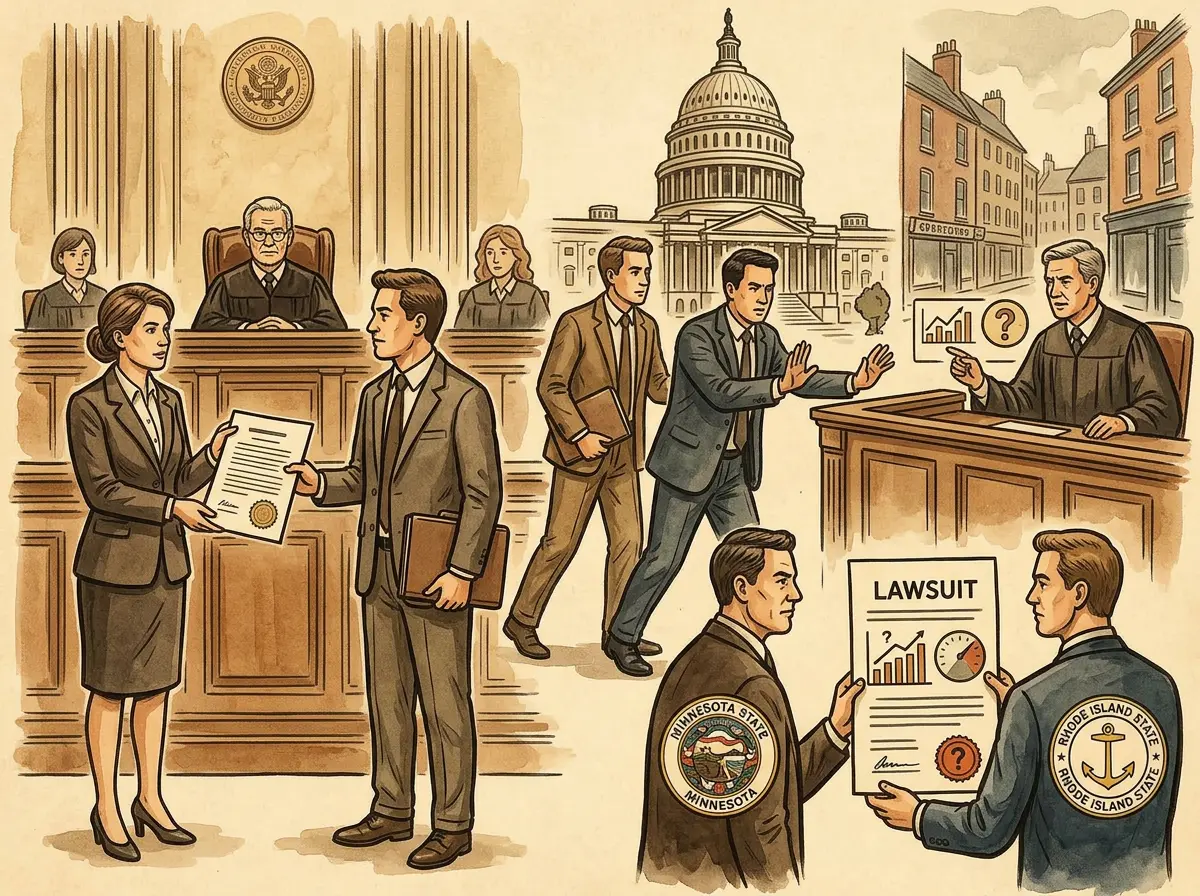
According to CoinTelegraph on May 29, the chair of the U.S. Commodity Futures Trading Commission (CFTC), Michael Selig, and prediction market platform Kalshi have filed a lawsuit in federal court over Minnesota’s ban on prediction markets, while a similar legal dispute in Rhode Island has also heated up. Minnesota Governor Tim Walz signed a bill last week that bans advertising/promotional activities, the creation of, and operation assistance for prediction market platforms.
Minnesota lawsuit: Core legal arguments from the CFTC and Kalshi
In the lawsuit, CFTC chair Seelig alleges that Minnesota enacted the “first complete ban” state law on prediction markets, which violates the federal jurisdiction framework set out in the Commodity Exchange Act.
Kalshi’s lawsuit echoes the same core arguments: event contracts on prediction markets are “swap contracts” under the definition of the Commodity Exchange Act, are traded on federally designated contract markets, and therefore fall under CFTC’s federal jurisdiction rather than state gambling laws. The Supremacy Clause of the U.S. Constitution confirms that federal law takes precedence over state law. At present, some federal courts have rejected this argument, while others have taken a supportive stance.
Rhode Island lawsuit: AG Neronha sues and the CFTC seeks joint intervention
Rhode Island Attorney General Peter Neronha had previously sued Kalshi and Polymarket, asking the court to rule that the sports-related “event contracts” offered by these platforms constitute gambling. On Thursday, the CFTC announced that it will jointly intervene in a lawsuit with Kalshi against Rhode Island officials; the intervention motion reiterates the CFTC’s claim of regulatory jurisdiction over prediction markets.
The Trump family’s confirmed stance and related interests
On Wednesday, U.S. President Trump posted on social media that the CFTC’s exclusive jurisdiction over prediction markets is “crucial,” and criticized state officials for filing lawsuits against Kalshi and Polymarket.
Donald Trump Jr. (Trump’s eldest son) is an advisor to Kalshi and Polymarket, and invested in Polymarket through his risk investment company, 1789 Capital. Last week, the chair of the House Committee on Oversight and Government Reform asked the CEOs of Kalshi and Polymarket to explain how the companies are addressing insider trading issues on their platforms.
FAQs
What are the core legal bases for the CFTC and Kalshi’s lawsuit against Minnesota?
The core argument is that event contracts in prediction markets are “swap contracts” as defined by the Commodity Exchange Act, traded on federally designated contract markets; therefore, they fall under CFTC federal jurisdiction and are not subject to state gambling laws. The Supremacy Clause of the U.S. Constitution also confirms that federal law takes precedence over state law.
What is the current stance of the courts on the CFTC’s federal jurisdiction argument?
According to reports, some federal courts have rejected the CFTC/Kalshi federal jurisdiction argument, while others have supported it; rulings have differed across courts. The timeline and adjudication level for any eventual unified decision have not been determined.
What questions has the House committee raised regarding prediction markets?
Last week, the chair of the House Committee on Oversight and Government Reform asked the CEOs of Kalshi and Polymarket to explain how the companies are addressing insider trading issues on their platforms; the specific scope of inquiries and the response deadline were not disclosed in this report.


