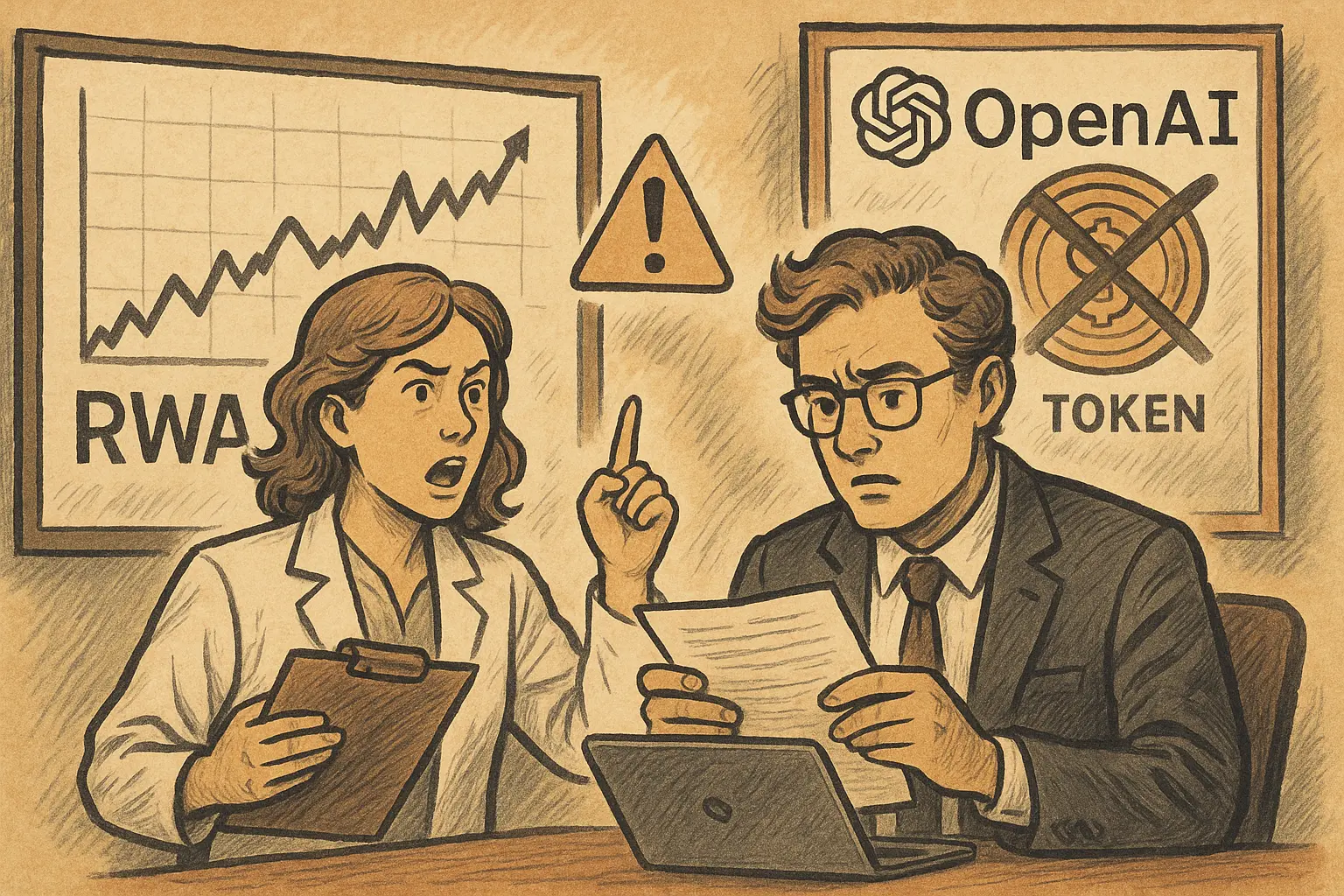
ARK Invest researcher Lorenzo Valente warned on X on May 14 that if the underlying equity, transfer restrictions, and investor rights are not clearly defined, tokenized stock will become speculative assets in multiple layers of packaging. Two days earlier, OpenAI stated that any direct or indirect transfer of equity without written consent is invalid, and it specifically named four types of market conduct. The statement also confirmed that OpenAI will actively enforce the relevant transfer restrictions.
Four types of invalid actions confirmed in OpenAI’s official statement (May 12)
OpenAI’s policy statement confirmed that the following four types of actions are all invalid and may violate U.S. federal or state securities laws:
· Direct sale of OpenAI equity
· Investment holding of an SPV that holds OpenAI equity
· Tokenized economic interests backed by OpenAI equity or SPV holdings
· Forward contracts and other forms of “economic-interest” derivatives
OpenAI’s statement confirmed that the above transactions violate the company’s transfer restriction terms, with risks that the related equity may be declared invalid; both the buying and selling parties may face legal liability; and the transaction itself may be rescinded. OpenAI clearly said it will “actively enforce” transfer restrictions applicable to all direct or indirect equity sales, without setting any exemption terms or time-limit constraints.
Valente’s warning: divergence across two paths
Valente’s X post confirmed two established paths for tokenized stocks to move toward institutional-level markets: Bullish acquisition of Equiniti, and Securitize pushing to put regulated stock equity directly on-chain. He also pointed out that, aside from the above compliant paths, the market continues to issue packaged products that include equity SPVs, debt notes, and other derivative structures. In the original text, Valente wrote: “I suspect in the end we’ll see dozens of other forms of packaged securities—such as equity investment special purpose entities, bonds, etc. Not many opportunities; we need to be ready.”
OpenAI’s statement confirms three layers of investor legal risk
First layer: Risk of underlying equity effectiveness OpenAI’s statement said transactions that violate transfer restrictions may lead to the “underlying equity being declared invalid.” OpenAI explicitly stated it does not recognize related investors’ status as shareholders, and it will not grant corresponding rights in an IPO or liquidation.
Second layer: U.S. securities law compliance risk Transfers of U.S. private equity are restricted by regulations such as Rule 144 under the Securities Act of 1933. OpenAI’s statement confirmed that such transfer activities may also violate U.S. federal or state securities laws, and both parties to the trade may face legal responsibility.
Third layer: Transaction rescission and clawback risk OpenAI’s statement confirmed that transactions may be subject to mandatory rescission. Under a nested structure of “SPV wrapping SPV,” the path for fund clawbacks becomes more complex due to the presence of multiple layers of legal entities.
FAQ
Which institutions lead the two compliant paths pointed out by Lorenzo Valente?
Valente’s X post confirmed two specific cases: Bullish acquired Equiniti (an organization that provides stock registration and shareholder management services), and Securitize is pushing for regulated stocks to be directly tokenized on-chain, replacing SPV-packaged structures as a compliant issuance format for tokenized stocks.
Does OpenAI’s statement apply to SPV transactions completed in the past?
OpenAI’s statement confirmed it will “actively enforce” transfer restrictions and said transactions may be rescinded; the statement did not set any exemptions for historical transactions. OpenAI has not yet published a specific enforcement timeline or a list of identified violations.
What are the core differences between compliant issuance of tokenized stocks and packaged SPV tokenization?
Valente’s warning distinguishes two models: the compliant path is to put regulated real shares directly on-chain (the Securitize model), with a clear legal basis for the effectiveness of underlying equity and investors’ rights; the packaged risk path is indirect tokenization via SPVs or derivative structures, and OpenAI’s statement explicitly characterizes the latter as invalid conduct that violates transfer restrictions.


